
Business
Our mission is to enable wealth generation for all citizens: CSE chairman


Reproduced below are some excerpts from the speech made by CSE Chairman Dumith Fernando at the recent special bell ringing ceremony organized at the CSE under the patronage of Prime Minister Mahinda Rajapaksa to mark the Digitalization of the Sri Lankan Stock Market. The launch event which had been themed as ‘Hyper-Leap to the future’ saw the participation of key policymakers and industry leaders of the country.
“In this 35th year of operation of the Colombo Stock Exchange, we are gathered today to launch the Digitalization of the CSE and its entry into the Future”.
“The step we are taking today in partnership with, and enabled by, the Securities and Exchange Commission of Sri Lanka to Digitalize the stock market – is a first step towards a transformation that can reposition Sri Lanka in a digital financial marketplace. While this may be the first step, it is a major milestone in the advancement for the CSE. Your presence here today, to witness this momentous leap in our nation’s financial infrastructure is a great pleasure and an honor to us. Therefore, on behalf of the Board of Directors and Management of the Colombo Stock Exchange, I warmly welcome you to this home of the country’s stock market and this event. We are deeply grateful, especially to you Hon. Prime Minister, for your presence here today”.
“At the CSE our mission is clear. Our goal is to Revitalize long-term Capital Mobilization for businesses, and to Enable Wealth generation for all citizens by providing a Trusted Venue for Trading and Depository Services”.
“Now if we are serious about enabling wealth generation for all citizens through the CSE, there are 3 things we need to do –
1) Make it easier for citizens to access and learn about the stock market;
2) Make it easier and more efficient to complete transactions – end-to-end; and
3) Make it cheaper to perform all these activities.
The Digitalization of the CSE does exactly these things. With the new Digitalization app being launched today, users will be able to open an account at the Central Depositary System (commonly known as the CDS) and a stockbroker from anywhere in the country in a matter of minutes and begin trading within an hour. In addition, from today, trade settlements including sending trade confirmations and payment settlement can be done entirely online. With this, the Colombo Stock Exchange can also safely operate, completely virtually, even during a lockdown like we had earlier this year. Today’s launch of the new and improved websites of the CSE, CDS and SEC as well as the SEC’s Youtube channel will further support Digitalization by instantly delivering much needed information to issuers and investors”.
“This launch is a result of a large team of people who have worked together tirelessly for months. In the interest of time, I will leave it to our CEO, Rajeeva Bandaranaike to recognize all those who contributed to this effort. But I must say in no uncertain terms, that this milestone was achieved through a combination of the leadership given by the SEC, as well as extensive collaboration between the SEC, CSE and the member stockbroker firms and I thank you all for that”.

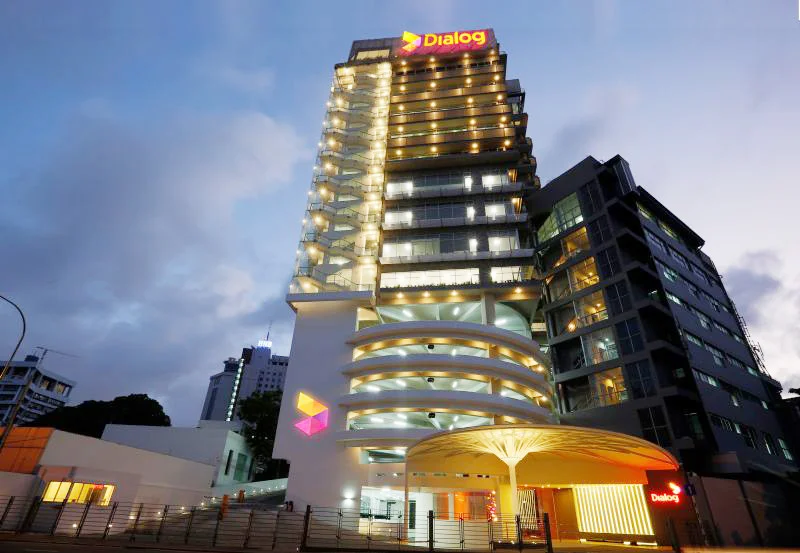
Dialog Axiata PLC announced, Friday 6th February 2026, its consolidated financial results (Reviewed) for the year ended 31st December 2025. Financial results included those of Dialog Axiata PLC (the “Company”) and of the Dialog Axiata Group (the “Group”).
Group Performance
The Group delivered a strong performance across Mobile, Fixed Line and Digital Pay Television businesses recording a positive Core Revenue growth of 16% Year to Date (“YTD”). Group Headline Revenue reached Rs179.6Bn, up 5% YTD, despite the continued strategic scaling down of low-margin international wholesale business. In Q4 2025, Revenue was recorded at Rs46.5Bn up 2% Quarter-on-Quarter (“QoQ”) and 2% Year-on-Year (“YoY”).
The Group Earnings Before Interest, Tax, Depreciation and Amortisation (“EBITDA”) reached Rs86.0Bn up 30% YTD supported by Core Revenue performance and Cost Rescaling Initiatives. On a QoQ basis Group EBITDA demonstrated a modest growth to record at Rs23.0Bn up 2% QoQ with an EBITDA margin of 49.5% in line with the Revenue performance. Group EBITDA margin reached 47.9% for FY 2025, up 9.2pp.
Group Net Profit After Tax (“NPAT”) reached Rs20.8Bn for FY 2025, up 67% YTD mainly resulting from robust EBITDA growth, despite higher tax and net finance costs. Normalized for forex impact, NPAT growth was recorded at +>100% YTD to reach Rs22.1Bn. On a QoQ basis NPAT grew 3% to reach Rs5.9Bn resulting from strong EBITDA performance.
On the back of strong operational performance, the Group recorded Operating Free Cash Flow (“OFCF”)
of Rs49.3Bn for FY 2025 up >100% YTD.
Dividend Payment to Shareholders
In line with the dividend policy and financial performance of the Group and taking into account the forward investment requirements to serve the nation’s demand for Broadband and Digital services, the Board of Directors of Dialog Axiata PLC at its meeting held on 6th February 2026, resolved to propose for consideration by the Shareholders of the Company, a dividend to ordinary shareholders amounting to Rs1.50 per share. The said dividend, if approved by shareholders, would translate to a Dividend Yield of 5.0% based on share closing price for FY 2025. The dividend so proposed will be considered for approval by the shareholders at the Annual General Meeting (AGM) of the Company, the date pertaining to which would be notified in due course.
Company and Subsidiary Performance
At an entity level, Dialog Axiata PLC (the “Company”) continued to be the primary contributor to Group Revenue (76%) and Group EBITDA (74%). Aided by sustained growth in the Data segment and cost-rescaling initiatives, Company revenue was recorded at Rs135.8Bn for FY 2025, up 18% YTD, EBITDA rose 32% YTD to reach Rs63.6Bn. On a QoQ basis, Q4 2025 Revenue was recorded at Rs34.8Bn, down 1% QoQ due to a reclassification of Hubbing Revenue, while EBITDA decline 1% QoQ to record Rs17.0Bn, largely attributable to network restoration costs and donations made in relation to the Cyclone Ditwah relief efforts. Furthermore, NPAT was recorded at Rs15.6Bn for FY 2025, up 41% YTD. Normalised for forex impacts, the company NPAT was up +>100% YTD to reach Rs17.0Bn. On a QoQ basis, Company NPAT was recorded at Rs4.5Bn, down 6% QoQ.
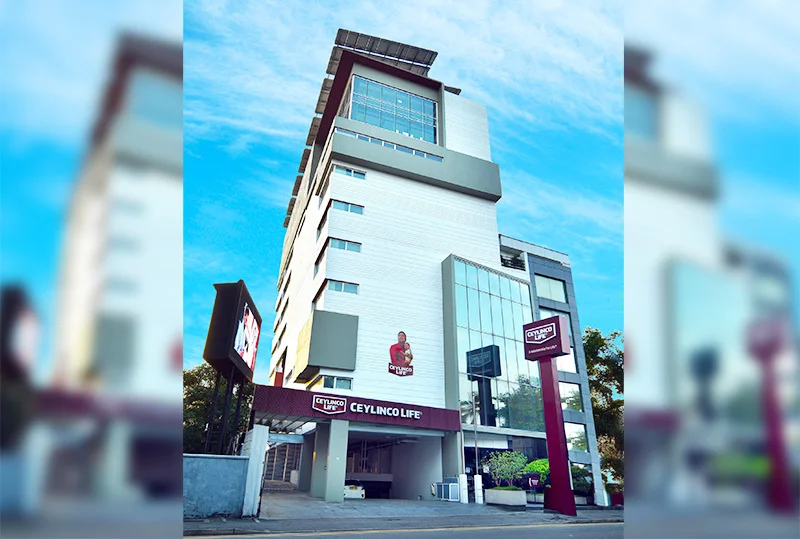
Ceylinco Life has announced the launch of the 25th consecutive edition of its flagship Pranama Scholarships programme, marking a significant milestone in the company’s long-standing commitment to recognising and rewarding excellence among the children of its policyholders.
Under the 2026 programme, the life insurance market leader will present scholarships with a total cumulative value of Rs. 22.7 million, continuing a rewards initiative that has now been conducted without interruption for a quarter of a century. Since its inception, the Ceylinco Life Pranama Scholarships programme has benefitted 3,466 students across the country, representing a total investment of Rs. 240 million in nurturing academic achievement and outstanding performance in sports, arts and other extracurricular pursuits.

The artistic genius of Sri Lankans was amply manifest all over again at ‘Kala Pola ‘26’ which was held on February 8th at Ananda Coomaraswamy Mawatha Colombo 7; the usual, teeming and colourful venue for this annual grand exhibition and celebration of the work of local visual artists.
If there is one thing that has flourished memorably and resplendently in Sri Lanka over the centuries it is the artistic capability or genius of its people. It is something that all Sri Lankans could feel a sense of elation over because from the viewpoint of the arts, Sri Lanka is second to no other nation. With regard to the visual arts a veritable dazzling radiance of this inborn and persisting capability is seen at the annual open air ‘Kala Pola’.
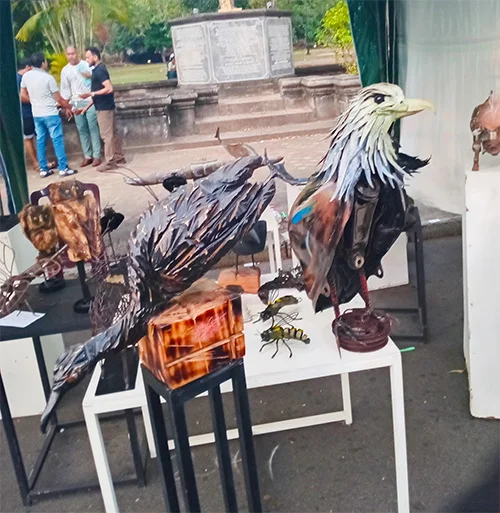
A bird of Sri Lanka created from scraps of iron waste.
All capable visual artists, wherever they hail from in Sri Lanka, enjoy the opportunity of exhibiting their work at the ‘Kala Pola’ and this is a distinctive ‘positive’ of this annual event that draws numberless artists and viewers. There was an abundance of paintings, sketches and sculptures, for instance, and one work was as good as the other. Ample and equal space was afforded each artist. Its widely participatory and open nature enables one to describe the exhibition as exuding a profoundly democratic ethos.
Accordingly, this time around at ‘Kala Pola ‘26’ too Sri Lankans’ creative efforts were there to be viewed, studied and enjoyed in the customary carnival atmosphere where connoisseurs, local and foreign, met in a sprit of camaraderie and good cheer. Many thanks are owed once again to the George Keyt Foundation for the presentation of the event in association with the John Keells Group and the John Keells Foundation, not forgetting the Nations Trust Bank, which was the event’s Official Banking Partner. The exhibition was officially declared open by Chief Guest Marc-Andre Franche, UN Resident Coordinator in Sri Lanka.
By Lynn Ockersz

Milano-Cortina 2026 Olympic Winter Games underway

New Zealand brace for unfamiliar opponents UAE

Namibia begin campaign in crucial game against Netherlands

Markram, Ngidi help South Africa ease past dogged Canada

Pakistan withdraw boycott of India match at T20 World Cup

Mainly dry weather will prevail in the most parts of the island.

‘Dates have the highest sugar content to fight Coronavirus’

Sunday Island 27 December – Headlines

#SundayIsland 17th December – Headlines

Sunday Island – 28th March

Sunday Island Headlines – 21 March

Sunday Island – 21st February – Headlines
-

 Features2 days ago
My experience in turning around the Merchant Bank of Sri Lanka (MBSL) – Episode 3
-

 Business3 days ago
Zone24x7 enters 2026 with strong momentum, reinforcing its role as an enterprise AI and automation partner
-

 Business2 days ago
Remotely conducted Business Forum in Paris attracts reputed French companies
-

 Business2 days ago
Four runs, a thousand dreams: How a small-town school bowled its way into the record books
-
 Business2 days ago
ComBank and Hayleys Mobility redefine sustainable mobility with flexible leasing solutions
-
 Business3 days ago
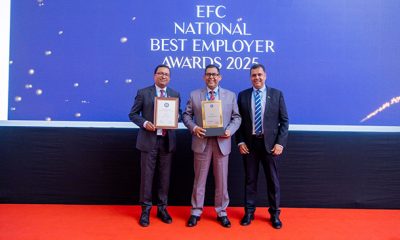
HNB recognized among Top 10 Best Employers of 2025 at the EFC National Best Employer Awards
-

 Business3 days ago
GREAT 2025–2030: Sri Lanka’s Green ambition meets a grid reality check
-

 Editorial5 days ago
All’s not well that ends well?