
News
Opposition asks govt. to make new Constitution

Instead of adopting piecemeal measures
By Shamindra Ferdinando
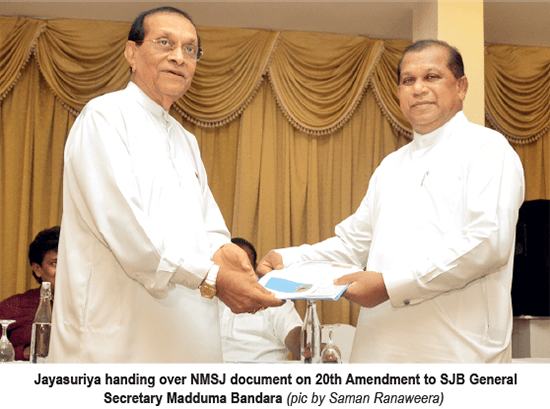
The Samagi Jana Balavegaya (SJB)-led Opposition, yesterday (29) pledged to work with the National Movement for Social Justice (NMSJ) to scuttle the proposed 20th Amendment to the Constitution.
General Secretary of the SJB Ranjith Madduma Bandara made the pledge on behalf of its leader Sajith Premadasa, at a meeting chaired by NMSJ Chief former Speaker Karu Janasuriya at Hotel Janaki in Colombo 5.
The Opposition grouping reached a consensus on a common action plan to oppose the 20th Amendment both in and outside parliament.
The SLPP commands a two-thirds majority in Parliament whereas the main Opposition consists of 54 members.
The Opposition held the meeting as the Supreme Court began hearing petitions filed against the 20th Amendment. The audience was informed that as many as 39 cases against the government had been filed.
Jayasuriya declared that they had the backing of the Tamil National Alliance (TNA), Thamil Makkal Thesiya Kuttani (TMTK), the Sri Lanka Muslim Congress (SLMC), All Ceylon Makkal Congress (ACMC) as well as the Jathika Hela Urumaya (JHU).
However, the JVP wasn’t represented at the meeting. Defeated Gampaha District candidate Arjuna Ranatunga represented the UNP, while lawmakers Mano Ganesan and Gajendrakumar Ponnambalam addressed the gathering on behalf of the Democratic People’s Front and Ahila Illankai Thamil Congress, respectively.
The former Speaker recently succeeded Prof. Sarath Wijesuriya, who took over the civil society organisation in late 2015 following Ven. Maduluwawe Sobitha Thera’s demise.
Alleging that the 20th Amendment would grant dictatorial powers to President Gotabaya Rajapaksa, Jayasuriya strongly criticised the proposed law on six specific reasons, namely (1) the parliament would be reduced to a puppet in the hands of the President (2) the executive wouldn’t be answerable to the parliament, the judiciary and the people. Those institutions coming under the purview of the President wouldn’t be subjected to the auditing process (3) politicisation of the entire election process (4) facilitating waste, corruption and irregularities by abolishing the Audit Service Commission and the National Procurement Commission (5) weakening of the judiciary and (6) enabling dual citizen to enter parliament.
Both Jayasuriya and Maddumabandara pointed out that the government project faced unexpected opposition with growing protests against the proposed law.
SJB MP Rajitha Senaratne told the gathering that they would conduct a countrywide protest campaign on Oct 5 against the 20th Amendment. It would be followed by a rally at Hyde Park on Oct 8, where all political parties represented in parliament and civil society groups were scheduled to participate.
MP Senaratne found fault with the media for not vigorously campaigning against the 20th Amendment.
Jayasuriya led the call for the government to abandon the hasty bid to enact 20th Amendment and take tangible measures in consultation with all stakeholders, both in and out of parliament to introduce a new Constitution acceptable to all communities.
The government was warned of dire consequences of unilateral efforts to enact 20th Amendment that would deliver a knockout blow to democratic way of life. Dr. Senaratne alleged that President Gotabaya Rajapaksa’s recent declaration that public servants should accept his verbal directives as circulars, signaled an extremely dangerous trend.
MP Mano Ganesan said that the urgent requirement today was to address the national question. Declaring that the national issue couldn’t be addressed by enacting the 20th Amendment, he urged the government to abandon the project. Instead of 20th Amendment, the government should initiate immediate action to bring in a new Constitution, he added.
Among those present on the occasion were civil society activists Constitutional Council member Javid Yusuf and Prof. Rohan Samarajeeva.
The Opposition fiercely attacked the SLPP bid to do away with State auditing process. “How could the SLPP justify abolishing the audit process?” MP Ganesan asked, claiming that many government members were disappointed at the way the ruling party handled the 20th Amendment. Opposition speakers insisted the SLPP couldn’t justify 20th Amendment by claiming the 19th Amendment had been introduced to keep the Rajapaksas at bay.
The NMSJ said that it was ready to lead a high profile campaign similar to the one which had paved the way for the change of government in 2015. The NMSJ said that the SLPP shouldn’t misrepresent the mandates it received at presidential and parliamentary polls, in Nov 2019 and Aug 2020 to bring about a dictatorship.

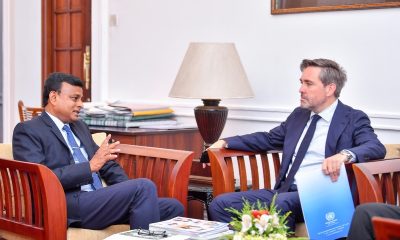



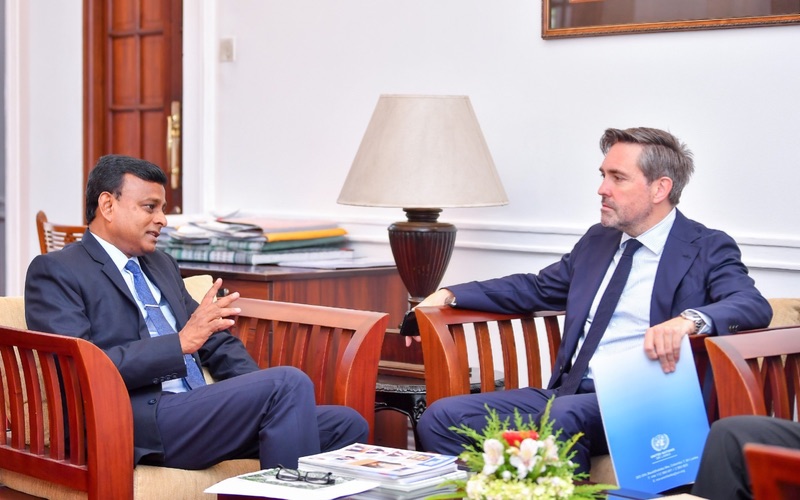
A meeting between UN Resident Coordinator Marc-André Franche and Chief of Staff to the President Prabath Chandrakeerthi was held on Monday (07) morning at the Presidential Secretariat.
Particular attention was given to the Government’s programme to resettle people who lost their homes due to Cyclone Ditwah.
The Government’s programme to address potential disasters that may arise in the future amid El Nino conditions was also discussed. The Chief of Staff to the President briefed the UN Resident Coordinator on the Government’s preparedness and plans to address such challenges.
Mr Franche stated that the United Nations was prepared to provide the necessary assistance to the Government to support the successful implementation of these programmes.
Partnerships and Development Finance Specialist at the United Nations Azam Bakeer Markar and UN Sri Lanka Humanitarian and Resilience Officer Wagisha Perera also participated in the discussion.
[President’s Media Division]
[ Cricbuzz]
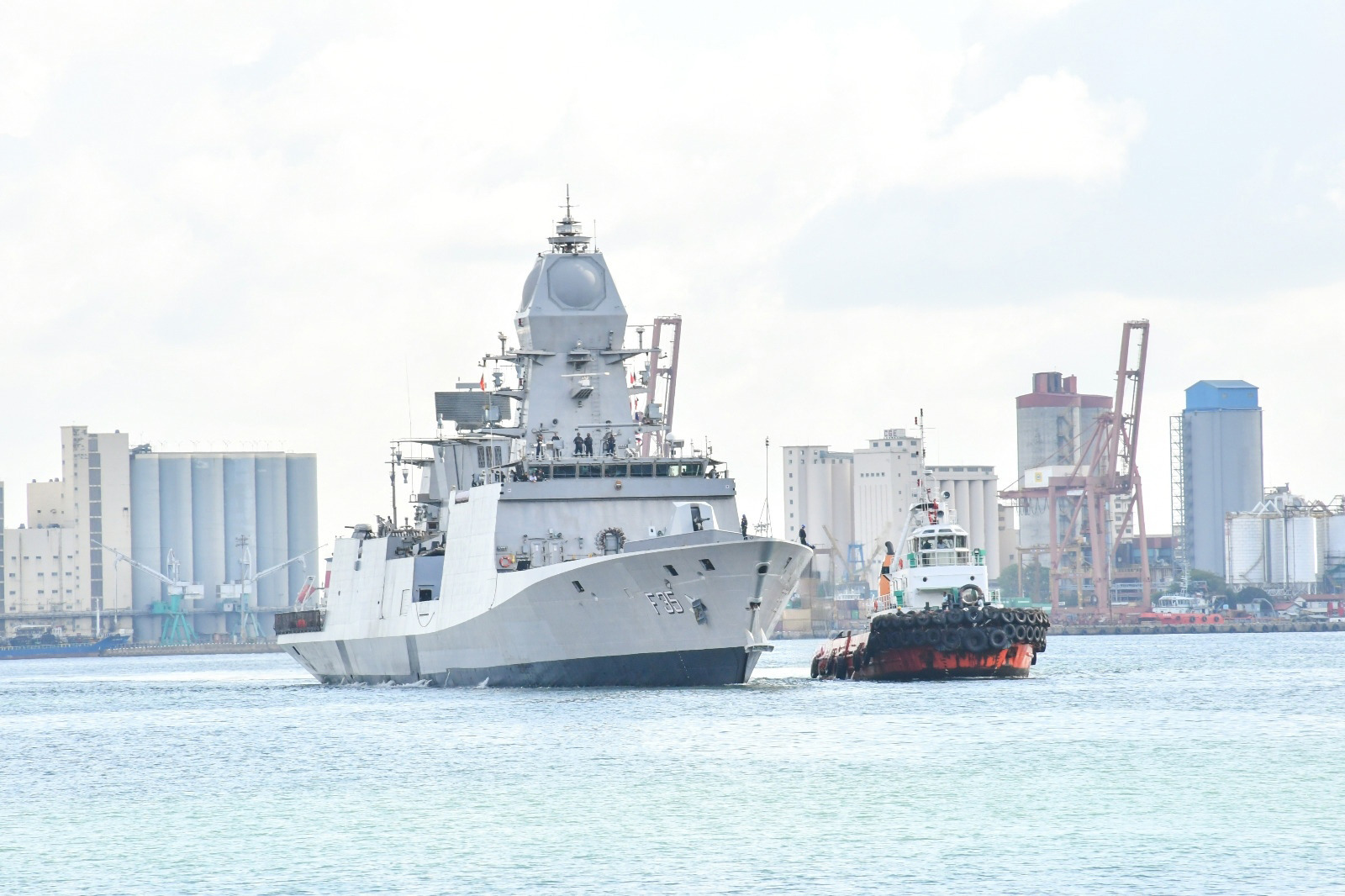
The Indian Naval Ship (INS) Udaygiri arrived at the Port of Colombo on an official visit today, 8 September 2026, where it was received by the Sri Lanka Navy in accordance with time-
honoured naval traditions.
INS Udaygiri is a 149.02m long Frigate, Commanded by Captain Vikas Sood. Meanwhile, the Commanding Officer of the visiting ship is scheduled to call on Commander Western Naval
Area, Rear Admiral Harsha De Silva at the Western Naval Command Headquarters.
Captain Sood served as the Defence Adviser at the Indian High Commission in Sri Lanka from July 2020 to October 2023.
During their stay in the island, the crew of INS Udaygiri will participate in several goodwill events organized by the Sri Lanka Navy to enhance camaraderie between the two forces.
The visiting personnel are also scheduled to visit prominent tourist and cultural locations across the island.
Additionally, Sri Lanka Navy personnel are expected to visit the ship for capability observation and knowledge sharing, and will conduct onboard training during its stay.

UN Delegation Meets Chief of Staff to the President

Afghanistan to host Zimbabwe, Bangladesh in ODI tri-series

Sandhu’s 6 for 7 seals Pakistan’s semi-final spot

INS Udaygiri makes port call in Colombo

Showers in the Uva, Central and Eastern provinces and in Polonnaruwa district

22A: Exclusion of 8 petitions questioned, action filed against SC Registrar, others

‘Dates have the highest sugar content to fight Coronavirus’

Sunday Island 27 December – Headlines

#SundayIsland 17th December – Headlines

Sunday Island – 28th March

Sunday Island Headlines – 21 March

Sunday Island – 21st February – Headlines
-

 News6 days ago
Denied of promotion to SC despite vacancies, justice Gurusinghe retires
-

 Latest News6 days ago
Grade 5 scholarship exam results released
-

 News6 days ago
22A: SC urged to suspend hearing, appoint full bench
-

 Midweek Review7 days ago
The local and global dynamics of Sri Lanka’s 22nd Amendment
-

 News4 days ago
Namal remanded until Sept. 18 over Airbus deal investigation
-

 Latest News3 days ago
Tharanga creates history with Diamond League crown in Brussels
-

 News6 days ago
Govt. seeks NATO assistance
-

 News7 days ago
40 professional organisations and TU oppose proposed 22A