
News
Only traitors won’t accept urgent economic reform agenda acceptable to IMF

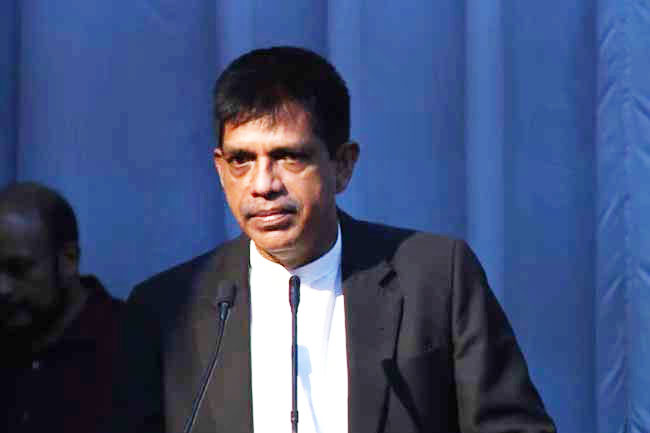
Public Administration Secretary:
By Shamindra Ferdinando
New Public Administration Ministry Secretary Priyantha Mayadunne has warned political parties represented in Parliament, state and private sector trade unions and the civil society that they will soon be categorised as traitors unless they agreed to a far reaching economic reforms agenda.
Attorney-at-Law Mayadunne issued the warning over the last weekend at a meeting of public administration officers held at the Postal Auditorium, near Lotus Tower.
One-time Justice Ministry Secretary Mayadunne replaced J. J. Ratnasiri as Secretary to the Ministry of Public Administration, following the appointment of the new Cabinet.
The normally soft-spoken Mayadunne declared that the country was in such a precarious situation, especially in the absence of a tangible recovery plan yet. Therefore, the government and other stakeholders didn’t need IMF’s intervention to undertake a wide ranging reform agenda on their own without delay.
The declaration was made close on the heels of the revelation at the recent sittings of parliamentary watchdog committee how the then Presidential Secretary Dr. P.B.J. Jayasundera rejected IMF’s intervention in March-April 2020.
During the COPE
(The Committee on Public Enterprises) proceedings on May 25, Governor of the Central Bank Dr. Nandalal Weerasinghe revealed how the then government callously dismissed IMF recommendations for immediate debt restructuring programme and advice not to implement large scale tax cuts.
Asked whether he had earned the wrath of the political authority for being critical of successive governments and the current dispensation for Sri Lanka’s predicament, Mayadunne said that he solidly stood by what he said at the forum. “There is absolutely no point
in suppressing the truth or making foolish efforts to deceive the masses. The public must be taken into confidence and told how to face the growing crisis. But, the crisis cannot be addressed unless the political parties, both in and outside Parliament, trade unions and civil society groups recognize and accept their responsibilities,” Mayadunne said.
Acknowledging his own shortcomings, Mayadunne told a public servants’ meet over the last weekend, those who served the public service for 30 years were responsible for varying degrees.
Mayadunne asserted that successive governments bear the responsibility for creating an oversized public service that was a very heavy burden on the taxpayer. Pointing out that the public service comprised staggering 1.5 mn members, Mayadunne declared that the country could have afforded 500,000. Sri Lanka could have managed 500,000 to 800,000 but today there were nearly double the amount of public servants the country could afford, Mayadunne said.
Mayadunne recalled how he requested the then Secretary to the President in 2004 not to expand the public service by accommodating a large group of graduates as it could cause a catastrophe one day. As a result of following dangerous politically motivated policies, those now retiring from the public service faced the risk of not being able to receive a monthly pension. The situation was so bad the retirees couldn’t expect to receive gratuity, Mayadunne said, warning that all would have to forgo perks and privileges for a period of ten years.
The top official urged trade union leadership regardless of the sectors they represented not to make utterly irresponsible demands under any circumstances. The government lacked the wherewithal to meet basic requirements, such as salaries let alone addressing other demands.
Acknowledging the extreme difficulties experienced by a large section of public servants, Mayadunne strongly advised against a salary increase as it could create an extremely volatile situation. Mayadunne warned that salary increases to public servants at a time others didn’t have relief at all could result in violence being directed at the decision makers. Perhaps an appropriate transport allowance could be considered due to high cost of public and private transport.
Mayadunne said that the country was on the verge of a famine. Whatever various people said that the Yala season couldn’t meet the country’s requirement, he said, adding that crisis-hit countries in the region weren’t in a position to meet the shortfall. June would be far worse than May and the country couldn’t anticipate foreign food assistance either, Mayadunne said.
Recalling the hardships experienced by the people of the North during the conflict, Mayadunne warned that the way the financial crisis developed and the overall situation deteriorated, credit cards issued here would soon be useless.
The Ministry Secretary warned that the Western Province where about 90 percent of its paddy requirement had to be brought from outside would be the worst affected region.
Declaring that the vast majority of people found it extremely difficult to make ends meet, Mayadunne said that even having a glass of milk was a luxury.
The top Public Administration official said that there was nothing that the population here could do now to rectify waste, corruption, irregularities and mismanagement, if the country ended up in an unprecedented crisis.
Revealing that public servants were owed a staggering Rs 17 bn in gratuity payments, Mayadunne said the duty free car permit issued to them couldn’t be utilized now for obvious reasons.
Underscoring the responsibility on the part of the executive, the legislature and the judiciary to address the issues at hand, Mayadunne said that regardless of public standing all should be subjected to a common agenda. Water, electricity and other essential services shouldn’t be provided free of charge as the country struggled to cope up with extremely daunting challenges.
Mayadunne said that trade unions would have to align with the overall national plan meant to save and revive the economy.
Alleging that national policies developed at taxpayers’ expenses ended up in the dustbin, Mayadunne explained how irresponsible governance over a period of time ruined the country. He slammed successive governments over public sector recruitment, extravagant state-projects, and perks and privileges granted to lawmakers.
Mayadunne said that the establishment of Commissions wouldn’t change the public service overnight. As long as the politicians exercised power over officials, the current situation would continue, Mayadunne declared, insisting that key appointments should be handled by the Constitutional Council. Comparing a Secretary to a Ministry with a peon, Mayadunne said that since 2015, he had held 17 appointments and by the time he retired he would get an opportunity to serve in three other places.

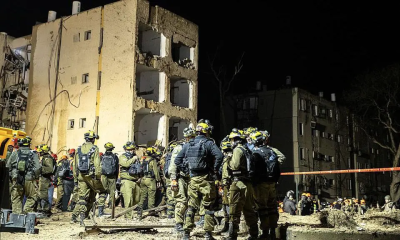





The newly appointed Cabinet Committee tasked with ensuring the uninterrupted functioning of Sri Lanka’s public service held its inaugural meeting on Thursday (19) at the Presidential Secretariat under the patronage of Prime Minister Dr Harini Amarasuriya.
The Committee convened to discuss strategies to maintain seamless government operations in the face of potential disruptions caused by the ongoing conflict situation in the Middle East, with particular focus on energy resource management.
According to officials, the discussions emphasised sustaining essential government services, ensuring continued service delivery to the public, and addressing the operational challenges faced by public sector employees during the current circumstances. The Committee also examined measures to mitigate any disruptions that could affect day-to-day administrative and service functions across ministries and departments.
Key attendees at the meeting included the Minister of Public Administration, Provincial Councils and Local Government A. H. M. M. H. Abayaratne; Secretary to the President Dr Nandika Sanath Kumanayake; Secretary to the
Prime Minister Pradeep Saputhanthri; Chief of Staff to the President Prabath Chandrakeerthi; and senior secretaries from key ministries including Health and Mass Media, Transport, Highways and Urban Development, Energy, and Digital Economy.
Representatives from state institutions such as the Ceylon Petroleum Corporation were also present, highlighting the government’s focus on energy security as a central priority. The Committee’s deliberations underscored a coordinated approach to balancing uninterrupted public service delivery with effective management of limited energy resources amid the ongoing geopolitical uncertainties.
Observers note that the formation of this Cabinet Committee reflects the government’s proactive stance in safeguarding national administrative functions and ensuring that critical public services remain resilient during times of external pressures.The Committee is expected to meet regularly to monitor developments, evaluate emerging risks, and implement practical measures to maintain operational continuity across the public sector.
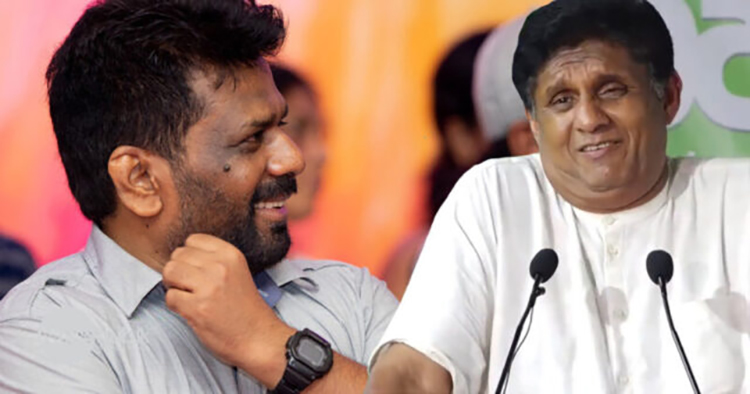
Opposition Leader Sajith Premadasa on Friday lashed out at President Anura Kumara Dissanayake in Parliament, accusing him of failing to uphold international law during wartime.
Premadasa said the President’s claim of neutrality ignored breaches of the UN Charter—including Articles 2.4 and 2.7—and other global conventions. “A neutral stance requires openly acknowledging violations,” he argued, criticizing the absence of ethical mechanisms to safeguard international law.
He also questioned the President’s handling of maritime issues, particularly whether Sri Lanka had been informed of the alleged attack on the Iranian vessel IRIS Dena, stressing that the Exclusive Economic Zone (EEZ) permits only peaceful activity.
On the economic front, Premadasa condemned the government for missing a chance to buy Russian oil during a 30-day U.S. sanctions suspension.
He said attempts to advise the Foreign Ministry, including a meeting with the Russian Ambassador, yielded no progress.
Premadasa further ridiculed the government’s earlier dismissal of the QR code fuel system, noting that officials are now adapting to it.
Turning to broader economic concerns, he called for immediate negotiations with the IMF to secure a new agreement, warning that the current primary balance of 2.3 is unsustainable. He stressed the urgent need for a poverty-reduction program, highlighting that one-third of Sri Lankans live in poverty.
He also demanded that surplus Treasury funds be used to support relief packages, arguing billions in reserves could aid households struggling with income shortfalls.Concluding his address, Premadasa criticized the government for failing to prepare for foreseeable crises, leaving the country vulnerable.

Former Minister Johnston Fernando, his two sons, and three others were remanded by the Wattala Magistrate’s Court yesterday (20) until April 2, the court confirmed.
The suspects, including Fernando’s elder son Johan, younger son Jerome, and a former transport manager of Lanka Sathosa, are under investigation by the Police Financial Crimes Investigation Division (FCID).
Authorities allege the Lanka Sathosa lorry was misused for operations linked to an ethanol company reportedly owned by Fernando, causing an estimated Rs. 2.5 million loss to the state.

Trump says US will ‘obliterate’ Iran’s power plants if Strait of Hormuz not open before 48-hour deadline

Showers may occur at several places in the Western, Sabaragamuwa and Southern provinces and in Nuwara-Eliya district after 1.00 pm.

PM Harini leads panel to protect public services

Sajith slams President over war conduct and economic missteps

Johnston Fernando, sons held in Lanka Sathosa lorry misuse case

Gura: The unsung hero

‘Dates have the highest sugar content to fight Coronavirus’

Sunday Island 27 December – Headlines

#SundayIsland 17th December – Headlines

Sunday Island – 28th March

Sunday Island Headlines – 21 March

Sunday Island – 21st February – Headlines
-

 Business6 days ago
Browns EV launches fast-charging BAW E7 Pro at Rs. 5.8 million
-

 News4 days ago
CIABOC questions Ex-President GR on house for CJ’s maid
-

 News5 days ago
Sri Lankan marine scientist Asha de Vos honoured at UNGA opening
-

 Features6 days ago
Achievements of the Hunduwa!
-

 News5 days ago
Australian HC debunks misleading travel risk claims for Sri Lanka
-

 Latest News6 days ago
Wednesdays declared a government holiday with effect from 18th March
-
 News3 days ago
Bailey Bridge inaugurated at Chilaw
-

 News3 days ago
Pay hike demand: CEB workers climb down from 40 % to 15–20%