
Features
Only deterrence can reverse the assault on democracy

by Kumar David
The world has been spared a Third World War thanks to deterrence, that is the threat of mutual destruction. If only one nation possessed nuclear weapons all others would be enslaved. Likewise, should the threat of a military regime surface anywhere in the world, only the presence of countervailing opposition to ensure that the venture will be beaten back, can repel it. Morality and promises are poppycock; only power counts. Soft power is as pathetic and as toothless as Aung San Suu Kyi; the good lady will end her life in prison. From the first dynasties four millennia ago to the coups of yesteryear, that’s history’s stern lesson.
Let us stop playing Russian Roulette with authoritarianism, military dictatorships or fascism, as the case may be, in nation after nation. The state in the third-world, having subjugated every agency of society has emerged as a supra-national entity. This is a new phenomenon; it belongs to recent decades. Neither class, nor wealth, nor race, nor faith are barriers to which it is subordinate. When the nation-state emerged in 17th and 18th Century Europe and later in America it was different; it was the handmaiden of commerce and a rising bourgeoisie. As absolute monarchies receded the nation-state arose not as a power in its own right, but rather the state and its instruments and institutions were subordinate to class, society and liberal norms – brief Bonapartist interludes like Napoleon aside. Now except in the metropolitan world* a profound change has occurred; it is now different in Africa, Latin America, the Middle East and parts of Asia (Cambodia and Central Asia). In the last two decades there have been about 40, at a guess, military seizures of power or annulments of elections by incumbent regimes which summoned the military to crush the people with an appalling lack of conscience and compassion. Hobbes’ Leviathan, Rousseau’s Social Contract and Marx’s version of the relationship of class and state to military power can do with updating.
The change is that the Nation-State is no longer what this term meant when nation was synonymous with country as it was with the French, British, American, Italian and Soviet nation-states though the constitutional arrangements varied. Then the nation was synonymous with country, the whole people but now the dramatic rise of narrow nationalisms has drastically altered this. The nation-state is now the nationalist-state is the narrow-nationalist-state which draws its legitimacy not from the whole but from a part of the citizenry. For example the Hindutva state, the Sinhala-Buddhist state, the Jewish state, the Burman-Buddhist state, Islamic ISIS, and the military dictatorships which draw their sustenance from a tribal (ethnic) group in West Africa or the Horn of Africa. The “Other” is not a foreign power but an “Internal-Other”. In these instances, respectively, it is the Muslims, the minorities, the Palestinians, the numerous ethnic peoples of Burma, the Shia and the other black or brown nearby peoples. The Other is an Internal-Other, the enemy is an enemy within.
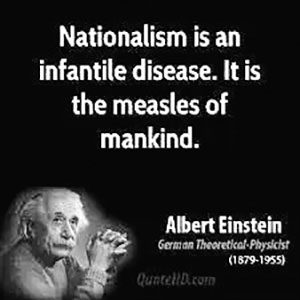 To repeat, the critical factor is that fascist, militarist or dictatorial states now draw their strength and moral compass from narrow-nationalism, that is from the state’s manifestation as the enemy of the Internal-Other. The enemy is no longer the foreign foe but the Internal-Other. (Colvin once called our military “A toy army in war and a real army in peace”). Modi’s Hindutva derives its legitimacy as the sworn enemy of Muslims, the rightfulness of the Sinhala-Buddhist state is a beacon against the Internal-Other in the sixty years of SWRD, JR, Premadasa, Mahinda and Gotabaya presidencies. This symbiosis of brutal military regimes with narrow ethno-nationalisms is the fundamental paradigm shift in the modern third-world.
Paradoxically for this very reason these regimes can slaughter with impunity – horrendous carnage in Africa, the Civil War in Sri Lanka, the brutality of the Burmese army and ISIS’s atrocities. Politicians cheering these one-dimensional nationalisms are populist tribunes blaring out the slogans of the crowd or relaying the broadcasts of army TV and radio. The phenomenon draws its strength from the datum that every member of the primary nationalist category, without exception of class or wealth, is united within it; brothers in the crusade against the ‘Other’. This is the foundation of every military dictatorship of recent times. It had its origins in the obscenity of Nazism whose Internal-Other was the “greedy, licentious, dirty and avaricious Jew”!
I would like to further develop these theoretical propositions about the frequency and brutality of the modern military regime as an incarnation of dictatorship that alienates an Internal-Other, but for reasons of space I must draw up my paper and get back home. The stark reality at home is that if there is a power-grab in Lanka, then restoring democracy will be a road through hell. Does anyone imagine that restoring democracy in Burma, in Sudan, in Venezuela and everywhere where a military regime as foisted itself will take less than decades of anarchy, economic ruin, blood, civil war and revolution? This is the point at which I am flabbergasted by the JVP and the Sajith-SJB. I am not declaring that a military venture is likely. No, indeed the odds are less than even; it is not possible to predict the odds. But only a fool will say that economic disaster, an insoluble debt imbroglio, president-made fertiliser scarcity, man-made power crises and food shortages are not breeding grounds for frantic regimes to seek desperate responses!
Is it asking too much of the JVP and the SJB to concede that the danger is real even if the odds are less than even? Why not take simple measures to thwart it if the cost of such measures is insignificant? As with nuclear war the cost of deterrence is zilch compared to the charge that history will levy on a negligent world. What does it cost these two parties, the TNA, smaller entities, trade unions, civil society and Churches and Temples to convene, discuss, warn and issue proclamations to the effect that any extra-parliamentary adventure will be resisted, an attack on one will be deemed an attack on all, and postponement of elections will not be permitted?
JR and Mahinda in their day led pada yatra, People’s (foot) Marches; peaceful and orderly, clergy in the vanguard, expressing deep public anger and discontent. There is no shortage of issues today for grassroots mobilisation; ‘Hands off Democracy’, ‘Can we Farm without Fertiliser?’, ‘Give our Children Food’ are a few examples that will galvanise people. The objective at this point in time is by no means to bring down the government or to foreshorten its electoral term, rather it is as deterrence against authoritarian ambitions, to expose idiotic decisions and to deter unconstitutional excesses.
Deterrence! What does it cost the participants? Nothing! There is no commitment to programmatic unity or to future coalition government. No endorsement of each other’s ideology is implied. I have raised this several times in discussions and in my columns but received as response only inanities such as “We will consider when the time comes”, “There is no such danger now” and “Defensive preparations have to be done secretly”. Why oh why did god deprive some people of a brain!
To return to my theme that third-world dictatorship in recent times is the manifestation of a narrow-nationalist state in crisis, it is useful to appreciate that Sri Lanka may have progressed to a stage where that cock will not fight any more. Has the usefulness of the call to war against the demala and the hambaya lost its resonance? The results of the 2019-2020 election cycle may give you pause in endorsing this thought, but what has lost its sheen is the promise of this victorious regime. “The stupid 69 lakhs” is mockery even on the lips of those who themselves were among the 69! Is the sheen of narrow Sinhala-Buddhist nationalism wearing thin? Has the theme song of depicting the minorities as the felons lost its resonance? If you listen to the tales of woe at every street corner the culprit is the government, this Minister or that, the President and his aanduwa. A take-over to “safeguard the nation from the Internal-Other” is no longer credible. The same is not true of the military machine. The tri-services were purged of Christian and Tamil vermin in the wake of the 1962 coup and is now a purified and sanitised Sinhala-Buddhist triple-gem! (For the full story see Jayantha Somasunderam; The Island of January 26, 27, 28 and 29, 2022 and the Colombo Telegraph of January 25).
So then, we have an interesting dichotomy where narrow racist extremism is saleable to the military but less so to the Sinhala people at large. The appointment of loyalists to high posts such as state ministerships, ministerial secretary posts and corporate chairmanships, pardoning convicted killers and scuttling trials against alleged military-police murderers (Trinco student murders, Médecins Sans Frontières killers) would no doubt have cemented loyalty of the military to the regime. Therefore, we have a mixed equation; will a narrow-nationalist extremist power grab (or postponement of elections), citing the Internal-Other as the enemy within carry legitimacy only with the military? The one thing that the JVP-NPP, Sajith-SJB, trade unions and civil society can do is to make it clear that any such gorilla venture will be resisted by counter mobilisation of the people, mainly the Sinhalese people. This is the sole purpose of my column, not deep scholarship and profound analysis – others outrank me in these respects – but to kick the arses (editor permitting) of slumbering comrades who seem to have taken Robert Burns to heart. “My (comrades) are asleep by thy murmuring stream: Flow gently, sweet river, disturb not (their) dream”.
[However, all is not well in the First World either. The US Congress was informed last week that the Trump White House drafted two Executive Orders, one to the military the other to Homeland Security ordering counting machines be seized when the presidential election-count was going badly. The orders were not signed or issued, but this was a common practice in Latin America in the 1960s].

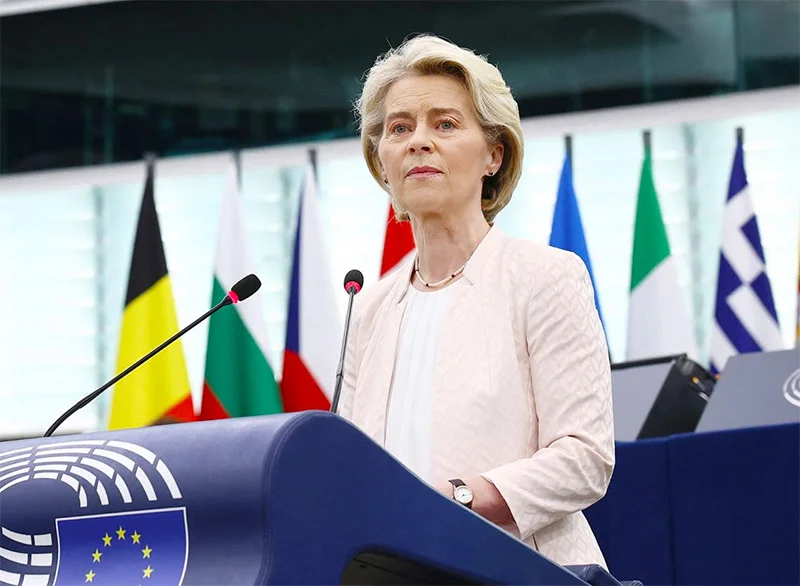
 European Commission President Ursula von der Leyen addressing the World Economic Forum in Davos, Switzerland on Tuesday put forward the EU’s viewpoint on current questions in international politics with a clarity, coherence and eloquence that was noteworthy. Essentially, she aimed to leave no one in doubt that a ‘new form of European independence’ had emerged and that European solidarity was at a peak.
These comments emerge against the backdrop of speculation in some international quarters that the Post-World War Two global political and economic order is unraveling. For example, if there was a general tacit presumption that US- Western European ties in particular were more or less rock-solid, that proposition apparently could no longer be taken for granted.
For instance, while US President Donald Trump is on record that he would bring Greenland under US administrative control even by using force against any opposition, if necessary, the EU Commission President was forthright that the EU stood for Greenland’s continued sovereignty and independence.
In fact at the time of writing, small military contingents from France, Germany, Sweden, Norway and the Netherlands are reportedly already in Greenland’s capital of Nook for what are described as limited reconnaissance operations. Such moves acquire added importance in view of a further comment by von der Leyen to the effect that the EU would be acting ‘in full solidarity with Greenland and Denmark’; the latter being the current governing entity of Greenland.
It is also of note that the EU Commission President went on to say that the ‘EU has an unwavering commitment to UK’s independence.’ The immediate backdrop to this observation was a UK decision to hand over administrative control over the strategically important Indian Ocean island of Diego Garcia to Mauritius in the face of opposition by the Trump administration. That is, European unity in the face of present controversial moves by the US with regard to Greenland and other matters of contention is an unshakable ‘given’.
It is probably the fact that some prominent EU members, who also hold membership of NATO, are firmly behind the EU in its current stand-offs with the US that is prompting the view that the Post-World War Two order is beginning to unravel. This is, however, a matter for the future. It will be in the interests of the contending quarters concerned and probably the world to ensure that the present tensions do not degenerate into an armed confrontation which would have implications for world peace.
However, it is quite some time since the Post-World War Two order began to face challenges. Observers need to take their minds back to the Balkan crisis and the subsequent US invasions of Afghanistan and Iraq in the immediate Post-Cold War years, for example, to trace the basic historic contours of how the challenges emerged. In the above developments the seeds of global ‘disorder’ were sown.
Such ‘disorder’ was further aggravated by the Russian invasion of Ukraine four years ago. Now it may seem that the world is reaping the proverbial whirlwind. It is relevant to also note that the EU Commission President was on record as pledging to extend material and financial support to Ukraine in its travails.
Currently, the international law and order situation is such that sections of the world cannot be faulted for seeing the Post World War Two international order as relentlessly unraveling, as it were. It will be in the interests of all concerned for negotiated solutions to be found to these global tangles. In fact von der Leyen has committed the EU to finding diplomatic solutions to the issues at hand, including the US-inspired tariff-related squabbles.
Given the apparent helplessness of the UN system, a pre-World War Two situation seems to be unfolding, with those states wielding the most armed might trying to mould international power relations in their favour. In the lead-up to the Second World War, the Hitlerian regime in Germany invaded unopposed one Eastern European country after another as the League of Nations stood idly by. World War Two was the result of the Allied Powers finally jerking themselves out of their complacency and taking on Germany and its allies in a full-blown world war.
However, unlike in the late thirties of the last century, the seeming number one aggressor, which is the US this time around, is not going unchallenged. The EU which has within its fold the foremost of Western democracies has done well to indicate to the US that its power games in Europe are not going unmonitored and unchecked. If the US’ designs to take control of Greenland and Denmark, for instance, are not defeated the world could very well be having on its hands, sooner rather than later, a pre-World War Two type situation.
Ironically, it is the ‘World’s Mightiest Democracy’ which is today allowing itself to be seen as the prime aggressor in the present round of global tensions. In the current confrontations, democratic opinion the world over is obliged to back the EU, since it has emerged as the principal opponent of the US, which is allowing itself to be seen as a fascist power.
Hopefully sane counsel would prevail among the chief antagonists in the present standoff growing, once again, out of uncontainable territorial ambitions. The EU is obliged to lead from the front in resolving the current crisis by diplomatic means since a region-wide armed conflict, for instance, could lead to unbearable ill-consequences for the world.
It does not follow that the UN has no role to play currently. Given the existing power realities within the UN Security Council, the UN cannot be faulted for coming to be seen as helpless in the face of the present tensions. However, it will need to continue with and build on its worldwide development activities since the global South in particular needs them very badly.
The UN needs to strive in the latter directions more than ever before since multi-billionaires are now in the seats of power in the principle state of the global North, the US. As the charity Oxfam has pointed out, such financially all-powerful persons and allied institutions are multiplying virtually incalculably. It follows from these realities that the poor of the world would suffer continuous neglect. The UN would need to redouble its efforts to help these needy sections before widespread poverty leads to hemispheric discontent.

 Hi! This week I’ve come up with tips to brighten up your skin.
* Turmeric and Yoghurt Face Pack:
You will need 01 teaspoon of turmeric powder and 02 tablespoons of fresh yoghurt.
Mix the turmeric and yoghurt into a smooth paste and apply evenly on clean skin. Leave it for 15–20 minutes and then rinse with lukewarm water
Benefits:
Reduces pigmentation, brightens dull skin and fights acne-causing bacteria.
* Lemon and Honey Glow Pack:
Mix 01teaspoon lemon juice and 01 tablespoon honey and apply it gently to the face. Leave for 10–15 minutes and then wash off with cool water.
Benefits:
Lightens dark spots, improves skin tone and deeply moisturises. By the way, use only 01–02 times a week and avoid sun exposure after use.
* Aloe Vera Gel Treatment:
All you need is fresh aloe vera gel which you can extract from an aloe leaf. Apply a thin layer, before bedtime, leave it overnight, and then wash face in the morning.
Benefits:
Repairs damaged skin, lightens pigmentation and adds natural glow.
* Rice Flour and Milk Scrub:
You will need 01 tablespoon rice flour and 02 tablespoons fresh milk.
Mix the rice flour and milk into a thick paste and then massage gently in circular motions. Leave for 10 minutes and then rinse with water.
Benefits:
Removes dead skin cells, improves complexion, and smoothens skin.
* Tomato Pulp Mask:
Apply the tomato pulp directly, leave for 15 minutes, and then rinse with cool water
Benefits:
Controls excess oil, reduces tan, and brightens skin naturally.
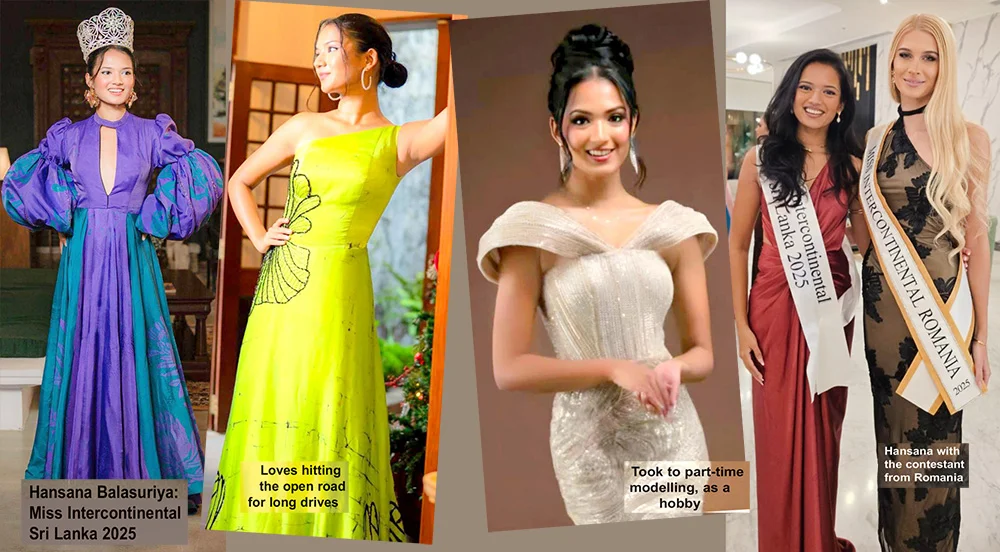
 That’s precisely what 25-year-old Hansana Balasuriya has in mind – shooting for the stars – when she was selected to represent Sri Lanka on the international stage at Miss Intercontinental 2025, in Sahl Hasheesh, Egypt.
The grand finale is next Thursday, 29th January, and Hansana is all geared up to make her presence felt in a big way.
Her journey is a testament to her fearless spirit and multifaceted talents … yes, her life is a whirlwind of passion, purpose, and pageantry.
Raised in a family of water babies (Director of The Deep End and Glory Swim Shop), Hansana’s love affair with swimming began in childhood and then she branched out to master the “art of 8 limbs” as a Muay Thai fighter, nailed Karate and Kickboxing (3-time black belt holder), and even threw herself into athletics (literally!), especially throwing events, and netball, as well.
A proud Bishop’s College alumna, Hansana’s leadership skills also shone bright as Senior Choir Leader.
She earned a BA (Hons) in Business Administration from Esoft Metropolitan University, and then the world became her playground.
Before long, modelling and pageantry also came into her scene.
She says she took to part-time modelling, as a hobby, and that led to pageants, grabbing 2nd Runner-up titles at Miss Nature Queen and Miss World Sri Lanka 2025.
When she’s not ruling the stage, or pool, Hansana’s belting tunes with Soul Sounds, Sri Lanka’s largest female ensemble.
What’s more, her artistry extends to drawing, and she loves hitting the open road for long drives, she says.
This water warrior is also on a mission – as Founder of Wave of Safety,
Hansana happens to be the youngest Executive Committee Member of the Sri Lanka Aquatic Sports Union (SLASU) and, as founder of Wave of Safety, she’s spreading water safety awareness and saving lives.
Today is Hansana’s ninth day in Egypt and the itinerary for today, says National Director for Sri Lanka, Brian Kerkoven, is ‘Jeep Safari and Sunset at the Desert.’
And … the all-important day at Miss Intercontinental 2025 is next Thursday, 29th January.
Well, good luck to Hansana.

Local entrepreneurs propose high-quality saree manufacturing in Sri Lanka to curb forex outflow

LOLC Holdings, PickMe and Browns EV collaborate to accelerate Sri Lanka’s transition to inclusive electric mobility

Mendis’ unbeaten 93 anchors Sri Lanka to 271 for six against England

‘TOKYO SUPER, the only cement brand to earn SUPERBANDS status’

Continuing investor optimism over Q3 corporate results helps retain CSE’s glow

LB Finance continues growth momentum. PAT up 24% to Rs. 8.9 bn

‘Dates have the highest sugar content to fight Coronavirus’

Sunday Island 27 December – Headlines

#SundayIsland 17th December – Headlines

Sunday Island – 28th March

Sunday Island Headlines – 21 March

Sunday Island – 21st February – Headlines
-

 Editorial5 days ago
Illusory rule of law
-
 News6 days ago
UNDP’s assessment confirms widespread economic fallout from Cyclone Ditwah
-
 Editorial6 days ago
Crime and cops
-
 Features5 days ago
Daydreams on a winter’s day
-

 Editorial7 days ago
The Chakka Clash
-
 Features5 days ago
Surprise move of both the Minister and myself from Agriculture to Education
-

 Features4 days ago
Extended mind thesis:A Buddhist perspective
-
 Features5 days ago
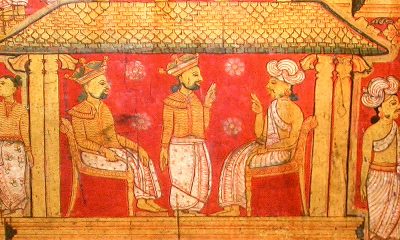
The Story of Furniture in Sri Lanka