
Foreign News
Europe ‘at turning point in history’, French president warns

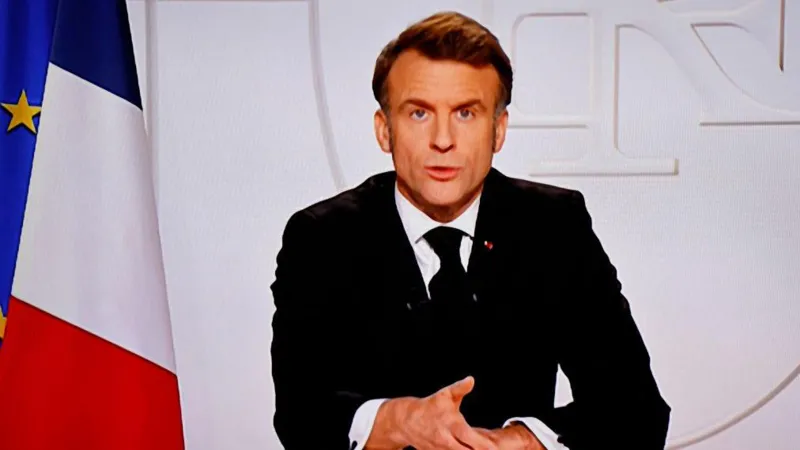
EU leaders are gathering in Brussels today [06] for a special council on defence, as France’s President Emmanuel Macron warned that the continent was at a “turning point of history”.
As well as rearmament, leaders are expected to discuss how the body can further support Kyiv in the face of US President Donald Trump’s announcement on Monday that he would suspend aid to Ukraine. Ukrainian President Volodymy Zelensky is invited to the summit.
Nerves have grown increasingly frayed across Europe since Trump and Zelensky’s showdown at the White House last week, and the rhetoric around Thursday’s summit leaves no doubt about the importance EU officials are ascribing to it.
Three years on since Russia’s full scale invasion of Ukraine, the Trump administration’s overtures to Russian President Vladimir Putin have left many in Europe concerned the continent would not be able to rely on US support for its security.
Washington’s decision on Wednesday topause intelligence sharing with Ukraine did nothing to allay those worries.
In a sign of the depth of concern, President Macron said France was open to discussing extending the protection offered by its nuclear arsenal to its European partners, during an address to the nation on Wednesday.
That followed a call from Friedrich Merz, likely to be Germany’s next chancellor, to discuss increased nuclear sharing.
Europe was facing a “clear and present danger on a scale that none of us have seen in our adult lifetime”, European Commission chief Ursula von der Leyen said, while European Council President António Costa said this was a “defining moment for Ukraine and European security”.
In a letter to European leaders, von der Leyen also said the continent had to “meet the moment” and “unleash our industrial and productive power and direct it to the goal of security”.
On Monday, von der Leyen announced an unprecedented defence package – dubbed ReArm Europe – and said that Europe was ready to “massively” boost its defence spending “with the speed and the ambition that is needed”.
Von der Leyen said the three proposals outlined in the ReArm Europe plan would both support Ukraine and “address the long-term need to take much more responsibility” for European security – likely referring to the fact many Europeans feel the continent can no longer automatically rely on the US to come to its aid.
The proposals include:
- Allowing countries to increase national deficit levels to give room for more defence spending
- €150bn (£125bn) in loans for defence investment in domains that could benefit the defence of the EU as a whole – for example, air and missile defence, anti-drone systems, and military mobility – helping pool demand, and reduce costs through joint procurement
- Allowing countries to redirect funds earmarked for cohesion policy programmes (policies aimed at levelling the differences between more and less advantaged regions) to defence spending
The European Investment Bank would also be allowed to finance military projects.
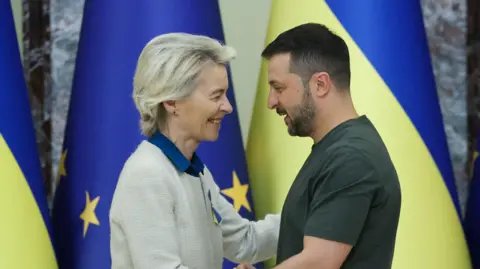
According to von der Leyen, the plan could free up a total of €800bn ($860bn; £670bn) in defence expenditure.
Many European leaders have signalled their support for swift, decisive action in regards to the continent’s security.
Donald Tusk, Poland’s prime minister, said the Commission’s plan represented “a fundamental shift”, while Lithuanian President Gitanas Nauseda said that the summit would give Europe the opportunity to show “whether it’s just a debate club or whether we can make decisions”.
But dissent from certain European leaders sympathetic to Moscow is expected.
Earlier this week, Slovakian Prime Minister Robert Fico said the EU’s “peace through strength” approach was “unrealistic”.
And in a letter to Costa, Hungary’s Viktor Orban demanded that Ukraine not be mentioned in any written conclusions following the summit.
Orban – who has repeatedly attempted to block EU aid to Ukraine and has praised Trump for “standing bravely for peace” – said there was now a “strategic divide… between the majority of Europe and the USA”.
“One side insists on prolonging the war in Ukraine, while the other seeks an end to the conflict,” he added.
Yet Orban left the door open for a “greater probability for cooperation” with other leaders over issues of common security and defence.
While Thursday’s crisis summit is taking place in Brussels, UK Defence Secretary John Healey will be in Washington for discussions with his counterpart Pete Hegseth on the US decision to pause intelligence sharing with Ukraine.
Their bilateral meeting will focus on a possible peace plan while efforts continue to bridge a transatlantic rift over Kyiv’s future security.
Perhaps in a final bid to try and achieve unity ahead of the summit, Emmanuel Macron – who has positioned himself at the centre of the EU’s efforts to bridge the gap between Kyiv and Washington – invited Orban to have dinner in Paris on Wednesday evening.
The two leaders met immediately after the French president gave a sombre address to the nation in which he said that France and Europe needed to be ready if the US was no longer by their side.
“We have to be united and determined to protect ourselves,” Macron said. He added that the future of Europe could not be tied to Washington or Moscow, and said that while he “wanted to believe that the US will stay by our side, we have to be ready for this not to be the case”.
The French president plans to hold a meeting of European army chiefs in Paris next week.
Macron said that “decisive steps” would be taken in Brussels, leaving European countries “more ready to defend and protect themselves”.
“The moment calls for unprecedented decisions,” he concluded.
[BBC]

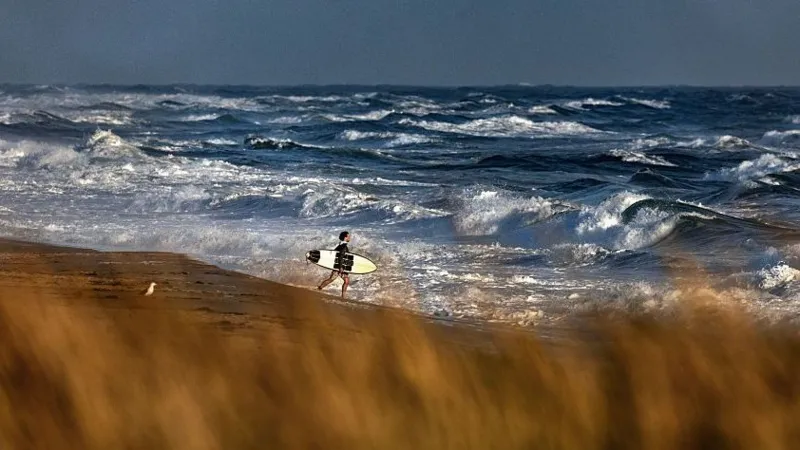
US authorities have found debris from a medical transport aircraft that went missing with six people on board.
The Federal Aviation Administration told the BBC it had lost contact with the Gulfstream G-100 plane just after 01:00 local time (05:00 GMT) on Saturday, while it was travelling from Bermuda to Boston, Massachusetts.
The search for survivors continues off the coast of Nantucket, a Massachusetts island, the US Coast Guard said.
Authorities have notified the next of kin of those on the flight, four Canadian nationals and two Bermudian nationals.
“Search crews located a debris field confirmed to be from the aircraft off the coast of Nantucket,” the US Coast Guard said in an update on Saturday night. It added that ships, helicopters and planes were involved in searches that would through continue the night.
The plane departed from Bermuda’s L.F. Wade International Airport at 23:40 local time, according to flight data from FlightAware, and was due to land at Boston’s Logan International at 01:30 EDT (05:30 GMT).
According to the tail number released by the Coast Guard, the plane belonged to Latitude Air Ambulances, a company that provides international medical flights for patients returning home.
Among those on board were two pilots and two medical staff, both Canadian, Clarence Togeretz, director of flight operations at Latitude, told CBC News.
The crew flew to Bermuda to collect a patient and their relative, who are not Canadian, Togeretz said.
FlightAware’s tracker shows the aircraft significantly dropped in altitude before its communications went dark, plummeting from around 7,300m (24,000ft) to 3,300m (11,000ft).
Radio transmissions shows trouble with communications between the air traffic controller and the pilot, the Boston Globe reported based on transmissions provided by LiveATC.net.
“You’re coming in blind? Is that what you said?,” the air traffic controller asked. “Are you declaring an emergency, or no?”
The pilot’s response was inaudible.
“You’re coming in a little weak so I didn’t hear what your response was, if you were declaring an emergency or not,” the air traffic controller said, according to the Globe.
The air traffic controller later confirmed the pilot had declared an emergency.
An area fire dispatcher asked emergency crews just after 01:00 EDT to prepare to meet a plane with an “electrical issue”.
The dispatcher later said “the aircraft has lost radio and radar”.
The Coast Guard said it would provide an update on Sunday morning local time.
[BBC]
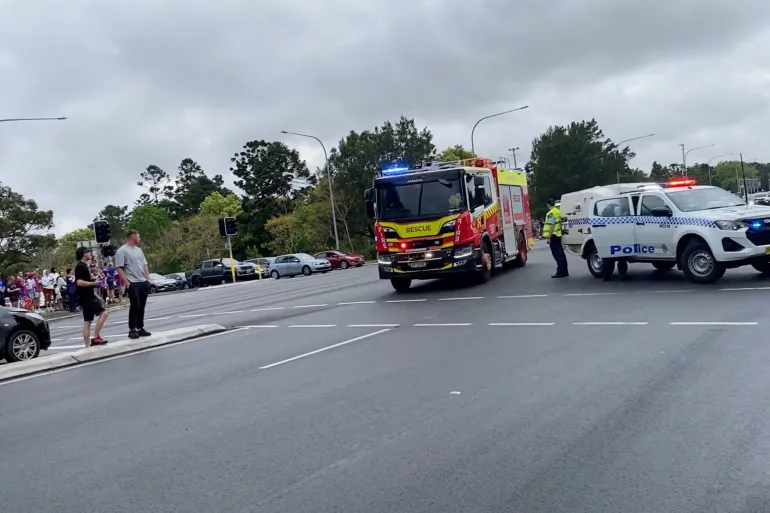
A car has crashed into a crowd of rugby league supporters in the eastern Australian city of Newcastle, injuring 10 people, including three children.
New South Wales police said on Saturday that two of the injured – a five-year-old girl and a 67-year-old man – were in a critical condition and the other eight were in stable condition in hospital.
Police said they had arrested the 18-year-old man driving the vehicle and were investigating what happened. They said the crash was not believed to be related to “terrorism”.
The crowd had gathered to farewell the local rugby league side, the Newcastle Knights, ahead of their grand final against the Sydney Roosters on Sunday.
Newcastle Lord Mayor Gavin Morris said the driver, a rugby league fan, had lost control of his vehicle and had been taken into custody.
“He was revving the car, he was excited, he was a supporter, he was there for the joy of the moment,” Morris told the national broadcaster ABC.
“Somehow he lost control of the car … and he’s gone into the crowd,” he added.
Prime Minister Anthony Albanese said: “My thoughts are with everyone injured or involved in the horrible incident this morning in Newcastle.”
“Rugby league brings people together, and this should have been a weekend of excitement and pride for Newcastle fans,” he wrote in a social media post.
[Aljazeera]
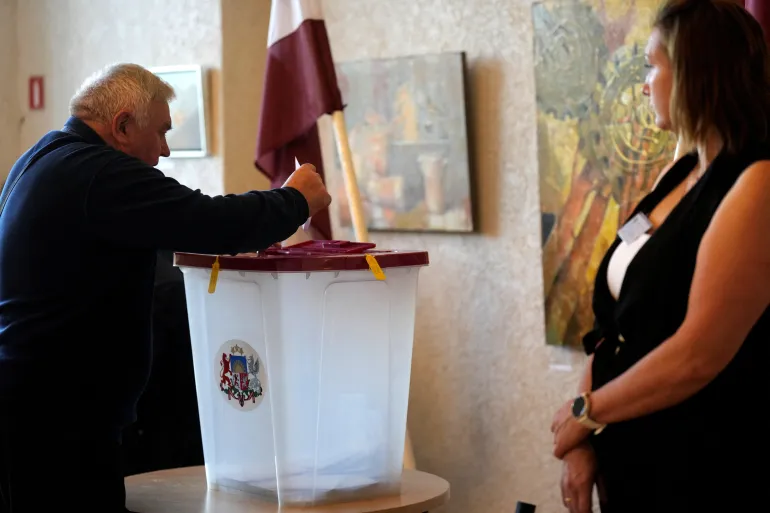
Polls have opened in Latvia for an election taking place against the backdrop of perceived security threats from Russia and a nationwide cost-of-living squeeze.
Saturday’s vote is the first electoral test for Prime Minister Andris Kulbergs after coming to power in May this year when his predecessor resigned due to a backlash from stray drone incursions from Ukraine.
Kulbergs, whose right-wing United List party is currently polling at about 20 percent, is expected to hold onto his position, but the decline of two allies in his current coalition means he is set for a complicated negotiation over the makeup of any future government.
Polls opened at 05:00 GMT and will close at 17:00 GMT. The results are not expected to change Latvia’s pro-European and pro-Ukrainian course.

About 1.5 million people are eligible to vote in the country’s 11th parliamentary election since independence from the Soviet Union in 1991.
Latvian politics are highly fragmented, with parties rarely seeing above 20 percent vote share and coalitions being the norm.
This year, 14 electoral lists are contesting the election, but polls indicate only seven are likely to enter parliament, with the rest expected to fail to meet the minimum 5 percent vote threshold.
Rising living costs, low wages, strains on the healthcare system and long-term population decline have all featured prominently in campaign debates.
Most parties in Latvia are pro-Ukraine; however, the populist Sovereign Power party – which says it wants Ukraine to win but argues money spent supporting Kyiv would be better spent at home – looks likely to become the country’s second-biggest party, with more than 9 percent of the vote. Most other parties have ruled out forming a coalition with Sovereign Power.
Latvia First, a pro-Ukraine and populist nationalist party currently polling at about 9 percent, could be a potential coalition partner for PM Kulbergs.
The Progressives, a pro-European social democratic party, are polling at 6 percent.
Ethnic Russians make up roughly one in four Latvian citizens, but their vote, which has traditionally been cast along identity-based lines, looks set to be made according to economic and social issues.
Latvia is the poorest of the Baltic states, and it has sharply increased its defence spending since Russia invaded Ukraine, now allocating nearly 5 percent of its gross domestic product (GDP) to defence.
[Aljazeera]

Remembering Juvenal, Coke, Acton and Machiavelli

West Asian conflict undergoing manifold complications

Nissanka absence opens door for Sri Lanka’s young guns

The prelate who walked the talk

Needs of populace hit by Cyclone Ditwah seen as waiting to be addressed

Future of Sri Lanka’s state university system: Should it be shut down and reopened?

‘Dates have the highest sugar content to fight Coronavirus’

Sunday Island 27 December – Headlines

#SundayIsland 17th December – Headlines

Sunday Island – 28th March

Sunday Island Headlines – 21 March

Sunday Island – 21st February – Headlines
-

 Editorial6 days ago
Colombo Port drug bust: The plot thickens
-

 Features4 days ago
The first woman in the foreign service or Ceylon Overseas Service it was then called
-

 Editorial5 days ago
Fuelling discontent and protest
-

 News3 days ago
Geneva takes up Sallay’s case and govt. ignores opportunity to answer accusations
-

 Latest News5 days ago
Tharindu Rathnayake, bowlers secure Asian Games Bronze for Sri Lanka
-

 Foreign News5 days ago
Ten injured after car crashes into rugby supporters in Australia
-

 Features3 days ago
Sri Lanka Cricket Bill: Governance reform is not yet a cricket strategy
-

 News4 days ago
Nearly 20 Iranian tankers stranded off Lanka amid US sanctions