
News
One out of six Lankans now multi-dimensionally poor and bulk of them are in rural areas

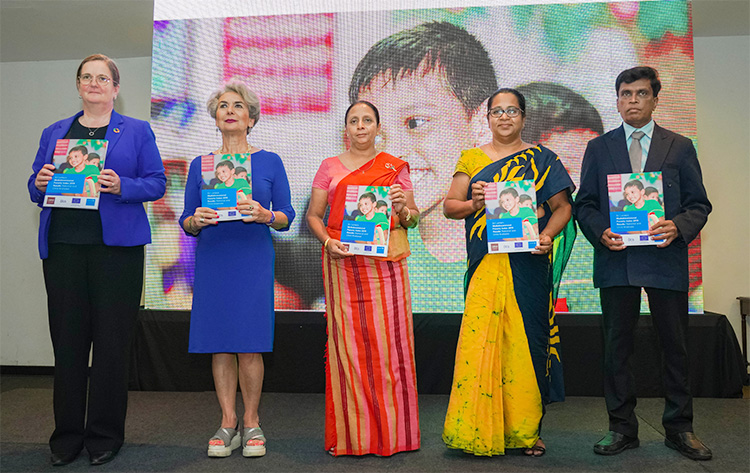
Approximately one out of every six (16 percent) persons in the country is multi-dimensionally poor, says the Sri Lanka’s first official national Multidimensional Poverty Index (national MPI).
The National MPI, using data from the Household Income and Expenditure Survey 2019, launched last week, shows that more than eight out of every 10 (80.9 percent) persons who are poor live in rural areas.
The National MPI, prepared jointly by UNICEF, the Oxford Poverty and Human Development Initiative (OPHI) and the European Union, the Department of Census and Statistics (DCS) indicates that poverty levels in districts vary significantly, from a low of 3.5 percent in Colombo to 44.2 percent in Nuwara Eliya. Even for districts with similar MPI values, high-impact policies must consider the indicator composition of poverty, in order to plan the most cost-effective response. Estate areas are pockets of poverty, requiring policy attention, as more than half (51.3 percent) of all people in these areas are living in poverty.
The Executive Summary of the report, titled ‘Sri Lanka’s Multidimensional Poverty Index 2019 Results: National and Child Analyses’ shows that 17.9% of the people, aged 65 years and older, are the poorest age group in Sri Lanka, with the highest headcount ratio (17.9 percent), as well as intensity of poverty and MPI. . Deprivation patterns – and therefore policy and budgetary responses – vary by district and age. The deprivations that require immediate policy attention are the lack of access to health facilities and basic facilities, clean cooking fuels, and safe drinking water.
It says: In 2021, in close consultation with various ministries, the Department of Census and Statistics (DCS) developed the first official national Multidimensional Poverty Index (national MPI) for Sri Lanka. The Sri Lankan national MPI is an official permanent statistic of multidimensional poverty that will be updated and published regularly, reported as Sustainable Development Goal (SDG) indicator 1.2.2, and used to complement the monetary poverty measure. A key population of concern around poverty is young children, whose deprivations in nutrition and cognitive development have lifelong effects. To further probe and support child poverty policies, DCS crafted an individual child Multidimensional Poverty Index (child MPI) for children aged 0-4, which includes exactly the same indicators as the national MPI, plus undernutrition and early childhood development. The national MPI and the child MPI are both based on data from the Household Income and Expenditure Survey 2019 (HIES 2019). The HIES 2019 was modified to include key MPI indicators, and will do so in future, permitting updates of both MPIs. Sri Lanka’s child MPI is the first official measure of child poverty that links directly and precisely with the national MPI. The MPI is not just a statistic, it is a policy tool. It provides relevant information to accelerate poverty reduction with limited resources – by informing high-impact budget allocation, focused interventions, policy design and coordination, and poverty monitoring. This report presents the key findings of Sri Lanka’s official permanent national MPI and its linked child MPI, further disaggregated by location, age and sex, and the policy implications of these findings. This report explains why Sri Lanka was motivated to develop multidimensional poverty indices, the process followed to design these policy-salient measures, and the measurement methodology. The national MPI results convey the level and composition of multidimensional poverty, disaggregated by age, area, district, and sex of the household head. The child MPI results delve further into an individual measure for children aged 0-4 that is directly linked to the national MPI, but which exposes particular needs of young children.

Latest News
IMF Executive Board approves US$206 Million in Emergency Financial Support for Sri Lanka


The IMF Executive Board approved emergency financing under the Rapid Financing Instrument (RFI), providing Sri Lanka with immediate access to SDR 150.5 million (about US$206 million,
equivalent to 26 percent of quota) to help Sri Lanka address the urgent needs arising from the catastrophic Cyclone Ditwah and preserve macroeconomic stability.

In response to severe weather impacts, the Sri Lanka Navy conducted a diving and technical assistance operation on Friday (19 Dec 25) to clear major debris obstructing vital infrastructure.
Heavy rainfall caused a significant rise in the water level of the Mahaweli River, washed large quantities of debris, including logs and bamboo, downstream. These remain lodged in the Diyakapanathota in Gatambe, Peradeniya and Lewella bridges, obstructing the smooth flow of water.
Acting promptly upon request, a Navy diving team executed a coordinated operation in collaboration with the Road Development Authority. The team removed the accumulated debris, restoring normal water flow through the bridges.
Latest News
Landslide early warnings issued to the districts of Badulla, Kandy, Kurunegala, Matale and Nuwara-Eliya extended till 8AM on Sunday (21)
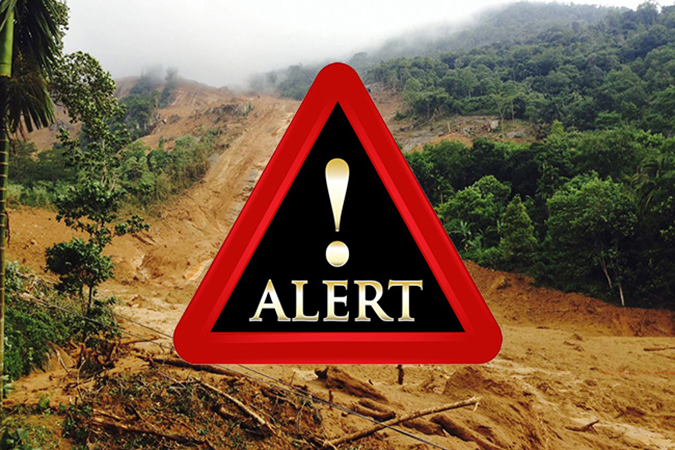
The Landslide Early Warning Centre of the National Building Research Organization (NBRO) has extended the Landslide Early Warning issued to the districts of Badulla, Kandy, Kurunegala, Matale and Nuwara-Eliya till 08:00AM on Sunday (21st December 2025)
The LEVEL III RED landslide early warnings issued to the Divisional Secetaries Divisions and surrounding areas of Medadumbara, Doluwa, Ududumbara and Minipe in the Kandy district, and Nildandahinna, Hanguranketha, Mathurata and
Walapane have been extended.
LEVEL II AMBER landslide early warnings have also been issued to the Divisional Secetaries Divisions and surrounding areas of Soranathota, Hali_Ela, Passara, Meegahakivula, Badulla, Lunugala and Kandeketiya in the Badulla district, Thumpane, Harispattuwa, Udapalatha, Kundasale, Akurana, Poojapitiya, Udunuwara, Pathadumbara, Pasbage Korale, Gangawata Korale, Hatharaliyadda, Yatinuwara, Ganga Ihala Korale, Panvila, Pathahewaheta and Deltota in the Kandy district, Rideegama in the Kurunegala district, Ukuwela, Naula, Matale, Ambanganga Korale, Rattota, Pallepola, Wilgamuwa, Yatawatta and Laggala Pallegama in the Matale district, and Nuwara-Eliya in the Nuwara-Eliya district.
LEVEL I YELLOW landslide early warnings have been issued to the Divisional Secetaries Divisions and surrounding areas of Uva Paranagama, Welimada, Haputhale, Haldummulla, Ella and
Bandarawela in the Badulla district, Alawwa, Mallawapitiya,
Polgahawela and Mawathagama in the Kurunegala district, and Kothmale East, Ambagamuwa Korale, Kothmale West, Thalawakele and Norwood in the Nuwara-Eliya district.

IMF Executive Board approves US$206 Million in Emergency Financial Support for Sri Lanka

Navy clears major bridge obstructions in Peradeniya and Lewella

Landslide early warnings issued to the districts of Badulla, Kandy, Kurunegala, Matale and Nuwara-Eliya extended till 8AM on Sunday (21)

Trump says US launched large-scale attacks on ISIL in Syria

Showers will occur in the Eastern, Western, Sabaragamuwa, Southern, Uva and Central provinces and in Polonnaruwa district

PM says govt. will introduce a new Constitution to abolish executive presidency

‘Dates have the highest sugar content to fight Coronavirus’

Sunday Island 27 December – Headlines

#SundayIsland 17th December – Headlines

Sunday Island – 28th March

Sunday Island Headlines – 21 March

Sunday Island – 21st February – Headlines
-

 Midweek Review4 days ago
How massive Akuregoda defence complex was built with proceeds from sale of Galle Face land to Shangri-La
-

 Features7 days ago
Why Sri Lanka Still Has No Doppler Radar – and Who Should Be Held Accountable
-

 News3 days ago
Pakistan hands over 200 tonnes of humanitarian aid to Lanka
-

 News3 days ago
Pope fires broadside: ‘The Holy See won’t be a silent bystander to the grave disparities, injustices, and fundamental human rights violations’
-
 Latest News6 days ago
Landslide early warnings in force in the Districts of Badulla, Kandy, Kegalle, Kurunegala, Matale, Nuwara Eliya and Ratnapura
-
 News4 days ago
Burnt elephant dies after delayed rescue; activists demand arrests
-
 Features7 days ago
Srima Dissanayake runs for president and I get sidelined in the UNP
-

 Editorial7 days ago
Disaster relief and shocking allegations