
Features
On being prepared: Sri Lankan experience

By Dr. Ranil Senanayake
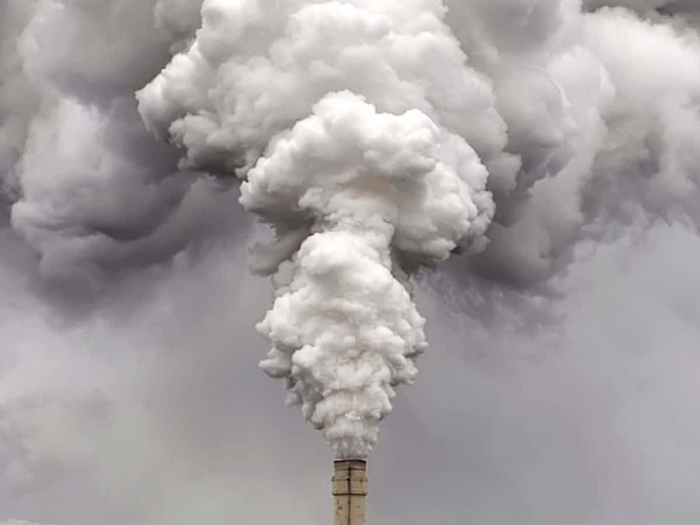
While the political narcissists play their pathetic game of musical chairs and the supporting cast of corrupt bureaucrats support that dance are completely removed from the deadly reality that the rest of us have to face. He who occupies any station of power must have some knowledge how of power is used and how that will determine the well being of this nation and its citizenry. The crises are manifold, best illustrated by the changes in weather patterns brought by Climate Change. Sri Lanka has been fortunate to escape the extreme weather experienced by many other nations, but that should not be a reason for complacency, the changes are real, we too will have to face them.
We know what lies ahead, if anyone involved in national governance, politician or bureaucrat missed the warnings that have appeared in the national press for over fifteen years, we might say they are too busy with the hubris of their own importance, to care about other national voices. But now, after being exposed to the consequences of climate change, there is still a willful, stubborn, ignoring of reality.
Fifteen years ago, the effect of sea level rise was being experienced, but there was no public awareness of the process. It was at that time the following observations were made and questions asked:
‘Has anyone wondered at the disappearance of the golden beaches that is being replaced by these rocky barriers to the ocean? Will our beaches go the way of the turtles that need to come up to sandy beaches to lay their eggs? How will tourists react to disappearing beaches? All valid questions ; But ask the community living in these areas and there is no understanding of global warming, its causes or effects. Their biggest concern is another Tsunami, not understanding that there is a creeping tsunami at their feet! Will the current system of irrigation locks be sufficient to prevent saltwater intrusion into agricultural lands? What adaptation strategies have we developed nationally? Perhaps the experts and pundits have sorted it all out but, some public capacity building activity must become evident or we will become unknowing victims to the affects of climate change, unable to mount any meaningful response’
Fifteen years later, the international community is informing us that there will be a rise in sea level by at least three to four inches (it could be more) as a consequence of climate change and there is sill no response from the government. I wonder if the climate change bureaucrats or at least the Ministry of Agriculture had taken notice of the fact that this will lead to the salinization of a large area currently under rice production. Have the urban planners taken notice of the fact that this will mean salt water intrusion up the Kelani River? Has the Colombo Municipality taken notice of the fact that unplanned (corrupt) urbanisation, has stopped water infiltration into the soil and will lead to flooding as the Kelani river loses its ‘fresh water tongue’ into the ocean?
While there is the excitement of building for tourists at the beach, what land planning has accounted for the beach being moved serval hundred meters inland? What sea level rise models does Sri Lanka contribute to? Why are sea level rise models not mandatory in coastal land use planning? These seem reasonable questions for an island nation.
Could it be that the government of Sri Lanka, is downplaying the impacts of climate change because they are following an agenda of ‘development’ set by the producers of fossil fuels? When the decision for Sri Lanka to place her development aspirations on energy based on fossil fuels was made the deed was done.
It was in 1979 when an official communiqué on development displayed in the nation’s newspapers stated: “No oil means no development, and less oil, less development. It is oil that keeps the wheels of development moving”, it seems clear that our current state of fossil addiction was not a function of some natural, uninformed social growth, it was designed to create an exponential demand to fossil fuels as the source of energy to power society. The ‘development’ of centralised energy entailed large sums of money in trading coal and oil. Attracting unsavory political and bureaucratic attention. The sleazy dealing behind our coal and oil supplies are now done as a matter of national importance.
However, today the world has woken up to the reality of climate change driven by the consumption of fossil fuels. Every time one travels or takes a flight or even switches on a light, we contribute to the acceleration of climate change. Renewable energy has become a catchword into the 20’s. but the focus of the government was on centralised energy generation through the purchase of fossil fuels and renewable energy was ignored.
Today, due to a tragic mix of corruption and ignorance, Sri Lanka has become a ‘bankrupt state’ and cannot import those quantities of fossil. It has now become ‘the canary in the coalmine’ of fossil powered economic growth, which promises ‘development’. The pain of withdrawal from addiction is felt from the cooking fires of its homes to the national energy grids. Can this pain provoke a realisation that the only way to stop it from happening again is to cease this addiction to fossil fuels and choose a new paradigm for growth and development?
There are innumerable, creative inventions made by our youth to respond to energy issues at the local level. There are small and medium industries that can arise around sustainable energy production, but unless this potential is recognized and encouraged, we will have to put up with the platitudes of those profiting off our energy dependence and occupying the seats of power that can make the change required.There is an obvious need to decentralise essential services, as much as there is a crying need for local responsibility and accountability. But while we bicker about the control of our national processes, the shadow of the global impact of climate change is almost upon us and the time that we have to plan and prepare is almost gone.



 ‘Adapt, shrink or die’ – thus runs the warning issued by the Trump administration to UN humanitarian agencies with brute insensitivity in the wake of its recent decision to drastically reduce to $2bn its humanitarian aid to the UN system. This is a substantial climb down from the $17bn the US usually provided to the UN for its humanitarian operations.
Considering that the US has hitherto been the UN’s biggest aid provider, it need hardly be said that the US decision would pose a daunting challenge to the UN’s humanitarian operations around the world. This would indeed mean that, among other things, people living in poverty and stifling material hardships, in particularly the Southern hemisphere, could dramatically increase. Coming on top of the US decision to bring to an end USAID operations, the poor of the world could be said to have been left to their devices as a consequence of these morally insensitive policy rethinks of the Trump administration.
Earlier, the UN had warned that it would be compelled to reduce its aid programs in the face of ‘the deepest funding cuts ever.’ In fact the UN is on record as requesting the world for $23bn for its 2026 aid operations.
If this UN appeal happens to go unheeded, the possibilities are that the UN would not be in a position to uphold the status it has hitherto held as the world’s foremost humanitarian aid provider. It would not be incorrect to state that a substantial part of the rationale for the UN’s existence could come in for questioning if its humanitarian identity is thus eroded.
Inherent in these developments is a challenge for those sections of the international community that wish to stand up and be counted as humanists and the ‘Conscience of the World.’ A responsibility is cast on them to not only keep the UN system going but to also ensure its increased efficiency as a humanitarian aid provider to particularly the poorest of the poor.
It is unfortunate that the US is increasingly opting for a position of international isolation. Such a policy position was adopted by it in the decades leading to World War Two and the consequences for the world as a result for this policy posture were most disquieting. For instance, it opened the door to the flourishing of dictatorial regimes in the West, such as that led by Adolph Hitler in Germany, which nearly paved the way for the subjugation of a good part of Europe by the Nazis.
If the US had not intervened militarily in the war on the side of the Allies, the West would have faced the distressing prospect of coming under the sway of the Nazis and as a result earned indefinite political and military repression. By entering World War Two the US helped to ward off these bleak outcomes and indeed helped the major democracies of Western Europe to hold their own and thrive against fascism and dictatorial rule.
Republican administrations in the US in particular have not proved the greatest defenders of democratic rule the world over, but by helping to keep the international power balance in favour of democracy and fundamental human rights they could keep under a tight leash fascism and linked anti-democratic forces even in contemporary times. Russia’s invasion and continued occupation of parts of Ukraine reminds us starkly that the democracy versus fascism battle is far from over.
Right now, the US needs to remain on the side of the rest of the West very firmly, lest fascism enjoys another unfettered lease of life through the absence of countervailing and substantial military and political power.
However, by reducing its financial support for the UN and backing away from sustaining its humanitarian programs the world over the US could be laying the ground work for an aggravation of poverty in the South in particular and its accompaniments, such as, political repression, runaway social discontent and anarchy.
What should not go unnoticed by the US is the fact that peace and social stability in the South and the flourishing of the same conditions in the global North are symbiotically linked, although not so apparent at first blush. For instance, if illegal migration from the South to the US is a major problem for the US today, it is because poor countries are not receiving development assistance from the UN system to the required degree. Such deprivation on the part of the South leads to aggravating social discontent in the latter and consequences such as illegal migratory movements from South to North.
Accordingly, it will be in the North’s best interests to ensure that the South is not deprived of sustained development assistance since the latter is an essential condition for social contentment and stable governance, which factors in turn would guard against the emergence of phenomena such as illegal migration.
Meanwhile, democratic sections of the rest of the world in particular need to consider it a matter of conscience to ensure the sustenance and flourishing of the UN system. To be sure, the UN system is considerably flawed but at present it could be called the most equitable and fair among international development organizations and the most far-flung one. Without it world poverty would have proved unmanageable along with the ills that come along with it.
Dehumanizing poverty is an indictment on humanity. It stands to reason that the world community should rally round the UN and ensure its survival lest the abomination which is poverty flourishes. In this undertaking the world needs to stand united. Ambiguities on this score could be self-defeating for the world community.
For example, all groupings of countries that could demonstrate economic muscle need to figure prominently in this initiative. One such grouping is BRICS. Inasmuch as the US and the West should shrug aside Realpolitik considerations in this enterprise, the same goes for organizations such as BRICS.
The arrival at the above international consensus would be greatly facilitated by stepped up dialogue among states on the continued importance of the UN system. Fresh efforts to speed-up UN reform would prove major catalysts in bringing about these positive changes as well. Also requiring to be shunned is the blind pursuit of narrow national interests.

 Hi! Great to be back after my Christmas break.
Thought of starting this week with egg white.
Yes, eggs are brimming with nutrients beneficial for your overall health and wellness, but did you know that eggs, especially the whites, are excellent for your complexion?
OK, if you have no idea about how to use egg whites for your face, read on.
Egg White, Lemon, Honey:
Separate the yolk from the egg white and add about a teaspoon of freshly squeezed lemon juice and about one and a half teaspoons of organic honey. Whisk all the ingredients together until they are mixed well.
Apply this mixture to your face and allow it to rest for about 15 minutes before cleansing your face with a gentle face wash.
Don’t forget to apply your favourite moisturiser, after using this face mask, to help seal in all the goodness.
Egg White, Avocado:
In a clean mixing bowl, start by mashing the avocado, until it turns into a soft, lump-free paste, and then add the whites of one egg, a teaspoon of yoghurt and mix everything together until it looks like a creamy paste.
Apply this mixture all over your face and neck area, and leave it on for about 20 to 30 minutes before washing it off with cold water and a gentle face wash.
Egg White, Cucumber, Yoghurt:
In a bowl, add one egg white, one teaspoon each of yoghurt, fresh cucumber juice and organic honey. Mix all the ingredients together until it forms a thick paste.
Apply this paste all over your face and neck area and leave it on for at least 20 minutes and then gently rinse off this face mask with lukewarm water and immediately follow it up with a gentle and nourishing moisturiser.
Egg White, Aloe Vera, Castor Oil:
To the egg white, add about a teaspoon each of aloe vera gel and castor oil and then mix all the ingredients together and apply it all over your face and neck area in a thin, even layer.
Leave it on for about 20 minutes and wash it off with a gentle face wash and some cold water. Follow it up with your favourite moisturiser.

 Superlatives galore were used, especially on social media, to highlight R&B singer Ne-Yo’s trip to Sri Lanka: Global superstar Ne-Yo to perform live in Colombo this December; Ne-Yo concert puts Sri Lanka back on the global entertainment map; A global music sensation is coming to Sri Lanka … and there were lots more!
At an official press conference, held at a five-star venue, in Colombo, it was indicated that the gathering marked a defining moment for Sri Lanka’s entertainment industry as international R&B powerhouse and three-time Grammy Award winner Ne-Yo prepares to take the stage in Colombo this December.
What’s more, the occasion was graced by the presence of Sunil Kumara Gamage, Minister of Sports & Youth Affairs of Sri Lanka, and Professor Ruwan Ranasinghe, Deputy Minister of Tourism, alongside distinguished dignitaries, sponsors, and members of the media.
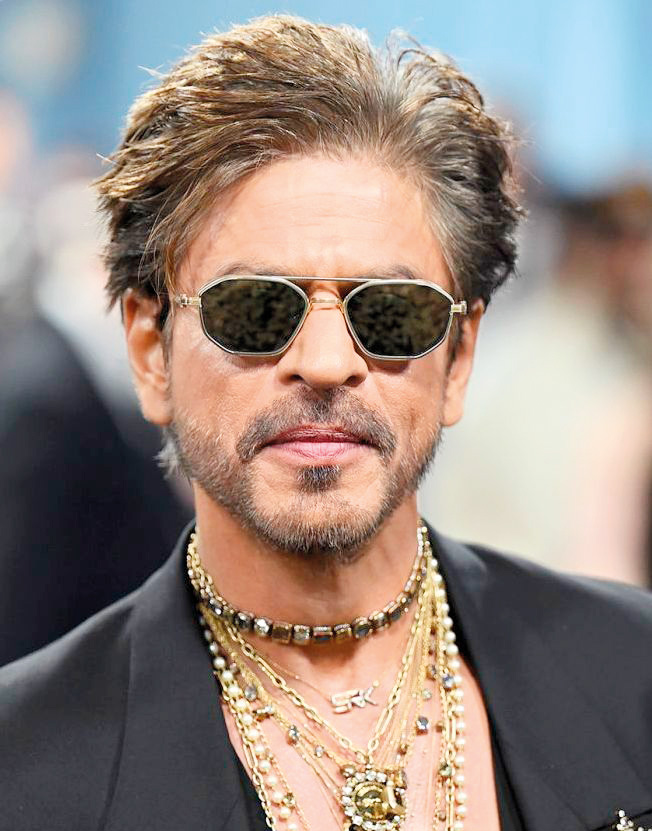
Shah Rukh Khan: Disappointed his fans in Sri Lanka
According to reports, the concert had received the official endorsement of the Sri Lanka Tourism Promotion Bureau, recognising it as a flagship initiative in developing the country’s concert economy by attracting fans, and media, from all over South Asia.

Nick Carter: His concert, too, was cancelled due to “Unforeseen circumstances
However, I had that strange feeling that this concert would not become a reality, keeping in mind what happened to Nick Carter’s Colombo concert – cancelled at the very last moment.
Carter issued a video message announcing he had to return to the USA due to “unforeseen circumstances” and a “family emergency”.
Though “unforeseen circumstances” was the official reason provided by Carter and the local organisers, there was speculation that low ticket sales may also have been a factor in the cancellation.
Well, “Unforeseen Circumstances” has cropped up again!
In a brief statement, via social media, the organisers of the Ne-Yo concert said the decision was taken due to “unforeseen circumstances and factors beyond their control.”
Ne-Yo, too, subsequently made an announcement, citing “Unforeseen circumstances.”
The public has a right to know what these “unforeseen circumstances” are, and who is to be blamed – the organisers or Ne-Yo!
Ne-Yo’s management certainly need to come out with the truth.
However, those who are aware of some of the happenings in the setup here put it down to poor ticket sales, mentioning that the tickets for the concert, and a meet-and-greet event, were exorbitantly high, considering that Ne-Yo is not a current mega star.
We also had a cancellation coming our way from Shah Rukh Khan, who was scheduled to visit Sri Lanka for the City of Dreams resort launch, and then this was received: “Unfortunately due to unforeseen personal reasons beyond his control, Mr. Khan is no longer able to attend.”
Referring to this kind of mess up, a leading showbiz personality said that it will only make people reluctant to buy their tickets, online.
“Tickets will go mostly at the gate and it will be very bad for the industry,” he added.

In pictures: New Year welcomed around the world

Foreign warships commended for their assistance during weather disaster in Sri Lanka

Machu Picchu train crash leaves one dead and dozens injured

I invite you to step into 2026 with renewed energy, hope, and determination – PM

Fairly heavy showers about 75 mm are likely at some places in the Central and Uva provinces and in Batticaloa and Ampara districts

National Audit Office reveals NHSL lapses

‘Dates have the highest sugar content to fight Coronavirus’

Sunday Island 27 December – Headlines

#SundayIsland 17th December – Headlines

Sunday Island – 28th March

Sunday Island Headlines – 21 March

Sunday Island – 21st February – Headlines
-
 News6 days ago
Street vendors banned from Kandy City
-

 Sports3 days ago
Gurusinha’s Boxing Day hundred celebrated in Melbourne
-

 News6 days ago
Lankan aircrew fly daring UN Medevac in hostile conditions in Africa
-
 News1 day ago
Leading the Nation’s Connectivity Recovery Amid Unprecedented Challenges
-

 Sports4 days ago
Time to close the Dickwella chapter
-

 Features6 days ago
Rethinking post-disaster urban planning: Lessons from Peradeniya
-

 Features2 days ago
It’s all over for Maxi Rozairo
-

 Opinion6 days ago
Are we reading the sky wrong?