
News
Office of CDS likely to be scrapped; top defence changes on the cards

By Shamindra Ferdinando
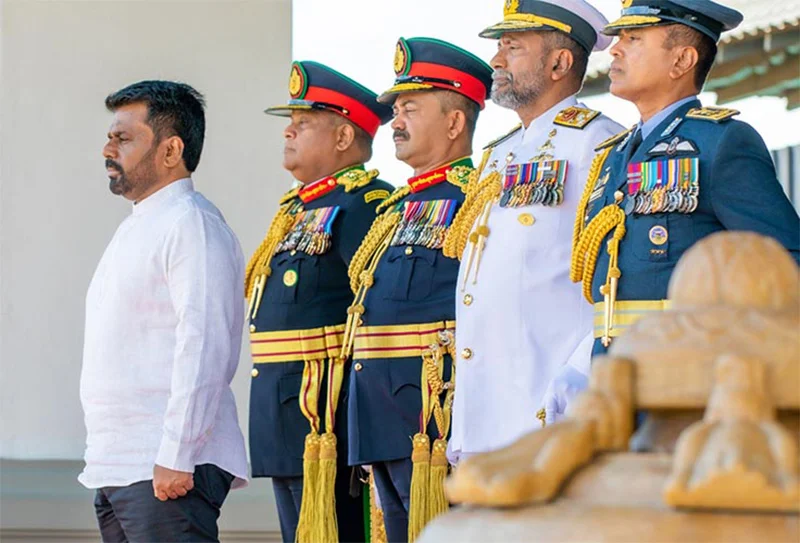
Speculation is rife that the National People’s Power (NPP) government is planning to do away with the Office of the Chief of Defence Staff (CDS) at the end of this year.
Having examined the overall post-war security requirements, the new government has asserted that it could do away with the Office of the CDS, sources said, adding that the move was in line with overall thinking of the ruling party.
Sri Lanka brought the war to a successful conclusion in May 2009 against many a professed opinion to the contrary.
President Anura Kumara Dissanayake is also the Minister of Defence and head of the National Security Council. The CDS is the highest ranking armed forces officer and outranks respective commanders of the Army, Navy and Air Force.
The incumbent CDS is General Shavendra Silva, former Army commander (2019-2022) and wartime General Officer Commanding (GoC) of the celebrated 58 Division, the former Task Force I.
The origins of the Office of the CDS could be traced back to the Joint Operations Command (JOC) that was established in late Feb. 1985 to meet the growing threat posed by separatist terrorist movements. The JOC was meant to coordinate operations among the tri-services and the police.
After the launch of the second Janatha Vimukthi Peremuna (JVP)-led insurgency in 1987, during the JRJ presidency, the JOC received additional responsibilities. There had been three General Officers Commanding JOC namely. T.I. (Bull) Weeratunga (Feb. 85 to Sept. 85), Cyril Ranatunga (Sept. 85 to July 1988) and Hamilton Wanasinghe (Nov. 1991 to Sept. 1993).
In early January 1999, under controversial circumstances, the JOC was renamed the Joint Operations Bureau (JOB) during CBK presidency.
JOB had been a civilian outfit though Gen. Rohan de S. Daluwatte served it as Chairman from Jan. 1999 to April 2000).
However, during the JOB managed war effort, the government suffered a series of heavy battlefield defeats in the northern theatre. A deeply concerned CBK administration established Joint Operations Headquarters (JoH) in late April 2000 immediately after the LTTE forced 54 Division plus troops out of the strategically located Elephant Pass sector. With that change, Gen. Daluwatte was made the Chief of Defence Staff (January 2000 to June 2002) and he was followed by Lionel Balagalle (Oct. 2003 to June 2004), Admiral Daya Sandagiri (Sept. 2004 to June 2006) and Air Chief Marshal Donald Perera (June 2006 to July 2009).
Following the conclusion of the war, the Rajapaksa government introduced the Chief of Defence Staff Act No. 35 of 2009. In terms of that the duties of the CDS were extended by the Chief of Defence Staff Act No. 35 of 2009 and it was named Office of the CDS.
War-winning Army Commander General Sarath Fonseka (promoted to the rank of Field Marshal in 2015) served as the first CDS appointed under the new Act (July 2009 to Nov 2009). Fonseka resigned to contest the 2010 presidential election.
The following officers subsequently served as CDS: Air Chief Marshal Roshan Goonetileke (Nov. 2009 to Aug. 2013), Jagath Jayasuriya (Aug. 2013 to June 2015), Air Chief Marshal Kolitha Gunatilleke (June 2015 to June 2017), Gen. AWJC de Silva (June 2017 to Aug 2017) and Admiral Ravi Wijegunaratne (Aug. 2017 to Dec. 2019).
General Silva, who served as the Acting CDS, was appointed CDS in June 2022 at the height of political turmoil caused by Pohottuwa goons attack on the Galle Face protesters and unprecedented and well-coordinated retaliation carried out by interested parties.
President Ranil Wickremesinghe re-appointed General Silva as CDS for a period of six months – from June 1 to Dec. 31, 2024. Wickremesinghe issued an extraordinary gazette in this regard under Section 3 of the Chief of Defence Staff Act, No. 35 of 2009.
Army Chief General Vikjum Liyanage who received appointment as the Commander of the Army on June 01, 2022 from President Gotabaya Rajapaksa is on his second service extension. Gotabaya Rajapaksa had to flee the country six weeks later after massive crowds overwhelmed the police and the armed forces.
Navy Commander Vice Admiral Priyantha Perera, too, is on his second service extenstion.
Air Vice Marshal Udeni Rajapaksa is on his first service extension after being appointed commander in June 2023.
The following are Maj. Gen. Dinesh Nanayakkara, Rear Admiral Kanchana Banagoda and Air Vice Marshal Sampath Wickremeratne, the No 02 officers in the Army, Navy and Air Force, respectively. However, being Chief of Staff doesn’t guarantee the top slot.
Retired AVM Sampath Thuyakontha is the Secretary Defence while retired Maj. Gen. Aruna Jayasekera was brought on the NPP National List and appointed Deputy Defence Minister. President Dissanayake has declared that State Ministers wouldn’t be appointed during his tenure.
Meanwhile, Priyantha Weerasooriya still functions as Acting IGP pending the Supreme Court verdict on nine petitions filed by several parties, including Colombo Archbishop, Cardinal Malcolm Ranjith, challenging the then President Ranil Wickremesinghe’s decision to appoint Deshabandu Tennakoon as the IGP. The case will be taken up again on Feb. 24th and 25th.





Former first lady Shiranthi Rajapaksa, wife of former President Mahinda Rajapaksa was produced before the Hulftsdorp court, after being arrested by officers of the Commission to Investigate Allegations of Bribery or Corruption (CIABOC) and produce
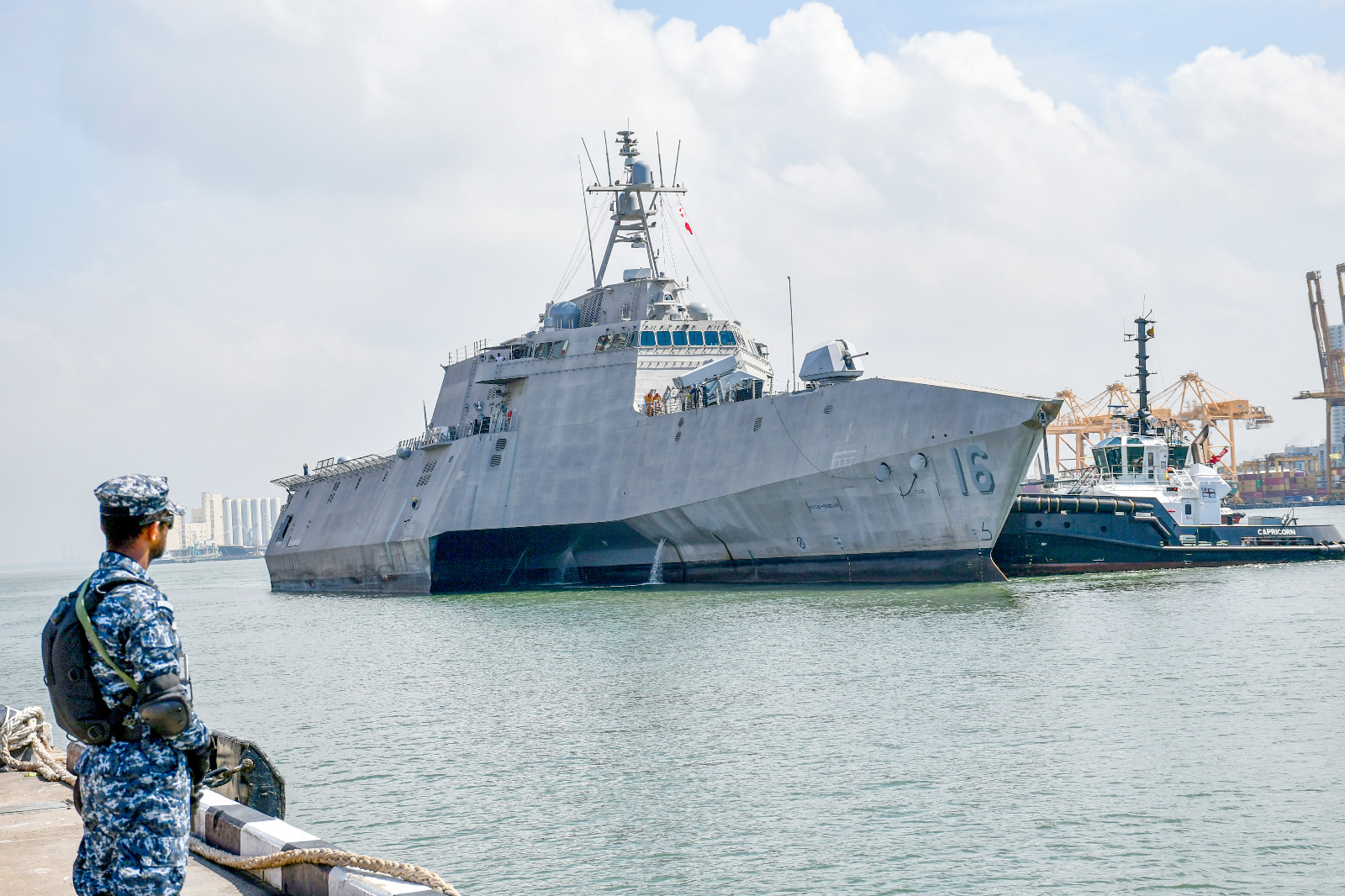
The U.S. Navy ship USS Tulsa (LCS 16) arrived at the Port of Colombo this morning, 7 October 2026 for replenishment purposes.
The visiting ship was welcomed by the Sri Lanka Navy in accordance with naval traditions.
The 127.7-metre-long platform is a Littoral Combat Ship commanded by Commander BM Wanier. Commissioned on 16 February 2019, USS Tulsa has since been in service with the US Navy.
The ship previously made a port call in Sri Lanka on 27 August 2025.
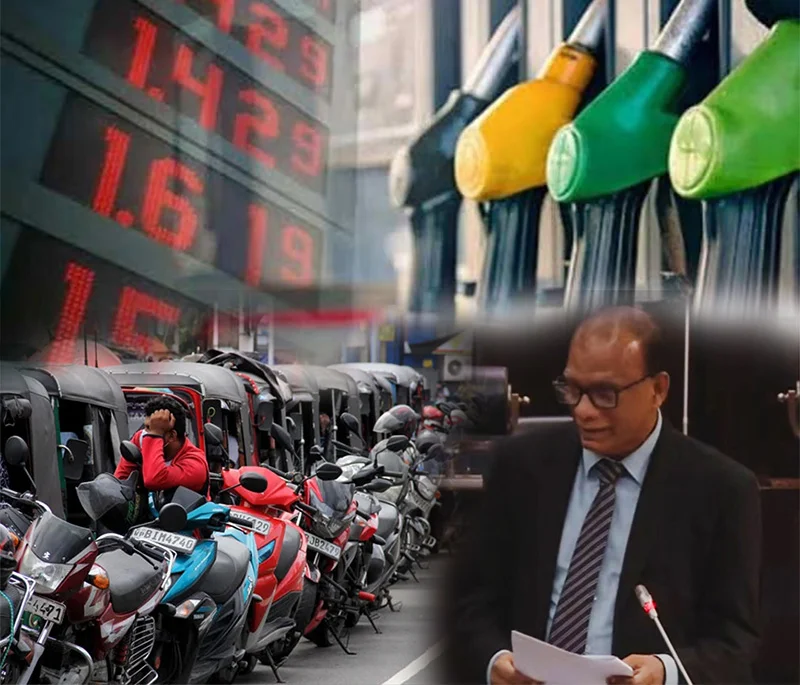
Govt. tells fuel distributors to maintain stocks to ensure uninterrupted supplies
by Saman Indrajith and Norman Palihawadane
The government had instructed private fuel distributors to maintain minimum stocks and ensure uninterrupted supplies to the market, Energy Minister Anura Karunathilaka told Parliament yesterday (06).
Karunathilaka said the Ministry of Energy Secretary had notified the relevant companies of the requirement, following a reduction in supplies by some private distributors, amid higher international fuel prices.
The Minister said private companies had informed the government that they were facing losses because international prices had risen while fuel was being sold, locally, at prevailing prices. As a result, some companies had reduced the volumes released to the market.
The reduced supplies had increased the burden on the Ceylon Petroleum Corporation (CPC), whose share of the diesel market had risen from about 54% to 82%, the Minister said.
“The CPC currently holds an 82% share of the market,” he said, adding that it had increased its supplies, compared with February, to compensate for the reduction by private distributors.
Karunathilaka said the government could not, under the existing agreements with private companies, specify the quantities they should supply to individual filling stations. However, it could require them to maintain minimum stocks in the country.
The Minister said the Energy Ministry had already instructed companies that had failed to maintain the required stocks to take steps to prevent supply disruptions.
The Minister attributed the queues reported at some filling stations to reduced supplies from private distributors, as well as normal variations in fuel distribution. He also said demand for CPC fuel had increased because private companies generally did not provide fuel to dealers on credit, while the CPC offered a three-day credit facility.
“We expect that, as the Ceylon Petroleum Corporation takes on this additional burden, the problem will ease to some extent by Wednesday or Thursday,” Karunathilaka said.
He said instructions had also been issued to increase supplies to CPC filling stations. A special discussion on the issue is scheduled for today (07), with officials of the Energy Ministry and CPC expected to participate,
along with President Anura Kumara Dissanayake.
Meanwhile, Petroleum Dealers’ Association officials have called for an early solution to the supply issue. Association Chairman D.V. Shantha Silva said queues had been reported at many filling stations, mainly those operated by private distributors.
He said the situation was not due to an overall shortage of fuel, but was linked to reduced orders by Lanka IOC, Sinopec and R.M. Parks amid concerns over losses incurred on fuel sales.
The Ceylon Petroleum Private Tanker Owners Association has urged motorists to refrain from panic buying, saying there was no nationwide disruption to fuel supplies.
The government earlier increased fuel prices and introduced a per-litre diesel subsidy following concerns raised by distributors over rising international prices.

Former first lady Shiranthi Rajapaksa arrested by CIABOC

U.S. Navy ship USS Tulsa arrives in Colombo for replenishment visit

Smriti Mandhana appointed India captain across formats

Ronaldo apologizes for Portugal walkout; says Jesus broke promise

Showers in the Western, Sabaragamuwa, Central, Uva, North-western and Southern provinces and in Anuradhapura and Mannar districts

Fuel crunch looms

‘Dates have the highest sugar content to fight Coronavirus’

Sunday Island 27 December – Headlines

#SundayIsland 17th December – Headlines

Sunday Island – 28th March

Sunday Island Headlines – 21 March

Sunday Island – 21st February – Headlines
-

 News7 days ago
US-assisted ‘Ice’ detection: NPC to examine IGP’s move to transfer drug-busting team
-

 Editorial6 days ago
Colombo Port drug bust: The plot thickens
-

 Editorial7 days ago
Drug busting, transfers and trust deficit
-

 Features4 days ago
The first woman in the foreign service or Ceylon Overseas Service it was then called
-
 News7 days ago
Sri Lankan facing death penalty in Saudi Arabia: Mano G appeals to Crown Prince
-

 Editorial5 days ago
Fuelling discontent and protest
-

 News3 days ago
Geneva takes up Sallay’s case and govt. ignores opportunity to answer accusations
-

 Latest News5 days ago
Tharindu Rathnayake, bowlers secure Asian Games Bronze for Sri Lanka