
Editorial
Of that high drama

Monday 26th June, 2023
It has been revealed before the COPE (Committee on Public Enterprises) recently that Sathosa suffered a loss of about six billion rupees due to rice imports in 2015 because most of the stocks of imported rice had to be sold as animal feed at extremely low prices. These losses are passed on to the public in the form of tax and tariff hikes, and fund cuts for vital sectors such as education, health and social welfare.
Sathosa often makes headlines for the wrong reasons; it has become synonymous with corrupt practices, and this is the main reason why its potential to compete with the private sector for the benefit of the ordinary public cannot be fully tapped.
Reams have been written about mega import rackets Sathosa is involved in, but racketeers carry on regardless and enrich themselves thanks to their political connections and the prevailing culture of impunity. This unfortunate situation has come about because government leaders and top bureaucrats are in league with a cartel of big-time rice millers, who are free to further their interests at the expense of Sathosa—the state coffers, to be exact.
As harvesting seasons near, the wealthy millers hoard paddy, creating a shortfall in the supply thereof and making governments import rice. Politicians and their lackeys in the key positions of Sathosa, etc., stand to gain. When imported rice arrives, the millers begin to release their stocks to the market slowly, causing the prices of rice to drop temporarily and buy paddy for a song.
They prevent competition in the paddy market by making banks and other financial institutions delay the loans that small-time millers apply for. When locally-produced rice is made freely available, people stop consuming imported rice, as former Minister Dayasiri Jayasekera rightly told the COPE, the other day; local rice agrees with Sri Lankans’ palates more than imported varieties, as is public knowledge. When this happens, huge consignments of imported rice rot in warehouses and are sold as animal feed. In the meantime, crafty millers reduce rice supplies, jack up prices and make a killing. This is the name of the game.
Ways and means of ending the exploitation by the powerful millers of the rice grower and consumer alike have been proposed over the years. Ideally, the millers’ cartel has to be crushed as a nation priority, but its slush funds prevent governments from resorting to such stringent action. The Paddy Marketing Board has to be revitalised urgently for the government to maintain adequate stocks to regulate the prices of paddy and rice. Steps have to be taken to ensure that banks, etc., make funds available to small-time millers ahead of the harvesting seasons so that they can buy paddy and sell rice at competitive prices.
Rice should be imported only when there is a sharp drop in the national paddy production and not when the millers’ Mafia hoards paddy and starves the rice market. We are not short of politicians who take pride in having crushed the LTTE and wrested control of the areas that it had kept under its rule, but there are still some uncleared areas, which need to be liberated; they are the sprawling warehouse complexes of the powerful rice millers, who keep huge paddy stocks in their silos to manipulate the paddy and rice markets.
The Sathosa rice racket must be probed and the culprits brought to justice, but the problem is that it was carried out during the UNP-led Yahapalana government, of which the SLFP-led UPFA was the second biggest constituent, and the two parties have joined forces with the SLPP, whose leaders screamed blue murder, calling for action against the Yahapalana crooks. Most of the current SJB MPs were in the Yahapalana government, which was also backed by the JVP and the TNA.
Thus, one can shout until one is blue in the face, but it is highly unlikely that the current Parliament will take any action against those who carried out the rice racket at issue. One can only enjoy the moments of high drama when corrupt deals are exposed at COPE meetings, without being so naïve as to expect the culprits responsible for them to be prosecuted, much less punished.










Thursday 19th March, 2026
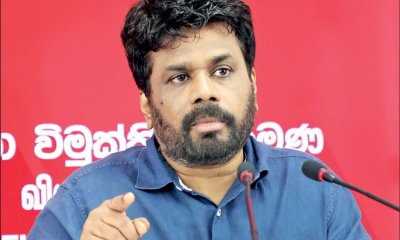
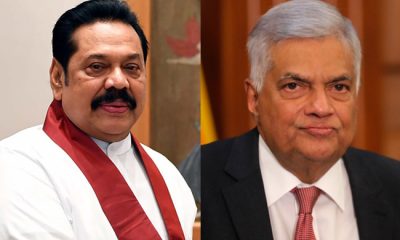
Whenever the JVP-NPP government gets into hot water, President Anura Kumara Dissanayake rushes to Parliament and makes special statements; the CID and the national anti-graft commission try to pull a rabbit out of the hat to distract the public. While the government is drawing heavy flak for mismanaging the current fuel quota system, with long queues of vehicles persisting near filling stations, the Commission to Investigate Allegations of Bribery or Corruption has recorded a statement from former President Gotabaya Rajapaksa on an allegation that during President Mahinda Rajapaksa’s government, he, as the Secretary to the Ministry of Urban Development, had a house allocated to a maid of the then Chief Justice (CJ) Mohan Peiris, in an Urban Development Authority housing scheme.
There is no gainsaying that an investigation needs to be conducted to find out whether there were irregularities in the allocation of the aforesaid house and the state suffered any losses therefrom, but there are far bigger issues that need to be addressed. The Rajapaksa government earned notoriety for cronyism, corruption, misuse of state assets, etc., but most of its questionable deals have not been probed. Similarly, the destruction of hundreds of state-owned buildings by the JVP in the late 1980s has gone uninvestigated despite the staggering losses those crimes caused to the state coffers. Maithripala Sirisena, whom the JVP helped secure the executive presidency in 2015, once revealed that the JVP had torched as many as 240 Agrarian Service Centres with paddy storage facilities countrywide during its second reign of terror (1987-89). Now that action has reportedly been taken to reinvestigate crimes, such as abductions, torture and extrajudicial killings in the Batalanda torture chamber in the late 1980s, why the arson attacks on the Agrarian Service Centres, more than 700 state-owned buses, about 14 trains, countless transformers, etc., have not been probed defies comprehension. They were clear violations of the Offences against Public Property Act and must be investigated.
Let the focus now shift from the maid’s house to her employer, Peiris, and some unresolved issues concerning his tenure as the head of the judiciary. One of the first few things that the UNP-led Yahapalana government did after the 2015 regime change was to remove Peiris as CJ. President Sirisena declared the appointment of Peiris as CJ null and void ab initio, and reinstated Dr. Shirani Bandaranayake, claiming that her impeachment had no legal validity. Interestingly, Sirisena himself had spoken and voted in favour of her ‘impeachment’ as a minister in the Rajapaksa government in 2013. Dr. Bandaranayake retired soon after her reinstatement, and Sri Lanka had three CJs on three consecutive days—Peiris, Bandaranayake and her successor K. Sripavan!
Strangely, the Yahapalana government, which claimed that Peiris had functioned as the CJ ‘unlawfully’, stopped short of taking any action against him for having held that position for two years. If it is true that Peiris’ appointment was invalid, as Sirisena and the UNP claimed, then it follows that everything he did as the CJ was unlawful. Peiris drew the CJ’s salary, enjoyed the perks of office, functioned as the Chairman of the Judges’ Institute of Sri Lanka, heard cases, gave judgments and signed vital documents and perhaps even cheques. Why didn’t the Yahapalana government take any action against Peiris and/or the person who appointed him CJ ‘unlawfully’? Sirisena and his erstwhile Yahapalana chums owe an explanation. Shouldn’t the JVP-NPP government probe these issues as well? In fact, it is duty bound to do so because the JVP was an ally of the Yahapalana government.
The UNP’s arguments against the ‘impeachment’ of CJ Bandaranayake were tenable and compelling. The Parliamentary Select Committee, which probed her, was biased; it allegedly refused to allow some witnesses to testify and failed to specify what the due process was. Most of all, the UNP said the resolution passed in a hurry to impeach CJ Bandaranayake had not specifically sought parliamentary approval for her removal. However, if the impeachment process had been flawed, as argued by the UNP and some legal experts, a proper way to right the wrong would have been for President Sirisena to have Parliament undo what it had done. The Yahapalana government, which mustered a two-thirds majority for the 19th Amendment, could have accomplished that task easily. Instead, President Sirisena chose to override Parliament. Sadly, the Bar Association of Sri Lanka egged him on to do what he did, unmindful of the politico-legal consequences of his arbitrary action. The unresolved constitutional imbroglio that arose from glaring violations of due process, high-handed executive action, etc., is certainly far more serious than the allocation of a house for Peiris’ maid and therefore needs to be addressed urgently.
Wednesday 18th March, 2026
Long lines of vehicles are still seen outside filling stations despite the introduction of the QR-based fuel quota system. They show no signs of going away any time soon. Teething problems associated with the QR-controlled fuel rationing have persisted longer than usual for three reasons—some system flaws, difficulties faced by filling station workers in scanning some QR codes, especially the old ones issued in 2022, and a supply shortfall that has made many pumps run dry. The JVP-NPP government came to power promising a digital economy, among other things, and unveiled an ambitious digital policy in the run-up to the 2024 presidential election. But it has not been able to ensure the smooth reimplementation of the QR-based fuel quota system, which was successfully used in 2022 to resolve a fuel crisis. So much for the government’s digital capability.
Some fillings stations have remained closed during the past several days for want of supplies, causing long queues near the ones where fuel is available albeit in insufficient quantities. The government must find out why these filling stations have not received fuel or whether they are hiding stocks. Its leaders know how the distribution of Ceylon Petroleum Corporation (CPC) fuel stocks was delayed in 2022 as part of a strategy to unsettle the then government. Complaints abound that many foreign-run filling stations do not receive supplies regularly. This is something the government must look into. It is not difficult to imagine how bad the situation would have been if all CPC-owned filling stations had been privatised.
The current fuel shortage is different from what we experienced in 2022, as we argued in a previous comment in response to some false claims made by the Opposition. Today, the country has dollars for oil imports, but the Iran conflict has disrupted global oil supplies, unlike in 2022, when it had no forex to pay for oil, which was readily available in the world market. So, the Opposition should stop comparing apples and oranges, and trying to gain political mileage out of the current fuel crisis.
However, the SLPP-UNP government managed to bring fuel queues to an end by introducing the QR-controlled fuel sales though it had neither dollars nor sufficient petroleum reserves at the time; the country was running on fumes, so to speak. Today, the government says the existing fuel reserves are sufficient for more than one month, and oil shipments are arriving on schedule, but it cannot manage the fuel stocks to ensure a reliable petroleum supply with the help of the QR-based rationing. It also claims that there are sufficient LPG stocks, but it has pathetically failed to resolve the countrywide LPG shortage. It may be recalled that the SLPP-UNP government sorted out a LPG shortage as well in 2022. It managed to do so despite the country’s forex woes and severely depleted gas stocks. The JVP-NPP government has no such problems. Sri Lanka’s Gross Official Reserves amounted to USD 6.0 bn (including a swap facility) at the time of the 2024 regime change. The current government has substantial reserves of foreign currency and fuel, but it cannot do away with the fuel queues, which are reportedly getting longer. Is it that the SLPP-UNP administration, which the JVP/NPP condemned as a failed regime, was more efficient and competent than the incumbent government in meeting the energy needs of the public amidst a crisis?
The biggest problem with the JVP-NPP government is that its leaders try to talk problems away instead of knuckling down to them. They let the grass grow under their feet, and when they begin to act, it is late. The manner in which they have sought to address the current fuel crisis is a case in point. They are in overdrive, doing what they should have done at least two weeks ago. They also had ample time to do a dry run of the QR-based fuel rationing system to prevent technical issues. They have endless meetings and nothing seems to come of them if the persistence of the problems they are intended to address is any indication.
As for long queues of vehicles near filling stations, the solution, in our view, is to replenish stocks expeditiously and couple the QR-based fuel quota system with last-digit or odd-even rationing.
Tuesday 17th March, 2026
US President Donald Trump and Israeli Prime Minister Benjamin Netanyahu prematurely claimed victory in their war on Iran immediately after killing Ayatollah Ali Khamenei and inflicting heavy damage on the Iranian military bases and economic nerve centres. Trump even snubbed UK Prime Minister Keir Starmer, when the latter decided to send a warship to the Gulf region belatedly; he said the US and Israel had already won the war and therefore he did not need British help. But Trump is now asking other countries to send their warships to ensure the safety of the commercial vessels sailing through the Strait of Hormuz, which Iran has closed and is using as an effective strategic lever to mount economic pressure on the US and its allies.
Trump keeps on contradicting himself. He has asked for ships from other countries while claiming that Iran has been ‘beheaded’. When Iran threatened to close the Hormuz Strait, Trump said he would deploy the US warships there. Iran has since attacked 16 or 18 ships in that strait. Trump now says, “Hopefully China, France, Japan, South Korea, the UK, and others that are affected by this artificial constraint will send ships to the area so that the Hormuz Strait will no longer be a threat by a nation that has been totally decapitated.” It was reported at the time of writing, that Trump had demanded help from all NATO allies to reopen the Strait of Hormuz. If Iran has been ‘decapitated’ as Trump claims, why can’t the US deploy its own warships to ensure the safety of vessels passing through the Hormuz Strait?
The response of the US allies to Trump’s request has been muted. China has reportedly rejected his call out of hand, saying the Strait of Hormuz is part of Iranian territory and Iran’s sovereignty must be respected. Why the other countries are wary of deploying their warships in a war the US and Israel have started is understandable. They know how dangerous naval incursions into Iran’s sea will be, with the war having taken an unexpected and unpredictable turn. Iran has unveiled new missile capabilities; it is now firing hypersonic missiles at Israel.
Washington has failed to live up to the expectations of its allies in the Persian Gulf. They expected the US to protect them against Iranian attacks. But they now have Iranian drones and missiles raining down on them, destroying their oil storage facilities and critical infrastructure. The US has sought assistance even from Ukraine, which has been dependent on Washington to fight Russia: it needs Ukrainian help to counter Iranian drone attacks on its allies in the region. This points to a serious military miscalculation the US and Israel have made. Shouldn’t they have done a proper assessment of Iran’s drone capability before going to war? They have spent billions of dollars to defend themselves against low-cost yet extremely destructive Iranian drones. Have Trump and Netanyahu bitten off more than they can chew in their war on Iran?
Trump, who once claimed that he deserved the Nobel Peace Prize more than anyone else, has plunged the entire world into chaos. Economies are groaning under soaring oil prices and global uncertainty. Economists have warned that at this rate the world may have a global recession to contend with sooner than expected. If the Iran conflict intensifies and/or drags on, the day may not be far off when economic hardships drive people to riot in many countries. Most of all, Trump’s military adventurism has severely damaged the foundation of the Washington-led global order, as it were. Iran is reportedly planning to allow passage for a limited number of tankers through the Strait of Hormuz on the strict condition that the cargo is traded in Chinese yuan and not US dollars. This strategy is aimed at not only circumventing US sanctions but also giving a boost to the de-dollarization campaign. The ongoing war has also made the US swallow its pride and do an about-turn on its sanctions on Russian oil.
In a dramatic turn of events, Trump has gone on record as saying that Washington is talking to Iran, but Tehran is not yet ready to make a deal to end the war. Iran has made it clear that it will not end the war on Washington’s terms. Iran’s President Masoud Pezeshkian has stated conditions for ending the ongoing conflict. He demands acceptance of Iran’s rights, reparations, and international guarantees against future aggression.
Had Trump acted wisely, weighing all possible military and economic ramifications of his military campaign and refrained from letting the genie out of the bottle in the Middle East, he would not have had to seek others’ help to force it back in. One can only hope that the other world powers will learn from the unfolding conflict, realise the need to act with restraint and strive to resolve the worsening Middle East conflict soon.

King Charles praises ‘living bridge’ with Nigeria at glitzy banquet

Our objective is to ensure that the Commission to Investigate Allegations of Bribery or Corruption operates as an independent institution, free from any external influence – PM

Showers above 50 mm can be expected at some places in the Central, Sabaragamuwa and Uva provinces and in Ampara district.

Oil nears $110 a barrel after gas field strike

Iran’s intelligence minister Esmail Khatib killed in air strike

Heat Index at ‘Caution Level’ in the Western, Sabaragamuwa, North-central, Southern and North-western provinces and in Monaragala, Mannar, Vavuniya and Mullaitivu districts

‘Dates have the highest sugar content to fight Coronavirus’

Sunday Island 27 December – Headlines

#SundayIsland 17th December – Headlines

Sunday Island – 28th March

Sunday Island Headlines – 21 March

Sunday Island – 21st February – Headlines
-

 Business4 days ago
Browns EV launches fast-charging BAW E7 Pro at Rs. 5.8 million
-

 Life style5 days ago
From culture to empowerment: Indonesia’s vision for Sri Lanka
-

 News2 days ago
CIABOC questions Ex-President GR on house for CJ’s maid
-

 Opinion7 days ago
M. D. Banda: Memories of Appachchi – II
-

 Business6 days ago
Sri Lanka Institute of Information Technology raises the bar for academic excellence
-
 Latest News5 days ago
QR code system will be implemented for fuel with effect from 06.00 a.m. today (15th)
-

 Life style5 days ago
Ranjith Fernando celebrates cricketing journey with Hob Nails to Spikes
-

 News3 days ago
Australian HC debunks misleading travel risk claims for Sri Lanka