
News
Now, Dolawatte denies he backed US-led LGBTQ project


Sri Lankan group appreciates Trump withdrawing support
By Shamindra Ferdinando
Former SLPP MP Premnath C. Dolawatte yesterday (23) claimed that a bill he presented to the last parliament was not meant to promote LGBTQ (lesbian, gay, bisexual, transgender and queer) rights. Attorney-at-law Dolawatte stressed that he sought to amend Sections 365 and 365A in the Penal Code which criminalised same-sex sexual activity, though it is hardly enforced.
The ex-MP Dolawatte said so responding to a query from The Island whether US President Donald Trump’s declaration that his administration would accept only two genders-male and female thereby ceasing US backing for various projects promoting LGBTQ rights would undermine the Sri Lankan campaign supportive of LGBTQ rights.
When pressed for a further explanation, the former MP insisted that his effort wasn’t intended to promote LGBTQ rights.
The then MP Dolawatte presented his bill to parliament in August 2022 just weeks after UNP leader Ranil Wickremesinghe was elected to complete the remainder of President Gotabaya Rajapaksa’s five-year term.
Responding to another query, the former MP said that the dissolution of parliament immediately after the presidential election in Sept., last year brought the process to an end.
Dolawatte is on record as having said that the proposed amendments to Sections 365 and 365A in the Penal Code would receive the backing of MPs with a progressive mindset. Section 365 of the Penal Code terms “voluntary carnal intercourse against the order of nature with any man, woman, or animal” as an “unnatural offence”, while Section 365A penalises “acts of gross indecency between persons”.
Having gathered outside the US embassy in Colombo on Tuesday (21), Mothers’ Movement of Sri Lanka urged President Trump’s intervention to stop LGBTQ agenda being forced on Sri Lanka as a pre-condition for US, IMF and World Bank assistance.
Alleging that the US, IMF and World Bank Exploited Sri Lanka’s bankruptcy to advance their despicable agenda, the group said children, teens, journalists, lawyers, medical professionals, law enforcement authorities, educationists and academia were targeted.
According to the group the Bureau of Democracy, Human Rights and Labour, USAID and Global Equality Fund provided substantial funds to promote LGBTQ rights here.
The group alleged that the European Union via European Instrument for Democracy & Human Rights, Netherlands via Dutch Ministry of Foreign Affairs/Human Rights Fund, Canada via Feminist International Assistance Policy, UK via Foreign, Commonwealth & Development Office, Sweden via Swedish International Development Agency (SIDA), Norway, Germany via Federal Ministry for Economic Cooperation & Development (BMZ), wholeheartedly backed the US project.
The UN threw its weight behind the high profile LGBTQ project with some Colombo based diplomatic missions openly intervening on their behalf, the group said.
Former MP Dolawatte claimed that the National People’s Power (NPP) government, too, had made various pledges to the international community.
A spokeswoman for the Mothers’ Movement of Sri Lanka told The Island that the new government should take a strong stand on this matter. The UN backed Western project was meant to weaken the traditional family thereby undermine the whole society. Interested parties even targeted parliamentarians as LGBTQ project had been one of the major objectives of the Biden administration that lavishly provided required funds, she said.





* Govt. lacks plan to meet IMF targets
By Shamindra Ferdinando
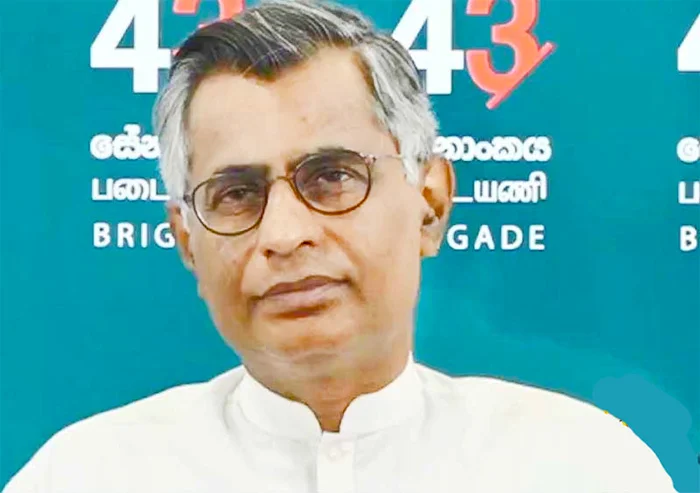
United Republican Front (URF) leader Patali Champika Ranawaka has alleged that the 22nd Amendment is aimed at enabling the National People’s Power (NPP) to perpetuate its rule without conducting elections.
The former Minister was addressing the media at the Flower Road Office of UNP leader Ranil Wickremesinghe on Tuesday (25). Alleging that the Pelawatte-based ‘red junta’ spearheaded the operation to enact the controversial 22nd Amendment, the ex-parliamentarian pointed out that neither President Anura Kumara Dissanayake nor Health and Media Minister Dr. Nalinda Jayathissa, who is also the Cabinet spokesman, never denied declarations made by various members of the NPP parliamentary group that elections wouldn’t be conducted for 10, 20 years.
The President and the Cabinet spokesman never clarified that such declarations were not the position of the government, Ranawaka said. The URF leader pointed out that some NPP/JVP members told those receiving appointments that they would also retire under the same administration.
Addressing the media after former External Affairs Minister Prof. G. L. Peiris, convenor of the Joint Opposition, said that the government recognised them as the real opposition. Referring to Dr. Jayathissa’s recent claim that they conspired at the residence of Prof. Peiris and challenged them to come on to the streets, ex-lawmaker Ranawaka thanked the Minister for the recognition at the expense of the Samagi Jana Balawegaya (SJB). The government accepted the challenge posed by them in spite of the main Opposition party, in Parliament, having 40 MPs, the URF Chief said, urging the government to reveal the identities of those who clandestinely led the ruling party.
The former MP said that the country was now aware of their conspiracies during the past six decades. Blaming the government for its inordinate delay in conducting the Provincial Council polls, and the failure to take tangible measures to do away with the executive presidency, as repeatedly promised in the run-up to the national elections in 2024, Ranawaka alleged that the government was busy conspiring to roll back the electoral map. He also alleged that President Dissanayake was leading the operation.
According to Ranawaka the government was keen to postpone elections indefinitely as its members feared to face the law under a different government.
Commenting on the economic situation, Ranawaka explained how under President Wickremesinghe tough measures were taken during the 2022 to 2024 period to stabilise the country with the backing of the International Monetary Fund (IMF). “However, the country cannot go on beyond 2027 under the current setup. In terms of the agreement with the IMF, the debt repayment was stopped. However, the country will have to start repayment in 2028,” the ex-MP said, pointing out the country’s reserves were down to USD 6.4 bn.
The ex-MP said the IMF expected Sri Lanka to maintain foreign reserves at USD 6.8 bn and to increase the reserves to USD 12 bn next year. In terms of the IMF’s recommendations, the foreign reserves have to be increased to USD 15 bn by 2028, Ranawaka said, recollecting how former President Ranil Wickremesinghe, at a recent book launch, explained the daunting challenges faced by the country on the economic front.
Ranawaka was referring to Wickremesinghe’s speech at the launch of former Minister Ranjith Siyambalapitiya’s book launch at the BMICH, where the former President warned of dire consequences if the government failed to adhere to the IMF formula.
The former Minister disputed the government’s much touted claim that corruption was dealt with. The person who caused an unprecedented gas crisis, in 2021, by promising to supply gas at a much lower price than what was paid by the then government at that time and ended up causing countrywide panic due to “accidental” blasts of domestic gas cylinders, received protection from this government.
The government conveniently refrained from initiating action against that person, Ranawaka said. Referring to the developments leading to President Gotabaya Rajapaksa’s government declaration of bankruptcy in April 2022, the ex-Minister claimed that the IMF, in a letter dated 7 March, 2022, alerted the Secretary to the President, the Finance Ministry and the Central Bank, of the impending economic collapse. The NPP government failed to take action against those responsible for creating the 2022 crisis, Ranawaka said.

Navy headquarters yesterday said it was continuing the search for Lt. Thilina Udayapriya, second-in-command of the Super Dvora Mark III Fast Attack Craft (FAC), which sank in the seas off Angulana, on 15 August, 2026. Of the 12-member crew, 11 were rescued but so far SLN efforts to locate the missing officer’s body had failed, sources said.
They said that the salvage operation of the sunken craft, taken delivery from Israel after the end of the war, is continuing amidst gruelling weather and rough sea conditions, and the sunken vessel is now off Bambalapitiya.
Sources said that the vessel collided with a sunken ship MV Thermopylae Sierra that sank in August 2012, during a monsoon storm. The ill-fated Super Dvora Mk III has gone over the ship wreck in spite of it being clearly demarcated in the nautical chart, aka hydrographic chart available to the ill-fated vessel’s crew. But authorities had failed to mark the site with a buoy to warn maritime traffic, in spite of public appeals. (SF)
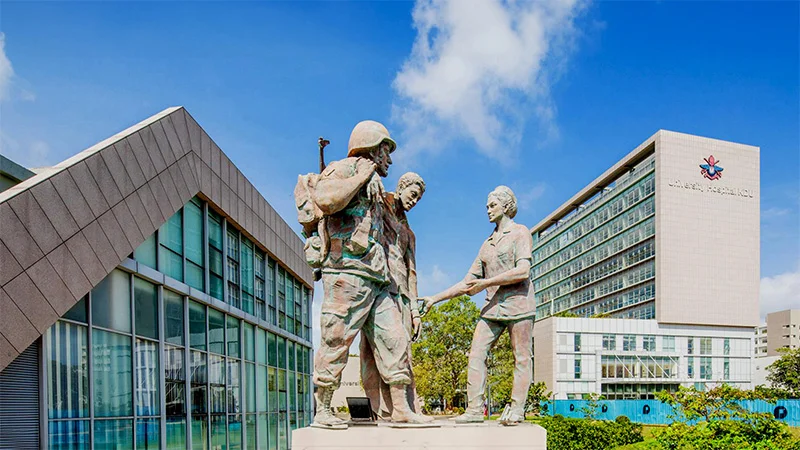
The Ministry of Defence, Ministry of Health and Mass Media, and the General Sir John Kotelawala Defence University (KDU), have signed a tripartite Memorandum of Understanding (MoU) to facilitate the expansion of free cardiothoracic surgery services by utilising the facilities of the General Sir John Kotelawala Defence University (KDU) Teaching Hospital.
The Defence Secretary Air Vice Marshal Sampath Thuyacontha (Retd), Secretary to the Ministry of Health and Mass Media Dr Anil Jasinghe, and Vice Chancellor of General Sir John Kotelawala Defence University Rear Admiral H. G. U. Dhammika Kumara, signed the agreement on behalf of their respective institutions.
The Defence MInistry said that the initiative, implemented in accordance with a Cabinet proposal submitted by the Minister of Health and Mass Media Dr Nalinda Jayatissa would reduce congestion and address the lengthy waiting list for cardiothoracic surgeries at the National Hospital of Sri Lanka (NHSL).
The Ministry stated: “Under the arrangement, specialist doctors and clinical staff of the Cardiothoracic Unit of the National Hospital will conduct free heart and thoracic surgeries and provide specialised treatment for patients at the KDU Teaching Hospital. KDU will provide the necessary infrastructure, medical facilities and specialised equipment, while the Ministry of Health and Mass Media will provide the required medicines, medical supplies and specialised medical care.”

Unyielding Dinusha, spirited tail hold off India to save Colombo Test

US golfer Gogel gets six-month ban for betting

UAE’s Asif Khan handed 15-month ban for using a banned substance

Nepal-Tibet floods: What happened, what caused them and who is missing?

Showers above 50 mm are likely in the Western, Sabaragamuwa and North-western provinces and in Kandy, Nuwara-Eliya, Galle and Matara districts

Patali alleges NPP conspiring to put off elections indefinitely

‘Dates have the highest sugar content to fight Coronavirus’

Sunday Island 27 December – Headlines

#SundayIsland 17th December – Headlines

Sunday Island – 28th March

Sunday Island Headlines – 21 March

Sunday Island – 21st February – Headlines
-
 News7 days ago
Country’s first woman Surveyor General appointed
-
 Business6 days ago
SriLankan Airlines makes ShakthiSAT Mission possible for talented Sri Lankan student
-
 Features7 days ago
Medical education in Sri Lanka: Then and now
-
 Latest News6 days ago
Imran Khan moved to private hospital amid deteriorating health
-
 Latest News6 days ago
Government has declared 21, 22 and 23 August 2026 as national days of mourning
-
 Features5 days ago
My secondary schooling after Royal Primary
-
 Latest News5 days ago
Tharanga edges out Chopra in 88m javelin battle
-
 News7 days ago
22A: Opp. demands all available SC judges hear petitions