
News
Norway: Too early to pass judgment on LG representation and women’s quota


Having recently perused ‘Necessary Yet Insufficient: Women’s Quota for Wider Political Representation in Sri Lanka’ and ‘Women, Quota and the Press: Media Coverage of the 2018 Local Government Elections’ released jointly by Women and Media Collective (WMC) and the Norwegian Embassy in Colombo, The Island felt the need to seek clarification as regards the Norwegian involvement in the ongoing project to enhance women’s representation not only at LG level but Provincial Council and Parliamentary levels as well. Booklets have been published in Sinhala and Tamil as mentioned in the foreword by Sanchia Brown, Programme Officer, WMC, who acknowledged that as a result of the new hybrid electoral system the total number of LG representatives increased from 4,486 to 8,356.
by Shamindra Ferdinando
The Norwegian Embassy says it is not fair to pass judgment on the Local Government system just four years after the first LG polls held under the new hybrid electoral system. It also insists that encouraging more women in politics remains a major priority for Norway and their efforts here are in line with the overall strategy.
The Island raised the issue with the Norwegian Embassy in Colombo as Norway was among those foreign sponsors of the high profile project here to enhance women’s participation at various levels of governance and challenge the postponement of scheduled Local Government polls by the current dispensation.
The Embassy spokesperson responded to the following questions that were submitted:
The Island: In addition to WMC, how many other civil society groups received Norwegian funding to promote enhanced women’s representation? Can you name them?
Norwegian Embassy: The Norwegian support to Women and Media Collective is the only project that directly targets increasing women’s representation in politics. However, the Norwegian Embassy also works with Sarvodaya, who runs a political leadership programme, aiming to encourage young people, both men and women, to get involved in political life.
The Island: Can you disclose the total amount of money granted to WMC and other organizations.
Norwegian Embassy: All information about Norwegian aid to Sri Lanka is publicly available through: Norwegian Development Aid (norad.no)
The Island:
Some newspaper groups including the Upali Newspapers, were left out of research on newspapers reporting on what the report called ‘historic 25% quota for women in LG from Sept 2017 to Dec 2018.’ As it was jointly issued by the WMC and the Norwegian embassy in Colombo, would you explain why some publishing houses were left out?
Norwegian Embassy: While Norway provides financial support to Women and Media Collective, we have no influence over the content of the research produced or the decisions made by individual researchers. Therefore, this question would be best addressed to the authors of the paper. Norway respects academic freedom and freedom of expression.
The Island:
Would it be possible for you to disclose the approximate amount of funding annually made available to civil society groups since 2015? And who were the recipients?
Norwegian embassy: Norwegian bilateral aid to Sri Lanka comes through at least 3 different channels: Directly from the Embassy through Norway’s development agency NORAD and directly from the Norwegian Foreign Ministry.
From 2015-2020, a total of 386.3 million NOK was earmarked to Sri Lanka, of which about 213.3 million NOK was channeled through either Norwegian or non-Norwegian Non-Governmental Organizations (NGOs). A full overview can again be found here: Norwegian development aid (norad.no)
The Island: Four years after the first LG polls held under the new hybrid electoral system, have you observed any improvement in the set-up or are your disappointed with the status of the LG administration?
Norwegian embassy: Norway is a decentralised country, and we believe strongly in local governance. Such structures need time to develop and mature, and require sufficient financing to function well. We therefore think it is too early to cast any judgment on the system only four years in.
The Island: Have you (the Government of Norway) discussed the need for enhanced women political representation at all levels with the government over the past several years?
Norwegian Embassy: Women’s equitable representation in elected political bodies is important for several reasons. Given that women constitute half the population in most countries, but have been historically marginalised from such bodies, ensuring equitable representations is important to deepen democratic governance and ensure more equitable development outcomes. Equitable representation is also important given that women may have different views, experiences and interests from men. The need for enhanced female political representation at all levels is a question the Embassy raises in most of our meetings with parliamentarians, party leaders, local officials and government representatives.



Former first lady Shiranthi Rajapaksa, wife of former President Mahinda Rajapaksa was produced before the Hulftsdorp court, after being arrested by officers of the Commission to Investigate Allegations of Bribery or Corruption (CIABOC) and produce
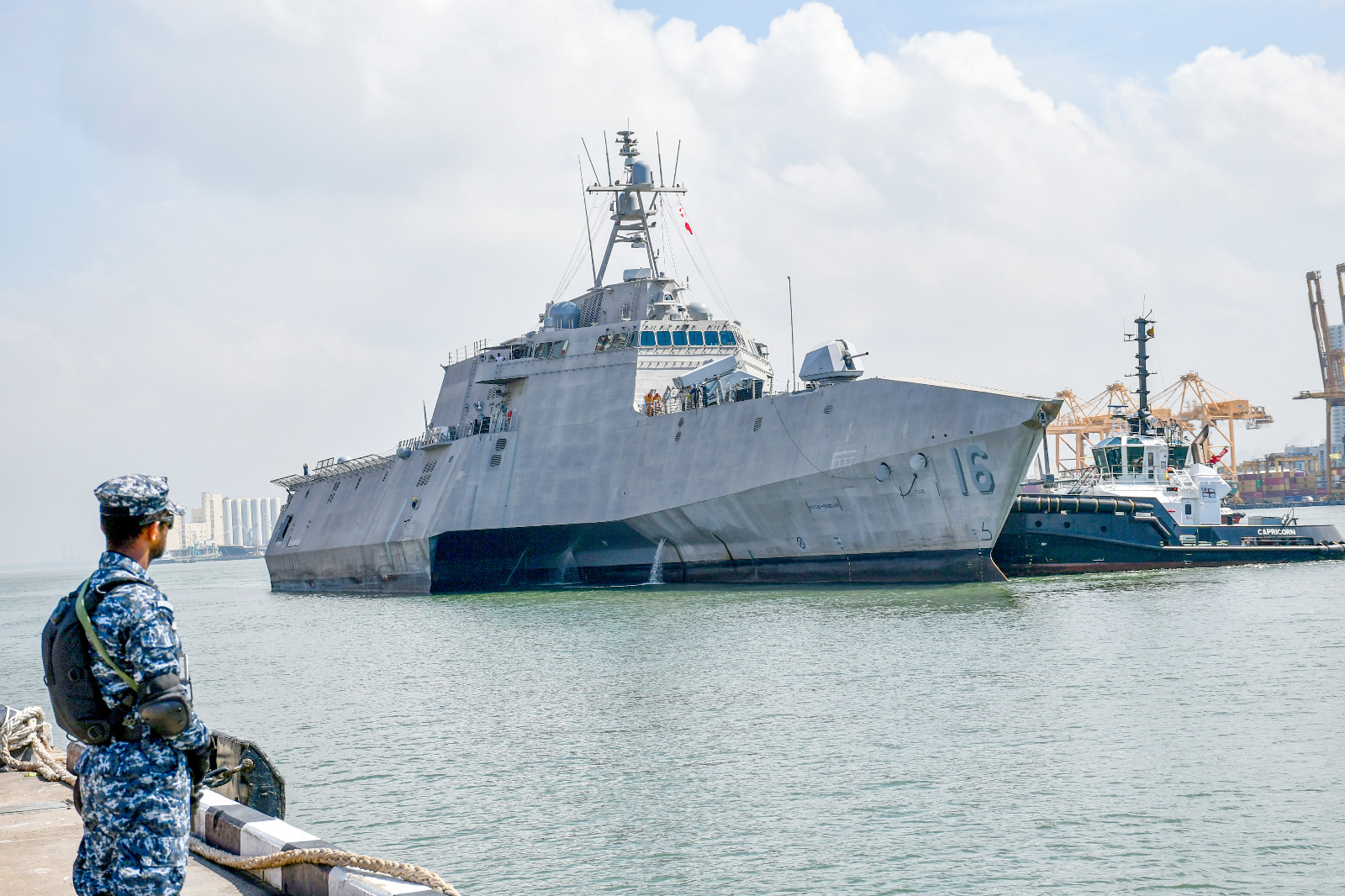
The U.S. Navy ship USS Tulsa (LCS 16) arrived at the Port of Colombo this morning, 7 October 2026 for replenishment purposes.
The visiting ship was welcomed by the Sri Lanka Navy in accordance with naval traditions.
The 127.7-metre-long platform is a Littoral Combat Ship commanded by Commander BM Wanier. Commissioned on 16 February 2019, USS Tulsa has since been in service with the US Navy.
The ship previously made a port call in Sri Lanka on 27 August 2025.
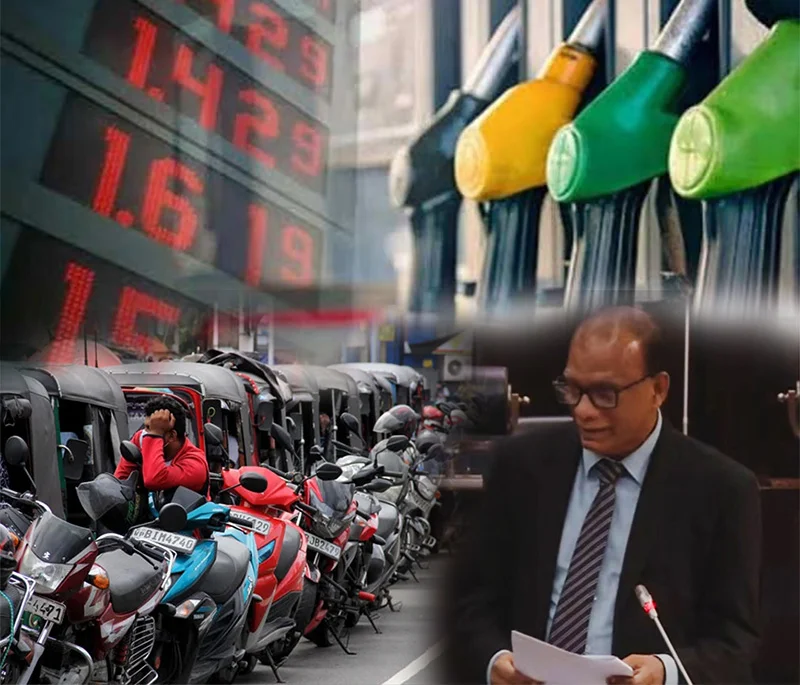
Govt. tells fuel distributors to maintain stocks to ensure uninterrupted supplies
by Saman Indrajith and Norman Palihawadane
The government had instructed private fuel distributors to maintain minimum stocks and ensure uninterrupted supplies to the market, Energy Minister Anura Karunathilaka told Parliament yesterday (06).
Karunathilaka said the Ministry of Energy Secretary had notified the relevant companies of the requirement, following a reduction in supplies by some private distributors, amid higher international fuel prices.
The Minister said private companies had informed the government that they were facing losses because international prices had risen while fuel was being sold, locally, at prevailing prices. As a result, some companies had reduced the volumes released to the market.
The reduced supplies had increased the burden on the Ceylon Petroleum Corporation (CPC), whose share of the diesel market had risen from about 54% to 82%, the Minister said.
“The CPC currently holds an 82% share of the market,” he said, adding that it had increased its supplies, compared with February, to compensate for the reduction by private distributors.
Karunathilaka said the government could not, under the existing agreements with private companies, specify the quantities they should supply to individual filling stations. However, it could require them to maintain minimum stocks in the country.
The Minister said the Energy Ministry had already instructed companies that had failed to maintain the required stocks to take steps to prevent supply disruptions.
The Minister attributed the queues reported at some filling stations to reduced supplies from private distributors, as well as normal variations in fuel distribution. He also said demand for CPC fuel had increased because private companies generally did not provide fuel to dealers on credit, while the CPC offered a three-day credit facility.
“We expect that, as the Ceylon Petroleum Corporation takes on this additional burden, the problem will ease to some extent by Wednesday or Thursday,” Karunathilaka said.
He said instructions had also been issued to increase supplies to CPC filling stations. A special discussion on the issue is scheduled for today (07), with officials of the Energy Ministry and CPC expected to participate,
along with President Anura Kumara Dissanayake.
Meanwhile, Petroleum Dealers’ Association officials have called for an early solution to the supply issue. Association Chairman D.V. Shantha Silva said queues had been reported at many filling stations, mainly those operated by private distributors.
He said the situation was not due to an overall shortage of fuel, but was linked to reduced orders by Lanka IOC, Sinopec and R.M. Parks amid concerns over losses incurred on fuel sales.
The Ceylon Petroleum Private Tanker Owners Association has urged motorists to refrain from panic buying, saying there was no nationwide disruption to fuel supplies.
The government earlier increased fuel prices and introduced a per-litre diesel subsidy following concerns raised by distributors over rising international prices.

Former first lady Shiranthi Rajapaksa arrested by CIABOC

U.S. Navy ship USS Tulsa arrives in Colombo for replenishment visit

Smriti Mandhana appointed India captain across formats

Ronaldo apologizes for Portugal walkout; says Jesus broke promise

Showers in the Western, Sabaragamuwa, Central, Uva, North-western and Southern provinces and in Anuradhapura and Mannar districts

Fuel crunch looms

‘Dates have the highest sugar content to fight Coronavirus’

Sunday Island 27 December – Headlines

#SundayIsland 17th December – Headlines

Sunday Island – 28th March

Sunday Island Headlines – 21 March

Sunday Island – 21st February – Headlines
-

 News7 days ago
US-assisted ‘Ice’ detection: NPC to examine IGP’s move to transfer drug-busting team
-

 Editorial6 days ago
Colombo Port drug bust: The plot thickens
-

 Editorial7 days ago
Drug busting, transfers and trust deficit
-

 Features4 days ago
The first woman in the foreign service or Ceylon Overseas Service it was then called
-
 News7 days ago
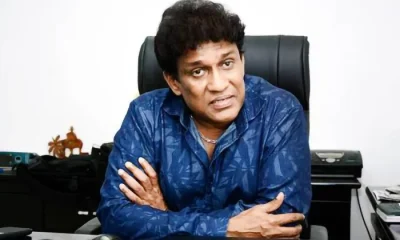
Sri Lankan facing death penalty in Saudi Arabia: Mano G appeals to Crown Prince
-

 Editorial5 days ago
Fuelling discontent and protest
-

 News3 days ago
Geneva takes up Sallay’s case and govt. ignores opportunity to answer accusations
-

 Latest News5 days ago
Tharindu Rathnayake, bowlers secure Asian Games Bronze for Sri Lanka