
Latest News
Nissanka’s 98* keeps Sri Lanka’s hopes of making tri-series final alive


Sri Lanka 148 for 1 in 16.2 overs (Pathum Nissanka 98*, Kamil Mishara 12, Kusal Mendis 25*; Brad Evans 1-36) beat Zimbabwe 146 for 5 in 20 overs (Brian Bennett 34, Brendan Taylor 14, Ryan Burl 37*, Sikandar Raza 37; Dasun Shanaka 1-36, Wanidu Hasaranga 2-23, Maheesh Theekshana 2-23) by nine wicket
Pathum Nissanka found a timely return to form as he struck a devastating 98 off 58 deliveries to help Sri Lanka chase down a target of 147 against Zimbabwe in just 16.2 overs, with nine wickets to spare, in what was a must-win game in Rawalpindi.
The result gives Sri Lanka their first win on the tour, and snaps a five-match losing streak in T20Is. It now means Sri Lanka go into their final game against Pakistan on Thursday knowing that a win will mean they qualify for the final of the tri-series.
Before Nissanka’s blitz, Sri Lanka’s bowlers had done well to restrict Zimbabwe to a sub-par total of 146 for 5. Maheesh Theekshana and Wanindu Hasaranga ended with identical innings-best figures of 2 for 23, as Zimbabwe struggled to push their innings into high gear.
There were starts for Brian Bennett and Sikandar Raza, but both fell at inopportune moments, while a final flourish from Ryan Burl was still not enough to challenge a strong Sri Lanka batting performance. The rest of the Zimbabwe batting once more fell flat. There was also a debut for Pavan Rathnayake, though Nissanka ensured Rathnayake was not required to bat.
After that monumental 107 against India in the Asia Cup, Nissanka’s next five white-ball scores read 29, 24, 24, 0 and 17. Not necessarily terrible form, but for a side that relies heavily on his power-hitting to set the tone, it’s no surprise that Nissanka’s dip in form has coincided with a lean period for Sri Lanka.
But here, with Sri Lanka chasing a middling total and needing a win to stay in contention for the final, Nissanka finally got one to stick. Sri Lanka produced their best powerplay of the series – 64 for 1 – with Nissanka accounting for 37 of those runs. Through the middle overs, Sri Lanka struck a further 73 – and Nissanka 51 of those. And only three death-overs deliveries were needed to seal the chase – a wide, a four, and a mammoth six.
Full or short, it didn’t matter, Nissanka dealt with them all just the same. There were sweeps off seamers, flat-batted wallops over extra cover, slaps down the ground, and mega pulls right across the square boundary. Richard Ngarava was singled out in particular, with the tall left-arm seamer being taken for four fours and three sixes.
Nissanka struck 11 fours and four sixes in total. Such was Nissanka’s control over proceedings that the final shot of the chase – a front-foot pull for six over backward square leg – had Nissanka looking up at the sky with a wry smile. No, not in celebration, rather disbelief that he had struck six when he intended to hit a four, as the latter would have allowed him to make a run at a second T20I century.
In 11 T20Is in 2025, Theekshana has 11 wickets at an economy rate of 7.78. It is his most expensive year so far – his overall economy rate stands at 6.97 – while also being his least impactful (in which he has played at least ten matches) since his debut in 2021. It has meant that despite picking up 24 wickets in 2024 at a strike rate of 18.7 – the figure stands at 23.1 for 2025 – Theekshana has found himself the odd man out on more than one occasion.
So having been dropped for Sri Lanka’s second game in this tri-series, Theekshana was recalled for this match, and promptly handed the new ball. By the time his three-over powerplay spell had ended, two of Zimbabwe’s top three had been sent back – he beat both edges to rattle the stumps of Tadiwanashe Marumani and Dion Myers – as his figures at that stage read 2 for 19. Zimbabwe, meanwhile, ended the powerplay on 44 for 2.
Theekshana’s final over arrived at the start of the death-overs period, and in it he gave away just four runs. That was four quality overs in the game’s most difficult period for bowlers on a good batting track. In a year where he hasn’t been at the top of his game, Theekshana seemed to have provided a timely reminder of what he offers when he’s at his best.
Of the 581 runs Zimbabwe have struck over the course of four games this series, 273 have come off the bats of Bennett and Raza – that roughly accounts for 46%. It is a worrying dependency as of late, but one that Zimbabwe will be grateful for at present.
After Theekshana’s early strikes, it was Bennett who ensured the scoring rate remained above seven runs an over, particularly with Brendan Taylor struggling for fluency at the other end. It meant that despite Taylor’s 14 off 16 balls, their partnership of 36 still came off 28 deliveries.
And once Taylor fell, it brought Raza to the crease, and together he added 36 off 30 balls with Bennett – they mixed the odd boundary with intelligent strike rotation. While they were together, Zimbabwe looked on track for at least 160 as the pair navigated the middle overs expertly.
Burl has flattered to deceive throughout this series, but against Pakistan last time out, his 67 off 49 deliveries finally realised some of what he had been threatening. Unfortunately for Burl, that knock came in a doomed cause, whereas on Tuesday evening, he revived an innings that had been limping to a close.
After Bennett and Raza had both fallen in the space of 13 deliveries courtesy Hasaranga’s double strike, Zimbabwe’s innings was in danger of unraveling. Of the four overs bowled at the death, two went for three and four runs, respectively. But Burl, who had been on 1 off 7 balls when Raza fell midway through the 15th over, ensured the innings retained some momentum by striking 36 runs off his next 19 deliveries.
If Tashinga Musekiwa had been able to offer more support than his eventual 6 off 14 balls, Zimbabwe may have reached the 160 they had been eyeing – or perhaps more.
Brief scores:
Sri Lanka 148 for 1 in 16.2 overs (Pathum Nissanka 98*, Kamil Mishara 12, Kusal Mendis 25*; Brad Evans 1-36) beat Zimbabwe 146 for 5 in 20 overs (Brian Bennett 34, Brendan Taylor 14, Ryan Burl 37*, Sikandar Raza 37; Dasun Shanaka 1-36, Wanidu Hasaranga 2-23, Maheesh Theekshana 2-23) by nine wickets
(Cricinfo)






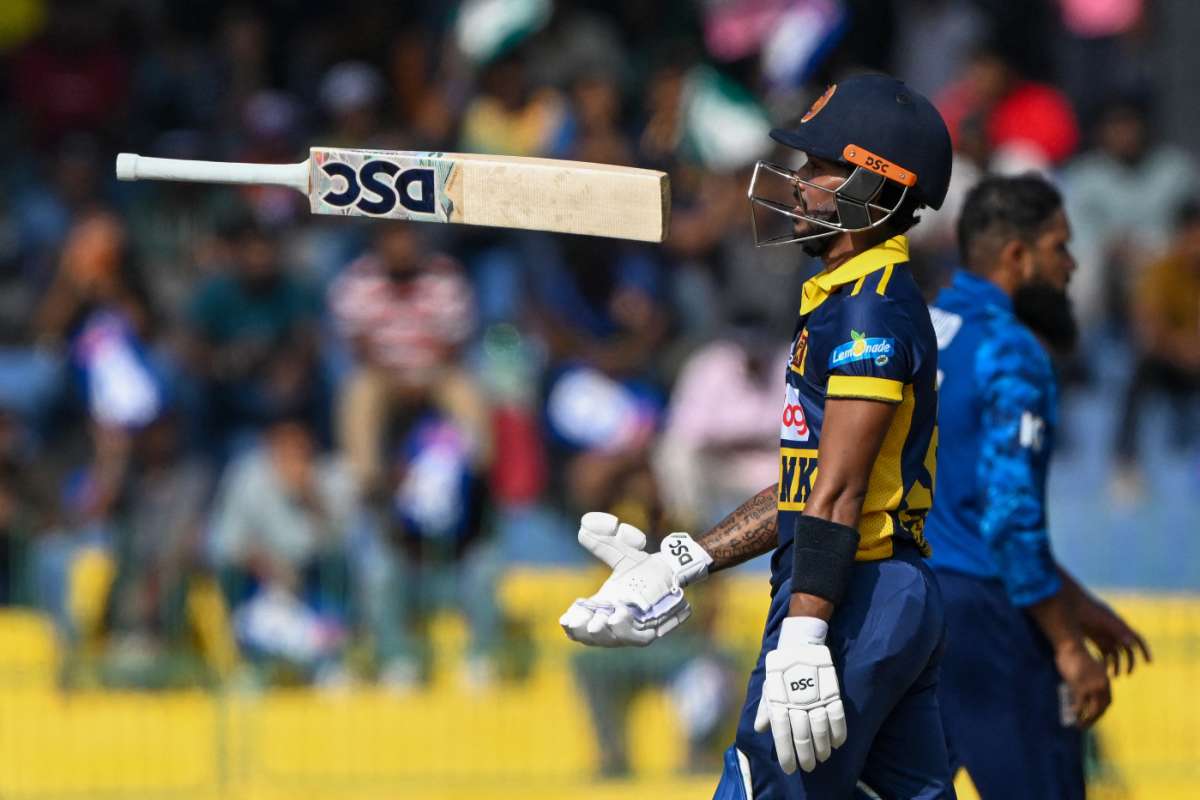
A Sri Lankan innings that never really got going eventually parked itself at middling total of 219, as they were bowled out in 49.3 overs in the second ODI in Colombo. It’s a total England will fancy themselves to chase down as they look to level this three-match series.
Sri Lanka’s innings was headlined by Charith Asalanka’s 45 off 64 and Dhananjaya de Silva’s 40 off 59, but at strike rates of 67.79 and 70.31 it tells you all you need to know about how well England kept a lid on the innings.
For the visitors the wickets were spread out, with Adil Rashid, Jamie Overton and Joe Root picking up two apiece, the latter with the final two balls of the innings. There were also wickets for Liam Dawson, Rehan Ahmed and the returning Will Jacks.
And much like in the first ODI, England’s varied attack – no less than eight options were used across the innings – sought to give little away. “Keeping the stumps in play,” was Harry Brook’s refrain, speaking after losing the toss, and on an uber-dry surface with boundaries square and behind mostly protected, the onus was on the Lankan batters to use their feet in order to access the boundaries at extra cover and deep midwicket.
That sort of strokeplay however proved detrimental to the Lankan cause with four of their top five falling in their attempts to access the boundaries in front of square. Kamil Mishara sought to bring some impetus to the innings after a miserly early burst from the England seamers, but his attempted lashing cover drive could not clear Ben Duckett in the circle, who held on at the second attempt.
Pathum Nissanka, who had patiently waded through the opening powerplay when the scoring rate sat below four an over, then sought to capitalise on his added time in the middle, but only managed to loft an inside-out drive to long-off.
Later on in the innings Dhananjaya whacked one low to Root at midwicket, before the set Asalanka found deep midwicket with a slog sweep.
And arguably Sri Lanka’s best batter at accessing those regions, Kusal Mendis, ran himself out for a ground-out 26, when he cut one straight to point and absentmindedly set off for the single. The throw from the fit-again Jacks was pinpoint and found Mendis easily short as he sought in vain to fling himself back to safety.
There were promising stands between, notably a 42-run effort between Nissanka and Mendis and 66 between Dhananjaya and Asalanka, but none of the batters involved were able to push on and up the rate of scoring over any concerted period of time.
Pavan Rathnayake’s 29 off 34 had also shown promise, but he fell foul looking to clear the straight boundary as he sliced one to long-off, and in the process silenced an energetic Khettarama crowd.
The frustrating nature of Sri Lanka’s innings was illustrated by the fact that five batters scored at least 25 and faced at least 30 deliveries, but the highest score remained Asalanka’s 45.
England, to their credit, stuck to and executed their plans well. The use of eight bowlers – six of them spinners – meant Sri Lanka’s batters were ever really able to get a measure of any one bowler. And while the lengths were consistent, the pace of the deliveries was varied. It meant that even when a set batter such as Nissanka sought to take on the attack, Rashid was able to successfully deceive him in the flight.
Dunith Wellalage once more looked enterprising during a late cameo, but despite finding two boundaries in his brief stay, his 20 off 19 was far less damaging to England’s cause than had been in the first ODI.
England bowled 40.3 overs of spin across their innings, breaking their previous record of 36. That came in Sharjah in 1984-85, when Norman Gifford captained England at the age of 44, and took four wickets. The team wore black armbands during the first ODI after his death last week.
Brief scores:
Sri Lanka 219 in 49.3 overs (Charith Asalanka 45, Dhananjaya De Silva 40; Joe Root 2-12, Jamie Overton 2-21, Adil Rashid 2-34) vs England
(Cricinfo)
(Cricbuzz)
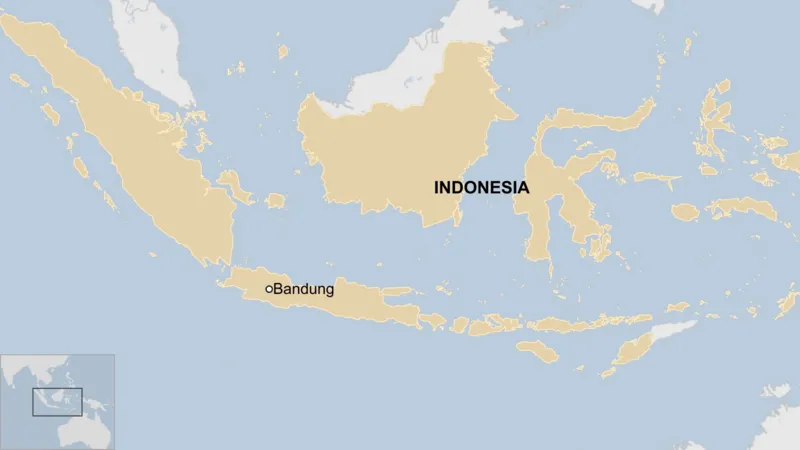
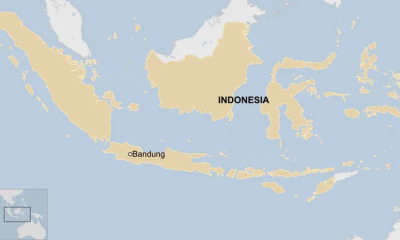
At least seven people have died and more than 80 others are missing after a landslide hit Indonesia’s West Java province, officials said.
The landslide occurred in the West Bandung region, south-east of the capital Jakarta, following days of intense rainfall.
More than thirty homes were destroyed after “landslide material buried residential areas, causing fatalities and affecting local residents”, Indonesia’s disaster mitigation agency said in a statement.
Flooding, landslide and extreme weather alerts have also been issued for the broader region.
The landslide hit the village of Pasirlangu around 02:30AM on Saturday [24] (19:30 GMT).
Two dozen people were evacuated safely from the affected region, according to Abdul Muhari, communication chief of the National Search Agency.
Images shared by local news outlets showed homes buried under mud and debris.
[BBC]

Sri Lanka succumb for 219 as spin-heavy England turn screw

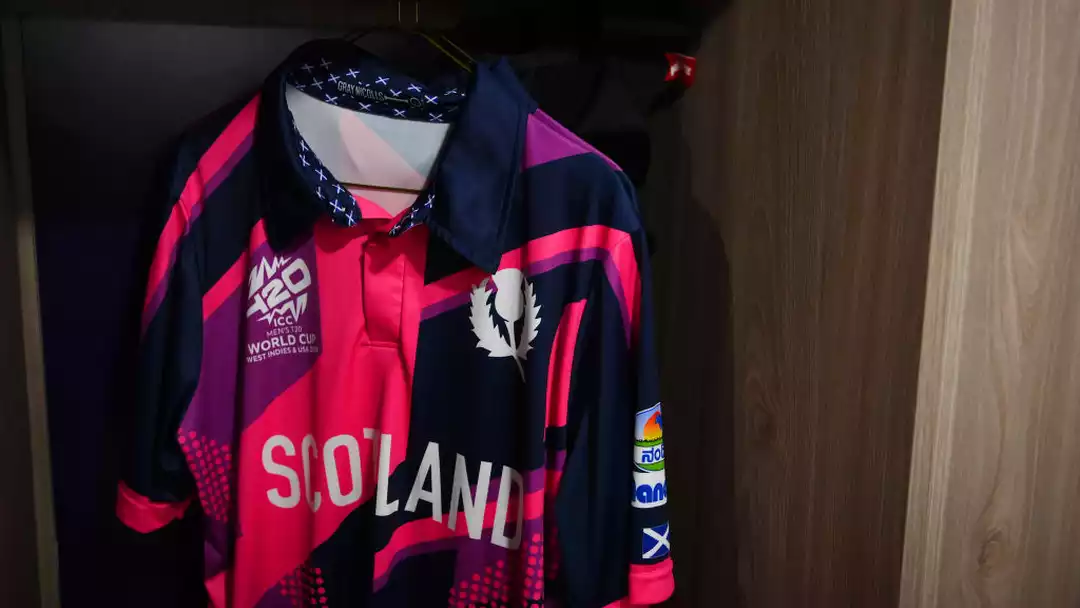
T20 World Cup 2026: ICC replace Bangladesh with Scotland

Indonesia landslide kills 7, dozens more missing

Ukraine condemns ‘brutal’ Russian strikes ahead of second day of peace talks

Sri Lanka bat first in second ODI

Colombo Stock Exchange (GL 12) donates LKR 25 million to the “Rebuilding Sri Lanka” Fund

‘Dates have the highest sugar content to fight Coronavirus’

Sunday Island 27 December – Headlines

#SundayIsland 17th December – Headlines

Sunday Island – 28th March

Sunday Island Headlines – 21 March

Sunday Island – 21st February – Headlines
-

 Editorial7 days ago
Illusory rule of law
-

 Features7 days ago
Daydreams on a winter’s day
-

 Features7 days ago
Surprise move of both the Minister and myself from Agriculture to Education
-

 Features6 days ago
Extended mind thesis:A Buddhist perspective
-

 Features7 days ago
The Story of Furniture in Sri Lanka
-

 Opinion5 days ago
American rulers’ hatred for Venezuela and its leaders
-
 Features7 days ago
Writing a Sunday Column for the Island in the Sun
-

 Business3 days ago
CORALL Conservation Trust Fund – a historic first for SL