
Features
New York and America rebuke Trump


New York, New York … City that doesn’t sleep … king of the hill, top of the heap … where if you make it, you can make it anywhere – made the most sensational news this week, but not for anything the paean of a song that John Kander wrote and Frank Sinatra immortalized. It made news by electing Zoran Mamdani, a 34 year American citizen of colour without borders, as its new Mayor and giving more than a little jolt to every scaffolding of all the political, cultural and economic structures of the American establishment. The jolt may not come to mean anything in any final outcome, but it is impossible to miss the moment of its occurrence.
Mamdani’s election on Tuesday, October 4th, was the most dramatic rebuke to Trump, but it was not the only one. In multiple elections in New Jersey, Virjinia, Pennsylvania, Georgia and California, the voters decisively turned against Trump and his executive overreaches. It is not the numbers of votes that matter but the restive vibes that are finally permeating America’s body politic. It certainly builds on and extends the momentum created by the No Kings protests held across America in June, July and October.
Dick Cheney’s Legacy
On Monday, the day before the vote, former Vice President Dick Cheney passed away. Cheney is considered to be the most powerful Vice President in modern American history and was the architect of the war on terror in Afghanistan and Iraq that marred the presidency of Bush the younger and precipitated the presidency first of Barack Obama a progressive centrist and later that of Donald Trump a crass opportunist who has been hugging the extreme right.
Although he vigorously opposed Trump and his methods and publicly supported Kamala Harris in the 2024 election, Cheney was the original champion of the concept of unitary president that Trump is now stretching to ridiculous and dangerous limits through his executive orders. There is an esoteric debate among online pundits as to who has done greater damage to the American political system – Cheney or Trump?
I put that question to my daughter, Menaka, a political theorist, and her ready response was that there are different levels of bad and evil and that it is all there – in The Eighteenth Brumaire! Who better than Marx for diagnosing historic facts and personages? History alternates between farce and tragedy and the traditions of the dead weigh down on the brains of the living.
But then, as the Mayor elect Mamdani gallantly quoted Jawaharlal Nehru in his victory speech in New York: “A moment comes, but rarely in history, when we step out from the old to the new, when an age ends, and when the soul of a nation, long suppressed, finds utterance.
” The quote is from Nehru’s celebrated midnight independence speech in 1947 made impromptu without text, notes or teleprompter, immediately following the more memorable line: “At the stroke of the midnight hour, when the world sleeps, India will awake to life and freedom.”
Quoting Nehru in New York may not go down well in today’s New Delhi, and ‘that is how things are’ today. But fellow Indian American and Democratic Congressman from California, Ro Khanna, has welcomed it as a sign of Mamdani’s authenticity. Khanna, a respected Congressman, identifies himself as a Progressive Capitalist, but wholeheartedly supports the New York exploits of Mamdani, the Democratic Socialist.
Quoting Nehru is also indicative of the new Mayor’s home schooling and the influence of his parents Mahmood Mamdani and Mira Nair, respectively, of Gujarati Muslim and Punjabi Hindu origins. His father is an academic in postcolonial studies, who gave Zoran his middle name, Kwame, after Africa’s first postcolonial leader, the charismatic Kwame Nkrumah of Ghana. Zoran’s mother is the celebrated filmmaker of Mississippi Masala.
Born in Kampala, Uganda, lived in Johannesburg, South Africa and finally settled in New York, Zoran Nkrumah Mamdani is the quintessential millennial without borders. An activist from his Bronx school days in New York, and Bowden University days in Maine, Zoran is a talented communicator, writer, musician, rap singer and filmmaker. He is the consummate activist artist rather than the ideal philosopher politician. But his artistic talents and media skills have served him well in making the biggest political splash on the world’s biggest city stage.
Trump and Mamdani
The Economist (November 1st) is touting it as “The battle for New York”, between the Mayor elect Mamdani and the City’s enfant terrible of a son, now US President, Donald Trump – “two skillful politicians with radical plans.” Trump’s plans are coming home to roost much sooner than anyone may have thought. And there are scores of highly placed doubters as to whether any of Mamdani’s socialist plans will ever pass in the citadel of capitalism.
The Mamdani manifesto – promising free daycare, free transit, affordable groceries, $30 minimum wage, and moratorium on rent, all paid by taxing wealthy, has resonated resoundingly with New York voters, giving him over 50% of the vote, and good margin wins in four of New York’s five boroughs, with over 60% of young New Yorkers voting for him.
But the establishment powers and voters over 65 are skeptical about him, about his promises and his ability to deliver them. There is no underestimating the challenge facing him, although Mamdani’s policies are not infeasible or impractical. They have been implemented in many European countries, and Mamdani himself has alluded to a form of Scandinavian socialism as appropriate for New York.
But many in the New York city administration support him and he has reached out to those with municipal experience to lead the transition to office before he is sworn in as Mayor on January 1. The transition is all women with impressive background and credentials and includes the widely known and respected former Federal Trade Commission Chair Lina Khan in the Biden Administration. She would bring heft to the legal and fiscal side of the new administration when it comes to taxation and pushing back on President Trump’s illegal threat to stop the flow of federal funds to the City.
But for all his haranguing about Mamdani’s candidacy and mayorship, Trump may not have the time or the means to take the fight to Mamdani. He already has too many other fires to worry about, all of them he created and which are now coming back to burn him. He and the Republican Party will of course try to use Mamdani and his brand of democratic socialism as the new face of the Democratic Party to scare away the American voters. They already did in Tuesday’s elections but got beaten anyway.
The Democratic Party is also divided at the top in spite of the experiential unity and solidarity among the people at every layer that is below the establishment. The brahmins of the party have generally kept a safe distance from Mamdani. But the progressive socialists who have mostly been a bank bench force in the party, except during presidential primaries, openly embraced Mamdani and have now become a national force that the party establishment has to reckon with.
Bernie Sanders and AOC have been supporting Mamdani from the beginning and his victory in New York opens a new chapter for American progressivism. Rather than Mamdani becoming Trump’s political whipping boy, it is Trump who is making himself to be the galvanizer of all Americans who want America to be inclusive in its promises to everyone who chooses to live there.
by Rajan Philips ✍️


The contemporary global landscape is currently defined by two distinct but interconnected theaters of conflict that are fundamentally reshaping the future of military engagement, as noted by political analyst Fareed Zakaria. This shifts the advantage toward smaller states, or even non-state actors, who do not need to defeat a superpower in direct confrontation; they only need to sustain a constant level of low-cost harassment. In the Middle East, the escalating tensions between the United States and Iran have moved beyond traditional brinkmanship into a high-stakes confrontation centred on the Strait of Hormuz and regional infrastructure. This direction is characterised by Iran’s sophisticated use of asymmetric ‘precise mass’ to challenge American naval and technological superiority, forcing a re-evaluation of how a superpower maintains deterrence against a revolutionary regime that views its own hardware as expendable. This theatre serves as a primary example of how a medium-sized power can utilise low-cost, high-volume technology to neutralize the traditional advantages of a much wealthier adversary, potentially driving the region toward a dangerous nuclear threshold as conventional red lines are blurred.
Simultaneously, the war between Ukraine and Russia has become the world’s preeminent laboratory for the digital transformation of the battlefield. The direction of this conflict has shifted from a 20th-century war of attrition into a 21st-century war of algorithms, where the most critical ammunition is no longer just artillery shells, but data and software. Ukraine’s rapid adaptation—turning commercial drones into precision interceptors and using AI to process millions of combat images—has created a template for modern survival against a larger industrial power. Together, these two conflicts signal a global transition where the ‘exquisite’ military models of the past are being dismantled by the ‘new arithmetic’ of mass-produced precision. This essay examines how the inversion of war economics in these regions is ensuring that future supremacy will not belong to those with the most expensive platforms, but to those who can master the integration of industrial-scale with near-real-time software intelligence.
Fundamental departure
The ‘New Arithmetic of Conflict’ represents a fundamental departure from the 20th-century military paradigm, shifting the focus from high-cost, high-performance ‘exquisite’ systems to the power of ‘precise mass.’ For the last 50 years, military supremacy—particularly for the United States and its allies—has been defined by technologically superior platforms, such as the F-35 fighter jet or the Tomahawk cruise missile. While these systems are undeniably magnificent in their capabilities, they are also incredibly costly and irreplaceable in the short term. Because they take years to design and manufacture, losing even a handful in active combat is strategically damaging and painful for a modern military. This old model relied on a limited number of high-end assets that were slow to produce and even slower to replace, creating a vulnerability that smaller, more agile adversaries have now begun to exploit.
This traditional economic model is being turned upside down by the rise of cheap, commercial-off-the-shelf technology that achieves results previously reserved for superpower budgets. The emergence of the Shahed-type drone, which costs approximately $35,000, illustrates this shift perfectly. Unlike a $2 million cruise missile, these ‘one-way’ drones are built from common parts and can be launched in massive swarms. This creates a state of ‘precise mass,’ where the sheer volume of incoming, low-cost threats can overwhelm even the most sophisticated and expensive defence systems. The attacker no longer needs a massive industrial base to strike with precision; they only need the ability to scale simple, autonomous hardware.
Perhaps the most radical aspect of this inversion is the ‘cost-exchange ratio’ between attack and defence. In the past, an attacker generally had to spend more to destroy a target than a defender spent to protect it. Today, the arithmetic favours the attacker by an order of magnitude. To intercept a single $35,000 drone, a defender may be forced to fire a Patriot interceptor missile that costs roughly $4 million. This means the defender is spending over 100 times more than the attacker just to maintain the status quo. This economic reality suggests that a wealthier nation can effectively be ‘bankrupted’ or depleted of its ammunition reserves by a much smaller state or even a non-state actor using constant, low-cost harassment.
Primary laboratory
Ukraine has served as the primary laboratory for this new era of warfare, demonstrating that the real value in modern conflict is shifting from hardware to software and data. Ukrainian forces are producing stinging interceptor drones for as little as $2,000, capable of taking down far more expensive hardware. More importantly, they are treating battlefield data as a strategic asset, using millions of annotated images from combat flights to train drone AI. This creates a cycle of rapid wartime adaptation where lessons from the battlefield are turned into mass production in days rather than years. Ultimately, the winner of future conflicts may not be the nation with the finest individual platforms, but the one that can combine a small number of ‘exquisite’ weapons with a vast, intelligent, and cheaply networked mass of autonomous systems.
Building on the distinction between the ‘exquisite’ and the ‘expendable,’ the shift in military doctrine reflects a move away from the post-Cold War reliance on a small number of ultra-sophisticated assets toward a more resilient, high-volume architecture. For decades, Western military superiority was predicated on having the most advanced technology in the sky or on the sea, but the sheer cost and complexity of these systems have created a ‘fragility of excellence.’ When a single stealth fighter costs over $100 million, its loss is not merely a tactical setback but a national news event and a significant blow to the overall fleet’s readiness. This creates a psychological and strategic ‘risk aversion,’ where commanders may hesitate to deploy their most capable assets in high-threat environments for fear of losing an irreplaceable piece of national infrastructure.
Furthermore, the industrial reality of ‘exquisite’ systems is that they are built on highly specialised, low-volume production lines. In a high-intensity conflict, the rate of attrition—the speed at which equipment is destroyed—can quickly outpace the capacity of a modern industrial base to replace it. If a nation can only produce a few dozen advanced interceptors a year but loses hundreds of drones or missiles in a single week of combat, the mathematical deficit becomes insurmountable. This bottleneck has forced a re-evaluation of what constitutes a ‘good’ platform; the priority is shifting toward systems that are ‘good enough’ to be effective but cheap enough to be lost without compromising the mission or the budget.
In contrast to these legacy systems, the ‘expendable’ model treats hardware as a consumable resource, much like ammunition. By utilising modular designs and civilian-grade components, nations can mass-produce thousands of autonomous units that are inherently ‘attrition-tolerant.’ This does not mean the end of high-end technology, but rather its repositioning. Instead of a single $100 million jet trying to do everything, the future likely involves a ‘high-low’ mix where a few exquisite platforms act as command-and-control hubs, orchestrating vast swarms of cheap, expendable drones. This evolution ensures that even if the enemy successfully targets dozens of units, the collective network remains functional, shifting the strategic advantage back to the side that can sustain the fight through industrial scale and digital adaptability.
Concept of ‘precise mass’
The concept of ‘precise mass’ represents a strategic pivot where quantity possesses a quality of its own, enabled by the democratization of high-end technology. Historically, precision was a luxury available only to the world’s most advanced militaries, requiring specialised Guidance Systems and satellite constellations. Today, the ‘New Arithmetic’ flips this model by integrating commercial-off-the-shelf components—such as GPS chips found in smartphones and engines from hobbyist aircraft—into lethal, autonomous platforms.
This shift allows smaller states and non-state actors to achieve tactical objectives that once required a superpower’s budget, effectively levelling the playing field through the clever application of low-cost innovation.
The ‘Shahed Model’ serves as the primary case study for this transformation. By producing ‘one-way’ suicide drones for approximately $35,000 each, Iran has created a weapon that is essentially a flying piece of ammunition.
Because these drones are built from common, globally available parts, they are insulated from many traditional supply chain disruptions and can be manufactured at an industrial scale that far outpaces sophisticated cruise missiles. This approach prioritises ‘good enough’ technology—systems that are sufficiently accurate to hit a target but inexpensive enough to be deployed in staggering numbers without financial second-guessing.
The true power of this model is realised through ‘swarm tactics,’ which weaponise the mathematical limitations of modern air defences. When a country launches dozens or even hundreds of these low-cost drones simultaneously, it forces the defender into a ‘saturation’ crisis. Even the most advanced missile defence systems have a limited number of interceptors and can only track a finite number of targets at once. By flooding the airspace with cheap decoys and suicide drones, an attacker can ensure that while many units are shot down, a sufficient percentage will inevitably leak through to strike their targets. This creates a state of ‘precise mass,’ where volume becomes the ultimate delivery mechanism for precision, rendering traditional, high-cost defence umbrellas increasingly obsolete.
This evolution signifies that the era of the ‘silver bullet’—the single, perfect weapon—is giving way to the era of the ‘steel rain.’ In this new environment, the strategic advantage shifts to the side that can manage the highest rate of ‘precise attrition.’ Success is no longer measured by the technical sophistication of a single strike, but by the ability to sustain a continuous, overwhelming flow of autonomous threats that exhaust the enemy’s resources, patience, and defensive capacity.
‘Bankruptcy of the Defence’
The ‘Bankruptcy of the Defence’ represents a critical failure in the modern military-industrial complex’s ability to counter asymmetric threats. In the 20th century, the financial burden of warfare typically fell on the aggressor, who had to invest in expensive bombers or long-range missiles to penetrate a nation’s borders. Today, that economic gravity has shifted entirely. The most radical part of this inversion is the ‘cost-exchange ratio,’ a mathematical reality that turns defensive success into a financial liability. When a defender successfully intercepts a threat, they are often winning the tactical battle while simultaneously losing the economic war.
This disparity is most visible in what can be called the ‘$4 Million Solution.’ In modern conflict zones, we regularly see sophisticated air defence batteries—designed to intercept high-altitude ballistic missiles—being forced to engage low-speed, ‘suicide’ drones. Using a $4 million Patriot interceptor to neutralise a $35,000 Shahed-type drone is an unsustainable strategy. Even if the defence achieves a 100% intercept rate, the attacker is essentially ‘trading up’ in value at a staggering scale. The defender is forced to expend a finite, high-cost resource to eliminate a nearly infinite, low-cost nuisance, creating a logistical bottleneck where the supply of interceptors can never meet the demand of the swarm.
This ‘Losing Game’ fundamentally alters the grand strategy of global powers. Mathematically, when a defender is spending over 100 times more than the attacker per engagement, they are participating in a process of rapid financial and material depletion. As Fareed Zakaria notes, this ‘new arithmetic’ shifts the advantage toward smaller states, insurgent groups, or even criminal organisations. These actors do not need to defeat a superpower’s navy or air force in a direct confrontation; they only need to sustain a constant level of low-cost harassment. Over time, the cost of maintaining a ‘perfect’ defense becomes so high that it can effectively bankrupt a wealthier opponent or force them to withdraw from a region simply because the price of protection has become greater than the value of the presence.
Interceptors alone won’t do
Ultimately, this economic inversion suggests that the future of defence cannot rely on ‘exquisite’ interceptors alone. The current model is built on a scarcity of precision, but in an era where precision is mass-produced, the defense must find a way to make interception as cheap as the intrusion. Until a nation can field directed-energy weapons or low-cost kinetic interceptors that match the $35,000 price point of the threat, they remain trapped in a defensive paradigm that is both mathematically flawed and strategically exhausting.
The final piece of this military evolution is the emergence of Ukraine as the ‘Great Laboratory’ of modern warfare, where necessity has birthed a model of adaptation that operates at wartime speed. This environment has transformed the country from a passive recipient of aid into a sovereign architect of a new kind of combat. Central to this transformation is the development of the ‘STING’ interceptor drone. Produced by groups like Wild Hornets for approximately $2,000, these drones can reach speeds of 280 km/h—fast enough to chase down and destroy the lumbering Shahed drones that have plagued Ukrainian infrastructure. By mid-2025, these low-cost predators had already downed over 3,000 enemy targets, proving that a $2,000 solution could reliably neutralize a threat costing tens of thousands, further tilting the economic scales in favor of the agile defender.
However, the most significant output of this laboratory is not the hardware itself, but the data it generates. Defense Minister Mykhailo Fedorov has noted that Ukraine now possesses a unique array of battlefield data that is unmatched anywhere in the world, including millions of annotated images gathered during tens of thousands of combat flights. In a historic move, Ukraine has begun opening access to this ‘digital ammunition’ through a dedicated AI platform. This allows international partners and defense firms to train their algorithms on real-world combat footage—spanning everything from electronic warfare interference to the movements of camouflaged ‘turtle tanks’—bridging the ‘sim-to-real’ gap that often causes sophisticated Western drones to fail in unpredictable, messy environments.
‘Software-defined’ battlefield
This data-centric approach has led to a ‘software-defined’ battlefield where the loop between a lesson learned, and a technical update is measured in days. Ukraine is now moving toward a procurement model where AI-driven analytics, rather than manual requests, determine which systems are purchased based on their real-world effectiveness. By treating every drone sortie as a data point in a broader matrix, the Ukrainian military is effectively closing the loop on procurement and employment, ensuring that only the most effective, attrition-tolerant technologies reach the front. This institutionalisation of failure analysis into the next generation of software means that the ‘Made in Ukraine’ badge has become a global gold standard for battle-proven, autonomous technology.
Ultimately, the implications of this laboratory stretch far beyond the current conflict. As human judgment gradually gives way to computer algorithms for target detection and navigation, the war’s most valuable legacy may be the creation of the world’s first ‘algorithmic’ military. The transition from industrial mass to algorithmic precision suggests that the countries that prevail in the future will not be those with the largest stockpiles of stagnant hardware, but those that can own and manage the ‘data polygons’ necessary to refine their autonomous systems in near-real time. Ukraine is no longer just fighting a war; it is hosting the debut of a future where data is the ultimate force multiplier.
The inversion of war economics signifies a fundamental shift where industrial capacity and software integration have eclipsed the traditional pursuit of ‘technological exquisiteness’ as the primary metrics of military power. For decades, the measure of a superpower was its ability to field a small number of nearly invulnerable, multi-million-dollar platforms. However, in the modern landscape, these ‘exquisite’ systems are increasingly vulnerable to ‘precise mass’—vast swarms of low-cost, autonomous drones that can be produced at a rate of thousands per day. This transition means that the ‘physical platform’ is becoming a commodity, while the true competitive advantage lies in the ‘compute foundation’ and ‘software-defined’ capabilities that allow these systems to be networked and updated in real-time. Consequently, the victor in future conflicts will not necessarily be the nation with the most expensive fighter jet, but the one that can maintain a resilient, high-volume industrial base capable of sustaining an ‘attrition-tolerant’ force that evolves faster than an adversary can target it.
Double-edged sword for smaller nations
For smaller nations like Sri Lanka, the arrival of this new military era offers a double-edged sword of strategic opportunity and profound vulnerability. Traditionally, small states were sidelined in the global arms race due to the prohibitive costs of ‘exquisite’ platforms like advanced fighter jets or missile destroyers, which often consumed unsustainable portions of a national budget. However, the shift toward ‘precise mass’ means that countries with limited resources can now develop significant deterrent capabilities through the localised production of low-cost, high-impact autonomous systems. By investing in software-defined defences and domestic drone manufacturing, a nation like Sri Lanka can achieve a level of coastal and territorial security that previously required a superpower’s investment. Not only that, but Sri Lanka can also develop into an export market for the new precise technology which has a wide demand from warring countries. Conversely, the democratisation of these ‘one-way’ technologies also means that non-state actors or regional adversaries can more easily threaten national infrastructure, forcing small nations to prioritise digital resilience and rapid technological adaptation over the maintenance of ageing, high-cost legacy hardware.
by Prof. M. W. Amarasiri de Silva

By Ifham Nizam
In an exclusive interview with The Island, Ifham Nizam speaks with Professor Gothamie Weerakoon—Senior Curator and leading researcher on lichens and slime moulds at the Natural History Museum—who offers a candid, evidence-driven critique of corporate sustainability, global biodiversity governance, and the realities facing countries like Sri Lanka.
With over 450,000 specimens under her care and more than 100 new lichen species described through fieldwork across South and Southeast Asia, Prof. Weerakoon brings a rare combination of deep scientific expertise and frontline ecological observation.
Her message is clear: biodiversity loss is accelerating, and much of what is presented as “progress” remains largely unproven.
Excepts of the full interview
Q: The Natural History Museum speaks of turning science into action—what evidence is there that businesses are actually changing behaviour rather than rebranding sustainability narratives?
A:There is emerging evidence of change, but when biodiversity is the focus, the gap between action and narrative becomes much more visible.
Some companies are moving beyond broad commitments by measuring their impacts on ecosystems, setting targets to halt biodiversity loss, and reporting through frameworks like TNFD (Taskforce on Nature-related Financial Disclosures). But these are still the exceptions.
Real change becomes evident when businesses transform supply chains—eliminating deforestation-linked commodities, adopting regenerative agriculture, and working with local communities to restore ecosystems. Investment in habitat restoration and science-led, location-specific action also signals progress.
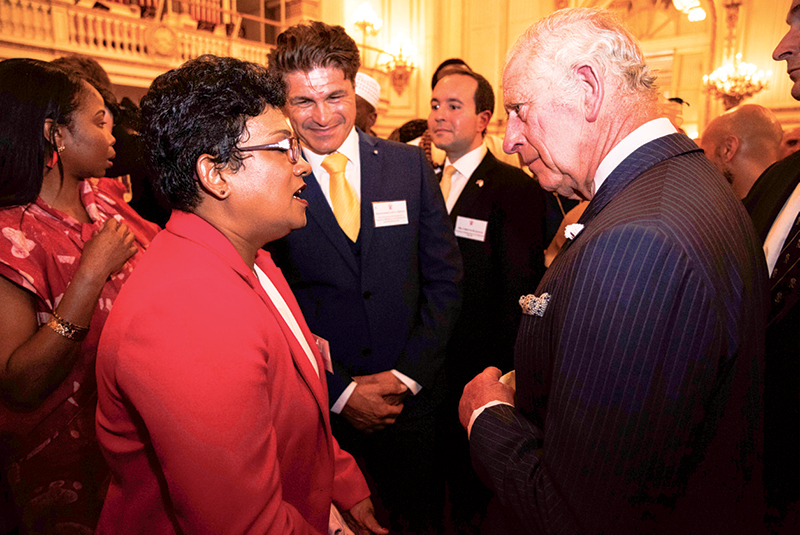
Turning science into action: Prof. Gothamie Weerakoon calls out Biodiversity “Narratives”
However, without clear baselines, measurable outcomes, and long-term commitment, biodiversity claims risk remaining abstract. At present, biodiversity is still more visible in corporate language than in verified outcomes.
Q: Are multinational corporations genuinely reducing their biodiversity footprint, or simply shifting environmental costs to developing countries like Sri Lanka?
A: The reality is mixed, but there is strong evidence that impacts are often being shifted rather than reduced.
Consumption in wealthier economies continues to drive habitat loss in biodiversity-rich regions. In countries like Sri Lanka, export-driven sectors, such as agriculture and rubber, contribute to deforestation and habitat fragmentation.

Lichens grow on both natural and artificial surfaces
Companies may improve their environmental performance, domestically, while outsourcing ecological damage to regions with weaker regulation. So while awareness is increasing, most corporations are not yet reducing their global biodiversity footprint.
Q:How do you distinguish between credible biodiversity action and corporate greenwashing in real terms?
A:Credible action is science-based, measurable, and location-specific.
Companies must establish baselines, quantify their ecological impacts, and demonstrate real outcomes—such as reduced deforestation or restored habitats—verified independently.
Greenwashing, on the other hand, relies on vague terms like “nature-positive” without evidence. It often highlights small projects while ignoring major impacts, or depends on offsets instead of reducing harm.

Red Christmas lichens are not a species found in Arctic habitats. Instead, it is characteristic of tropical and subtropical regions, indeed found in the Sinharaja Forest Reserve, particularly in the Morningside and Pitadeniya areas
The key test is simple: can a company prove that biodiversity loss linked to its operations is declining in specific places over time? If not, it is likely narrative rather than action.
Q:Many biodiversity commitments remain voluntary—should there be legally binding global standards for corporate accountability?
A:Yes, there is a strong case for binding standards.
Voluntary commitments lead to uneven progress and make it difficult to separate genuine action from superficial claims. Legal frameworks could ensure consistent reporting, accountability, and minimum standards.
However, biodiversity is highly local. Any global system must allow for flexibility and support developing countries rather than imposing rigid rules.
Q:What sectors are currently causing the most irreversible biodiversity damage, and why are they still operating with limited restrictions?
A:The most damaging sectors include agriculture, forestry, mining, and fossil fuel extraction.
Agriculture—especially large-scale monocultures—drives deforestation and habitat loss. Mining and fossil fuels cause long-term ecological disruption, while marine ecosystems suffer from overfishing.
These sectors persist with limited restrictions because they are economically powerful, biodiversity loss is harder to quantify than carbon emissions, and global supply chains allow impacts to be outsourced. Regulation also remains fragmented and weakly enforced.
Q:In countries like Sri Lanka, development projects often override environmental concerns—how can science-based tools realistically influence political decision-making?
A:Science-based tools can make biodiversity loss visible and measurable.
Environmental impact assessments, ecological mapping, and predictive models allow policymakers to understand trade-offs clearly. When ecological risks are quantified, they become harder to ignore.
The key is integrating these tools into planning systems so environmental considerations are not optional, but a core part of decision-making.
-

- Phyllopsora species in Monatne forest of Sri Lanka
-

- Green Algal lichens are dominant in wet mountains in Sri Lanka
Q:Can biodiversity conservation truly coexist with large-scale infrastructure and energy projects?
A:Yes—but only if biodiversity is considered from the beginning.
Projects must be designed using science-based planning, avoiding sensitive ecosystems and incorporating mitigation strategies like wildlife corridors and habitat restoration.
Conservation and development are not inherently incompatible, but poor planning creates conflict.
Q:Are global biodiversity frameworks failing to address ground realities in developing economies?
They often fall short in implementation.
A:Global frameworks provide guidance, but must be adapted to local conditions. Developing countries face capacity constraints and competing priorities.
Success depends on building local scientific capacity, aligning goals with economic realities, and ensuring flexibility in how targets are applied.
 Q:What role should governments play when businesses resist biodiversity regulations citing economic pressures?
A:Governments must act as regulators and enforcers.
They should establish clear legal standards, backed by monitoring and penalties. At the same time, incentives—such as green finance and technical support—can help businesses transition.
Economic arguments should not override ecological realities, especially when long-term costs of biodiversity loss are considered.
Q:Are financial institutions doing enough to penalise environmentally destructive investments?
A:Not yet. While awareness of biodiversity risk is increasing, short-term profits still dominate decision-making. ESG frameworks exist, but enforcement is weak.

Professor Gothamie Weerakoon
Stronger systems are needed—binding criteria, independent audits, and better integration of ecological risk into financial decisions.
Q:How can local communities be given real decision-making power rather than token consultation?
A:Communities must be recognised as partners, not stakeholders.
Legal rights, participatory planning, and co-management systems are essential. Traditional knowledge should be integrated with scientific data.
Without real authority, consultation becomes symbolic rather than meaningful.
Q:What immediate, science-backed interventions can be implemented in Sri Lanka?
A:Practical steps include restoring mangroves, creating wildlife corridors, and community-led reforestation.
Using GIS mapping and monitoring systems can identify high-risk areas, while sustainable livelihood programmes reduce pressure on ecosystems.
These interventions must be evidence-based and locally adapted.
Q:How can policymakers protect biodiversity-rich regions from short-term exploitation?
A:Through zoning laws, protected areas, and mandatory environmental assessments.
Valuing ecosystem services in economic planning is also critical. When biodiversity is treated as an economic asset, it becomes harder to ignore.
Q:What mechanisms exist to hold corporations accountable when biodiversity damage crosses borders?
A:International agreements, supply chain regulations, and reporting frameworks like TNFD play a role.
Financial institutions, legal systems, and civil society also contribute to accountability. But enforcement across borders remains a major challenge.
Q:Is there sufficient transparency in corporate biodiversity reporting?
A:No—current systems are inconsistent and largely voluntary.
Many companies fail to quantify their impacts, and independent verification is limited. Without standardised metrics and audits, transparency remains inadequate.
Q:How can biodiversity be integrated into national economic planning without slowing growth?
A:By recognising that biodiversity supports economic resilience.
Nature-based solutions—such as mangrove restoration or sustainable agriculture—deliver both ecological and economic benefits.
Strategic planning can align conservation with development rather than treating them as opposing goals.
Q:What are the long-term economic risks of biodiversity loss in South Asia?
A: They are severe. Declining pollination, soil degradation, and fisheries collapse threaten food security. Loss of forests and wetlands increases disaster risks.
Ultimately, biodiversity loss undermines economic stability and increases vulnerability to climate shocks.
Q:How can science communication better influence public opinion and policy?
A: By making data accessible and relevant.
Visual tools, storytelling, and collaboration with media can translate complex science into actionable insights. Public engagement is essential for policy change.
Q:Are current conservation models too dependent on international funding?
A:Yes, and that creates vulnerability.
Long-term sustainability requires diversified funding—government support, private investment, and community-based initiatives.
Local ownership is key to lasting impact.
Q:Ultimately, who should bear the greatest responsibility for reversing biodiversity loss?
A:Responsibility is shared—but governments hold the greatest leverage.
They set the rules, enforce regulations, and shape economic systems. Corporations and consumers also play critical roles, but without strong governance, progress will remain limited.
Prof. Weerakoon’s assessment is both measured and uncompromising: biodiversity loss is no longer a distant ecological issue—it is an economic, political, and social crisis.
Aligned with the mission of the Natural History Museum, her message is clear: the future of conservation depends not on promises, but on verifiable, science-based action grounded in real ecosystems—not narratives.
An Independent Freelance Correspondent
As the sun sets over the Indian Ocean, the tranquil beauty of Sri Lanka feels many a world away from the smoke, thunder, misery and deaths in the Middle East, taking place in the midst of a senseless war. Yet for all that, in our interconnected world, a butterfly might flit its wings in the Gulf, and a storm might eventually break over our own little paradise island, as a strange reversal of the status quo. However, the escalating conflict in the Middle East is no longer just a distant headline for Sri Lankans; it is an ominous cloud gathering that threatens the very backbone of our much-bandied social contract, our healthcare system.
While we often view war through the lens of geopolitics or rising oil prices, the “Ground Zero” of its impact in Sri Lanka may well be the hospital ward, the local dispensary, and the dinner tables of our most vulnerable citizens, just as much as it would impact on the healthcare professionals who are responsible for maintaining a well-oiled machine; the pun being intentional.
The Fuel Paradox: When Mobility Becomes a Luxury
Our health service runs on wheels as much as it does on training and wisdom. The entire system has to be supported by energy. The Middle East remains the lifeblood of our energy supply, and any disruption to the Strait of Hormuz would send immediate shockwaves to our fuel pumps. Lack of fuel, as well as skyrocketing prices of oil, would have a cascading detrimental effect on our health service.
For the average citizen, a spike in fuel prices is not just a “transport issue” but a miserable calamity that could become a noteworthy barrier to life-saving healthcare. When bus fares double and three-wheeler charges skyrocket, a mother in a rural village may think twice and even hesitate to take her feverish child to the nearest Base Hospital. In the calculus of poverty, the cost of the journey often outweighs the urgency of the ailment, until and most unfortunately, it sadly and tragically becomes too late.
Furthermore, our healthcare workers, the doctors, nurses, public health midwives, clerks, orderlies, and other grades of minor staff, are certainly not immune to the impacts of the fuel crisis. Unlike many top-tier officials of the rest of the public service, most medical staff rely on their own vehicles or public transport to reach their posts. If fuel becomes a rationed luxury, we risk a kind of inevitable “silent strike” where the healers simply cannot afford to commute to the hallowed places of healing. The other grades of staff mentioned are certainly no less important to run the machine, and they will also be at the receiving end of the fuel crisis and transport problems.
A Bitter Pill: The Private Sector Squeeze
While the state provides free healthcare, the private sector has long acted as a vital pressure valve for the national system. However, the conflict is rapidly tightening the screws here as well.
=The Price of Healing: Most of our medicines and vaccines are imported. With global shipping routes disrupted and “war risk” insurance premiums surging, the landed cost of a simple strip of a commonly used medicine or a vital course of antibiotics to clear a lung infection would climb disproportionately.
=The “In-Patient” Inflation: Private hospitals are energy-intensive hubs. From the electricity that powers life-support machines to the diesel that runs emergency generators, rising costs will most unfortunately have to be passed directly to the patient.
=Consultation Charges: As overheads, maintenance costs, staff salaries, and medical supplies spiral, even the renowned Private Hospitals, as well as even the most dedicated private practitioners, would find themselves forced to increase fees.
When the private sector becomes unaffordable, those patients migrate back to the already overstretched state hospitals, creating a “domino effect” of long queues and exhausted resources.
The Empty Plate: Nutrition as the First Line of Defence will be in danger
Perhaps, the most insidious impact of the Middle Eastern crisis is the one that happens at the grocery store leading to great difficulties in getting food into the table. Sri Lanka relies heavily on remittances from our workers in the Gulf and the robust export of our “black gold”- Ceylon Tea. The war has stalled tea exports to major markets like Iran and Iraq, costing the industry millions every week. Simultaneously, if our workers in the Middle East face displacement, the flow of foreign exchange into our country, which would benefit even the villagers, might just dry up.
When a family’s income drops, the first thing to be sacrificed is often the “quality” and even the quantity of the food that comes onto the table. We might see a return to starch-heavy, protein-poor diets. For a pregnant mother, this means anaemia and untold risks to the yet-to-be-born baby. For a growing young child, it means stunting and weakened immunity. For the elderly, it will mean increasing the frailty of old age. We are essentially “importing” a future health crisis of malnutrition that no amount of free medicine can easily fix.
The Supply Chain Shadow
Modern medicine is a “just-in-time” industry. Many of our specialised vaccines and a variegated plethora of treatments require a “cold chain” – a continuous refrigerated journey. With major Gulf air hubs facing disruptions, these temperature-sensitive medicines must be rerouted. This adds days to the journey and increases the risk of “spoilage.” A vaccine that loses its potency due to a shipping delay is not just a financial loss; it is a lost shield for a child and even, older and elderly people.
Sadly, just like the fuel situation, there have not been any worthwhile efforts to “stockpile” at least some of the essential medicines. Of course, unlike just storing fuel to stockpile, medicines have their own problems with shelf-life and expiry dates. It is indeed a vexing problem that might cause a major, tricky situation at some time in the future. The government is planning to issue medicines for two months from the clinics etc. One only hopes that the currently available stock could be used effectively without that initiative leading to a desperate shortage of essential drugs.
Navigating the Storm: Some Ways to Mitigate the Crisis
This author has brought to light some of the issues that we may see in the future. However, it is not an exhaustive or complete list of all possible consequences. There could be quite a few more. While the situation is grave at present, it is perhaps not unmanageable. To protect the vitality of our healthcare, we must adopt a “War Footing” of preparedness:
1. Fuel Priority for Healthcare: The government must establish a “Green Lane” for healthcare personnel and emergency vehicles, ensuring that they have subsidised or prioritised access to fuel to prevent service interruptions. This has to include the private healthcare personnel as well.
2. Strategic Buffer Stocks: We must move away from “just-in-time” imports and build a minimum 6-month buffer stock of essential medicines and vaccines. We need to utilise regional cooperation with neighbours like India to diversify supply routes.
3. Strengthening Primary Care: By investing in local dispensaries and public health midwives, we can treat ailments before they require expensive hospital stays, as well as extended forms of treatment, reducing the transport burden on patients.
4. Nutritional Safety Nets: Expanding school meal programmes and providing fortified food supplements to pregnant mothers can act as a firewall against the malnutrition that is likely to be caused by economic shocks.
5. Digital Health Integration: Expanding “telemedicine” can allow specialists to consult with rural patients remotely, saving both the doctor and the patient the high cost of travel.
A Call for Preparedness, but not a Harbinger of Panic
It is ever so easy to read these points and see a looming, tremendously gloomy fog that could envelop our revered Motherland in the not-too-distant future. However, from a clearer perspective, the purpose of this analysis is not for the writer to act as a prophet of doom, but for this enterprise to serve as a wake-up call for proactive management and to take all necessary steps, well in time, to avoid a catastrophe.
Our health service is the crown jewel of our nation. It has been built on the Herculean effort of generations who believed that health is definitely a right, and certainly not a privilege. To protect it, we must look beyond our borders and understand that the proverb “a stitch in time saves nine” is what we need now. We must strengthen our social safety nets before the ripples of the Middle Eastern war become a tidal wave that hits our shores. We need to act purposefully now, to be able to steadfastly cushion whatever blows that might come our way in the future.
This is not a forecast of a disaster that is one-hundred per cent certain to occur. In stark contrast, it is meant to be a sober and sombre analysis of possible ramifications that we must prepare for today, to save the lives of our people and look after their health tomorrow.
Dr B. J. C. Perera
MBBS(Cey), DCH(Cey), DCH(Eng), MD(Paediatrics), MRCP(UK), FRCP(Edin),
FRCP(Lond), FRCPCH(UK), FSLCPaed, FCCP, Hony. FRCPCH(UK), Hony. FCGP(SL)
Specialist Consultant Paediatrician and Honorary Senior Fellow, Postgraduate Institute of Medicine, University of Colombo, Sri Lanka.

Electricity tariffs to be increased from 1st April

A QR code system to be introduced for agricultural lands and other sectors requiring fuel

Rickelton, Rohit, Shardul break Mumbai’s first-game jinx

Oil tops $116 a barrel as Iran accuses US of preparing invasion

Iranian attack damages Kuwait power and desalination plant, kills worker

Warm weather conditions prevailing over the island are expected to continue

‘Dates have the highest sugar content to fight Coronavirus’

Sunday Island 27 December – Headlines

#SundayIsland 17th December – Headlines

Sunday Island – 28th March

Sunday Island Headlines – 21 March

Sunday Island – 21st February – Headlines
-

 News6 days ago
Senior citizens above 70 years to receive March allowances on Thursday (26)
-

 Features3 days ago
A World Order in Crisis: War, Power, and Resistance
-

 News4 days ago
Energy Minister indicted on corruption charges ahead of no-faith motion against him
-

 News5 days ago
US dodges question on AKD’s claim SL denied permission for military aircraft to land
-

 Business5 days ago
Dialog Unveils Dialog Play Mini with Netflix and Apple TV
-

 Business7 days ago
Postponement of Sri Lanka Investment Forum 2026
-

 News6 days ago
CEB Engineers warn public to be prepared for power cuts after New Year
-

 Sports4 days ago
SLC to hold EGM in April