
Features
New Year musings and wonder of simultaneity


By Susantha Hewa
It is said that the New Year, among other things, enables vast numbers of people to engage in the same activities simultaneously. There is said to be something particularly awesome in this simultaneity. However, nonagathaya (inauspicious phase), which is considered a vital feature of the annual event, in a ‘negative’ sense though, enforces inactivity. It is doubtful whether this grand ritual which incorporates both activity and inactivity at prescribed times has had any salutary effect on the generations that have followed the relevant rules solemnly. At least, the economic decline of the country which has culminated in the appalling situation we find ourselves in today goes to demonstrate that the astrological ‘science’ of the New Year has served a limited number of people with power and wealth. In hindsight, the sun’s “House moving” last year seems to have gone awry even for the hitherto lucky guys who would have assiduously stuck to the rituals as usual.
By the way, those who are forced to scramble for a few floating rupees to put on a façade of festivity on the important day often express the reality on the ground when they say, “If you are rich, you have “avurudu” (New Year/happiness) every day.” No one would disagree; except, perhaps, the traditionalists who would take exception to this rather ‘reductionist and materialistic’ view of a time-honoured festival. However, if the real value in the New Year were in the observance of “non-materialistic rites” intended for ushering in peace and prosperity, the present national predicament would not offer much to help persuade us of its relevance.
Of course, it is true that the New Year festival makes people feel a sense of ‘solidarity’ the briefness of which gets concealed beneath the plethora of formalities and the resultant collective excitement. However, one hardly needs the records of the numbers of those who get hospitalized due to brawls resulting from the usual ‘extra solidarity’ induced by booze to realize that this sense of togetherness is somewhat artificial. The New Year, like all other traditional festivals, often leaves us with little more significant than a feeling of deja vu. The ‘authority’ of astrology raises all to a ‘collective high’ and savour a transient sense of fellowship, which adds nothing to light up our lives in the long term, although lighting the hearth at the designated time is a vital feature in the solemn ceremony. Worse, it helps sustain our collective trust on the so-called good fortunes that are supposed to entail the proper observance of the rituals. All this annual ritual of conformity repeated over many decades has nothing much to show for it if the prosperity it promises is any indication. Adherence to astrological guidelines does not seem adequate to ward off the evils resulting from political and economic mishandling; they are too real and tangible.
Today, simultaneous activity has proved impactful in a completely different context. At the moment, the masses are coming together across all cultural, ethnic, linguistic, religious and class divisions, to engage in simultaneous activity triggered, not by astrology, but by unprecedented suffering which hasn’t spared anyone, both conformists and nonconformists. More importantly, they seem to be simultaneously becoming conscious of the causes of their suffering, which they, at least the majority, seem to have habitually attributed to various mystical influences contrived by planets. In their solidarity resulting from experiential suffering, they also seem to have forgotten all culturally imposed identities that have estranged them from one another. At the very least, this ‘inauspicious’ solidarity would send a strong message to all the slavering politicians that they cannot perhaps go on fooling people using the buzzword “democracy” as a mantra to keep them credulous, fatalistic and compliant forever. As a minimum, people are realizing that democracy has been stripped of its real meaning to them by those who have ruled the country and that it needs upgrading so as to make the latter behave and be “accountable”, the term meaning more than getting a five-year relapse of fortune.
Today, the slogans and placards reveal the average person’s heightened understanding of the powers that have manipulated them and a refusal to be placated by the customary gimmicks played appropriating the procedures provided under parliamentary protocols. There is a disdainful rejection of pretense like “shuffling of the deck”. The bottom line is the setting up of a corruption-free mechanism devoid of spin doctors notorious for corruption matched only by arrogance.
If at all, this time round it’s going to be a more revealing and sobering ‘celebration’ than the accustomed event of happy compliance for many. If the situation of the country continues to worsen in the next couple of days, which is more likely than not, people will have surely outgrown their faith on following the almanac to the letter with familiar visions of joy and prosperity lasting throughout the year.
Of course, festivals are happy occasions. The New Year is no exception. However, the New Year or any other festival should not be a sedative for lifelong sorrows resulting from political and economic mishandling, corruption and every other evil the greed for power generates. The take-home message for the grasping politicians of every hue is that greed is self-defeating and you are not secure until all are made to feel secure. Being those who are responsible for the destinies of hundreds of thousands of people, the definitive way for the legislators to ensure their own safety and wellbeing is to ensure those of the masses. There is no better way.
The present crisis has the potential to be the most important turning point in the communal life of all in many ways. Many people have realized it. If the people power is harnessed democratically, the entire country is sure to benefit. It’s time for all the intellectuals and the experts with integrity to come together.
As Dr. E.W. Adikaram has said, too much of dependency on festivals for happiness could be a sign of the underlying unhappiness of the people in a society. Perhaps, lasting happiness is unrealizable, individually. Hopefully, it is possible, collectively, at the level of society. It should be attained by “simultaneity” of feeling and action going beyond that prescribed by festivals.





I. The Constitutional Context
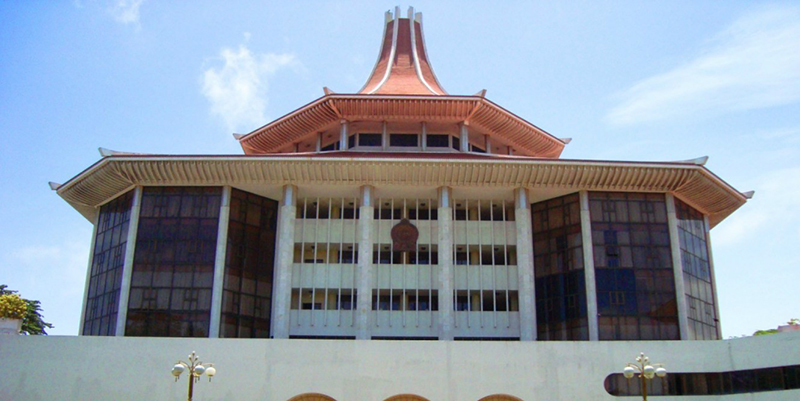
Independence of the judiciary is, without question, an essential element of a functioning democracy. In recognition of this, ample provision is made in the highest law of our country, the Constitution, to engender an environment in which the courts are able to fulfil their public responsibility with total acceptance.
As part of this protective apparatus, judges of the Supreme Court and the Court of Appeal are assured of security of tenure by the provision that “they shall not be removed except by an order of the President made after an address of Parliament supported by a majority of the total number of members of Parliament, (including those not present), has been presented to the President for such removal on the ground of proved misbehaviour or incapacity”[Article 107(2)]. Since this assurance holds good for the entirety of tenure, it follows that the age of retirement should be defined with certainty. This is done by the Constitution itself by the provision that “the age of retirement of judges of the Supreme Court shall be 65 years and of judges of the Court of Appeal shall be 63 years”[Article 107(5)].
II. A Proposal for Reform
This provision has been in force ever since the commencement of the Constitution. Significant public interest, therefore, has been aroused by the lead story in a newspaper, Anidda of 13 March, that the government is proposing to extend the term of office of judges of the Supreme Court and the Court of Appeal by a period of two years.
This proposal, if indeed it reflects the thinking of the government, is deeply disturbing from the standpoint of policy, and gives rise to grave consequences. The courts operating at the apex of the judicial structure are called upon to do justice between citizens and also between the state and members of the public. It is an indispensable principle governing the administration of justice that not the slightest shadow of doubt should arise in the public mind regarding the absolute objectivity and impartiality with which the courts approach this task.
What is proposed, if the newspaper report is authentic, is to confer on judges of two particular courts, the Supreme Court and the Court of Appeal, a substantial benefit or advantage in the form of extension of their years of service. The question is whether the implications of this initiative are healthy for the administration of justice.
III. Governing Considerations of Policy
What is at stake is a principle intuitively identified as a pillar of justice.
Reflecting firm convictions, the legal antecedents reiterate the established position with remarkable emphasis. The classical exposition of the seminal standard is, of course, the pronouncement by Lord Hewart: “It is not merely of some importance, but is of fundamental importance that justice should not only be done, but should manifestly and undoubtedly be seen to be done”. (Rex v. Sussex Justices, ex parte McCarthy). The underlying principle is that perception is no less important than reality. The mere appearance of partiality has been held to vitiate proceedings: Dissanayake v. Kaleel. In particular, reasonableness of apprehension in the mind of the parties to litigation is critical: Ranjit Thakur v. Union of India, a reasonable likelihood of bias being necessarily fatal (Manak Lal v. Prem Chaud Singhvi).
The overriding factor is unshaken public confidence in the judiciary: State of West Bengal v. Shivananda Pathak. The decision must be “demonstrably” (Saleem Marsoof J.) fair. The Bar Association of Sri Lanka has rightly declared: “The authority of the judiciary ultimately depends on the trust reposed in it by the people, which is sustained only when justice is administered in a visibly fair manner”.
Credibility is paramount in this regard. “Justice has to be seen to be believed” (J.B. Morton). Legality of the outcome is not decisive; process is of equal consequence. Judicial decisions, then, must withstand public scrutiny, not merely legal technicality: Mark Fernando J. in the Jana Ghosha case. Conceived as continuing vitality of natural justice principles, these are integral to justice itself: Samarawickrema J. in Fernando v. Attorney General. Institutional integrity depends on eliminating even the appearance of partiality (Mandal Vikas Nigam Ltd. v. Girja Shankar Pant), and “open justice is the cornerstone of our judicial system”: (Sahara India Real Estate Corporation Ltd. v. SEBI).
IV. Practical Constraints
Apart from these compelling considerations of policy, there are practical aspects which call for serious consideration. The effect of the proposal is that, among all judges operating at different levels in the judicature of Sri Lanka, judges of the Supreme Court and the Court of Appeal only, to the exclusion of all other judges, are singled out as the beneficiaries of the proposal. An inevitable result is that High Court and District Judges and Magistrates will find their avenues of promotion seriously impeded by the unexpected lengthening of the periods of service of currently serving judges in the two apex courts. Consequently, they will be required to retire at a point of time appreciably earlier than they had anticipated to relinquish judicial office because the prospect of promotion to higher courts, entailing higher age limits for retirement, is precipitately withdrawn. Some degree of demotivation, arising from denial of legitimate expectation, is therefore to be expected.
A possible response to this obvious problem is a decision to make the two-year extension applicable to all judicial officers, rather than confining it to judges of the two highest courts. This would solve the problem of disillusionment at lower levels of the judiciary, but other issues, clearly serious in their impact, will naturally arise.
Public service structures, to be equitable and effective, must be founded on principles of non-discrimination in respect of service conditions and related matters. Arbitrary or invidious treatment is destructive of this purpose. In determining the age of retirement of judges of the Supreme Court and the Court of Appeal, some attention has been properly paid to balance and consistency. The age of retirement of a Supreme Court judge is on par with that applicable to university professors and academic staff in the higher education system. They all retire at 65 years. Members of the public service, generally, retire at 60. Medical specialists retire at 63, with the possibility of extension in special circumstances to 65. The age of retirement for High Court Judges is 61, and for Magistrates and District Judges 60. It may be noted that the policy change in 2022 aimed at specifically addressing the issue of uniformity and compatibility.
If, then, an attempt is made to carve out an ad hoc principle strictly limited to judicial officers, not admitting of a self-evident rationale, the question would inevitably arise whether this is fair by other categories of the public service and whether the latter would not entertain a justifiable sense of grievance.
This is not merely a moral or ethical issue relating to motivation and fulfillment within the public service, but it could potentially give rise to critical legal issues. It is certainly arguable that the proposed course of action represents an infringement of the postulate of equality of treatment, and non-discrimination, enshrined in Article 12(1) of the Constitution.
There would, as well, be the awkward situation that this issue, almost certain to be raised, would then have to be adjudicated upon by the Supreme Court, itself the direct and exclusive beneficiary of the impugned measure.
V. Piecemeal Amendment or an Overall Approach?
If innovation on these lines is contemplated, would it not be desirable to take up the issue as part of the new Constitution, which the government has pledged to formulate and enact, rather than as a piecemeal amendment at this moment to the existing Constitution? After all, Chapter XV, dealing with the Judiciary, contains provisions interlinked with other salient features of the Constitution, and an integrated approach would seem preferable.
VI. Conclusion
In sum, then, it is submitted that the proposed change is injurious to the institutional integrity of the judiciary and to the prestige and stature of judges, and that it should not be implemented without full consideration of all the issues involved.
By Professor G. L. Peiris
D. Phil. (Oxford), Ph. D. (Sri Lanka);
Former Minister of Justice, Constitutional Affairs and National Integration;
Quondam Visiting Fellow of the Universities of Oxford, Cambridge and London;
Former Vice-Chancellor and Emeritus Professor of Law of the University of Colombo.
Features
Ranked 134th in Happiness: Rethinking Sri Lanka’s development through happiness, youth wellbeing and resilience


In recent years, Sri Lanka has experienced a succession of overlapping challenges that have tested its resilience. Cyclone Ditwah struck Sri Lanka in November last year, significantly disrupting the normal lives of its citizens. The infrastructure damage is much more serious than the tsunami. According to World Bank reports and preliminary estimates, the losses amounted to approximately US$ 4.1 billion, nearly 4 per cent of the country’s Gross Domestic Product. Before taking a break from that, the emerging crisis in the Middle East has once again raised concerns about potential economic repercussions. In particular, those already affected by disasters such as Cyclone Ditwah risk falling “from the frying pan into the fire,” facing multiple hardships simultaneously. Currently, we see fuel prices rising, four-day workweeks, a higher cost of living, increased pressure on household incomes, and a reduction in the overall standard of living for ordinary citizens. It would certainly affect people’s happiness. As human beings, we naturally aspire to live happy and fulfilling lives. At a time when the world is increasingly talking about happiness and wellbeing, the World Happiness Report provides a useful way of looking at how countries are doing. The World Happiness Report discusses global well-being and offers strategies to improve it. The report is produced annually with contributions from the University of Oxford’s Wellbeing Research Centre, Gallup, the UN Sustainable Development Solutions Network, and other stakeholders. There are many variables taken into consideration for the index, including the core measure (Cantril Ladder) and six explanatory variables (GDP per Capita ,Social Support,Healthy Life Expectancy,Freedom to Make Life Choices,Generosity,Perceptions of Corruption), with a final comparison.
According to the recently published World Happiness Report 2026, Sri Lanka ranks 134th out of 147 nations. As per the report, this is the first time that Sri Lanka has suffered such a decline. Sri Lanka currently trails behind most of its South Asian neighbours in the happiness index. The World Happiness Report 2026 attributes Sri Lanka’s low ranking (134th) to a combination of persistent economic struggles, social challenges, and modern pressures on younger generations. The 2026 report specifically noted that excessive social media use is a growing factor contributing to declining life satisfaction among young people globally, including in Sri Lanka. This calls for greater vigilance and careful reflection. These concerns should be examined alongside key observations, particularly in the context of education reforms in Sri Lanka, which must look beyond their immediate scope and engage more meaningfully with the country’s future.
In recent years, a series of events has triggered political upheaval in countries such as Nepal, characterised by widespread protests, government collapse, and the emergence of interim administration. Most reports and news outlets described this as “Gen Z protests.” First, we need to understand what Generation Z is and its key attributes. Born between 1997 and 2012, Generation Z represents the first truly “digital native” generation—raised not just with the internet, but immersed in it. Their lives revolve around digital ecosystems: TikTok sets cultural trends, Instagram fuels discovery, YouTube delivers learning, and WhatsApp sustains peer communities. This constant, feed-driven engagement shapes not only how they consume content but how they think, act, and spend. Tech-savvy and socially aware, Gen Z holds brands to a higher standard. For them, authenticity, transparency, and accountability—especially on environmental and ethical issues—aren’t marketing tools; they’re baseline expectations. We can also observe instances of them becoming unnecessarily arrogant in making quick decisions and becoming tools of some harmful anti-social ideological groups. However, we must understand that any generation should have proper education about certain aspects of the normal world, such as respecting others, listening to others, and living well. More interestingly, a global survey by the McKinsey Health Institute, covering 42,083 people across 26 countries, finds that Gen Z reports poorer mental health than older cohorts and is more likely to perceive social media as harmful.
Youth health behaviour in Sri Lanka reveals growing concerns in mental health and wellbeing. Around 18% of youth (here, school-going adolescents aged 13-17) experience depression, 22.4% feel lonely, and 11.9% struggle with sleep due to worry, with issues rising alongside digital exposure. Suicide-related risks are significant, with notable proportions reporting thoughts, plans, and attempts, particularly among females. Bullying remains a significant concern, particularly among males, with cyberbullying emerging as a notable issue. At the same time, substance use is increasing, including tobacco, smokeless tobacco, and e-cigarettes. These trends highlight the urgent need for targeted interventions to support youth mental health, resilience, and healthier behavioural outcomes in Sri Lanka. We need to create a forum in Sri Lanka to keep young people informed about this. Sri Lanka can designate a date (like April 25th) as a National Youth Empowerment Day to strengthen youth mental health and suicide prevention efforts. This should be supported by a comprehensive, multi-sectoral strategy aligned with basic global guidelines. Key priorities include school-based emotional learning, counselling services, and mental health training for teachers and parents. Strengthening data systems, reducing access to harmful means, and promoting responsible media reporting are essential. Empowering families and communities through awareness and digital tools will ensure this day becomes a meaningful national call to action.
As discussed earlier, Sri Lanka must carefully understand and respond to the challenges arising from its ongoing changes. Sri Lanka should establish an immediate task force comprising responsible stakeholders to engage in discussions on ongoing concerns. Recognising that it is not a comprehensive solution, the World Happiness Index can nevertheless act as an important indicator in guiding a paradigm shift in how we approach education and economic development. For a country seeking to reposition itself globally, Sri Lanka must adopt stronger, more effective strategies across multiple sectors. Building a resilient and prosperous future requires sound policymaking and clear strategic direction.
(The writer is a Professor in Management Studies at the Open University of Sri Lanka. You can reach Professor Abeysekera via nabey@ou.ac.lk)
by Prof. Nalin Abeysekera
Features
Hidden diversity in Sri Lanka’s killifish revealed: New study reshapes understanding of island’s freshwater biodiversity
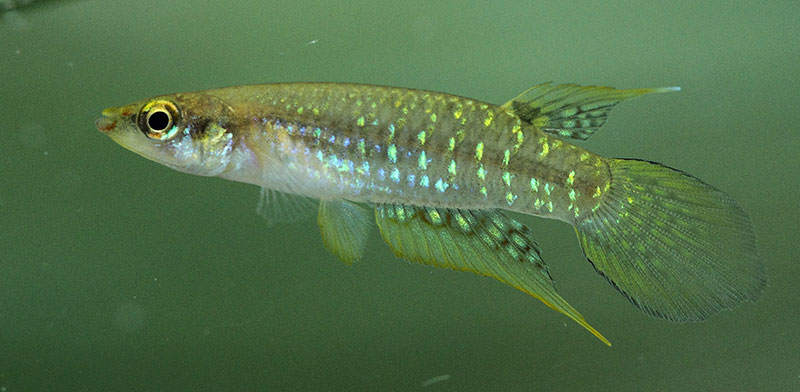
A groundbreaking new study led by an international team of scientists, including Sri Lankan researcher Tharindu Ranasinghe, has uncovered striking genetic distinctions in two closely related killifish species—reshaping long-standing assumptions about freshwater biodiversity shared between Sri Lanka and India.
Published recently in Zootaxa, the research brings together leading ichthyologists such as Hiranya Sudasinghe, Madhava Meegaskumbura, Neelesh Dahanukar and Rajeev Raghavan, alongside other regional experts, highlighting a growing South Asian collaboration in biodiversity science.
For decades, scientists debated whether Aplocheilus blockii and Aplocheilus parvus were in fact the same species. But the new genetic analysis confirms they are “distinct, reciprocally monophyletic sister species,” providing long-awaited clarity to their taxonomic identity.
Speaking to The Island, Ranasinghe said the findings underscore the hidden complexity of Sri Lanka’s freshwater ecosystems.
“What appears superficially similar can be genetically very different,” he noted. “Our study shows that even widespread, common-looking species can hold deep evolutionary histories that we are only now beginning to understand.”
A tale of two fishes
The study reveals that Aplocheilus blockii is restricted to peninsular India, while Aplocheilus parvus occurs both in southern India and across Sri Lanka’s lowland wetlands.
Despite their close relationship, the two species show clear genetic separation, with a measurable “genetic gap” distinguishing them. Subtle physical differences—such as the pattern of iridescent scales—also help scientists tell them apart.
Co-author Sudasinghe, who has led several landmark studies on Sri Lankan freshwater fishes, noted that such integrative approaches combining genetics and morphology are redefining taxonomy in the region.
Echoes of ancient land bridges
The findings also shed light on the ancient biogeographic links between Sri Lanka and India.
Scientists believe that during periods of low sea levels in the past, the two landmasses were connected by the now-submerged Palk Isthmus, allowing freshwater species to move between them.
Later, rising seas severed this connection, isolating populations and driving genetic divergence.
“These fishes likely dispersed between India and Sri Lanka when the land bridge existed,” Ranasinghe said. “Subsequent isolation has resulted in the patterns of genetic structure we see today.”
Meegaskumbura emphasised that such patterns are increasingly being observed across multiple freshwater fish groups in Sri Lanka, pointing to a shared evolutionary history shaped by geography and climate.
A deeper genetic divide
One of the study’s most striking findings is that Sri Lankan populations of A. parvus are genetically distinct from those in India, with no shared haplotypes between the two regions.
Dahanukar explained that this level of differentiation, despite relatively recent geological separation, highlights how quickly freshwater species can diverge when isolated.
Meanwhile, Raghavan pointed out that these findings reinforce the importance of conserving habitats across both countries, as each region harbours unique genetic diversity.
Implications for conservation
The study carries important implications for conservation, particularly in a country like Sri Lanka where freshwater ecosystems are under increasing pressure from development, pollution, and climate change.
Ranasinghe stressed that understanding genetic diversity is key to protecting species effectively.
“If we treat all populations as identical, we risk losing unique genetic lineages,” he warned. “Conservation planning must recognise these hidden differences.”
Sri Lanka is already recognised as a global biodiversity hotspot, but studies like this suggest that its biological richness may be even greater than previously thought.
A broader scientific shift
The research also contributes to a growing body of work by scientists such as Sudasinghe and Meegaskumbura, challenging traditional assumptions about species distributions in the region.
Earlier studies often assumed that many freshwater fish species were shared uniformly between India and Sri Lanka. However, modern genetic tools are revealing a far more complex picture—one shaped by ancient geography, climatic shifts, and evolutionary processes.
“We are moving from a simplistic view of biodiversity to a much more nuanced understanding,” Ranasinghe said. “And Sri Lanka is proving to be a fascinating natural laboratory for this kind of research.”
Looking ahead
The researchers emphasise that much remains to be explored, with several freshwater fish groups in Sri Lanka still poorly understood at the genetic level.
For Sri Lanka, the message is clear: beneath its rivers, tanks, and wetlands lies a largely untapped reservoir of evolutionary history.
As Ranasinghe puts it:
“Every stream could hold a story of millions of years in the making. We are only just beginning to read them.”
By Ifham Nizam

Trump threatens ‘hell’ for Iran over Hormuz Strait as deadline approaches

Tim David, Rajat Patidar inflict bruising defeat on Chennai Super Kings

Shami sets up Lucknow Super Giants victory before Pant fifty takes them home

Showers or thundershowers will occur at several places in the Northern, Eastern, North-central, Central and Sabaragamuwa provinces and in Puttalam, Galle and Matara districts after 2.00 p.m.

Sun directly overhead Beruwala, Gurulubadda, Rakwana, Godakawela, Udawalawe and Thanamalwila at about 12:13 noon today (06)

Heat Index at Caution Level in the Western, Sabaragamuwa, Southern, Eastern, North-western, Northern and North-central provinces and in Monaragala district

‘Dates have the highest sugar content to fight Coronavirus’

Sunday Island 27 December – Headlines

#SundayIsland 17th December – Headlines

Sunday Island – 28th March

Sunday Island Headlines – 21 March

Sunday Island – 21st February – Headlines
-

 News5 days ago
2025 GCE AL: 62% qualify for Uni entrance; results of 111 suspended
-

 Features2 days ago
Ranjith Siyambalapitiya turns custodian of a rare living collection
-

 News7 days ago
Tariff shock from 01 April as power costs climb across the board
-

 News2 days ago
Global ‘Walk for Peace’ to be held in Lanka
-
 Business6 days ago
Hour of reckoning comes for SL’s power sector
-

 Editorial5 days ago
Search for Easter Sunday terror mastermind
-

 Features7 days ago
Seychelles … here we come
-

 Opinion7 days ago
Sri Lanka has policy, but where is the data?