
News
Ampara District special Coordination Committee meeting chaired by the President

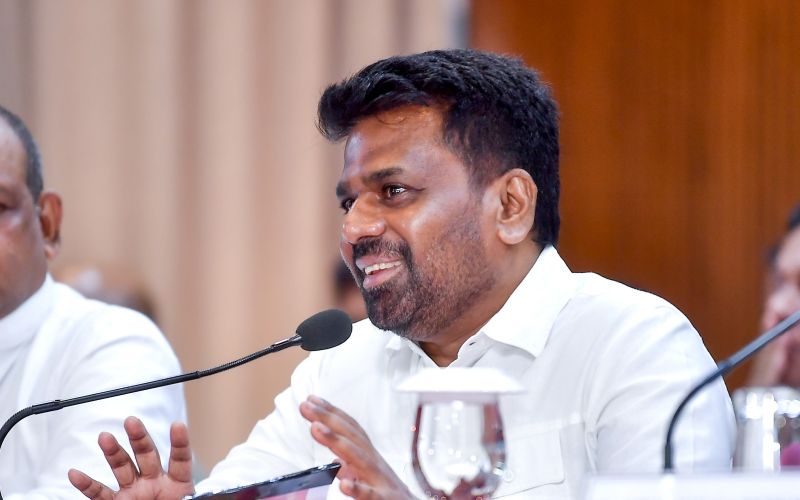
President Anura Kumara Dissanayake stated that a Special Committee, headed by the Deputy Inspector General of Police, will be established to protect lands in the Eastern Province.
The President highlighted that a number of issues have arisen in the region due to land grabs carried out through the misuse of political power, stressing that such practices will no longer be tolerated.
The President made these remarks while participating at the Special District Coordination Committee meeting in Ampara held on Friday (22) afternoon at the Ampara District Secretariat.
Drawing attention to coastal erosion affecting the Eastern coastline, the President instructed officials to develop a comprehensive plan to both protect the coastline and promote tourism in the region.
The President further noted that placing rocks and barriers is not a practical long-term solution to coastal erosion and instructed that urgent scientific studies be conducted to identify a sustainable and permanent solution, including consideration of the Oluvil Harbour and associated fisheries infrastructure.
Highlighting the tourism potential of the Eastern coastal belt, the President also stated that he had received reports of unequal treatment by public officials in the management of hotel operations in coastal areas and firmly instructed that such discrimination must not be allowed.
The President drew special attention to unauthorised land reclamation taking place in the Eastern Province and instructed the security forces to ensure that such activities are not permitted in the future.
Noting that 16 years have passed since the end of the conflict without a structured programme to resettle displaced persons in the region, the President instructed that urgent attention be given to developing and implementing a resettlement plan.
President Dissanayake further drew attention to the recurring flooding caused by the overflow of the Gal Oya, which affects several Divisional Secretariat areas including Ampara, Sammanthurai, Karaitivu, Addalachchenai, Kalmunai, Akkaraipattu, Irakkamam, Damana and Ninthavur. The President directed officials to conduct an urgent study to identify a permanent solution and confirmed that initial funding would be allocated for this purpose.
Discussions were also held regarding the current status of the Thirukkovil paddy storage facility and the continuation of operations at the Addalachchenai waste recycling centre.
Discussions were also held on the conservation of the Nuwaragala archaeological reserve and the development of tourism zones in Arugam Bay and Panama. Attention was further given to implementing a tourism development project in and around the Maduru Oya reserve, based on the indigenous villages in Henanigala South, Dehiattakandiya.
The committee also discussed restarting a drinking water project in the Lahugala area, which was initiated by the National Water Supply and Drainage Board approximately five years ago.
The President also paid special attention to the issues faced by sugarcane farmers in Hingurana. He noted that safeguarding sugarcane farmers within the industry is the responsibility of the relevant companies and stressed the need to engage in discussions on the emerging issues and reach an expedited solution.
Under the Kalmunai Urban Development Project, attention was drawn to the consolidation of all government institutions currently located in different places within the Kalmunai area into a single location. The President instructed officials to prepare and submit the relevant plans, noting that funding could be allocated in the forthcoming budget.
Discussions were also held on taking over and developing land with commercial value that had been allocated by the Sri Lanka Mahaweli Authority more than five years ago but where projects had not been implemented. The President directed that such lands be transferred to Divisional Secretaries or the District Secretary and developed under a structured programme for public benefit.
Discussions were also held on taking over and developing roads in the areas of Dehiattakandiya, Maha Oya and Padiyathalawa under the Road Development Authority and the Provincial Road Development Authority.
Special attention was also drawn to teacher vacancies in schools in the Ampara District and issues related to zonal education offices. The President emphasised that the establishment of administrative structures such as education offices and divisional secretariats is not a political exercise but an administrative function. He further stressed that such structures should be based on objective criteria such as geographical size and population, rather than ethnic considerations.
The President noted that LKR. 22,000 million has been allocated in the 2026 Budget for development projects in the Ampara District. Reviewing progress in ongoing projects in the sectors of roads, irrigation, drinking water supply and housing, he stressed that it is the responsibility of public officials to ensure that these funds are efficiently utilised within the relevant financial year to deliver timely benefits to the public.
The President also separately reviewed compensation and relief measures for the people of the Ampara District affected by Cyclone Ditwah, including compensation for loss of life, crop damage and losses in the livestock sector, as well as programmes for the fishing community, livelihood development initiatives and progress on partial and full housing damage compensation and resettlement programmes.
The President emphasised that the most affected by this disaster are economically vulnerable communities and therefore urged that housing construction and resettlement programmes be expedited without delay.
Co-Chairs of the Ampara District Coordinating Committee, Eastern Province Governor Professor Jayantha Lal Ratnasekera, Deputy Minister of Rural Development, Social Security and Community Empowerment, Wasantha Piyathissa, Members of Parliament, local authority Chairpersons and other public representatives, along with the Chief of Presidential Staff and Commissioner General of Essential Services, Prabath Chandrakeerthi, Defence Secretary Air Vice Marshal Sampath Thuyacontha (Retired), Ampara District Secretary Anupa Mangala Wickramarachchi and other government officials were present at the meeting.
(PMD)


A discussion between President Anura Kumara Dissanayake and the Circular Revision Committee appointed to review and update circulars issued under the State Lands Ordinance and the Land Development Ordinance was held on Tuesday (16) afternoon at the Presidential Secretariat. The Committee has been mandated to recommend to the Cabinet the cancellation of out-dated circulars, the issuance of new circulars, and the revision of existing circulars to ensure alignment with current requirements.
The Committee is chaired by the Secretary to the Ministry of Agriculture, Livestock, Lands and Irrigation, D.P. Wickramasinghe. Its other members include the Senior Additional Secretary to the President (Constitutional and Statutory Affairs Division), Legal Adviser to the Presidential Secretariat, an Additional Solicitor General from the Attorney General’s Department, the Additional Secretary (Lands) of the Ministry of Agriculture, Livestock, Lands and Irrigation, the Additional Director General of the National Budget Department, the Western Province Land Commissioner, the Divisional Secretary of Nuwaragampalatha East, the Deputy Chief Valuer of the Valuation Department and the Director (Lands) of the Mahaweli Authority.
The Commissioner General of Lands serves as the Convener of the Committee.
The Committee’s responsibilities include establishing a reliable, uniform and regularised system of land taxation within the existing legal framework, ensuring state revenue optimisation without prejudice to lessees. This includes reviewing annual lease rentals charged on long-term leases and grants, aligning related circulars with current requirements, and amending or formulating new provisions and directives where necessary.
During the meeting, detailed discussions were held on the proposals submitted by the expert committee in relation to the revision of these circulars.
The President emphasised that a new, time-appropriate policy should be formulated to address the underutilisation of State lands and to ensure their more efficient use.
Deputy Minister of Lands and Irrigation Aravinda Senarath, Secretary to the President Dr. Nandika Sanath Kumanayake, Legal Adviser to the President, Senior Attorney-at-Law J.M. Wijebandara, Secretary to the Ministry of Agriculture, Livestock, Lands and Irrigation D.P. Wickramasinghe, Additional Solicitor General of the Attorney General’s Department, President’s Counsel Ravindra Pathiranage, Commissioner General of Lands Chandana Ranaweraarachchi, Director General (Institutional Affairs), Ministry of Finance, Planning and Economic Development J.G.L.S. Jayawardena, Additional Director General (National Budget Department) D.A. Asantha Gunasekara, and Commissioner of Lands (Leasing Division) P.K.C. Nilani Mahindaganamage, together with members of the Committee, were also present.
Senior officials from the Ministry of Finance and the Ministry of Agriculture, Livestock, Lands and Irrigation also attended the meeting.
(PMD)
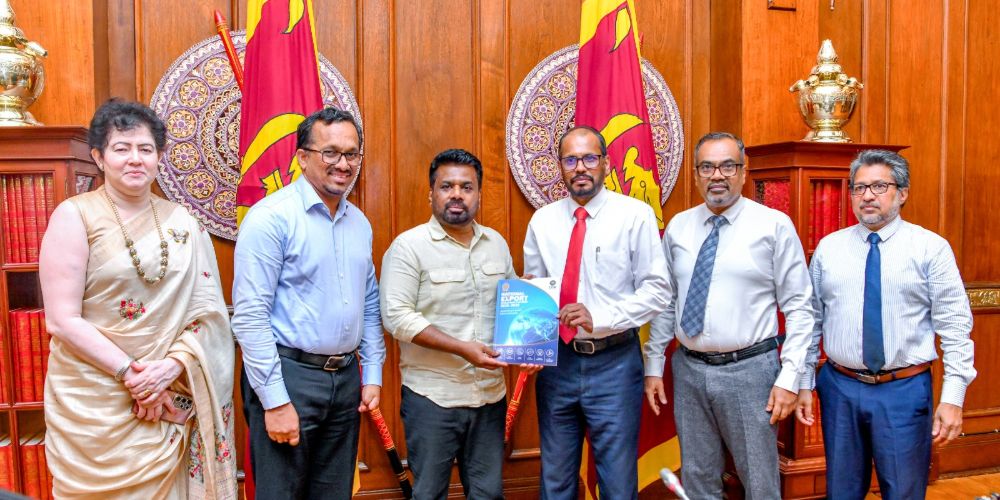
Marking an important milestone in Sri Lanka’s economic development, the National Export Development Plan (NEDP) for the period 2026–2030 was presented to President Anura Kumara Dissanayake on Tuesday morning (16) at the Presidential Secretariat.
The 2026–2030 National Export Development Plan (NEDP) is a key national programme formulated in line with the Government’s policy direction under the 2025 Budget. It aims to strengthen the country’s export sector and achieve export-led sustainable economic growth.
The strategic plan has been developed under the guidance of the Ministry of Industry and Entrepreneurship Development and the leadership of the Sri Lanka Export Development Board (EDB), with technical assistance provided through the Asian Development Bank’s (ADB) Policy-Based Lending (PBL) programme. It is the result of an extensive consultative process carried out in close collaboration with key government institutions, private sector stakeholders, and development partners.
The proposal submitted by the Minister of Industry and Entrepreneurship Development to recognise the “Sri Lanka National Export Development Plan 2026–2030” as the official strategic framework for export development and promotion in Sri Lanka was approved by the Cabinet of Ministers on 4 May 2026. The Plan reflects a broad consensus among government institutions, private sector experts, and international development partners.
In line with the national vision of “A Thriving Nation – A Beautiful Life”, the Plan has been formulated to enhance Sri Lanka’s export competitiveness and achieve an export revenue target of USD 36 billion by 2030.
The core vision of the Plan is to transform Sri Lanka into a competitive logistics and knowledge-based export hub serving regional and global markets. The strategy is based on two key interconnected pillars: “horizontals” and “verticals”, which together provide the foundation for strengthening export competitiveness, diversification, and sustainable growth.
The horizontal enablers, which support the growth and expansion of all priority sectors, include logistics and integrated hub operations, trade facilitation, trade finance and reforms in the business and investment environment, trade promotion and market linkages, quality management, standards, environmental, social and governance (ESG) capacity development, as well as entrepreneurship and innovation.
The Plan also identifies eight priority export sectors to enhance export diversification and value addition, and to position Sri Lanka more competitively in global markets. These include automotive components, mineral-based industries, rubber-based industries, maritime industries (including boat and shipbuilding), spices and concentrates, digital products and services, electrical and electronic equipment, and processed food and beverages.
The preparation of the Plan involved contributions from over 300 stakeholders, including government institutions, the private sector, civil society organisations and international development partners. Broad consensus was achieved through consultations held from October to December 2025 and workshops conducted in January 2026.
The Government expects that, with implementation supported by strong governance and monitoring framework, the Plan will elevate local products to international standards and ensure long-term economic stability and growth. It is further anticipated that the National Export Development Plan will serve as a key driver of Sri Lanka’s economic progress in the years ahead.
Minister of Labour and Deputy Minister of Finance and Planning Dr. Anil Jayantha Fernando, Minister of Industry and Entrepreneurship Development Sunil Handunnetti, Senior Additional Secretary to the President and Secretary to the Ministry of Energy Russell Aponso, Secretary to the Ministry of Industry and Entrepreneurship Development Thilaka Jayasundara, and Chairman of the Sri Lanka Export Development Board Mangala Wijesinghe were also present at the event.
[PMD]

The Committee for Protecting Rights of Prisoners (CPRP) has complained to the UN regarding custodial deaths.
Executive Director of the Committee, Attorney-at-Law Senaka Perera told The Island that they had submitted written submissions to the visiting UN Subcommittee on Prevention of Torture (SPT) on Monday (15). “We are confident that they’ll take up the issues at hand with the government and take tangible measures to improve the conditions in prisons and detention facilities,” Perera said.
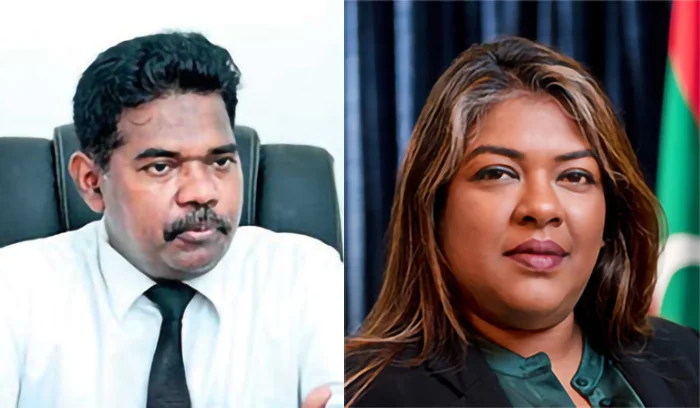
The SPT is here from 15 to 24 June. The visiting delegation consists of Aisha Shujune Muhammad, Head of Delegation (Maldives), Jakub Julian Czepek (Poland), Nika Kvaratskhelia (Georgia), Anica Tomsic (Croatia) and two human rights officers from the Office of the High Commissioner for Human Rights.
Claiming that there had been 184 prison deaths in 2024, the Committee asserted that though there was a drop in the number of cases, the deaths caused by underlying health complications and systemic issues weren’t available at the moment.
According to a copy of the submissions made to the SPT, received by The Island, there had been seven custodial deaths this year alone, reported from various parts of the country.
The Committee took a very critical position, while Foreign Minister Vijitha Herath assured the visiting delegation that the government didn’t tolerate torture at all.
The Ministry statement Monday night quoted Herath as having described the government response as zero tolerance policy.
The Committee for Protecting Rights of Prisoners also dealt with several other contentious issues, including special treatment granted to those with political connections and privileged backgrounds. Perera alleged that in spite of a change of government, in 2024 September, the much anticipated improvements failed to materialise and the continuing custodial deaths highlighted the crisis in the prisons and detention facilities.
According to the Committee, the situation was so bad and further deteriorating in overcrowded prisons, the national overcrowding rate has reached an unsustainable 286.6%, with some facilities, like the Vavuniya Remand Prison, exceeding capacity by 300%.
A significant portion of this population (65.4%) consists of persons not convicted awaiting trial, the Committee said, urging the SPT to look into the pathetic situation.
The Committee also complained of torture and ill-treatment at some detention facilities. There had been cases of lawyers, visiting detention centres at Welisara and Boossa, been subjected to degrading and humiliating searches, including forced removal of clothing.
The Committee also brought to the SPT’s notice how the Supreme Court, on 14 December, 2023, held the former Inspector General of Police (IGP), Deshabandu Thennakoon, personally responsible for torture. The failure on the part of prison authorities to grant inmates a fair hearing during internal investigations, too, has been raised by the Committee.
Among the other issues that had been raised were enforced disappearances, health and medical conditions, food, water and sanitation, corporal punishments and the operation of detention facilities within military bases.
Referring to the enforced disappearance of Gonapinuwala Kapila Kumara de Silva on 27 March, 2024, the Committee alleged that the Attorney General failed to take action against the perpetrators, believed to be members of the Special Task Force (STF)
The Committee alleged that in spite of them submitting formal complaints and an urgent letter to the Attorney General demanding prosecution under the International Convention for the Protection of All Persons from Enforced Disappearances Act, No. 5 of 2018, the AG took no meaningful action.
Consequently, CPRP filed a Writ of Mandamus petition in the Court of Appeal (CA/WRIT/185/26) against the Attorney General and other officials, seeking judicial intervention to compel investigation and prosecution. The case remains pending
by Shamindra Ferdinando

Iranian tankers exit US blockade zone before talks to end war

Hundreds of cats stolen for food in Vietnam rescued by police, welfare group says

Canada-Netherlands ODI abandoned due to dangerous pitch in Toronto

Da Silva and Jangoo earn recalls for West Indies’ Tests against Sri Lanka

Spinners make it two in two for England

Messi hat-trick fires holders Argentina to win over Algeria at World Cup

‘Dates have the highest sugar content to fight Coronavirus’

Sunday Island 27 December – Headlines

#SundayIsland 17th December – Headlines

Sunday Island – 28th March

Sunday Island Headlines – 21 March

Sunday Island – 21st February – Headlines
-
 News6 days ago
CIABOC summons Yoshitha over his participation in British Navy training programme
-

 News3 days ago
Release of 2025 O/L results likely to be delayed
-

 Sports3 days ago
Tharanga set for high-profile javelin clash in Ostrava
-

 News6 days ago
Justice Minister responds to social media claims he represented Easter Sunday ringleader
-

 Features4 days ago
Politics of protected species
-

 News3 days ago
Theft of USD 2.5 mn from Treasury: CoPF accused of complicity in NPP cover-up
-

 News5 days ago
Commonwealth lawyers urge Lanka to uphold rule of law
-

 News2 days ago
Beijing Capital Airlines to resume flights to Colombo signalling boost to tourism