
News
New national plan targets lasting solution to Human-Elephant conflict

By Ifham Nizam
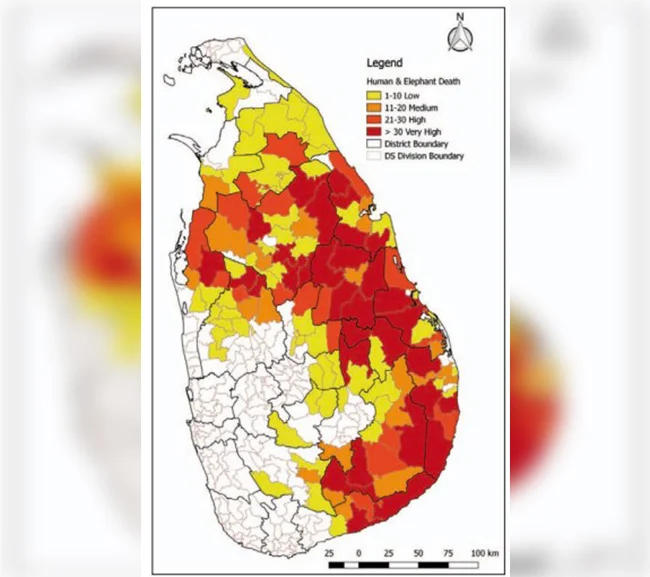
The government has launched a fresh national drive to tackle Sri Lanka’s long-standing human-elephant conflict (HEC), with a strong emphasis on restoring elephant corridors, establishing elephant enrichment zones and strengthening community participation as part of a new National Action Plan.
The National Action Plan Monitoring Committee met in Parliament yesterday under the co-chairmanship of Environment Minister Dammika Patabendi and Deputy Environment Minister Anton Jayakody, bringing together Members of Parliament from high-conflict districts, senior government officials, wildlife authorities and administrators to chart a long-term strategy to reduce one of the country’s most pressing conservation and socio-economic challenges.
The initiative comes amid growing concern over the continued loss of human lives, elephant deaths and escalating damage to crops and property caused by the conflict.
Environment Ministry Advisor Dr. Ravindra Kariyawasam told The Island that the new action plan would move beyond ad hoc responses and instead adopt a science-based, community-driven approach built on updated field data.
“The previous National Action Plan was prepared in 2020. Much has changed since then. Elephant movement patterns, forest cover and land-use practices have all evolved over the past five years. Therefore, the country urgently needs a revised strategy based on current scientific evidence and practical realities,” Dr. Kariyawasam said.
He said one of the central pillars of the new strategy would be restoring traditional elephant migratory routes that have been blocked by unplanned development and human encroachment.
“Clearing elephant corridors and protecting these movement routes are critical if we are to reduce encounters between elephants and people. At the same time, we are looking at establishing elephant enrichment zones that will improve habitat quality within forests and reduce pressure on surrounding villages and farmlands,” he said.
Dr. Kariyawasam noted that community participation would be a key component of the programme, as sustainable solutions could not be achieved through enforcement measures alone.
“We want local communities to become active partners in managing the conflict. Their knowledge, participation and ownership are essential if conservation measures are to succeed over the long term,” he added.
According to the Ministry, discussions at the Parliamentary committee also focused on improving the implementation of laws governing Managed Elephant Reserves and strengthening the operational capacity of the Department of Wildlife Conservation by providing additional human and physical resources.
The Government has already commenced several immediate interventions while the comprehensive action plan is being finalised. These include removing obstructions along traditional elephant corridors and establishing elephant enrichment zones under the national “Wanaspathi” programme.
Officials said the decision to formulate a new action plan followed a series of high-level discussions chaired by President Anura Kumara Dissanayake, during which concern was expressed over the increasing fragmentation of elephant habitats caused by rapid population growth, deforestation and unplanned development projects.
With Cabinet approval, a National Expert Committee comprising leading environmental specialists was appointed to prepare the updated strategy.
Dr. Kariyawasam said the Government’s objective was to replace short-term interventions with an integrated management framework that balances biodiversity conservation with the safety and livelihoods of rural communities.
“The ultimate goal is peaceful coexistence between people and elephants. That requires scientific planning, habitat restoration, effective law enforcement and sustained public participation rather than temporary solutions,” he said.


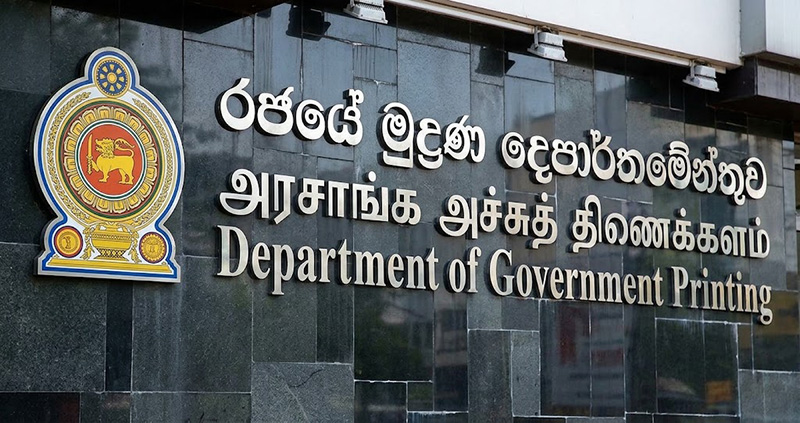
A complaint has been lodged with the Colombo Fraud Investigation Bureau against the Government Printer and the Secretary to the Ministry of Media regarding the online release of falsified documents bearing a forged Speaker’s certificate.
Attorney-at-Law Aruna Laksiri has lodged a complaint with the Colombo Fraud Investigation Bureau requesting legal action against the Government Printer of the Department of Government Printing (No. 118, Dr. Danister de Silva Mawatha, Colombo 08), Prasanna Jayaratne, and the Secretary to the Ministry of Mass Media (Asidisi Medura, 163, Kirulapone Mawatha, Polhengoda, Colombo 05), Dr. Anil Jasinghe.
The complaint alleges the commission of offences by forging and uploading falsified documents online using a forged Speaker’s certification, failure to perform statutory duties, and misappropriation of public property.
The complaint states that a copy of the English translation of the 22nd Amendment to the Constitution was downloaded and printed from the official website of the Government Printing Department (www.documents.gov.lk), which operates under the Ministry of Mass Media. On its outer cover and on page 1, the text “certified on 25th of September, 2026” is inscribed inside brackets.
The complaint pointed out that the Speaker has certified an English translation. Under Articles 23, 79, 83, and 80 of the Constitution, Parliament enacts laws and the Speaker certifies bills strictly in the Sinhala and Tamil languages; under the Constitution, therefore the Speaker cannot apply such certification to an English translation.
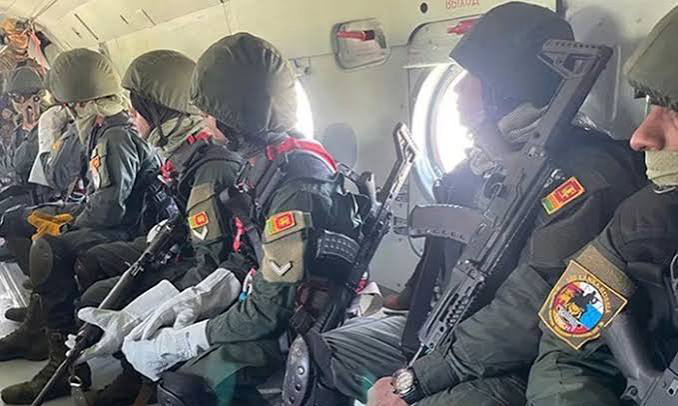
The Defence Ministry said yesterday that Sri Lankan troops had participated in counter-terrorism exercise with Russian counterparts in Russia. The announcement was made after the conclusion of the exercise and the return of 75 personnel, including 20 officers, to Sri Lanka. The exercise included training in heli-rappelling, close-quarters battle, sniper fire, ambush operations and drone operations in the far east of Russia.
The contingent of 20 officers and 55 other ranks took part in Exercise Wolverine Path II, held at Vladivostok, from 18 to 25 September. The troops returned, through Mattala Rajapaksa International Airport, on 28 September.
The Defence Ministry listed the training as counter-insurgency operations, tactical shooting, offensive and defensive manoeuvres, tactical medical training and the deployment of unmanned aerial systems.
“The training programme provided an opportunity for the participating troops to exchange operational experiences and training methodologies while developing their ability to operate together in diverse tactical scenarios,” the Ministry said.

Nine Indian fishermen and their fishing boat taken into custody by the Navy on 3 October for engaging in illegal fishing south of Delft Island, Jaffna, were brought to Kankesanthurai harbour yesterday (04) morning.
The Navy took the boat into custody after it crossed the International Maritime Boundary. The fishing boat and the nine fishermen have been handed over to the Jaffna District Fisheries and Aquatic Resources Department for legal action.

Lawyer lodges complaint against Govt. Printer, Media Ministry Secy.

Sri Lankan troops in joint anti-terrorist exercise in Russia

Nine Indian poachers brought to KKS with their boat

Quo Vadis? Private sector medicine in Sri Lanka

Sri Lanka must rethink plastics before waste crisis deepens, says OUSL Vice Chancellor

Dons’ frustration and rulers’ nonchalance

‘Dates have the highest sugar content to fight Coronavirus’

Sunday Island 27 December – Headlines

#SundayIsland 17th December – Headlines

Sunday Island – 28th March

Sunday Island Headlines – 21 March

Sunday Island – 21st February – Headlines
-

 Latest News5 days ago
Gold winner Tharanga gets brand-new Honda Vezel from SLAAJ
-

 News7 days ago
Sajith rejects Jt. Opp. protest sabotage claim; SJB TU chief demands remedial action
-

 Features5 days ago
Why Sri Lanka needs an Inclusive Civic Nationalism – urgently
-

 News4 days ago
US-assisted ‘Ice’ detection: NPC to examine IGP’s move to transfer drug-busting team
-

 Features6 days ago
Thailand’s biggest new global star …
-
 News6 days ago
First cases taken up by SC after enactment of 22A dismissed
-

 News5 days ago
Civil society activist accuses govt. of favouring Ven. Gnanasara
-

 Editorial6 days ago
Aftershocks of 22A