
Editorial
New laws alone won’t do


Tuesday 7th December, 2021
The government is keen to amend the election laws to provide for restrictions on campaign expenditure, and President Gotabaya Rajapaksa has given the Legal Draftsman necessary instructions in this regard, Media Minister Dallas Alahapperuma has reportedly said. It is hoped that the new laws to be made will also make it mandatory for candidates and political parties to disclose sources of their campaign finance, and the amounts of funds they receive by way of donations.
Laws to regulate campaign finance are long overdue, and the government initiative is therefore welcome. However, one should not be so naïve as to expect all problems related to campaign expenditure, etc., to disappear with the introduction of a few more laws. It is one thing to make laws; it is another to enforce them properly. We already have enough and more laws to prevent election malpractices, but the problem is that they are not applied correctly and fairly.
Politicians are adept at circumnavigating laws and compassing their political ends. When the 19th Amendment was introduced, it was widely expected to enable key state institutions to emerge independent and strong. But the Constitutional Council tasked with depoliticising those outfits became a mere rubber stamp for the Prime Minister, who manipulated it to further the interests of his government. This is the fate that befalls all laws in this country.
The problem with the election laws is not that they lack teeth; instead, it is that the authorities concerned lack the courage to enforce them strictly. The results of several elections, and the 1982 referendum should have been cancelled, given widespread rigging and violence that marred them. What was witnessed before and during the presidential and parliamentary elections in the late 1980s was the very antithesis of democracy; polling agents were chased away and ballot boxes stuffed openly while the police looked on. The North-Western provincial council polls (1999) were also affected by large-scale violence and rigging, but the results were not declared null and void.
Minister Alahapperuma has said the laws to be made will help usher in a new political culture. One should not be faulted for being sceptical about the possibility of such a radical change happening in Sri Lankan politics simply because of a few more additions to the country’s huge body of laws. If the government is genuinely desirous of changing the existing, rotten political culture, it ought to follow Alahapperuma’s example anent electioneering.
The media has been watching Minister Alahapperuma’s election campaigns with interest over the years. He has had the courage to spurn the conventional campaign methods; he does not use posters, banners, bunting, etc. When he chose to swim against the tide and take the high road, not many expected him to succeed in dirty Sri Lankan politics, but he has received a very positive response from the electorate. He has thus been able to keep the cost of electioneering very low. If he can conduct decent polls campaigns under the existing election laws, and get elected, why can’t others? There are several other politicians who also conduct clean election campaigns, and the onus is on the public to appreciate their courage to be different and reward them with votes. Sending the right men and women to Parliament is half the battle in draining the swamp.
It is heartening that the government has realised the need to regulate campaign finance at last and reportedly taken steps to introduce new laws for that purpose. If the SLPP had cared to set an example to others by keeping its campaign expenditure low, it would not have had to go out of its way to scrap duty on sugar imports in a questionable manner, some moons ago, to please one of its main financiers, thereby causing a huge loss to the State coffers. This scam has damaged its image irreparably.
Now that the government has evinced a keen interest in regulating campaign finance, will the ruling SLPP disclose, suo motu, the amounts of funds it received for the 2019 presidential election and the 2020 parliamentary polls, the sources thereof and actual expenditure.



Friday 20th February, 2026
The JVP-NPP government finds itself in an unenviable position over the Provincial Council (PC) polls, which have been in abeyance for nearly a decade. In the late 1980s, the JVP plunged the country into a bloodbath in a bid to prevent the establishment of the PCs, which it said would endanger the territorial integrity of the country. Today, it has a two-thirds majority in Parliament and its leader Anura Kumara Dissanayake is the Executive President. It is therefore well positioned to carry out its promise to do away with the PCs. After all, some election monitors have called upon it either to hold the delayed PC polls or to consider abolishing the PCs. It has chosen to do neither. Its leaders who vowed to liberate this country from India, which created the PC system, are seen pressing the flesh with the Indian leaders.
The Tamil National Alliance (TNA) has accused the JVP-NPP government of trying to use a parliamentary select committee (PSC) to delay the PC polls further. TNA MP Shanakiyan Rasamanickam has reportedly opposed a government plan to bring the PCs within the remit of a new PSC. He has pointed out that a PSC on the PCs already exists, and the duplication of the PSC process will only lead to confusion and create conditions for the PC polls to be further delayed.
MP Rasamanickam’s fear is not unfounded. It is obvious that the government is not ready for an election. Otherwise, it would have amended the PC Elections Act, enabling the Election Commission to hold the PC polls under the Proportional Representation system soon. All signs are that it will do everything in its power to avoid an electoral contest this year. Its fear of elections has given the lie to its claim that its approval rating has improved.
The TNA is not alone in urging the government to hold long-delayed PC elections. The SJB, the SLPP, the SLFP and the UNP are also demanding that the PC polls be held immediately. All these political parties facilitated the passage of an extremely bad Bill to amend the PC Elections Act in 2017, thereby helping the UNP-led Yahapalana government postpone the PC polls . They ought to tender an apology for that blatantly undemocratic act.
It may be recalled that the TNA, the SLFP, the JVP and the Joint Opposition, consisting of the SLFP dissidents who subsequently formed the SLPP were prominent among the parties that enabled the ratification of the aforesaid shockingly awful Christmas tree Bill loaded with more committee-stage amendments than its original text. The SJB stalwarts were in the UNP in 2017 and voted for that bad Bill, which was not consistent with Article 78 (3) of the Constitution: “Any amendment proposed to a Bill in Parliament shall not deviate from the merits and principles of such Bill.”
Meanwhile, JVP General Secretary Tilvin Silva has denied reports that the government is under pressure from India to hold the PC polls. He visited India recently and met Indian External Affairs Minister S. Jaishankar. However, one may recall that in April 2025, Indian Prime Minister Narendra Modi himself publicly urged Sri Lanka to hold the delayed PC polls. At the UNHRC session in Geneva in September 2025, an Indian delegation repeated Modi’s call. India has done so under pressure from Tamil Nadu.
Statements made by Tilvin, who is widely seen as the eminence grise of the ruling JVP-NPP coalition, are generally considered authoritative. If the NPP government is not under Indian pressure to ensure that the PCs will have elected representatives soon, the question is whether the Modi government has taken the Tamil Nadu politicians for a ride.
If the NPP government is not afraid of facing the public, it can amend the current PC election laws and hold the PC polls without taking cover behind the delimitation process, which is likely to drag on indefinitely. Mere rhetoric won’t suffice.

Thursday 19th February, 2026
The Parliament of Sri Lanka has earned notoriety for Dorothy Dixers or pre-arranged questions that the ruling party backbenchers ask ministers to help highlight the government’s ‘achievements’ and tear the Opposition to shreds. This practice is not peculiar to Sri Lanka, but here the situation has manifestly got out of hand. The NPP MPs are always given ample time to ask free-kick questions, which are legion, but the government frontbenchers invariably obstruct the Opposition members who throw curveballs that ministers cannot face. Some ministers even request weeks to answer easy questions, demonstrating a callous disregard for the parliamentary process and accountability.
Opposition Leader Sajith Premadasa raised some pertinent questions in Parliament yesterday. Demanding to know why the government had issued a gazette, placing the National Commission on Women (NCW) under the Ministry of Women and Child Affairs, he pointed out that the integrity of the commission which was expected to function as an independent body to protect, promote and advance women’s rights, would be undermined if it was placed under a particular ministry. He tabled the gazette notification at issue, disputing the government’s claim that no such document existed. While the Opposition Leader was demolishing the NPP’s arguments, some government members rose to their feet, shouting and accusing him of violating Standing Orders.
Party leaders should have some leeway when crucial matters are discussed in the House, where a lot of time is wasted on innocuous matters. The NCW is expected to safeguard the rights of women who account for about 52 percent of the country’s population. Parliament, therefore, should allocate enough time for discussions on matters pertaining to the NCW and allow the Opposition to express its views freely. After all, politicians act sensibly only when they are out of power. They take leave of their senses when power goes to their heads. Therefore, the public has a right to know the Opposition’s views on matters of national importance. There is nothing stupider than to go by what the ruling party politicians say about issues that adversely affect their own interests.
Governments with steamroller majorities tend to shout down their political opponents in Parliament. We have witnessed this for decades. Powerful regimes, intoxicated with power, cherish the delusion that popular mandates are special licences for them to do as they please and that an electoral defeat deprives the Opposition of its right to express its views and question government policies. The J. R. Jayewardene government did everything in its power to railroad the Opposition of the day into submission, but in vain. The Mahinda Rajapaksa government did likewise and went so far as to debilitate the Opposition by engineering dozens of crossovers. The JVP tore into those regimes, condemning their dictatorial actions, endeared itself to the public, and succeeded in turning the tables on the main parties and capturing state power. Unfortunately, the JVP-led NPP government has failed to be different.
Those who are familiar with the Westminster traditions are aware that the Opposition plays a vital role in a democracy, and deserves the opportunity to speak and raise questions in Parliament because that is a prerequisite for ensuring scrutiny, accountability and democratic legitimacy. The Opposition is duty-bound to question government actions, challenge executive decisions and take up policy flaws. Sri Lankan politicians ought to learn from the UK House of Commons, where the Opposition enjoys the freedom to question and criticise ministers. There are also “Opposition Days” allocated in the House of Commons for discussions on subjects chosen by the non-government parties. There are 20 days allocated for this purpose per session (under Standing Order 14). The JVP-led NPP came to power, promising a radical departure from the country’s rotten political culture. Sadly, it is moving along the same old rut as its predecessors it vehemently condemned for undermining democracy.
Aristotle has said that it is the mark of an educated mind to be able to entertain a thought without accepting it. Those who seek to suppress dissenting views in Parliament only demonstrate that they do not measure up to the Aristotelian standard.
Wednesday 18th February, 2026
The legal fraternity is up in arms over last week’s murder of a lawyer and his wife in a Colombo suburb. On 13 February, two gunmen shot lawyer Buddhika Mallawarachchi and his wife Nisansala dead inside their car near a supermarket at Akuregoda, where the Defence Headquarters Complex is located. The killers used a T-56 assault rifle and a pistol in the attack. There was absolutely no need for an assault rifle to kill the unarmed victims. Those who ordered the killing may have sought to make the attack as spectacular as possible, probably to send a chilling message to others.
The Bar Association of Sri Lanka (BASL) sprang into action, cranking up pressure on the government and the police to bring the killers to justice forthwith. It resorted to a one-day boycott of court proceedings in protest, urging the government to ensure the safety of lawyers and the public. The BASL reaction jolted the police into arresting some suspects with underworld links.
Hardly a day passes in this country without a shooting incident that snuffs out a life or two. Last year saw about 114 shooting incidents, which reportedly claimed 60 lives. About seven persons have been shot dead so far this year, according to media reports. The police have pathetically failed to prevent crime. They are busy doing political work for the incumbent government to the extent of making one wonder whether they have any time left for their regular duties and functions, including crime prevention. The CID is apparently labouring under the misconception that its raison d’etre is to protect the interests of the incumbent government and its members.
The police have drawn heavy flak for seeking to muddy the water over Friday’s killings by making some claims that have been construed as attempts to blame underworld rivalry for the double murder and imply that Mallawarachchi had underworld links. They may have sought to use their stock excuse of underworld rivalries in a bid to cover up their failure to neutralise the organised criminal gangs.
Attempts are made in some quarters to turn public opinion against lawyers who defend drug dealers, rapists, homicidal killers and other such criminals. It is a well-established legal principle that every person accused of a criminal offence has the right to be represented by a lawyer. This constitutes one of the core safeguards of a fair trial. The idea is to prevent offenders from being denied a proper opportunity to defend themselves, often through counsel, and condemned. Since the accused are presumed innocent until proven guilty, they must have a full chance to defend themselves, including through legal counsel. After all, the International Covenant on Civil and Political Rights recognises the right of an accused to have legal assistance. So, no lawyer should be vilified for representing any offender, even if the latter has perpetrated a heinous crime. There have been instances where lawyers refused to appear for some criminals. Such action violates the aforesaid legal principle.
Some government ministers have claimed that the incidents, such as the killing of Mallawarachchi and his wife, are isolated ones that cannot be considered threats to national security. They are being overly pedantic about the distinction between public security and national security. Obviously, public security and national security are different though the differences between them are often taken for granted. Technically, public security concerns the safety of citizens whereas national security concerns the protection of the state from major strategic threats. However, governments in this country use public security and national security interchangeably when it serves their purpose. According to the Protection of the State from Terrorism Bill, even public security issues are treated as threats to national security. The Prevention of Terrorism Act, which was introduced to protect the state and national security, is used to arrest and detain offenders who can be dealt with under ordinary laws.
The government and the police must get their act together instead of splitting hairs and trying to obfuscate the real issue of growing vulnerability of the public vis-à-vis the rise of the underworld.
With criminal gangs becoming more powerful and demonstrating their ability to strike anywhere at will, and with the police failing to prevent crime, what the situation would be if the LTTE were still active militarily is anyone’s guess.

Fairly heavy showers likely in the Eastern province and in Matale, Badulla, Mullaitivu and Polonnaruwa districts

CEB trade unions hint at stringent industrial action after talks fail

PM reveals allowances and perks available to MPs

CID expresses regret to Natasha; IGP to issue guidelines on ICCPR arrests

Construction begins on country’s largest solar power project in Hambantota

Lanka silent as 85 countries rebuke Israel at UN

‘Dates have the highest sugar content to fight Coronavirus’

Sunday Island 27 December – Headlines

#SundayIsland 17th December – Headlines

Sunday Island – 28th March

Sunday Island Headlines – 21 March

Sunday Island – 21st February – Headlines
-

 Life style5 days ago
Marriot new GM Suranga
-

 Business4 days ago
Ministry of Brands to launch Sri Lanka’s first off-price retail destination
-
 Features5 days ago
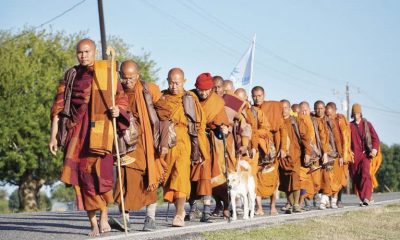
Monks’ march, in America and Sri Lanka
-
 Features5 days ago
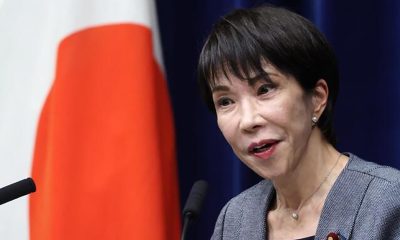
The Rise of Takaichi
-

 Features5 days ago
Wetlands of Sri Lanka:
-

 News5 days ago
Thailand to recruit 10,000 Lankans under new labour pact
-
 News5 days ago
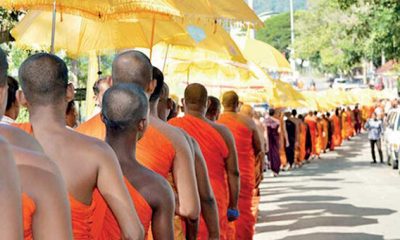
Massive Sangha confab to address alleged injustices against monks
-

 News3 days ago
IMF MD here