
News
New Geneva inquiry:

SJB backs govt. call for examining all available information, evidence
By Shamindra Ferdinando
The main Opposition party, the breakaway UNP faction, Samagi Jana Balavegaya (SJB) yesterday (30) said that all available information and evidence relating to Sri Lanka’s war against terrorism should be made available to the proposed special unit to be formed for the implementation of an accountability resolution adopted at the recently concluded Geneva-based United Nations Human Rights Council (UNHRC).
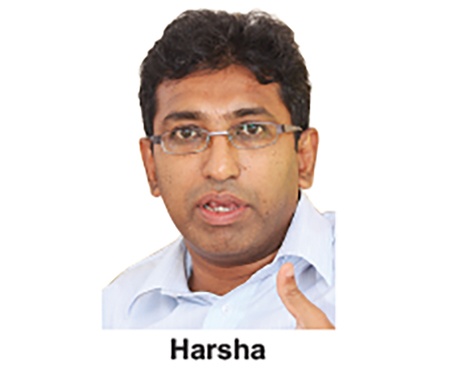
SJB lawmaker Dr. Harsha de Silva said so when The Island asked him whether his party backed the government’s call for the UK to make available wartime (January-May 2009) dispatches from its High Commission in Colombo to the proposed special unit.
The former non-cabinet minister in the yahapalana administration, who led the country’s delegation to the Universal Periodic Review (UPR) at the UNHRC in 2017, said that he couldn’t comment specifically on the British dispatches. The Colombo District lawmaker said let the planned new unit receive access to all available information and evidence.
Prof. Peiris, who served as the External Affairs Minister during 2010-2015 period on Monday (29) asked whether the UK, leader of Sri Lanka Core Group, in addition to being member of the UNHRC, would submit suppressed dispatches to the special Geneva unit estimated to cost the UN USD 2.8 mn. Prof. Peiris said that Geneva should request for dispatches from the British as well as from other countries with diplomatic missions in Colombo served either by defence advisors/attaches.
Prof. Peiris said that those genuinely interested in establishing the truth shouldn’t have any qualms in examining credible evidence.
MP de Silva asserted that there couldn’t be any dispute over new Geneva unit examining all available information and evidence.
Addressing the media at the Opposition Leader’s Office earlier in the day, Dr de Silva flayed the government for making a desperate attempt to depict the Geneva vote against Sri Lanka as a continuing battle between the West and the global south. The SJB MP pointed out that of those who voted for the resolution only seven represented the Western group.
The 47-member UNHRC is divided into five groups. The former UNPer explained how members of all groups either voted for the resolution or skipped the vote at Sri Lanka’s expense.
The SJB parliamentarian dismissed SLPP Chairman Prof. Peiris’ allegation that the Opposition was trying to portray an unfounded threat. Referring to The Sunday Times reportage of the issue at hand, lawmaker de Silva urged the government to be realistic in its assessment of the Geneva situation and take tangible measures to address the concerns of the international community.
Warning of dire consequences unless the government changed its strategy, lawmaker de Silva reiterated that the SJB’s commitment to throw its weight behind the country. The top SJB spokesman called for a consensus between the government and the Opposition in that regard.
Dr. de Silva emphasized that Geneva found fault with the incumbent government over a spate of issues ranging from threats to democracy and rapid militarization of the country. He also listed specific issues raised by the latest resolution that really focused on post-2019 presidential period rather than accountability issues during the war.
Declaring the SJB’s support for the Lessons Learnt and Reconciliation Commission (LLRC) report commissioned by the then President Mahinda Rajapaksa, MP de Silva said that ex-Attorney General C.R. de Silva’s dossier cleared the Sri Lankan military of deliberate slaughter of civilians. However, the government failed to act on other findings made by the report. Had the then government acted responsibly, international concerns could have been addressed, Dr de Silva said, demanding to know why one-time LTTE commander Karuna was offered high political status instead of punished for the massacre of 600 policemen in June 1990. The MP emphasized that the LLRC report especially called for probe into Karuna’s alleged role though he denied involvement.
The SJB declared support for a local accountability mechanism which could win the confidence of the international community. The SJB also assured its support for the full and meaningful implementation of the 13th Amendment to the Constitution through which maximum possible devolution could be offered.



Govt. tells fuel distributors to maintain stocks to ensure uninterrupted supplies
by Saman Indrajith and Norman Palihawadane
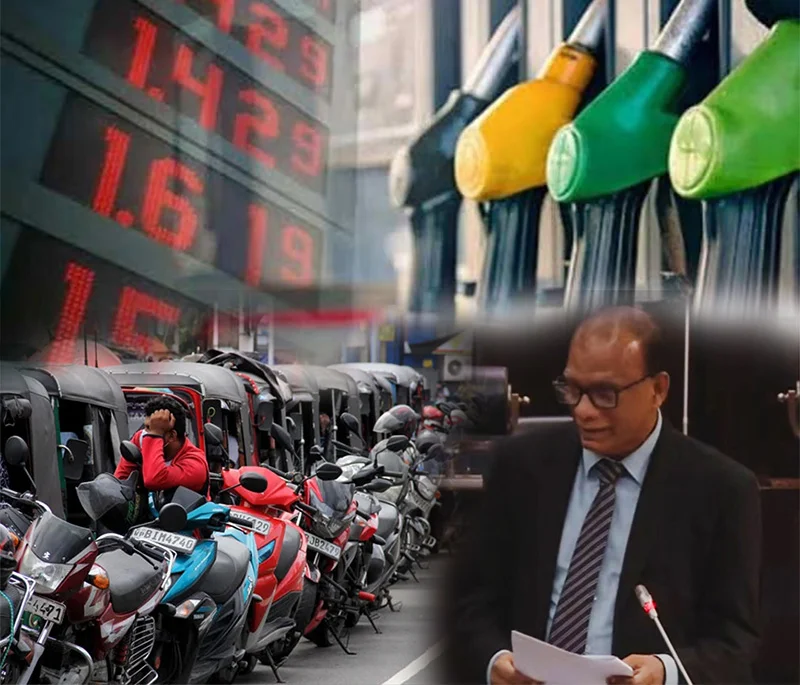
The government had instructed private fuel distributors to maintain minimum stocks and ensure uninterrupted supplies to the market, Energy Minister Anura Karunathilaka told Parliament yesterday (06).
Karunathilaka said the Ministry of Energy Secretary had notified the relevant companies of the requirement, following a reduction in supplies by some private distributors, amid higher international fuel prices.
The Minister said private companies had informed the government that they were facing losses because international prices had risen while fuel was being sold, locally, at prevailing prices. As a result, some companies had reduced the volumes released to the market.
The reduced supplies had increased the burden on the Ceylon Petroleum Corporation (CPC), whose share of the diesel market had risen from about 54% to 82%, the Minister said.
“The CPC currently holds an 82% share of the market,” he said, adding that it had increased its supplies, compared with February, to compensate for the reduction by private distributors.
Karunathilaka said the government could not, under the existing agreements with private companies, specify the quantities they should supply to individual filling stations. However, it could require them to maintain minimum stocks in the country.
The Minister said the Energy Ministry had already instructed companies that had failed to maintain the required stocks to take steps to prevent supply disruptions.
The Minister attributed the queues reported at some filling stations to reduced supplies from private distributors, as well as normal variations in fuel distribution. He also said demand for CPC fuel had increased because private companies generally did not provide fuel to dealers on credit, while the CPC offered a three-day credit facility.
“We expect that, as the Ceylon Petroleum Corporation takes on this additional burden, the problem will ease to some extent by Wednesday or Thursday,” Karunathilaka said.
He said instructions had also been issued to increase supplies to CPC filling stations. A special discussion on the issue is scheduled for today (07), with officials of the Energy Ministry and CPC expected to participate,
along with President Anura Kumara Dissanayake.
Meanwhile, Petroleum Dealers’ Association officials have called for an early solution to the supply issue. Association Chairman D.V. Shantha Silva said queues had been reported at many filling stations, mainly those operated by private distributors.
He said the situation was not due to an overall shortage of fuel, but was linked to reduced orders by Lanka IOC, Sinopec and R.M. Parks amid concerns over losses incurred on fuel sales.
The Ceylon Petroleum Private Tanker Owners Association has urged motorists to refrain from panic buying, saying there was no nationwide disruption to fuel supplies.
The government earlier increased fuel prices and introduced a per-litre diesel subsidy following concerns raised by distributors over rising international prices.
by Norman Palihawadane
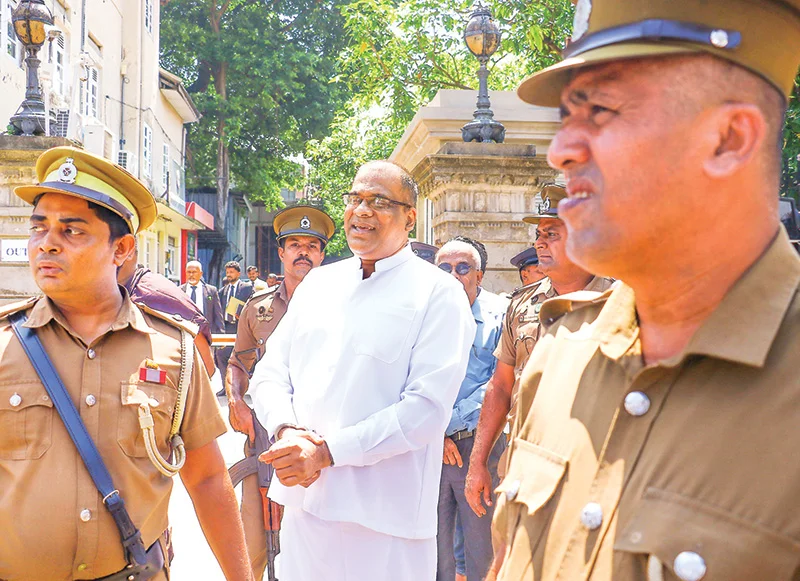
Bodu Bala Sena General Secretary Ven. Galagodaatte Gnanasara Thera, who has been ordered by the court to serve the remainder of his prison sentence, is to be assigned to the prison ‘printing work party’, prison officials said yesterday.
The monk was produced before the Colombo High Court yesterday by prison officials in connection with a warrant issued by the court.
He appeared before the court in civilian attire.
Prison sources said arrangements were being finalised for his detention and that he would subsequently be assigned to the printing work party.
The Thera initially objected when prison officials instructed him to change from his robes into the attire worn by convicted prisoners.
He later agreed to wear the prescribed prison clothes, sources said.
The Supreme Court, in September, annulled the presidential pardon granted to Gnanasara Thera in 2019. He had been serving a six-year prison sentence imposed following his conviction for contempt of court but had served only about nine months when then President Maithripala Sirisena granted him a presidential pardon in May 2019.
Following the Supreme Court ruling, the Thera was required to serve the remainder of his sentence. He was subsequently reported missing, prompting the Court of Appeal to issue an open warrant for his arrest.
The Court of Appeal on Monday ordered the authorities to enforce the remainder of his prison sentence.
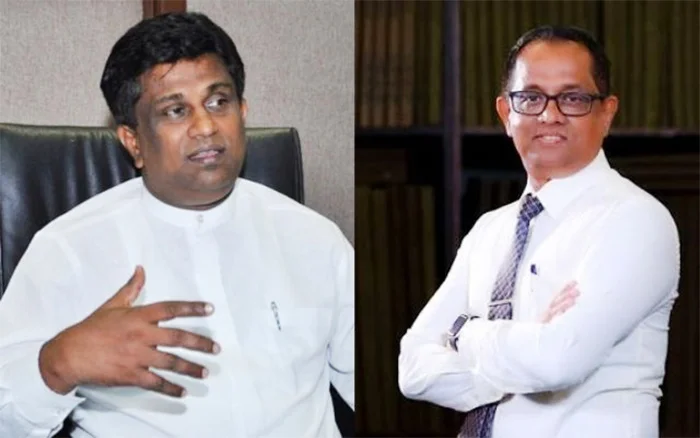
Speaker Dr. Jagath Wickramaratne yesterday ruled that a privilege complaint submitted by SJB Kalutara District MP Ajith P. Perera did not constitute a prima facie breach of parliamentary privilege.
The ruling was made in response to a notice of privilege submitted by Perera on October 02.
Perera alleged that his parliamentary privileges had been breached over the failure to take formal action or reach a final decision on a written request submitted on August 03 by 18 Opposition MPs seeking the appointment of a Special Select Committee to investigate delays in the judicial system and prison overcrowding.
He had also requested that the matter be referred to the Committee on Ethics and Privileges for investigation and recommendations.
In his ruling, Speaker Wickramaratne said the Speaker, as the Presiding Authority and guardian of the powers, rights and privileges of Parliament, could not be subjected to a privilege complaint or disciplinary inquiry by a committee subordinate to the Chair in respect of actions taken in an official capacity.
He said that, under the Standing Orders, the Speaker was required to independently determine whether a prima facie case of breach of privilege existed.
Referring a complaint against the Speaker to a committee functioning under the Speaker’s authority would, therefore, create a procedural contradiction, he said.
Accordingly, the Speaker ruled that Perera’s notice did not constitute a prima facie breach of parliamentary privilege and disallowed the request to refer the matter to the Committee on Ethics and Privileges.

Showers in the Western, Sabaragamuwa, Central, Uva, North-western and Southern provinces and in Anuradhapura and Mannar districts

Fuel crunch looms

Gnansara Thera to be assigned to prison printing section: Officials

Speaker rejects Ajith Perera’s privilege complaint

OIC of FCID summoned before Maligakanda Magistrate

Sallay cleared for discharge, to return to CID custody

‘Dates have the highest sugar content to fight Coronavirus’

Sunday Island 27 December – Headlines

#SundayIsland 17th December – Headlines

Sunday Island – 28th March

Sunday Island Headlines – 21 March

Sunday Island – 21st February – Headlines
-

 Latest News7 days ago
Gold winner Tharanga gets brand-new Honda Vezel from SLAAJ
-

 News6 days ago
US-assisted ‘Ice’ detection: NPC to examine IGP’s move to transfer drug-busting team
-

 Editorial5 days ago
Colombo Port drug bust: The plot thickens
-

 Editorial6 days ago
Drug busting, transfers and trust deficit
-

 Features3 days ago
The first woman in the foreign service or Ceylon Overseas Service it was then called
-

 Latest News4 days ago
Tharindu Rathnayake, bowlers secure Asian Games Bronze for Sri Lanka
-
 News6 days ago
Sri Lankan facing death penalty in Saudi Arabia: Mano G appeals to Crown Prince
-

 Editorial4 days ago
Fuelling discontent and protest