
News
New Geneva challenge: Chagie calls for united stand

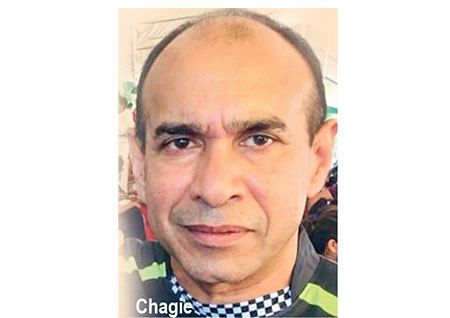
By Shamindra Ferdinando
Retired Maj. Gen. Chagie Gallage says the country should take a united stand at the Geneva-based United Nations Human Rights Council (UNHRC) or face the consequences.
The battle-tested Gajaba regiment veteran said that there shouldn’t be a difference of opinion whatsoever as regards Sri Lanka’s defence in the face of a new investigative mechanism approved at the recently concluded 46th sessions.
“We are on the Geneva agenda. Let us be realistic about the threat and take tangible measures without further delay to set the record straight. We may not get another chance to present our case,” Gallage said. The outspoken officer underscored the need to revisit the accountability issue with an open mind.
Responding to another query, the celebrated infantry officer emphasized that Sri Lanka’s withdrawal from an accountability resolution co-sponsored by the previous administration in Oct 2015, six years after the triumph over terrorism, was irrelevant.
Two years before his retirement in August 2018, Australia refused to issue a visa to Gallage based on unsubstantiated war crimes allegations directed at the Army.
Referring to statements attributed to SLPP Chairman Prof. G.L. Peiris and Samagi Jana Balavegaya lawmaker Dr. Harsha de Silva recently in The Island, Gallage welcomed the government and the main Opposition taking a common stand on Lord Naseby’s disclosure based on wartime dispatches from the British High Commission, Colombo. Sri Lanka should collectively ask for examination of all available information pertaining to the war and strive to bring everything before the proposed new inquiry.
The retired soldier noted that the UN had already allocated USD 2.8 mn. “Thanks to the disclosure of BHC, Colombo dispatches, the world now knows their diplomatic representative (Lt. Col. Anthony Gash) contradicted high profile lies propagated by their own,” Gallage said.
Examination of Gash reports, along with UN report that dealt with the Vanni war (Aug, 2008-May 13, 2009), Wikileaks cables, Lt. Col. Lawrence Smith’s astonishing declaration at the first Colombo Defence Seminar 2011 and exposed lies pertaining to Mannar mass graves and poisoning of detained terrorists would help the government to unravel the truth, he said.
Sri Lanka’s overall failure to disapprove accusations even a decade after the successful conclusion was a slur on those who paid the supreme sacrifice and the wounded, Gallage said. Nearly 6,000 security forces personnel died in the Eelam War IV. Of them approximately 2,400 lost their lives during January-May 2009 in fighting east of the Kandy-Jaffna A9 road.
Gallage emphasized that individual countries could always act on unsubstantiated findings and recommendations.
It would be a grave mistake on Sri Lanka’s part to take things lightly on the basis the country couldn’t be hauled up before the International Criminal Court (ICC) because UN Security Council members, China and Russia could veto proposed actions. Among those declared not welcome by the US and Australia were Field Marshal Sarath Fonseka, Army Commander Gen. Shavendra Silva and Maj. Gen. Gallage.
At the behest of the then Foreign Minister Mangala Samaraweera, Army headquarters moved Gallage out of the Jaffna peninsula following a public spat with the former.
Gallage pointed out that those pursuing war crimes issues were only interested in the final phase. Alleging that Sri Lanka was being targeted by both local and foreign elements who couldn’t stomach eradication of the LTTE, Gallage called for a determined bid to overcome the Geneva challenge. “Let us hope now that the Feb-March sessions are over the Geneva threat won’t be forgotten for the time being,” the war veteran said.
Gallage said that the country paid a very heavy price for not countering blatant lies. Unfortunately, some of those propagating lies against the country’s armed forces were elected members of parliament, the retired soldier said. “It is certainly an unfortunate situation,” Gallage said.
Despite public assurances given over the years, Sri Lanka never really addressed the denial of visas. Actually denial of visas was one of the first indicators of hostile foreign action directed against the war winning military, Gallage said, pointing out in the wake of the recently adopted resolution, Geneva was now talking about a host of measures, including universal jurisdiction and extraterritorial jurisdiction.
The war veteran said that whatever the political differences, there couldn’t be a dispute over the need to finish off terrorism for once and for all. “We should quite rightly be proud of maintaining peace since then.”


Admiral of the Fleet Wasantha Karannagoda said that he is still waiting for the government’s response to the UK sanctions imposed on three ex-military officers, including him, and a former member of the LTTE.
The former Navy Chief said so in response to The Island query whether he was aware of the position taken by a three-member ministerial committee, consisting of Foreign Minister Vijitha Herath, Justice and National Integration Minister Harshana Nanayakkara and Deputy Defence Minister Maj. Gen (retd) Aruna Jayasekera.
The government named the committee in the wake of the UK declaration of travel bans and asset freezes in respect of Karannagoda, General Shavendra Silva, General Jagath Jayasuriya and Vinayagamoorthy Muralitharan, also known as Karuna. Maj. Gen. Jayasekera said that they inquired into the issue at hand.
Karannnagoda said that he would like to know the government’s recommendations if the ministerial committee briefed the Cabinet as per a decision taken by the Cabinet of Ministers. Karannagoda said that the issue should have been taken at the highest level as various interested parties continue to humiliate the war-winning military by targeting selected individuals.
Other sources, familiar with the issues at hand, told The Island that the government was yet to announce its stand.
Sources pointed out that the Opposition has been silent on what they called a matter of utmost national importance.
Cabinet spokesman Dr. Nalinda Jayathissa is on record as having described the UK move as a unilateral move and that committee was formed to examine the developments and recommend appropriate measures to the Cabinet.
Foreign Minister Herath told The Island the government was not successful in getting the British to withdraw sanctions. Describing the UK decision as unilateral, the Miniser said that the government conveyed its concerns but the UK didn’t change its stand.
The Island raised the issue with Minister Herath and Admiral Karannagoda in the wake of British MP of Sri Lankan origin, Uma Kumaran requesting the UK Foreign Secretary Yvette Cooper to expand on the government’s sanctions imposed on the four above-mentioned persons.
During a Foreign Affairs Committee meeting on 16 December, the MP for Stratford and Bow highlighted the lack of accountability and political will from the current Sri Lankan government to address war crimes and mass atrocities committed in Sri Lanka.
Sources said that David Lammy, who served as Secretary of State for Foreign, Commonwealth and Development Affairs at the time of the declaration of sanctions, had no qualms in declaring that the action taken against four Sri Lankans was in line with a commitment he made during the election campaign to ensure those responsible wouldn’t be allowed impunity. The UK government statement quoted Lammy as having said that this decision ensured that those responsible for past human rights violations and abuses were held accountable.
By Shamindra Ferdinando
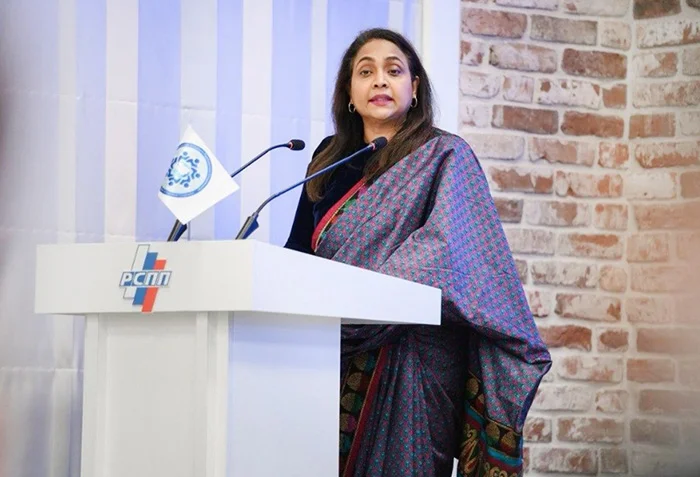
Sri Lankan Ambassador to the Russian Federation, Shobini Gunasekera recently presented a conceptual framework of seven key vectors that defined contemporary international relations and facilitated dialogue among States. She made the presentation at XI Moscow International Financial and Economic Forum held under the theme “Building Bridges: Partnership without Borders”.
In her address, the Ambassador emphasised that these vectors represent the channels through which ideas circulate, trade expands, and peace is strengthened, serving as guiding principles for cooperation amid global uncertainties. The seven key vectors highlighted were economic ties as a foundation for long-term stability; political choice and diplomacy through dialogue and multilateral engagement; security cooperation to address cross-border threats; cultural linkages through education, tourism, and professional exchanges; technological advancement, particularly in digital systems and artificial intelligence; environmental stewardship through collective action on renewable energy and climate change; and humanitarian obligations, including disaster relief and development cooperation.
Drawing on Sri Lanka’s experience, the Ambassador illustrated the practical application of these principles by highlighting the country’s strategic location in the Indian Ocean, its role as a trade and logistics hub, and its active engagement in regional groupings such as BIMSTEC and the Indian Ocean Rim Association, where the Russian Federation serves as a Dialogue Partner.
The potential for enhanced Sri Lanka–Russia bilateral cooperation was underscored, particularly through complementarities between Russia’s technological and energy expertise and Sri Lanka’s logistical capabilities and maritime infrastructure. She noted that such synergies could support joint initiatives in trade, innovation, tourism, and logistics, while cultural and scientific exchanges would further strengthen mutual understanding between the two countries.
Concluding her remarks, the Ambassador stated that sustained progress requires dialogue, mutual respect, and forward-looking partnerships capable of shaping a shared and stable future.
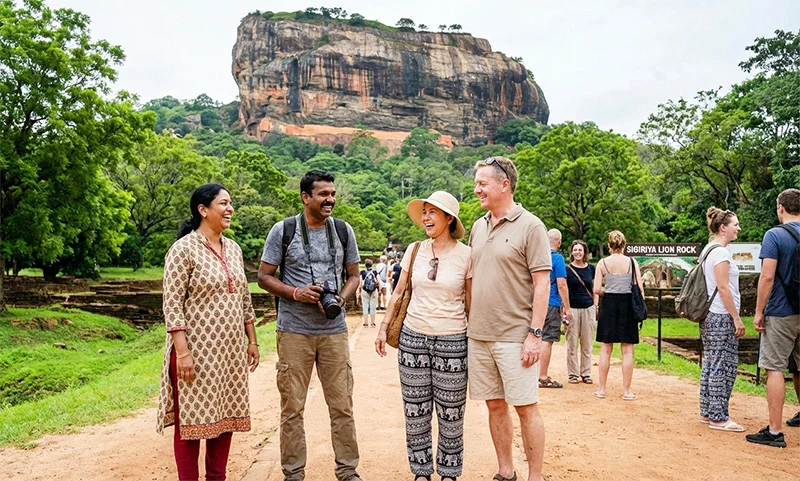
Thailand takes top place
Travel website Make My Trip has named Sri Lanka as the third most booked international destination by Indian travellers for the festive period, following Thailand and the United Arab Emirates (UAE).
According to a report released by MakeMyTrip, an analysis of booking trends between 20 December and January 2026 compared to the same period last year, highlighted a growing interest in Sri Lanka as a preferred destination.
Thailand ranked first, while the UAE secured second place. Vietnam recorded a notable rise, moving from seventh position last year to fourth this year, followed by Malaysia, Indonesia, Singapore, the UK, the US, and Hong Kong.

Delay in govt. response to UK sanctions on ex-military chiefs, and others causes concern

Sri Lanka outlines seven key vectors of international cooperation at Moscow forum

Sri Lanka third most preferred destination for Indians

Ondansetron controversy: Health Minister explores interim measures to address growing concerns

Post-Ditwah tourism: Govt. to retain UK interest in SL as key destination

Gurusinha’s Boxing Day hundred celebrated in Melbourne

‘Dates have the highest sugar content to fight Coronavirus’

Sunday Island 27 December – Headlines

#SundayIsland 17th December – Headlines

Sunday Island – 28th March

Sunday Island Headlines – 21 March

Sunday Island – 21st February – Headlines
-

 News6 days ago
Members of Lankan Community in Washington D.C. donates to ‘Rebuilding Sri Lanka’ Flood Relief Fund
-

 News4 days ago
British MP calls on Foreign Secretary to expand sanction package against ‘Sri Lankan war criminals’
-

 Features6 days ago
General education reforms: What about language and ethnicity?
-
 News6 days ago
Suspension of Indian drug part of cover-up by NMRA: Academy of Health Professionals
-
 Sports4 days ago
Chief selector’s remarks disappointing says Mickey Arthur
-
 News3 days ago
Street vendors banned from Kandy City
-

 News6 days ago
US Ambassador to Sri Lanka among 29 career diplomats recalled
-

 Editorial6 days ago
A very sad day for the rule of law