
Latest News
New commemorative Rs 2000 note presented to the President

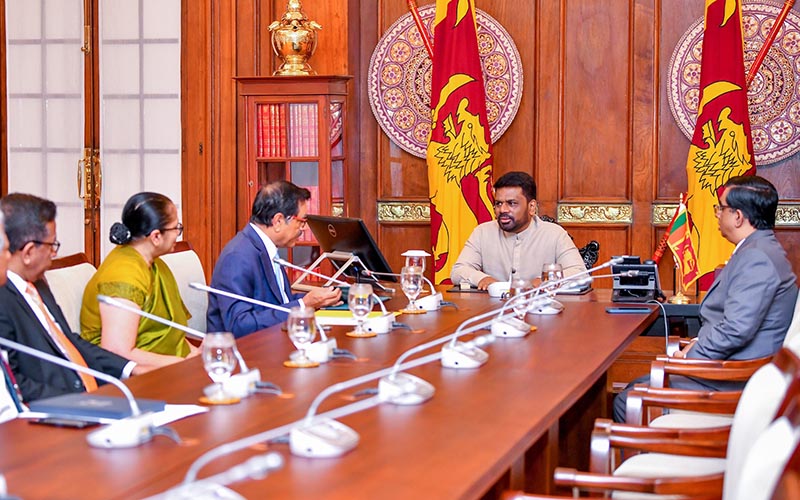
Marking the 75th Anniversary of the Central Bank of Sri Lanka (CBSL), a new commemorative Rs. 2000 currency note was presented this morning (29) to President Anura Kumara Dissanayake at the Presidential Secretariat by the Governor of the Central Bank, Dr. Nandalal Weerasinghe.
This commemorative note, issued to mark the anniversary, is the fifth commemorative currency note released by the Central Bank of Sri Lanka.
Reflecting the Bank’s unwavering commitment to strengthening economic stability as the foundation for national development, the note has been issued under the anniversary theme “Stability for Prosperity.”
On this occasion, the President also engaged in cordial discussions with officials of the Central Bank.
Secretary to the President Dr. Nandika Sanath Kumanayake, Senior Deputy Governor of the Central Bank Mrs. K. M. A. N. Daulagala, Assistant Governor K. G. P. Sirikumara and Superintendent – Currency Department P. D. R. Dayananda were present.

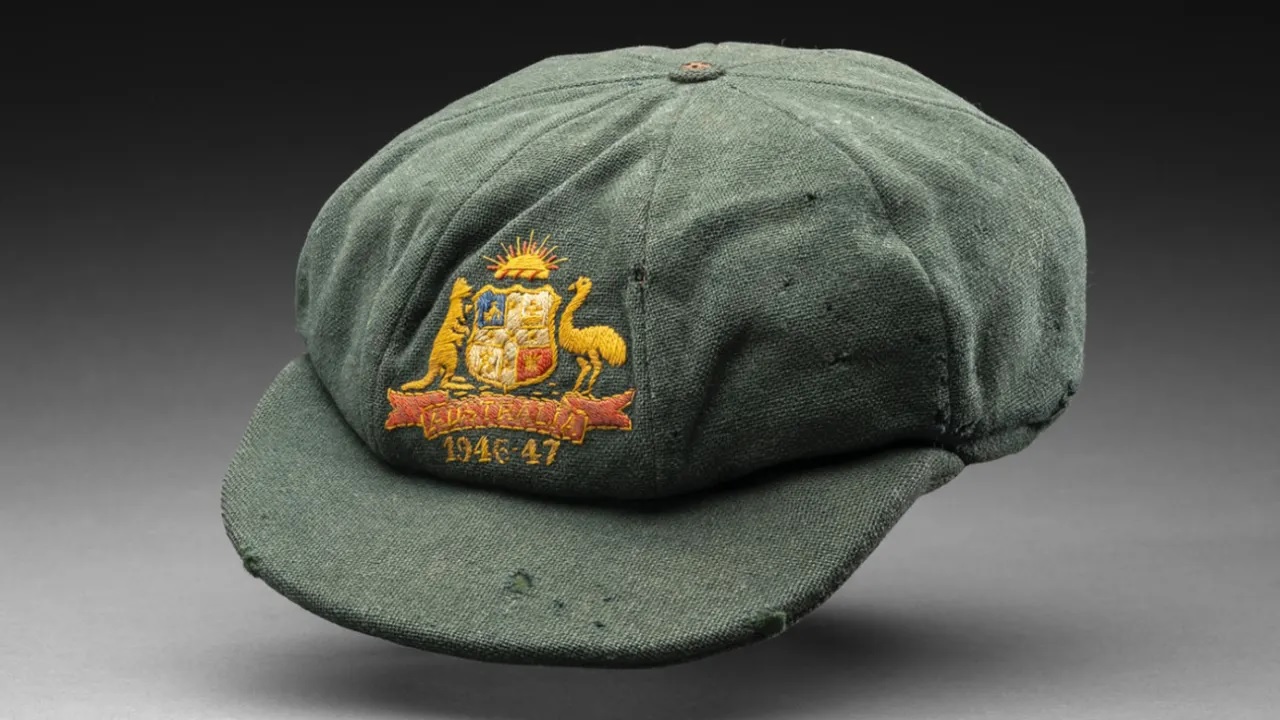
The baggy green cap that Sir Donald Bradman wore in India’s maiden series as an independent nation has been bought for AU$460,000 (US$320,000) by an anonymous buyer at a Gold Coast auction.
Bradman wore the cap during his final home series against India in 1947-48, before gifting it to their opening bowler, Ranga Sohoni, whose family had kept it in their possession ever since, without previously exhibiting it publicly.
It was sold on Monday by Lloyds Auctions in Queensland, with Lee Hames, the company’s chief operating officer, describing it as a “holy grail of cricket”.
“It has been hidden for 75 years, that’s over three generations under lock and key,” he said. “If you were a family member you were only allowed to look at it when you were 16 years old for five minutes.”
Though Sohoni played just the first Test of India’s 4-0 series defeat, and did not take a wicket in their innings loss, he nevertheless bowled their first ball of the match, and hence the first of the post-colonial era.
The inside of the cap is inscribed with the names “D.G. Bradman” and “S.W. Sohoni”, while “1947-48” is embroidered beneath the Australia crest. It is one of 11 known Bradman baggy greens, from an era when players wore different caps for each series.
Bradman’s first cap, from his debut in 1928, sold for Aus$450,000 in 2020. Shane Warne’s baggy green holds the record for such an artefact, having raised Aus$1,007,500 for the Australian Red Cross bushfire appeal in 2020.
[Cricinfo]
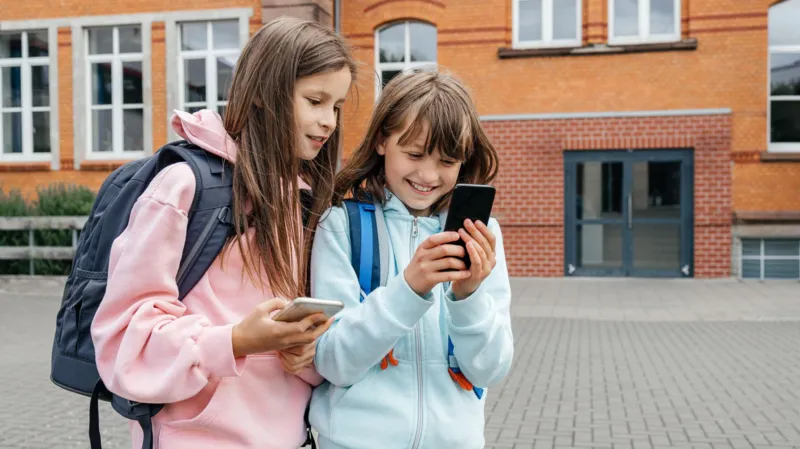
France’s National Assembly has taken a first step towards banning social media access for under-15s, a proposal backed by President Emmanuel Macron.
Lawmakers in the lower house on Monday agreed key elements of the bill, and are now expected to vote on the full text. The bill still needs to be approved by the upper house, the Senate.
If the legislation is passed, young teenagers would not be able to use networks such as Snapchat, Instagram and TikTok.
The French move is part of a worldwide trend towards restricting social networks for children, triggered by growing evidence of the damage they can cause to mental health. A similar law was passed in Australia late last year.
“With this law we will set down a clear limit in society,” said Laure Miller, a lawmaker behind the bill, as quoted by Le Monde.
“We are saying something very simple: social networks are not harmless,” she added. “These networks promised to bring people together. They pulled them apart. They promised to inform. They saturated us with information. They promised to entertain. They shut people away.”
Macron has said he wants the ban in place by the start of the school year in September. “We cannot leave the mental and emotional health of our children in the hands of people whose sole purpose is to make money out of them,” he said last month.
Under the new text, the state media regulator would draw up a list of social media networks that are deemed harmful. These would be simply banned for under 15-year-olds.
A separate list of supposedly less harmful sites would be accessible, but only with explicit parental approval.
The bill is believed to have a good chance of passing, with pro-Macron parties likely to be joined by the centre-right Republicans (LR) as well as the populist right-wing National Rally (RN).
Another clause would ban the use of mobile telephones in senior schools (lycées). The ban is already in effect in junior and middle schools.
If the law is passed, France will need to agree on the mechanism for age-verification. A system is already in place that requires over 18 year-olds to prove their age when accessing online pornography.
In Europe, Denmark, Greece, Spain and Ireland are also considering following the Australian example. Earlier this month, the UK government launched a consultation on banning social media for under 16s.
The basis of the proposed French law is a text drawn up late last year by deputy Laure Miller, who chaired a parliamentary committee enquiry into the psychological effects of TikTok and other networks.
Separately, the government was told to draw up its own legislation, after Macron decided to make the issue a centrepiece of his last year in office.
The president has been sidelined from domestic politics since the Assembly elections which he called in 2024 resulted in a hung parliament, and the social media ban has been a rare chance to court public favour.
For a time the cause risked falling victim to bickering between Macron and his one-time prime minister Gabriel Attal (Miller is an MP from Attal’s party). But in the end the government appears to have rallied behind the Miller bill.
If the text is approved, it will pass before the upper house, the Senate, in the next month. Macron said he had asked the government of Prime Minister Sébastien Lecornu to use a fast-track procedure to get the legislation on the books by September.
Without resort to the fast-track (which permits a single reading as opposed to two in each of the two houses), the law would have little chance of getting past the legislative backlog created by Lecornu’s difficulties in passing a budget.
The bill has already had to be redrafted to take account of questions raised by the Council of State, the body which previews draft legislation to ensure it conforms with French and European law.
A 2023 law which proposed a similar ban on social media for young teenagers proved inoperable after courts decided it broke European law.
[BBC]
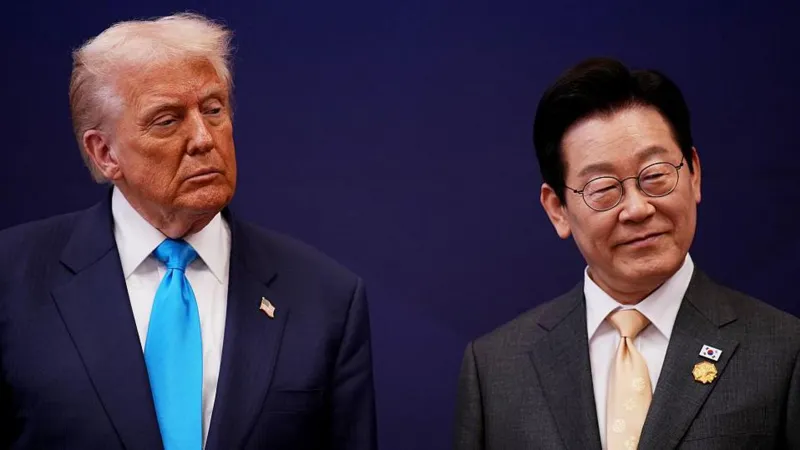
US President Donald Trump has announced he is raising tariffs on South Korean imports to 25% after accusing Seoul of “not living up” to a trade deal reached last year.
In a post on social media, Trump said he would increase levies on South Korea from 15% across a range of products including automobiles, lumber, pharmaceuticals and “all other Reciprocal TARIFFS”.
Trump said South Korean lawmakers have been slow to approve the deal while “we have acted swiftly to reduce our TARIFFS in line with the Transaction agreed to”.
South Korea says it had not been given official notice of the decision to raise tariffs on some of its goods, and wanted urgent talks with Washington over the issue.
It added that South Korea’s Industry Minister Kim Jung-kwan, who is currently in Canada, will visit Washington as soon as possible to meet US Commerce Secretary Howard Lutnick.
Shares in some South Korean exporters fell on Tuesday morning, with car maker Hyundai down about 2.5%. Stocks related to pharmaceuticals and timber were also lower.
Seoul and Washington reached a deal last October, which included a pledge from South Korea to invest $350bn (£256bn) in the US, some of which would go to shipbuilding.
The following month, the two countries agreed that the US would reduce tariffs on some products once South Korea started the process to approve the deal.
The agreement was submitted to South Korea’s National Assembly on 26 November and is currently being reviewed. It is likely to be passed in February, according to local media.
Tariffs are paid by companies who import products. In this case, US firms will pay a 25% tax on goods they buy from South Korea.
Trump has frequently used tariffs as leverage to enact foreign policy during his second term in the White House.
On Saturday, he threatened Canada with a 100% tariff if it struck a trade deal with China.
On Monday, Chinese officials said its “strategic partnership” agreement with Canada is not meant to undercut other countries.
Canadian Prime Minister Mark Carney has said his country was not pursuing a free trade deal with China and has “never” considered it.
He added that Canadian officials have made their position clear to their American counterparts.
Before that, Trump said he would impose import taxes on eight countries – including the UK – who opposed US plans to seize Greenland, an autonomous territory in the Kingdom of Denmark which is a member of Nato.
He later backed down from the tariff threat over Greenland citing progress towards a “future deal” over the island, but the episode strained US relations with Denmark and other Nato allies.
[BBC]

Don Bradman baggy green sold for AU$460,000

French MPs take first step to ban social media for under-15s

Trump raises US tariffs on South Korea imports to 25%

Sciver-Brunt’s maiden WPL ton lifts Mumbai Indians to second despite Ghosh heroics

Showers may occur in the North-central. Sabaragamuwa and Eastern provinces and Galle and Matara districts

U19 World Cup: Adnit ton powers USA to seven wicket win

‘Dates have the highest sugar content to fight Coronavirus’

Sunday Island 27 December – Headlines

#SundayIsland 17th December – Headlines

Sunday Island – 28th March

Sunday Island Headlines – 21 March

Sunday Island – 21st February – Headlines
-
 Business1 day ago
ComBank, UnionPay launch SplendorPlus Card for travelers to China
-
 Business2 days ago
ComBank advances ForwardTogether agenda with event on sustainable business transformation
-

 Opinion5 days ago
Remembering Cedric, who helped neutralise LTTE terrorism
-
 Business5 days ago
CORALL Conservation Trust Fund – a historic first for SL
-
 Opinion2 days ago
Conference “Microfinance and Credit Regulatory Authority Bill: Neither Here, Nor There”
-
 Opinion4 days ago
A puppet show?
-
 Opinion1 day ago
Luck knocks at your door every day
-
 Features6 days ago
The middle-class money trap: Why looking rich keeps Sri Lankans poor