
News
NCC rolls out ‘Clean Sri Lanka’ pilot to tackle school drug threat

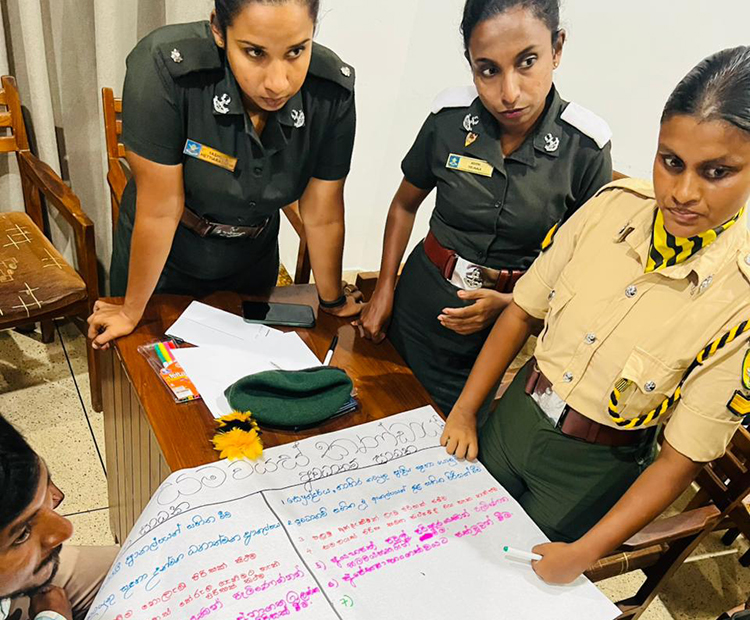
The National Cadet Corps (NCC) has launched a targeted drug prevention training programme for its officers, aiming to shield schoolchildren from rising narcotics use.
The initiative leverages the close rapport NCC officers maintain with students, amid growing concern over drug abuse among school-aged youth. It forms part of the wider “Clean Sri Lanka” national drive to promote a healthier society.
Under the direction of NCC Director Major General A.P.R. Premathilake, a two-day pilot workshop was held at the National Dangerous Drugs Control Board (NDDCB), focusing on the Western Province. Fifty selected officers received intensive training in prevention and early intervention strategies.
A certificate-awarding ceremony marked the conclusion of the programme, attended by senior officials, including NDDCB Director Major General (Retd.) K.M. Kothalawala and other key training and provincial representatives.
Organised by the NCC Media Unit, the initiative highlights the Corps’ stepped-up efforts to counter the spread of illegal drugs among the country’s youth.


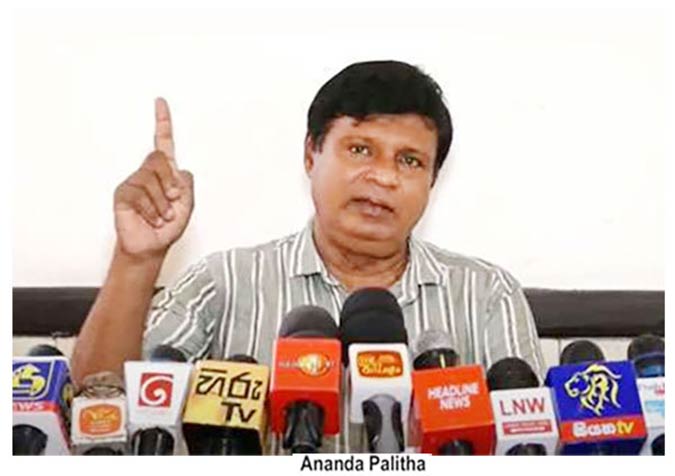
The Samagi Joint Trade Union Alliance Spokesman Ananda Palitha yesterday maintained that the prices of a litre of auto diesel and a litre of petrol 92 Octane could have been reduced by Rs 115 each. Instead, the Ceylon Petroleum Corporation (CPC) reduced petrol 92 Octane and auto diesel prices by Rs. 20 and Rs. 25 per litre, respectively. Petrol 92 Octane is now priced at Rs. 414 per litre and auto diesel at Rs. 382 per litre.
Responding to The Island queries, the former CPC employee said that the National People’s Power (NPP) had never adopted a fuel pricing formula and the latest revision, too, was no different. Ananda Palitha pointed out that the CPC had announced that the prices of Super Diesel, 95 Octane Petrol, and Kerosene would remain unchanged at Rs. 478, Rs. 478, and Rs. 285 per litre, respectively.
According to the SJBer the price reduction should have been applied to all products. Instead, the NPP continued to fleece consumers, disregarding repeated calls to adopt a sensible fuel pricing formula, he said, adding that since the unprovoked Israel-US attack on Iran on 28 February, 2026, Sri Lanka increased fuel prices on six occasions. On several occasions, prices had been increased in spite of the CPC having significant stocks, Ananda Palitha alleged, pointing out that during the Iran war the CPC had made massive profits.
According to the Auditor General, profits had been mentioned at Rs 36,400 mn, Ananda Palitha said, while drawing attention to the fact that the CPC made such profits though it had a 52% market share.
Ananda Palitha urged Parliament to look into what was going on. “Perhaps, the Human Rights Commission of Sri Lanka should step in. The rights of the entire population is being violated by the NPP. The petroleum sector should be run profitably. The CPC should earn profits. But, it is not fair to fleece the public,” he said.
The trade union leader emphasised that the Opposition should relentlessly pressure the government to adopt a realistic oil pricing formula. There was no point in demanding them to disclose a non-existing formula, he said, alleging that the government sought to make profits at the expense of the national economy and the long suffering people. (SF)
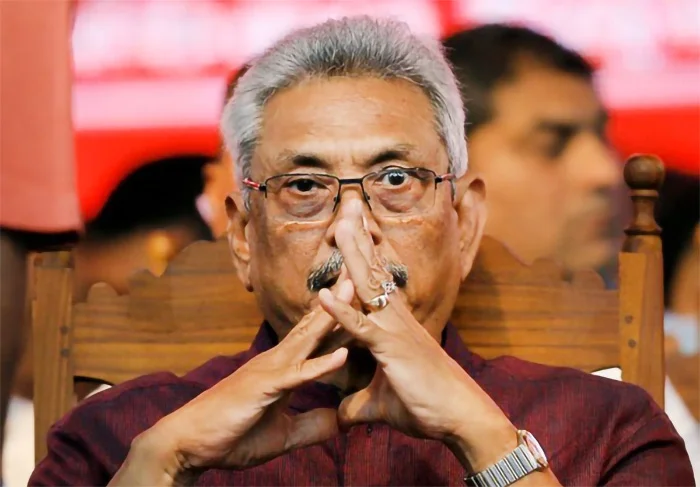
The Vinivida Foundation has requested the Commission to Investigate Allegations of Bribery or Corruption (CIABOC) to investigate the role played by former Chairman of Election Commission, Mahinda Deshapriya, and Ali Sabry, PC, in securing an opportunity for Gotabaya Rajapaksa to contest the 2019 presidential election without producing the mandatory proof of renunciation of his US citizenship issued by the US State Department.
On behalf of the Vinivida Foundation Dr Keerthy Attanayake, in a letter dated 30 June, 2026, requested Director General of CIABOC, Ranga Dissanayake, to initiate an investigation under Section 41 of the Anti-Corruption Act No 9 of 2023. The complainant stated in terms of Section 44 of the Anti-Corruption Act, the CIABOC is duty bound to inform him of the progress of the investigation.
In his 22-point letter, Dr. Attanayake claimed that EC Chief Deshapriya and Gotabaya Rajapaksa’s legal representative Sabry perpetrated what he called offence of corruption in favour of the SLPP 2019 presidential candidate.
According to Dr. Attanayake, Mahinda Deshapriya in a telephone call initiated by him with the General Secretary of Vinivida Foundation, Nagananda Kodituwakku, on 18 May 2021, the very day another member of the EC Prof Ratnajeewan Hoole furnished a sworn statement revealing the gross abuse of office by Mahinda Deshapriya, confirmed that he never verified the declaration made by the SLPP candidate about the renunciation of his US citizenship. Deshapriya was also quoted as having said that he did not know whether the SLPP candidate had renounced his US citizenship to qualify to tender nominations for the Presidential Election and also he believed the dual citizenship issue was not a matter that the EC should deal with but it was a matter for the Supreme Court to inquire into.
The complainant alleged that Deshapriya prevented Prof. Hoole from pursuing this matter. When The Island sought response from those familiar with the controversy, we were provided with a copy of certificate of loss of nationality of the United States pertaining to Gotabaya Rajapaksa. Sources said that there was absolutely no issue regarding the citizenship issue. (SF)
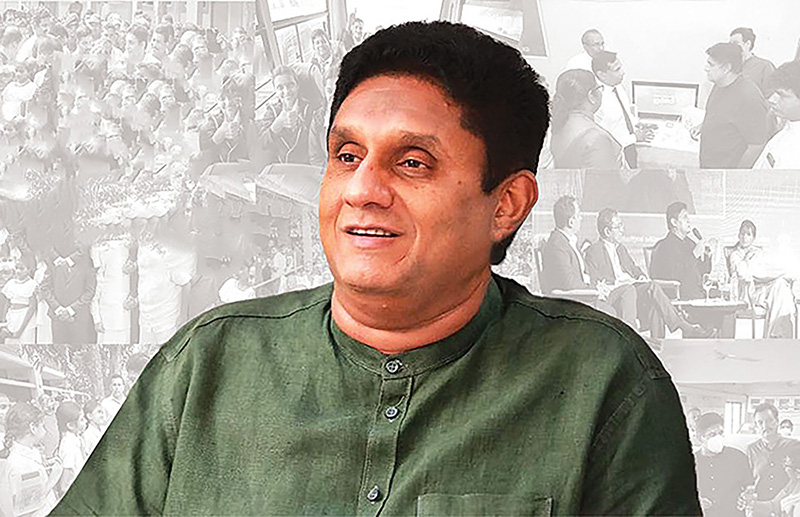
Leader of the Opposition, Sajith Premadasa, MP, has called for Sri Lanka to adopt a science-based approach to climate resilience and disaster preparedness, emphasising that climate security has become a national priority that transcends political differences.
Premadasa said so at the National Council for Disaster Management (NCDM), chaired by President Anura Kumara Dissanayake, yesterday (30).
During the meeting, the Leader of the Opposition shared his views on the growing climate-related risks facing Sri Lanka and outlined a series of evidence-based policy recommendations aimed at strengthening national preparedness for the anticipated impacts of the 2026–2027 ENSO (El Niño–Southern Oscillation) cycle. His observations reflected the key recommendations contained in a Strategic Policy Proposal prepared to support national policy deliberations on climate resilience and disaster preparedness.
“When the lives, livelihoods and security of our people are at stake, there should be only one side, and that is Sri Lanka.”
“Climate change does not distinguish between the Government and the Opposition. Floods do not distinguish between political parties. Droughts affect every farmer. Heatwaves affect every family. Protecting our people is, therefore, a shared national responsibility.”
He noted that his observations were made in a spirit of national unity and constructive cooperation, with the sole objective of contributing to Sri Lanka’s preparedness for the growing risks posed by climate change.
Referring to the latest global scientific assessments, the Opposition Leader observed that the developing 2026–2027 El Niño could become one of the strongest in recent decades, increasing the likelihood of prolonged drought followed by severe flooding, a phenomenon increasingly described by climate scientists as “climate whiplash.” He stressed that Sri Lanka has only a limited window within which to strengthen national preparedness before these impacts materialise.
Reflecting on the lessons from Cyclone Ditwah and other recent disasters, Premadasa stated that Sri Lanka could no longer rely solely on responding to disasters after they occur. Instead, he emphasised the need to progressively transition towards anticipatory governance, where scientific forecasting, risk assessments and early preparedness guide national decision-making.
Premadasa emphasised that his remarks were not intended as a criticism of the Government, nor as an attempt to duplicate the valuable work already being undertaken by State institutions. Rather, he said they were intended to contribute constructively to national policy discussions by bringing together international evidence, scientific assessments and practical policy recommendations into a coherent strategic framework that could support the Government and all relevant institutions in strengthening Sri Lanka’s resilience to future climate-related disasters.
The Leader of the Opposition highlighted three fundamental messages.
Firstly, he emphasised that anticipatory governance must become the cornerstone of national disaster management, noting that investments made before disasters occur save lives, protect livelihoods and significantly reduce the cost of recovery and reconstruction.
Secondly, he stressed that climate resilience must become a whole-of-government responsibility, requiring close coordination among institutions responsible for agriculture, water resources, energy, health, finance, defence, provincial administration and local government.
Thirdly, he underscored that climate resilience is inseparable from economic resilience, pointing out that food security, water security, energy security, public health, infrastructure, biodiversity and fiscal stability are closely interconnected and should therefore be addressed through an integrated national policy framework.
Among the priority areas highlighted by Premadasa were strengthening national climate preparedness and anticipatory governance, improving water security through integrated reservoir management, enhancing food security and climate-smart agriculture, modernising early warning systems through impact-based forecasting, strengthening disaster risk financing, improving preparedness for heatwaves and public health emergencies, enhancing the resilience of critical infrastructure, and considering the establishment of a National Climate Risk and Disaster Intelligence Centre to support evidence-based decision-making across Government.
The Opposition Leader noted that countries increasingly exposed to climate risks are investing in anticipatory governance, integrated climate intelligence and science-based planning. He referred to India’s strengthened climate forecasting and agricultural contingency planning, together with broader resilience initiatives undertaken in countries such as Australia, as examples from which Sri Lanka could draw valuable lessons while developing solutions suited to its own national circumstances.
Premadasa expressed confidence that climate resilience can become a unifying national agenda capable of bringing together the Government, Parliament, the scientific community, the private sector and civil society in pursuit of a safer, more resilient and more prosperous Sri Lanka.
Concluding his remarks, Premadasa reaffirmed that climate change does not distinguish between Government and Opposition, nor do floods, droughts or heat waves distinguish between political affiliations.

Mexico beat Ecuador 2-0 to reach World Cup last-16 and break 40-year curse

Trump made more than $1bn from crypto in first year back in office

France beat Sweden as Mbappe draws level with Messi in World Cup goal chart

Showers will occur in the Western, Sabaragamuwa and North-western provinces and in Galle, Matara, Kandy and Nuwara-Eliya districts.

SJB: Petrol and diesel prices could have been reduced by Rs. 115 each per litre

NGO urges CIABOC to probe GR’s 2019 presidential poll nomination

‘Dates have the highest sugar content to fight Coronavirus’

Sunday Island 27 December – Headlines

#SundayIsland 17th December – Headlines

Sunday Island – 28th March

Sunday Island Headlines – 21 March

Sunday Island – 21st February – Headlines
-
 News3 days ago
LAWASIA warns against ad hoc initiative to increase judges’ retirement ages
-

 News4 days ago
Another 1,132 Sri Lankan Personnel to be deployed for United Nations Peacekeeping Missions
-

 News6 days ago
Kelaniya emerges as highest ranked Lankan uni in Times Higher Education Sustainability Impact Ratings
-

 Opinion7 days ago
A triumph for Pakistan’s skilled diplomacy at Iran-US talks
-

 Features4 days ago
People’s Bank expands digital banking network with 125th cheque deposit kiosk
-
 News2 days ago
Chamuditha to seek removal of injunction on Youtube programme
-

 Business5 days ago
Month-end profit-takings drive stock trading; indices up
-

 News5 days ago
FSP complains of irregularities in a Guinness World Record event held in Sri Lanka