
News
National Communication Programme for Child Health Promotion (SBCC) has been launched. – PM

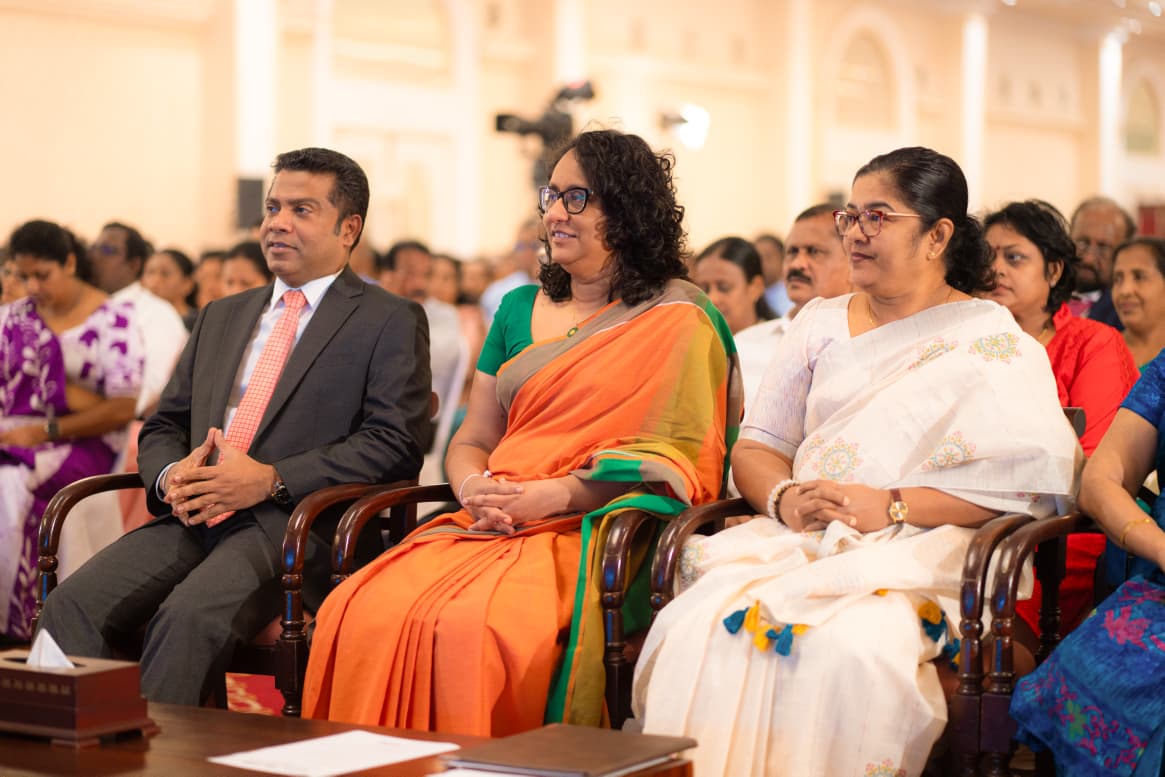
Prime Minister Dr. Harini Amarasuriya stated that the Government has commenced necessary measures to maintain preschool education under a framework, align preschool education with a unified curriculum, conduct teacher training in a systematic manner, and ensure quality standards.
The Prime Minister made these remarks on Saturday (10) at the Temple Trees, participating in the launch of the National Communication Programme for Child Health Promotion, aimed at promoting social and behavioural change (SBCC) among early childhood children. The programme is jointly organized by the Health Promotion Bureau, the Ministry of Women and Child Affairs, the Ministry of Education, Higher Education and Vocational Education, UNICEF, and the Clean Sri Lanka Programme.
Addressing at the event, Prime Minister Dr. Harini Amarasuriya stated:
“Early Childhood Development (ECD) has a major impact on a country’s human development and future progress. It is a widely accepted fact that a child’s future depends largely on early childhood development. Many aspects essential for a child’s growth occur within the first five years of life. The experiences, care, and love a child receives during this period are decisive.
The social integration, relationships, and environmental influences experienced in early childhood form the foundation for shaping an individual as an adult. Early childhood development influences life to an extent that it becomes difficult to change when it grows into adulthood.
The responses of adults to children’s actions, the way they interact with them, and the care they provide are extremely important. Therefore, early childhood development should never be viewed as the sole responsibility of parents. It is a collective responsibility of all citizens.
No child can be raised into a good citizen by parents alone. In all our lives, beyond our parents, there have been many who influenced us, showed us love, and provided care. It is due to the collective support of all these individuals that we have reached where we are today. The government views child care as a social responsibility. Supporting a child, providing care, ensuring protection, education, and health facilities are social responsibilities. In this regard, the intervention of the Clean Sri Lanka Programme to communicate these values to the public is important.
The role of the preschool teachers plays a special and vital role for children. The love, care, attentive listening, and responses children receive during this stage are decisive for their development. Teachers carry out a crucial intervention in the lives of children. An education policy on early childhood development has been formulated, with UNICEF providing technical assistance. Steps are being taken to operate preschool education under a single framework, align it with a unified curriculum, systematically conduct teacher training, and ensure quality standards.
Recognising early childhood development as a specialised area within education, the Prime Minister affirmed that the relevant interventions will be made accordingly.
Addressing the event, Minister of Women and Child Affairs, Ms. Saroja Paulraj stated that the Ministry has identified the standardisation and development of early childhood development as a primary goal for the year 2026. She noted that children who leave the warmth of their mother’s embrace and father’s shoulder and come to preschool teachers expecting the same love and care from their teachers. Conveying that warmth through words and expressions is a responsibility entrusted to teachers. The love and safe environment children receive shape their ability to love the environment and respect others.
Minister of Health and Mass Media, Nalinda Jayatissa, also addressed the gathering, stating that the goal of the government is to build a beautiful future generation capable of leading the country, free from the various hardships and challenges faced today.
He emphasised that creating a healthy population is a challenge, particularly in preventing non-communicable diseases. Children aged three to five today will become a generation aged 18 to 20 by 2040. Continuous and comprehensive programmes such as this are essential to protect that generation from non-communicable diseases. In some instances, interventions are required even during the preconception and prenatal stages.
He further highlighted that preschool and early childhood development centre teachers shoulder a tremendous responsibility in driving a major transformation in the country’s future.
The event was attended by the Governor of the Sabaragamuwa Province, Ms. Champa Janaki Rajarathne; the Governor of the Uva Province, Attorney-at-Law Kapila Jayasekara; the Governor of the North Central Province, Wasantha Jinadasa; the Governor of the North Western Province, Thissa Kumarsiri Warnasuriya; the Deputy Minister of Women and Child Affairs, Dr. Namal Sudarshana; the Member of Parliament, Dr. Najith Indika; the Representative of the United Nations Children’s Fund (UNICEF) in Sri Lanka, Ms. Emma Brigham; the Secretary to the President, Dr. Nandika Sanath Kumanayake; the Senior Additional Secretary to the President (Finance and Economic Affairs), Mr. Russell Aponsu; the Additional Secretary to the President (Clean Sri Lanka), S. P. C. Sugishwara; Secretaries to Ministries; Provincial Chief Secretaries; the Commanders of the Tri-Forces; officials of subject-related ministries; provincial council officials; preschool teachers; preschool children; and parents.


(Prime Minister’s Media Division)


By Shamindra Ferdinando
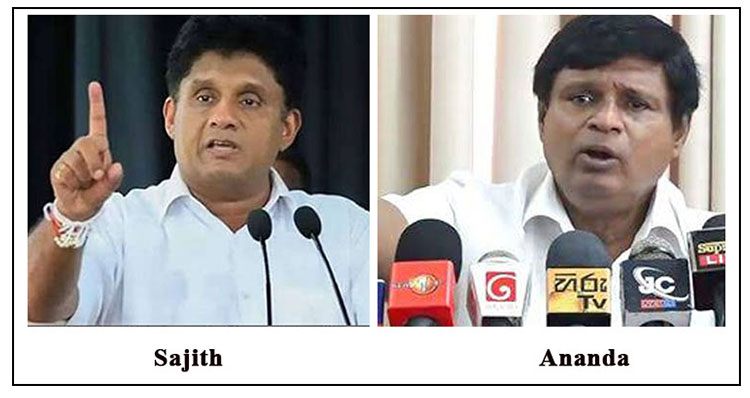
Alleging that the Samagi Jana Balawegaya (SJB) had betrayed the joint protest campaign, planned on 24 Sept., at Polduwa junction, against the enactment of the 22nd Amendment without securing public approval at a referendum, SJB trade union leader Ananda Palitha emphasised that SJB and Opposition Leader Sajith Premadasa should take remedial measures to restore the alliance against the NPP government.
Responding to The Island queries, the trade union activist said that he spoke on behalf of the vast majority of the SJBers who felt betrayed by the sudden declaration made by Colombo District SJB lawmaker S.M. Marikkar that they didn’t expect Opposition political parties’ participation, except that of the UNP.
Pointing out that at the behest of Premadasa, MP Marikkar belittled those who had pledged on 17 Sept. to join the SJB-led protest, Palitha emphasised the Opposition leader should be held responsible for restoring the shattered alliance. Palitha warned that the NPP, which was rapidly moving on a dictatorial path, would be the beneficiary of such treacherous actions.
When The Island raised the allegations pertaining to the 24 Sept. protest, Colombo District MP Premadasa said there was no basis for such claims. MP Premadasa called the accusations directed at him ‘rubbish.’
Palitha said that the pathetic failure on the part of the Opposition to genuinely challenge the authoritarian NPP should be examined, taking into consideration the government following an agenda almost 100 percent against the election pledges. Except the much touted anti-corruption campaign, the NPP reneged on all its election promises.
Recalling massive rice imports after having promised to stop the same in the run up to the national elections in 2024, Palitha alleged that the utterly corrupt NPP created an artificial shortage to enable import of large stocks of salt for their benefit. Massive earnings were made through commissions, Palitha said, urging the SJB to reiterate its commitment to the 17 Sept. pledge. According to him, the SJB’s irresponsible action sabotaged the joint Opposition agreement reached on the eve of President Anura Kumara Dissanayake completing two years in Office.
Palitha said that the disruption of a genuinely joint protest, at the last moment, caused irreparable harm to the Opposition. The unexpected eleventh hour declaration made by the SJB upset their efforts to organise a large scale two-day protest on 24 and 25 Sept. Palitha emphasised the responsibility on the part of the SJB leadership and its top management to spearhead an all-out campaign against the government. The former petroleum sector employee said that a strong and transparent campaign could undermine the NPP within as a section of its parliamentary group was deeply dismayed by the current policies and strategies.
Palitha, in his capacity as the trade union leader, invited the Bar Association of Sri Lanka (BASL) to join the trade unions’ protest on 25 Sept. to intensify pressure on the government. BASL President Rajeev Amarasuriya told The Island that they didn’t accept that invitation.
Former SLPP Kalutara District MP Sanjeewa Edirimanna said that the SJB was far more keen to organise a large-scale protest to counter the SLPP’s highly successful Anuradhapura rally held on 12 September than a genuine joint protest against the 22nd Amendment or the government. Edirimanna said that they realised that the SJB would probably join a joint protest campaign only after organising a gathering to counter the SLPP. According to him, the SJB hadn’t been honestly interested in a joint protest campaign. Instead, it sought to resist possible challenges from rival political parties, he said.
An aide to UNP leader and former President Ranil Wickremesinghe said that though the SJB announced they were welcome to join the 24 Sept. protest, the party never received an invitation. The official said that some UNPers joined the protest on their own though the party neither directed supporters to join or boycott the event. As the Janathawadi Joint Opposition decided against participating for want of formal invitations, the UNP, as part of that group, decided not to join the 24 Sept. protest.
By Norman Palihawadane
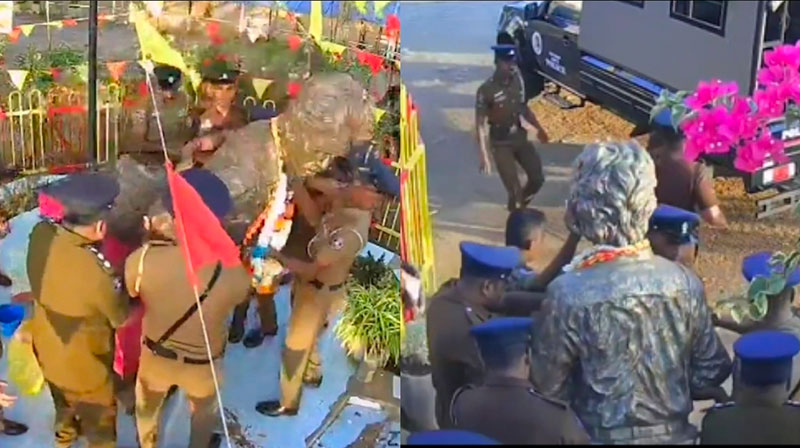
Police have removed a memorial statue of former LTTE member Rasaiah Parthipan, alias Thileepan, from the Thileepan Memorial Square in Nallur, Jaffna, following the conclusion of commemorative events, marking the 39th anniversary of his death.
The statue was removed in the early hours of yesterday (27), a day after the final day of the commemoration was held at the site.
CCTV footage from the memorial reportedly shows police officers removing the statue and taking it away in a vehicle.
Tamil National People’s Front (TNPF) Secretary and MP Selvarasa Gajendran alleged that more than 15 police officers arrived at the site, without prior notice, entered the premises wearing footwear, and forcibly removed the statue.
The reason for the removal and the legal basis for the police action had not been officially announced as of yesterday.
Thileepan, a former political wing leader of the LTTE, died in September 1987, after undertaking a hunger strike in Nallur, while making several demands of the Indian Government.
The memorial events, marking the 39th anniversary of his death, were held at the site on Saturday (26). A statue had been erected at the location in connection with the commemoration.
By Shamindra Ferdinand
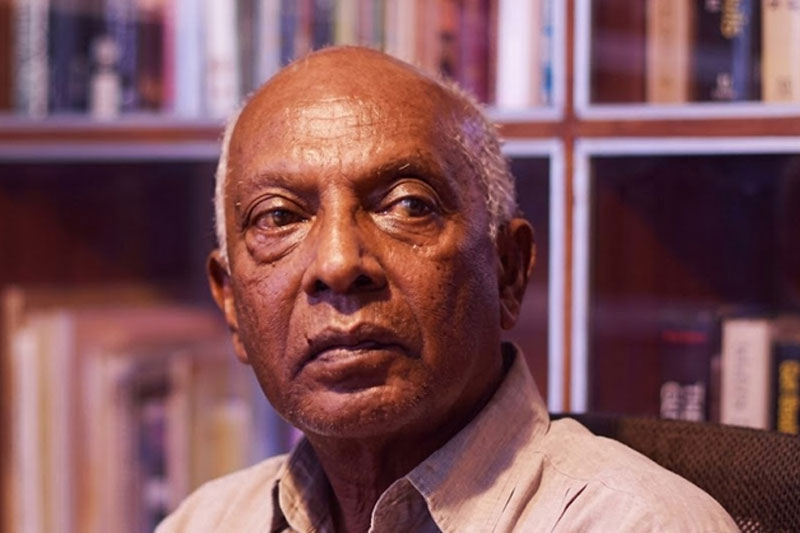
NPP Executive Committee member Lal Wijenayake said that he would continue with the ruling party though he disagreed with the 22nd Amendment, sans a referendum. That position wouldn’t be changed, lawyer Wijenayake said, adding that he would continue to support whatever action taken by the Bar Association of Sri Lanka (BASL) to highlight the damaging consequences of the new amendment.
Wijenayake said so in response to The Island query whether he could continue with the NPP after having opposed the 22nd Amendment. When pressed for clarification, Wijenayake revealed that he received an opportunity to discuss the issue at hand with NPP and JVP leader Anura Kumara Dissanayake.
Declaring that he couldn’t reveal what transpired in his meeting with President Dissanayake, Wijenayake said the status quo would remain.
“They wouldn’t seek my removal from the party,” he said, adding he would remain in the Executive Committee, regardless of his unchanged position on the 22nd Amendment. Wijenayake ruled out the possibility of him joining joint Opposition protests against the government.
NPP General Secretary Dr. Nihal Abeyseinghe told The Island that those who urged the ruling party to allow its members to vote, according to their conscience, should know the entire government parliamentary group accepted the need for the 22nd Amendment. Yes, they voted according to their conscience, the Kalutara District lawmaker said, underscoring that regardless of the split in the NPP over the 22nd Amendment, the vote proved otherwise.
Of the 159-member NPP group, 158 voted for the controversial amendment where three Opposition MPs skipped the vote. Ravi Karunanayake and Faizer Musthapha of the New Democratic Front (NDF), led by Ranil Wickremesinghe, were among them. The other absentee Nayana Wasalathilake represents the SJB.
The NDF, which contested under the ‘Gas Cylinder’ symbol secured, five seats at the last parliamentary polls. The remaining three members, Anuradha Jayaratne, Rohitha Abeygunawardena and Chamara Sampath Dassanayake, voted against the 22nd Amendment.

Rain threat looms over lopsided India vs Afghanistan quarter-final

Out, not-out, out: England secure bizarre run-out in Oval victory

Strait of Hormuz tensions linger as Iran and US move further from a deal

Showers will occur in the Western, Eastern, Uva and Sabaragamuwa provinces and in Galle, Matara, Kandy, Nuwara-Eliya, Polonnaruwa and Mullativu districts

Sajith rejects Jt. Opp. protest sabotage claim; SJB TU chief demands remedial action

Police remove Thileepan statue in Jaffna

‘Dates have the highest sugar content to fight Coronavirus’

Sunday Island 27 December – Headlines

#SundayIsland 17th December – Headlines

Sunday Island – 28th March

Sunday Island Headlines – 21 March

Sunday Island – 21st February – Headlines
-
 News5 days ago
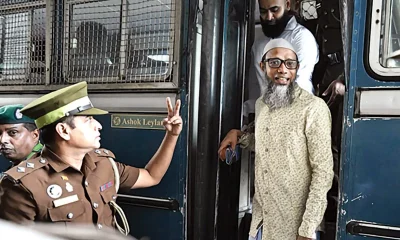
Mastermind Naufer Moulavi among 15 found guilty
-
 News6 days ago
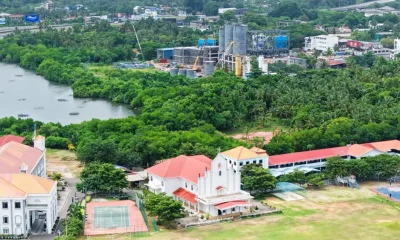
Protest against setting up of cement factory in highly populated area near BIA
-
 Midweek Review5 days ago
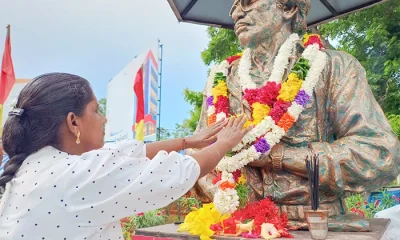
Thileepan’s fast unto death: An authentic narrative that many missed
-
 Latest News4 days ago
Showers above 100 mm are likely at some places in the Western, Sabaragamuwa, Central and North-western provinces and in Galle and Matara Districts
-

 Editorial6 days ago
Trouble beginning in earnest
-
Editorial5 days ago
Big Bad Bills
-
 News6 days ago
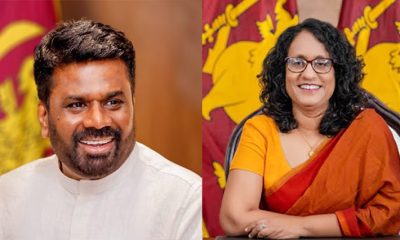
Govt. confident of 2/3 majority despite NPP split speculation
-
 News6 days ago
Police may seek clarification from US