
Opinion
My contribution to construction of new buildings in the University of Colombo

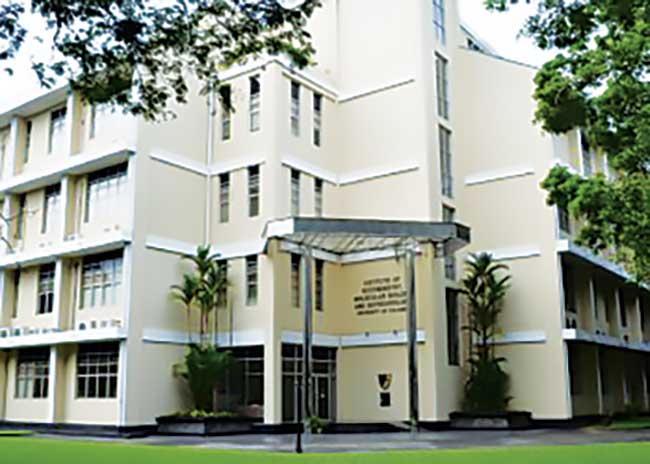
With the new government which came into power in 1977 there were several changes that took place. This was so in the case of construction of new buildings in government departments, corporations and other statutory bodies such as the universities.
It was not necessary for the universities to advertise calling for tenders from prospective consultants and building contractors. The universities had to submit the requirements of consultants and contractors indicating the new buildings to be constructed to the National Consortium set up by the government for this purpose. The Consortium sent the names of the consultants and contractors for each new building to be constructed.
The new buildings that the University of Colombo had planned to be constructed were the Chemistry Department, Physics Department, Law Faculty, Arts Faculty, Library and the New Administration buildings. All these buildings except the Library building were still under construction when I took over the reins as Registrar in 1984.
The first to be completed by the main contractor was the Chemistry building. However, when I inspected the laboratories, the timber used was of very poor quality and I asked the consultant to get the sub-contractor to remove all the laboratory tables and replace them with tables of good-seasoned timber. He declined to do this.
I got legal action instituted in the Mount Lavinia courts and at the end of the case the judge gave the decision in favour of the university. The contractor had to sell his car and other belongings to pay the compensation due to the university. I got the Government Factory to get all the laboratory equipment installed, including the tables with well-seasoned timber.
The Physics Department building ran into a problem with regard to the specifications which was pointed out by the structural engineer of the Buildings Department. The consultant did not accept it and unilaterally withdrew from the consultancy. Thereafter, the building was completed with the Buildings Department taking over the consultancy and rectifying the defective specifications.
The consultants to the Law Faculty building had designed the building utilizing materials for the roof (cladding), the ceiling, etc to be imported from Singapore so that the final cost of constructing the building would be high. This was because the Construction Consortium had decided that the consultants get 15% of the total cost! All the consultants used this ruse to jack up their dues.
The contractor (a government corporation) had damaged the roof claddings by boring the holes in the wrong places and this led to the roof leaking. I asked the contractor to replace the roof claddings at their own expense which they refused. I had to get rid of the contractor and withhold payment of Rs. 1. 5 million which was needed to replace the roofing sheets.
I got another contractor who was doing some other building in the university to complete the Law Faculty building. Next the consultant made a request to get the final payment. I told him that it cannot be done until the building is completed. He decided to leave taking the decision unilaterally. The consultant was not paid the amount.
The next building was the Faculty of Arts building which is a monstrous piece of architecture. We had to get the Finance Ministry approval to commence work in respect of this building. The Vice-Chancellor(VC) wanted me to draft a letter to the Minister of Finance(Mr. Ronnie de Mel) as most of the funds were being diverted to the University of Ruhuna. The VC sent the letter without any alterations and the university received the blessings of the Minister to commence operations.
The consultants had measured the land and had come to the conclusion that the land available would not be enough to accommodate the building. They suggested that the university get some land from the Planetarium premises. I went and met the Director of the Planetarium and apprised him of the problem and told him that I will give him double the land from the adjoining area in exchange for the plot given to the university.
He told me that he cannot do it as he had no authority. Then I contacted the Senior Assistant Secretary of the Ministry and as was expected of a government officer, he did not agree. The Secretary of the Ministry had the same answer. Now only the Minister was left to be contacted. When I told the ViCe-Chancellor, Prof. Stanley Wijesundera, he immediately got the Minister, Mr. Jayatillake on line and addressing him by his first name told him the problem. The Minister immediately gave instructions to release the land required by the university. But ultimately, it turned out that the additional land was not required.
In the case of the Arts Faculty building too the consultant had put in many unnecessary features to jack up the cost. When it came to the second stage of the building, I told the consultant to reduce all the unnecessary frills and get a simple building constructed. This was done and the cost was reduced drastically.
But the university had many problems with the contractor as he was trying to get an additional amount by contacting the Vice-Chancellor, then ICTAD Chairman and the Secretary of the Ministry of Education. Right along the line I refused stating that the university had settled all dues.
On the land where the Arts Faculty building was to come up, there were a number of small tenements abutting Reid Avenue, occupied by the descendants of the Ceylon Turf Club (CTC) employees and others. We had to get rid of them to free the land for university use. It is a long story as to how I got rid of them. But to cut it short, I got it done with the help of the Urban Development Authority (UDA), by payment of compensation to only the descendants of the CTC employees.
The new Administration building was being constructed by the same contractor who was doing the Physics building. Whenever I went on an inspection, I found various shortcomings which I got the contractor to demolish and redo. The Buildings Department representative on the job was not supervising the work as he was in the pocket of the contractor, and in fact he used to drive the contractor’s van! Here too the consultants did not attend to the supervision properly and as such I did not pay the final instalment.
The next building to be constructed was the Botany building which was stage one of the planned Biology building. After a long delay, I managed to get the Treasury to agree to releasing the funds for this purpose. The second stage did not get off the ground until I left the university.
Of the buildings planned in 1980, the last to get off the ground was the Library building. From 1980 upto the time Mr. Richard Pathirana assumed duties as the Minister of Higher Education the Treasury had approved to release only Rs. 7.5 million. Then I wrote to the Ministry of Higher Education and with the help of two engineers in the Ministry and the UGC, I was able to get the required funds approved by the Treasury, which was now Rs. 245million.
A few alterations were done to the original plan and the building was constructed in between the Arts and Law Faculties. At the opening ceremony, the Vice-Chancellor mentioned all the other names, but my name was not mentioned even though the building would not have got off the ground if not for my effort. That is gratitude!
I must also mention an old building that had been constructed for the exhibition held in 1965 which was one of the two buildings left intact after the exhibition. The other was the Planetarium. This two storied building was used as the library on the ground floor and the upper floor as an examination hall. The building was surrounded by a moat.
I had to get a lot of work attended to to get the building to a usable standard as the roof was leaking and water was seeping through the floor which damaged some of the books. When the new library building became functional, this building was demolished.
I had a plan to get a new pavilion constructed retaining the front of the old existing pavilion. I got a design done for an upstair building with all facilities for two teams, which was done free of charge by the Central Engineering Consultancy Bureau (CECB) . But I could not get this off the ground as the Instructor in Physical Education connived with a Dean of a Faculty and objected to the construction of a new pavilion.
I also got a cricket scoreboard done with all facilities as the university was using a small board to put up the scores. Here too the same Instructor got round the captain of cricket and saw to it that the scoreboard was never used!
HM NISSANKA WARAKAULLE


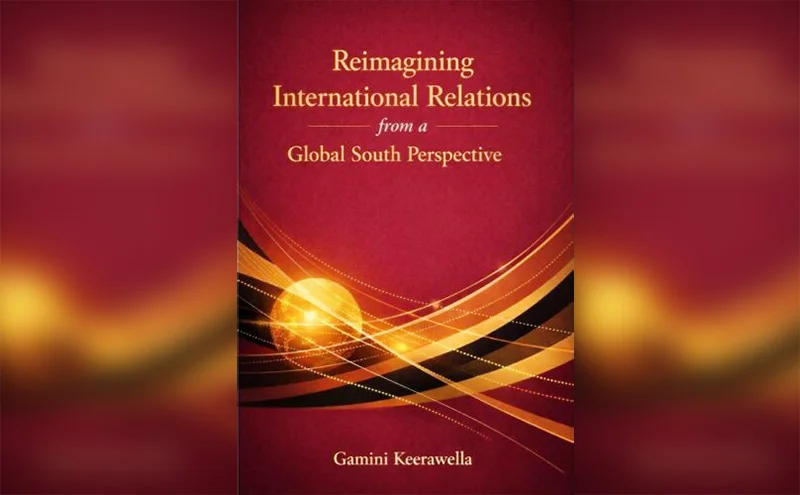
I wish to congratulate Prof. Keerawella, for having undertaken this mammoth task of seeking to capture, from ‘a global south perspective’, the multiple facets of scholarship of International Relations. He has, as always, been meticulous in his research, and also lucid in conveying to the reader, complex ideas and their interconnections, in an uncomplicated way. I am not in the habit of encouraging taking shortcuts, particularly with my students around – but if pressed, here is a book, with references to every major scholar in the 7 areas identified, in 440 pages, at a modest price.
We are honoured that the Prime Minister graced this occasion, and thankful for her inspiring words. She has left much food for thought – which I am hopeful our students will consider engaging with, as they proceed with their presentations and dissertations.
This is the 7th book, in fact the 3rd authored or co-authored by Prof. Keerawella, published under the auspices of the BCIS, over the past couple of years. It is a reflection of BCIS’s continuing commitment to bring into the public domain, quality academic literature that benefits both scholars and Sri Lankan students who pass through these halls and beyond. I want to commend President Kumaratunga, for through the BCIS, continuing to support the publication of such texts, at a time individually doing so is prohibitive and also more costly to the buyer, and the Bandaranaike Memorial National Foundation (BMNF) for making this possible.
Turning to the volume launched today (24 Feb), in ‘Reimagining International Relations from a Global South Perspective’, at the outset, Prof. Keerawella makes clear that a Global South perspective is not simply a matter of geographical focus; it is an epistemic stance that seeks to recover marginalised voices, experiences, and knowledge that have long been silenced or subordinated in mainstream discourse. He goes on to emphasise that, the choice of the phrase “a Global South Perspective” is deliberate. It signals an awareness that there is no single, homogeneous standpoint from which the Global South speaks’. To speak of a perspective, then, is to situate this volume’s argument within that broader, evolving mosaic—to offer one possible articulation among many, without claiming representational authority over them. Prof. Keerawella emphasises, it is an invitation to dialogue, not a declaration of orthodoxy.
As is customary by a reviewer, I intend to take up Prof. Keerawella’s ‘invitation to dialogue’ and commencsation in the latter part of this presentation, but first let me outline the valuable insights contained in this Book, as an appetiser.
The first chapter on IR Theory, points out – in each of the ‘isms’, ingredients as it were, that could contribute to a better understanding of the ‘Global South’. Here he highlights Raúl Prebisch and Andre Gunder Frank’s ‘dependency theory’, Neta Crawford’s ‘normative constructivism’, Sanjay Seth’s ‘Decolonial Critique’ and Amitav Acharya’s concept of ‘Global IR’ as having advanced a reformist, yet transformative agenda for the discipline. He observes that, “Collectively, their respective projects of rethinking, decolonizing, and globalizing International Relations illuminate how the Global South can contribute to the field not merely as a repository of empirical cases, but as a source of conceptual reflection and theoretical innovation”.
The second chapter which examines the transformation of International Security Studies, by foregrounding the lived insecurities of the Global South—ranging from poverty and structural violence to environmental vulnerability and social fragility, demonstrates why concepts such as human security gained salience as corrective and complementary frameworks, concerning the global south.
The third chapter pays analytical attention to the dynamics of regionalism with special focus on South Asia and the experience of the SAARC. It calls for reimagining regional cooperation in South Asia beyond rigid institutional templates, advocating for inclusive, flexible, and people-centered modalities rooted in the specific political and social realities of the Global South.
The fourth chapter addresses international organisations and international regimes as central pillars of contemporary global governance, with particular attention to their implications for the Global South. The chapter reveals how Global South states have simultaneously been constrained by inherited governance structures and mobilized collective strategies to contest inequities and assert greater voice.
The fifth chapter which focuses on Foreign Policy Analysis (FPA), situates it within a rapidly evolving global environment shaped by globalisation, technological transformation, and the Fourth Industrial Revolution, paying particular attention to the strategic choices made by Global South states.
The sixth chapter traces the long historical arc of diplomatic practice, demonstrating how modes of representation, negotiation, and cooperation have evolved in response to changing political, social, and technological contexts. From a Global South perspective, the chapter underscores both the opportunities and constraints of particularly science diplomacy.
In the final chapter, Prof. Keerawella discusses the notion of national self-determination.
He underscores its contradictions in theory, and its praxis in the post-Cold War context, tracing the ways in which self-determination has been invoked and contested in modern international relations.
Besides joining a very small league of international scholars (some already referred to) who have dared to challenge Western theoretical approaches in the study of IR and sub-fields and emphasised the need for an alternative ‘Global South’ reading, Prof. Keerawella becomes the first Sri Lankan to do so in any considered manner. His volume is also rare, in that in general, few Sri Lankans have sought to engage with and contribute to the theoretical literature of International Relations and Foreign Policy. His book has the additional advantage of being released at a time ‘International Relations’ – as we have been taught it and understood it, is under severe strain to explain contemporary developments in a conceptual and theoretical manner, and there is a serious vacuum to be filled, not just in understanding, but in order to change the currentpredicament.
While the book reaffirms the ‘global south’ as a certain collective sentiment, assembling many of the conceptual building blocks and empirical insights necessary for its articulation, what it leaves to us is the task of synthesising these elements into a coherent and operational set of principles that can foster a unified front amongst the Global South, despite the vast diversity of the actors and states involved.
While I have no disagreement with Prof. Keerawella’s starting premise and end goal of the desirability of having ‘a Global South Perspective’ in the areas under study, however, as an observer and practitioner of international relations for most of my professional life since 1980
– 9 years as a journalist, 33 years as a diplomat, and post-retirement, and over 4 years from the vantage point of running IR and Strategic Studies focused institutions, while also teaching, and engaging in my own research, I do encounter some difficulty, and lament that operationally little has or is being done, to evolve a strategy that addresses the shortcomings so carefully pointed out in Prof. Keerawella’s book.
Looking back, I do not see a single cohesive ‘Global South’ consistently in play. Rather, I see a multitude of ‘Global Souths’ –depending on the issue, competing opportunistically and often working at cross purposes, and all eventually getting played out by the continuing structural heft of the ‘Global North’.
This is no fault of Prof. Keerawella, or of the rich ingredients he brings together in this volume. Rather, it reflects the political reality that the‘Global South’ recipe has not yet been fully translated into an appetising dish.
I am no chef, and time does not permit me to elaborate from the different vantagespoints
I have experienced it from – but I do believe there is a compelling case that could be made for action, which needs serious reflection and attention.
To put it another way, without making value judgements on the rights and wrongs of the respective action, I wish to pose two sets of questions, confining myself to events of the past 4 years or so;
First, what did the ‘Global South’ do in the cases of Ukraine since 2022, of Gaza since 2023, of Sudan since 2023, on actions in the South-China Sea in recent times, following the imposition of ‘Reciprocal Tariffs’ throughout 2025, or in the case of Venezuela last month?
* Did they speak together?
* Did they vote together?
* Did they fight together?
Similarly, second, what will the ‘Global South’ do, God forbid, if there is to be a conflict on Iran, Cuba, the Panama Canal, Morocco-Algeria, DRC-Rwanda, or Taiwan, tomorrow?
* Will they speak together?
* Will they vote together?
* Will they fight together?
If I were to play devil’s advocate, I would be tempted to ask: if these coalitions neither speak, vote, nor act together, what kind of analytical and normative work can the category ‘Global South’ realistically achieve? Rather than assuming a unity that does not yet exist, how might we need to refine it?
To this end, I wish to posit, that the category of ‘Global South’ could be analytically more useful, if, as Max Weber suggested, it be used as an ‘ideal type’ – that might not be realized, but must be sought to be approximated.’Global South’ functions best as a Max Weber-inspired ‘ideal type’: an abstract model used not as a description of an existing state, but as a heuristic tool to clarify the degree to which specific regions approximate or diverge from its core characteristics.
Such an approximation cannot merely be imagined; it has at least to be attempted in practice.
What I am suggesting is not utopian. Historically, there is precedent that has been realized by the Non-Aligned group of countries – which by no means perfect, but was effective in its heyday duringthe 1960s, 1970s, and early 1980s. Unfortunately, rather than being reformed and modified at the end of the Cold War, it has been tossed away.
Admittedly, those were different times, but for purposes of encouraging the dialogue and debateProf. Keerawella wanted us to have stemming from his book, and in order to draw inspiration, let me suggest 4 factors that made Non-Alignment work as an operational strategy, while it did;
* There was a clearer ‘Framework of Operation’ – the Non-Aligned MOVEMENT, which incidentally in this year we commemorate the 50th anniversary of the hosting of the 5th Summit in Sri Lanka in 1976 at this very venue the BMICH.
* There was also a clear ‘Other’ – the cold War driven Western alliance on the one hand, and the Warsaw pact countries, which had competing ideologies–and which broadly Non-Aligned countries preferred not to emulate in toto.
* There was further an alternate Politico-Economic and Legally grounded Agenda – which saw expression through the UN Special Session on Disarmament, an operationally stronger UNCTAD, and a international legal regimethe UN Law of the Sea (UNCLOS), inwhich NAM countries played crucial roles.
* There was also ‘a like-minded collective leadership’ – which, spare a few, more often than not, dared to demonstrate objectivity between the West and the East – and resisted being unquestioning followers. Though they might not have been loved by the ‘West’, or for that matter by the ‘East’, but they were broadly respected by both.
While newer formations such as the G77, the BRICS, the SCO, alongside regional groupings such as the RCEP, the ASEAN, the AU, the GCC, and BIMSTEC have sought to fill this space, they remain, at best, partial substitutes, lacking the normative coherence and political solidarity that characterized the early NAM efforts that resulted in effective collective action demands.
It is ironic, that at a time when the ‘Global North’ is in disarray, and some its own constituents have made bold to say that this is not a “transition” but a “rupture” of the US-led rules-based international order, that there is no cohesive ‘Global South’ alternative.
The real question before the ‘Global South’ today should be, as to what conditions and mechanism could lead us to position ourselves better, to consolidate such a collective, and most importantly whether there is the political will to do so?
If not, we must at least be honest about current limits – that many states with even some capacity, are compelled to hedge, while those without meaningful leverage remain largely ‘bystanders’ in the global order.
However, if we recognize that this situation is not tenable and that we wish to serve a higher cause, we should do something about it and try to create ‘sufficient conditions’ that could more actively and tangibly approximate ‘a Global South’- which can ‘bracket’ its differences, find unity in what is most important, and avoid the temptation of flirting for temporary gain or glory.
This is the thought I wish to leave you with today in the hope that, as envisaged by Prof. Keerawella, this volume will not be the last word on ‘a Global South perspective’, but a starting point for precisely the kind of critical, self-reflective conversation that can turn it into a more grounded, plural, and effective practical programme and call to action.
Speech delivered by
by Ambassador (Retd.)
Ravinatha Aryasinha,
former Foreign Secretary and Executive Director, Regional Centre for Strategic Studies (RCSS), at the launch of
Prof. Gamini Keerawella’s book ‘Reimagining International Relations from a Global South Perspective’,
at the Bandaranaike Centre for International Studies (BCIS), Colombo on 24 February 2026)

The latest addition to the “Historic Thoughts” series by the J. R. Jayewardene Centre arrives with a provocative title: The J.R. I Disliked by Imthiaz Bakeer Markar. Yet beneath its seemingly adversarial framing lies a reflective and intellectually honest reassessment of one of Sri Lanka’s most consequential political figures — J. R. Jayewardene.
This publication, based on a commemorative lecture, is not merely a memoir fragment. It is a political meditation on leadership, ideological evolution, and the necessity of historical sobriety in a time when public discourse is often driven by caricature rather than careful analysis.
Candour as Political Virtue
What immediately distinguishes Markar’s lecture is its rare tone of sincerity. He openly recalls that, as a young activist, he seconded a proposal to expel Jayewardene from the United National Party — a confession that gives the work unusual credibility. In Sri Lankan political culture, where retrospective loyalty often replaces honest memory, such candour is refreshing.
Markar’s narrative demonstrates a crucial democratic lesson: political disagreement need not devolve into permanent enmity. His recollection of Jayewardene’s magnanimity — promoting a former critic based on merit rather than loyalty — reveals a statesman confident enough to transcend factional bitterness. This alone makes the publication politically instructive for a generation accustomed to zero- sum politics.
Beyond the Right–Left Caricature
One of the most valuable contributions of this text is its implicit challenge to the simplistic labeling of Jayewardene as merely a “right-wing” leader. A careful reading of Jayewardene’s own parliamentary interventions supports this reassessment.
As early as the 1940s, he warned:
“We are suffering due to an administrative system established and protected by foreign rulers… Until we are freed from this imperialist and capitalist administrative system, we will not… resolve the serious issues we face.”
This is not the language of doctrinaire capitalism. Nor was Jayewardene drawn to orthodox Marxism. Instead, his political philosophy reflected what may best be described as a pragmatic middle path — informed, arguably, by Buddhist political ethics that molded his own life.
He himself signaled this balance when he insisted Sri Lanka must learn from global systems without surrendering autonomy. His famous reply to U.S. pressure over the rubber-rice trade remains instructive:
“We do not compromise our independence in exchange for aid… from the United States or any other country.”
In an era when small states again face geopolitical bargaining pressures, this principle retains striking relevance.
Architect of Transformative Pragmatism
Markar is at his strongest when recounting Jayewardene’s political resilience. The rebuilding of the UNP after the 1956 defeat, the strategic patience during opposition years, and the eventual 1977 mandate illustrate what John F. Kennedy called “discipline under continuous pressure.”
Historically, Jayewardene’s policy legacy is too significant to be reduced to partisan memory. His role in:
· opening the economy
· establishing free trade zones
· expanding irrigation and electrification
· strengthening free education through textbooks and Mahapola
· modernising communications and infrastructure collectively altered Sri Lanka’s development trajectory.
Critics may debate the social costs of liberalisation, but no serious historian can deny the structural transformation that followed 1977. Markar rightly reminds us that many revenue streams and institutional pathways Sri Lanka relies on today originated in that reform moment.
The Independence Question Revisited
Perhaps the most intellectually compelling sections of the lecture revisit Jayewardene’s pre-independence thought. His insistence — alongside D. S. Senanayake — that Ceylon’s participation in World War II must be tied to a guarantee of freedom reveals remarkable foresight.
Equally revealing is his humanistic vision:
“Landlessness, poverty and hunger cannot be eradicated… until every vestige of foreign rule is swept away… so that English, Indian, Dravidian, etc. can work hand-in-hand.”
Here we see a leader whose nationalism was not exclusionary but developmental and pluralist — a nuance often lost in contemporary polemics.
International Realism Without Subservience
Markar’s discussion of the 1951 San Francisco Peace Conference is particularly important for younger scholars. Jayewardene’s invocation of the Buddhist maxim “Nahi verena verani” in defence of Japan’s dignity was not rhetorical flourish; it was strategic moral diplomacy.
Likewise, his firm response to foreign pressure over Sri Lanka’s trade choices demonstrates a foreign policy posture that was neither isolationist nor submissive — but sovereignly pragmatic.
In today’s multipolar uncertainty, Sri Lanka could profit from revisiting this calibrated realism.
The Necessary Balance
To his credit, Markar does not canonise Jayewardene. He acknowledges criticisms — authoritarian tendencies, the referendum extension, media tensions. This intellectual honesty strengthens rather than weakens his overall argument.
History, after all, is not served by hagiography.
Yet the broader point of the publication — and one I strongly endorse — is that Sri Lanka’s public discourse has too often magnified Jayewardene’s flaws while neglecting the scale of his statecraft. Serious scholarship demands proportionality.
Why This Book Matters Now
At a time when historical study in Sri Lanka risks being flattened by partisan narratives and social-media simplifications, The J.R. I Disliked performs a valuable civic function. It models three urgently needed habits:
Intellectual humility
— the willingness to revise earlier judgments Political generosity — recognising merit across factional lines Historical balance — weighing achievements alongside failures
For younger Sri Lankans especially, the work is a reminder that national development is rarely the product of ideological purity. It is, more often, the outcome of pragmatic adaptation — something Jayewardene understood deeply.
Final Assessment
This slim publication succeeds precisely because of its honesty. Markar’s journey from youthful critic to reflective admirer mirrors the maturation Sri Lanka’s own political analysis must undergo.
Whatever one’s partisan position, the evidence remains compelling: Jayewardene was among the most consequential executive leaders in our post-independence history — a statesman who sought, with notable pragmatism, to position Sri Lanka for social, economic and international advancement.
If this volume encourages a new generation to study his record with intellectual seriousness rather than inherited prejudice, it will have performed a national service.
And in that sense, the “J.R. he once disliked” may yet become the J.R. a thoughtful nation learns to understand more fully.
Although the Public Utilities Commission of Sri Lanka (PUCSL) has appropriately invited public consultation on the proposed electricity tariff revision from 27 February to 18 March, the online submission portal appears to contain a non-functioning submission tab. If this technical issue persists, it risks undermining the integrity and effectiveness of the entire consultation process. Consequently, I have chosen to present this letter openly for public consideration, including by the PUCSL.
Current geopolitical tensions in the Middle East underscore the urgent need for Sri Lanka to minimise its dependence on imported fossil fuels and prioritise the development of domestic renewable energy resources, including solar, hydro, and wind power. Such a transition is essential to securing a stable and independent energy supply. Regrettably, the Ceylon Electricity Board (CEB) appears to be moving in the opposite direction.
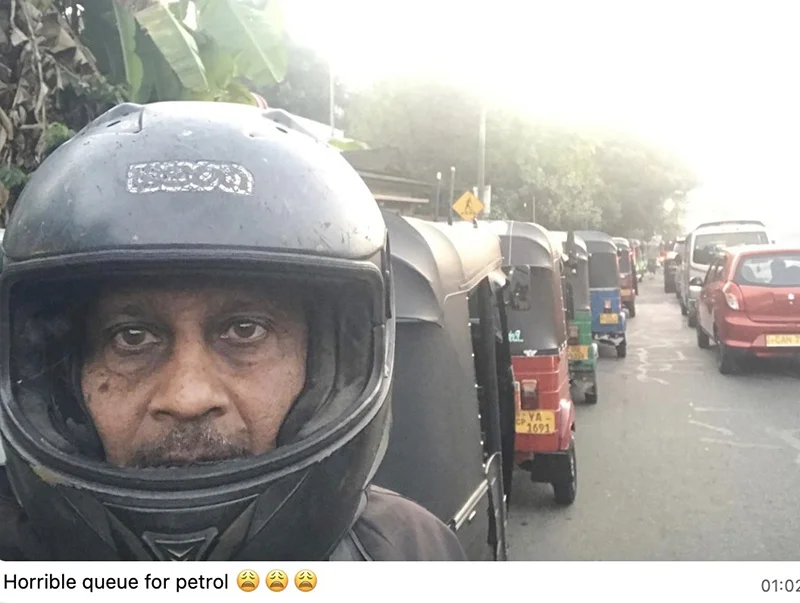
Promoting solar-powered electric vehicles supported by home-based renewable charging systems would strengthen national energy security and reduce pressure on imported fuel supplies. The fuel queues witnessed during periods of crisis, most notably in 2022, serve as a stark reminder of the risks associated with excessive dependence on external energy sources and the national anarchy that can follow.
As a small nation operating within a volatile global economy, Sri Lanka must remain as non-aligned and self-reliant as possible. Strengthening self-sufficiency in strategic sectors is critical to avoiding collateral damage amid escalating geopolitical rivalries among major powers. India has made steady progress along this path; Sri Lanka would be well-advised to do the same.
Raising electricity tariffs — a measure repeatedly adopted over the past decades to offset the high cost of fossil-fuel-based power generation — places an unfair burden on debt-ridden households and struggling businesses. Resorting once again to tariff increases, rather than addressing structural inefficiencies and fuel dependency, reflects a failure of long-term planning. The nation must instead pursue sustainable energy solutions that reduce costs over time.
As a debt-burdened country, Sri Lanka urgently requires pragmatic, forward-looking strategies that ease the pressure on citizens while strengthening resilience in times of geopolitical instability. Energy pricing is not a peripheral issue; it is a central pillar of economic stability and national security, demanding serious and immediate attention.
Established on 1 November 1969, the CEB was entrusted with the responsibility of generating and distributing electricity across the island while promoting social and economic development through the optimal use of national resources.
Recent developments suggest that the Ceylon Electricity Board has fallen short of these foundational objectives. Over the past two decades, electricity tariffs have been increased repeatedly under various justifications yet supply reliability has not consistently improved. The current proposed revision appears to perpetuate the same pattern: continued dependence on imported fossil fuels, directly contradicting the principle of optimally utilising national resources. This trajectory risks returning the country to recurring crises, including the prolonged fuel shortages and power cuts experienced in recent years.
Energy is not an ordinary commodity confined to a single sector; it affects every dimension of national life. High energy costs increase the cost of living by inflating expenses related to food production, transportation, manufacturing, and consumer goods. Ultimately, these costs are borne by citizens.
Moreover, elevated energy prices undermine national competitiveness by discouraging foreign investment and constraining local entrepreneurship, technological advancement, industrial expansion, and job creation. High-cost energy impedes national development.
Low-cost energy should therefore be formally adopted as a national policy objective. The CEB must adhere to its original mandate of optimising national resources for cost-effective electricity generation. Any deviation from this principle must be fully transparent and supported by clear, evidence-based justification.
Even in the sphere of renewable energy, concerns arise about the apparent preference for large-scale solar and battery storage projects that require substantial public funding. Previous claims of “grid instability” attributed to household rooftop solar generation were used to justify policy shifts. If electricity generated by rooftop solar during daylight hours was considered problematic, how would significantly larger solar installations differ in principle? Without systematic and transparent grid modernisation, such projects risk becoming costly stopgap measures rather than sustainable long-term solutions.
Poorly planned initiatives could once again expose the country to high delivery costs, reflected in elevated tariffs. They may also increase the risk of power disruptions due to battery limitations, spare-part shortages, infrastructure weaknesses, or maintenance failures. Sri Lanka has previously endured six- to ten-hour power outages, with severe economic and social consequences. The nation cannot afford a return to such instability.
It must also be recognised that rooftop solar installations, financed by homeowners — often through personal loans — have provided a crucial safety net for many families. By purchasing surplus energy from these “prosumers,” the system has functioned in a mutually beneficial manner for both households and the nation. Rather than discouraging decentralised generation, Sri Lanka should modernise its grid and meaningfully integrate citizen-led energy production. Short- and medium-term grid improvements could be facilitated through structured private-sector participation, including by prosumers themselves.
Globally, affordable energy underpins economic growth. Countries such as China, the United States, Norway, Brazil, and Canada have leveraged domestic energy resources to produce cost-effective power and accelerate development.
Sri Lanka must adopt a clear national policy centred on low-cost energy, fully utilising its natural endowments — solar, hydro, wind, and emerging technologies. Proposals prioritising imported fuels should be considered secondary and strictly transitional.
A nation that endures long queues for essential energy supplies cannot reasonably expect its citizens and businesses to remain productive and resilient. These realities are fundamentally incompatible.
Encouraging decentralised energy production would:
* Reduce the cost of living
* Improve national resilience
* Attract foreign investment
* Create employment
* Enhance export competitiveness
The people have entrusted the government with this responsibility. The time has come for a decisive, transparent, and forward-looking policy shift.
Chula Goonasekera
(cgoonase@sltnet.lk)
A concerned citizen

Daren Sammy issues plea as West Indies remain stuck in Kolkata hotel

Nepal election 2026: When will we get the results?

‘It’s so good to be home’ – passengers on Dubai-Dublin flight

India’s momentum meets Wankhede’s memory in big semifinal bout

Afternoon showers expected in the Uva and Sabaragamuwa provinces and in Hambantota, Nuwara-Eliya and Ampara districts

Trump administration launches US military operation in Ecuador

‘Dates have the highest sugar content to fight Coronavirus’

Sunday Island 27 December – Headlines

#SundayIsland 17th December – Headlines

Sunday Island – 28th March

Sunday Island Headlines – 21 March

Sunday Island – 21st February – Headlines
-

 Features4 days ago
Brilliant Navy officer no more
-

 Opinion7 days ago
Jamming and re-setting the world: What is the role of Donald Trump?
-
 Features7 days ago
An innocent bystander or a passive onlooker?
-

 Opinion4 days ago
Sri Lanka – world’s worst facilities for cricket fans
-

 Business7 days ago
An efficacious strategy to boost exports of Sri Lanka in medium term
-

 Business24 hours ago
Cabinet nod for the removal of Cess tax imposed on imported good
-
 Features5 days ago
Overseas visits to drum up foreign assistance for Sri Lanka
-

 Features4 days ago
A life in colour and song: Rajika Gamage’s new bird guide captures Sri Lanka’s avian soul