
News
Multi-billion rupee project in the pipeline to push up SL’s fuel buffer stock to 3 months

BY SURESH PERERA
Sri Lanka has embarked on an ambitious multi-billion rupee initiative to significantly improve the country’s Strategic Petroleum Reserve (SPR) under an ongoing long-term plan to push up the buffer stock to approximately three months from the existing 21 days.
As a crucial element of the strategy, a new oil farm will be built at Muthurajawala, while enhancing the holding capacity at the Kolonnawa storage terminal in the backdrop of continuing talks with the Indian government to reclaim 84 unused tanks in the upper section of the Trincomalee oil farm.
The operation of the 99-tank Trincomalee oil farm complex was given to Lanka Indian Oil Company (LIOC), a subsidiary of Indian state-owned IOC, under a long-term lease in 2003. However, at present, only 15 tanks in the lower section of the gigantic British built WW2 era facility are being used by the Indian company.
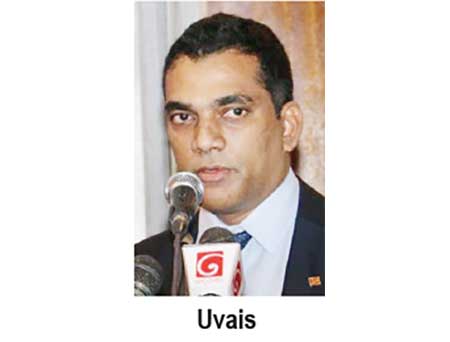
“The minister is in talks with the Indian government to explore the possibility of using the 84 oil storage tanks now lying idle”, says M. Uvais Mohamed, Chairman/Managing Director, Ceylon Petroleum Storage Terminals Limited (CPSTL).
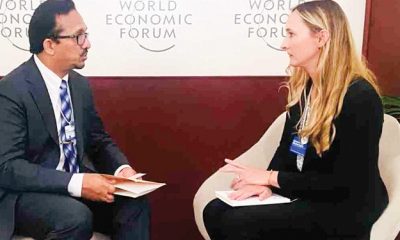
“We need to prioritize our focus on enhancing the available storage capacity as the national demand for fuel climbs by 5% per annum”, he said in an interview with The Sunday Island in his office at the sprawling, six-acre Kolonnawa oil terminal.
Sri Lanka’s annual import of fuel amounts to two million metric tons of crude oil and three million metric tons of refined oil.
The Chairman said that 50 acres were sought for the proposed Muthurajawala oil storage project (adjoining the existing CPSTL facility of 29 tanks) but only 25 acres were released. If the outright purchase of the land is considered too costly, a lease arrangement will be worked out.
“The idea is to build bigger oil storage tanks at the new Muthurajawala complex because they are more efficient and easy to maintain”, he explained.
Referring to the proposed storage capacity expansion at the Kolonnawa terminal, he outlined that the construction of nine new oil tanks are on the cards at a cost of Rs. 3 billion.
International tenders were called to build four 15,000MT, four 7,000MT and one 5,000MT oil tanks at the Kolonnawa complex, and bids were awarded to an Indian company to construct six of them, while the other three will be undertaken by a Sri Lankan enterprise using 100% local labor, Mohamed continued.
“One oil tank at Kolonnawa, which is unusable as it’s around 50 to 60 years old, will be demolished, while another with its bottom deck corroded can be repaired. We can do it for Rs. 50 million rather than spend Rs. 500 million to build a new one”, he said.
The Chairman stressed that Muthurajawala was earmarked for the new oil farm as Kolonnawa is a densely populated, cosmopolitan area with inadequate land resources for such a mega project.
“What is important is to enhance energy security by improving the country’s oil reserves to meet any contingency. That’s why we are looking at a three months’ buffer stock in the long run. This is a fair target because even a big country like the US maintains three to six months in oil reserves”, he noted.
Q: When do you expect to achieve the target of enhancing storage capacity under the ‘long-term plan?’
Within the next two to four years, we will be able to increase storage capacity by 100,000MT. The refurbishment of tanks, which are either not in use or cannot be used to their full capacity, is being undertaken. As a result, in another six months, we will be able to enhance capacity by 20,000MT. We are expediting the whole process. These are concrete plans, not wishes. Energy security is of paramount importance.
Q: You referred to talks with India on using 84 tanks in the Trincomalee oil farm. Has there been any headway?
The Minister is holding discussions on the matter, and as we maintain cordial relations with India, I think we will be able to work it out. This was government-owned land that was leased out to the IOC. The Sri Lanka government will decide on it. We should work together to make it viable and beneficial to the country.
Q: The CPSTL is largely dependent on the private sector bowsers for the distribution of fuel island-wide. Don’t you agree that CPSTL should have its own fleet of vehicles for this purpose in the event of a contingency?
At present, 88% of daily distribution of fuel is done by bowsers belonging to both the CPSTL and private owners. However, CPSTL owns only 158 bowsers, while around one thousand others are hired from private owners. I agree that we need to enhance our fleet to strike a balance. Though we have a good understanding with the private bowser owners, it is imperative that we have our own in sufficient numbers in case of an emergency.
We need to reduce costs and enhance efficiency through rail transport of fuel. We have added 27 more wagons to our fleet with the support of the CGR (Ceylon Government Railway). We maintain a bulk storage facility in Anuradhapura for distribution to the North. We have now procured six acres of land at Kankesanthurai for a proposed bulk storage facility to supply fuel to the North.
As the “bloodline of the nation”, it is our responsibility to ensure fuel supplies to all key segments of the economy, whether it is shipping, aviation, transport, power generation or industries. All of them depend on our service. We have to render an efficient and effective service to the nation to realize the President’s vision to make Sri Lanka prosperous.
Bringing greater efficiency to this sector even by a small percentage translates into a saving on the country’s foreign exchange reserves. It also has an impact on the trade balance and the economy as a whole.
Q: Was CPSTL able to achieve its target in terms of profits for 2020?
We were looking at a target of Rs. 1.6 billion, but even with the Covid-19 pandemic, we are optimistic of achieving Rs. 1.6 – Rs. 2 billion.
During the height of the Covid outbreak, we distributed hand and floor sanitizers free of charge to the police, armed services, health authorities and other key segments. During the general election, the Election Department made a big saving as we supplied the requirement of hand/floor sanitizers to polling booths.
At 42 years, Uvais Mohamed is the youngest Chairman to be appointed to the CPSTL. The brother of Justice Minister Ali Sabry, he is a management accountant with work experience in the United Kingdom, India and Bangladesh.

Latest News
Landslide early warnings in force in the Districts of Badulla, Kandy, Kegalle, Kurunegala, Matale, Nuwara Eliya and Ratnapura


The Landslide Early Warning Center of the National Building Research Organisation [NBRO] has issued landslide early warnings to the Districts of Badulla, Kandy, Kegalle, Kurunegala, Matale, Nuwara Eliya and Ratnapura valid until 1600hrs on 14th December 2025.
Accordingly,
LEVEL III RED warnings are in force in the Divisional Secretaries Divisions and surrounding areas of Ududumbara, Medadumbara, Ganga Ihala Korale, Pathadumbara, Panvila, Udapalatha, Doluwa, Deltota and Minipe in the Kandy district, and Rideegama in the Kurunegala district.
LEVEL II AMBER warnings are in force in the Divisional Secretaries Divisions and surrounding areas of Uva Paranagama, Passara, Welimada, Haputhale, Lunugala, Soranathota, Ella, Kandeketiya, Bandarawela, Meegahakivula, Badulla, Hali_Ela and Haldummulla in the Badulla district, Harispattuwa, Pathahewaheta, Thumpane, Udunuwara, Poojapitiya, Hatharaliyadda, Gangawata Korale, Yatinuwara, Kundasale, Akurana and Pasbage Korale in the Kandy district, Rambukkana, Yatiyanthota, Aranayaka, Kegalle, Bulathkohupitiya, Mawanella, Warakapola and Galigamuwa in the Kegalle district, Polgahawela, Mallawapitiya, Alawwa and Mawathagama in the Kurunegala district, Ukuwela, Naula, Wilgamuwa, Matale, Laggala Pallegama, Rattota, Ambanganga Korale, Yatawatta and Pallepola in the Matale district, Walapane, Hanguranketha, Nuwara Eliya, Kothmale East, Mathurata, Nildandahinna, Thalawakele, Norwood, Kothmale West and Ambagamuwa Korale in the Nuwara Eliya district, and Kahawaththa, Kolonna and Godakawela in the Ratnapura district.
LEVEL I YELLOW warnings are in force in the Divisional Secretaries Divisions and surrounding areas of Dehiowita, Deraniyagala and Ruwanwella in the Kegalle district, and Kalawana, Kuruwita, Elapatha, Ayagama, Kiriella, Balangoda, Openayake, Imbulpe, Ratnapura, Kaltota, Eheliyagoda, Pelmadulla and Nivithigala in the Ratnapura district.
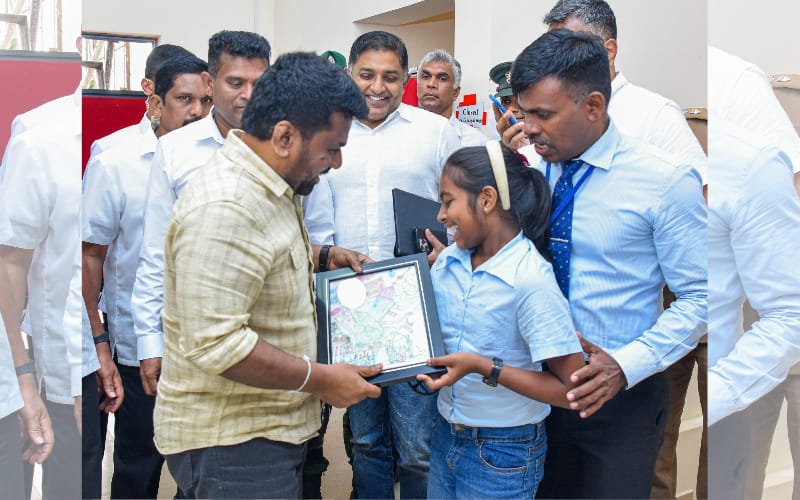
President Anura Kumara Dissanayake affirmed that the Government will never allow the violation of the rights of the fishing community, emphasizing the State’s firm commitment to protecting both land resources and the coastline.
The President also stated that the Government will address the challenges faced by fishing communities across the country through discussion and constructive engagement, ensuring sustainable solutions while safeguarding livelihoods.
President Anura Kumara Dissanayake made these remarks while attending a Special District Coordination Committee Meeting held on Saturday (13) afternoon at the Mannar District Secretariat, convened to review on-going efforts to restore normalcy to public life and rehabilitate infrastructure in the Mannar District following the recent disaster.
Highlighting the urgent need for a permanent solution to flooding in the Mannar District, the President instructed officials to proceed with the proposed flood control project after conducting comprehensive studies to ensure its long-term effectiveness.
Special attention was drawn to the severe impact of the disaster on the fishing sector. It was revealed that approximately 12,000 fishermen are currently unable to engage in fishing activities due to flooding and adverse weather conditions.
The President directed that dry ration packs be provided for one week to fishing families who, although not directly affected by floods, have lost their livelihoods due to unfavourable weather conditions.
Additionally, discussions were held on engaging with the Chinese Embassy to distribute a stock of fishing gear donated by the Government of China to fishermen affected by the disaster.
Attention was also focused on illegal land encroachments within the water catchment area of the Yodha Wewa Sanctuary. The President instructed that strict legal action be taken against individuals obstructing the placement of boundary markers around the reservoir.
It was reported that 70 families in the Mannar District have lost their homes due to the disaster. Discussions were held on rebuilding these houses and identifying suitable land for resettlement. A committee will be appointed to identify the required land within the next two weeks.
The meeting also addressed the expansion of facilities at Mannar Base Hospital and other hospitals, along with restoring health services and normalizing educational activities in the district.
The President further instructed that the Rs. 15,000 assistance provided by the Treasury for schoolchildren be disbursed promptly through Divisional Secretaries, based on recommendations from Grama Niladhari officers.
Extensive discussions were also held on reconstruction of damaged roads and bridges, restoration of water and electricity supply, rehabilitation of irrigation systems, compensation for losses in agriculture and livestock sectors and supporting affected communities to restart their livelihoods without delay
The meeting was attended by Deputy Minister of Cooperative Development and Chairman of the Vanni District Coordination Committee Upali Samarasinghe, Northern Province Governor N. Vethanayahan, Members of Parliament S. Thilaganathan, M. Jegatheeswaran, T. Ravikaran, Sathiyalingam, Selvam Adaikkalanathan, Kader Mastan and Rishad Bathiudeen, along with other government and opposition parliamentarians.
Also present were the Secretary to the Ministry of Finance, Secretary to the Ministry of Defence, Northern Province Chief Secretary D. Murugesan, Mannar District Secretary K. Kanageswaran, senior government officials, and representatives of the security forces.

President Anura Kumara Dissanayake has instructed officials to give top priority to restoring the livelihoods of communities affected by the disaster. He emphasized the need to expedite compensation payments for damages and to take immediate measures to revive the agriculture, fisheries and industrial sectors.
The President further directed that all compensation payments for crop damage be completed before December 25.
These instructions were issued during a special District Coordinating Committee meeting held on Saturday (13) morning at the Puttalam District Secretariat.
President Anura Kumara Dissanayake described the recent cyclone as one of the largest disasters the entire country has faced in recent times. He commended the dedicated efforts of the tri-forces, Police and public officials in restoring the lives of affected communities. The President noted that, thanks to their commitment, a significant portion of essential infrastructure including electricity, water supply and roads has already been rehabilitated.
He further emphasized that the Government’s ability to provide such substantial compensation to disaster-affected communities is the result of the strong fiscal discipline of the Government.
Taking into account the challenges that have arisen in the distribution of allowances and aid so far, the President instructed Divisional Secretaries to ensure that compensation is provided strictly to eligible recipients and to fully intervene to prevent any deviation from this policy under any circumstances.
During the meeting, the rehabilitation of damaged highways and bridges in the district was discussed in detail. The President inquired into issues arising during these reconstruction efforts and provided on-the-spot solutions in consultation with the relevant officials.
The construction of the Lower Kala Oya Bridge was also discussed. The President instructed that a temporary bridge be built to meet the needs of the tourism sector. He emphasized that all construction activities should be carried out with a thorough understanding of necessity and proper structural assessments.
The President further highlighted that previous large-scale projects were abandoned without delivering tangible benefits or the intended outcomes. He stressed that future infrastructure development should focus not only on regional needs but also on the broader economic benefits for the country as a whole.
The President inquired about the ongoing efforts to restore electricity supply in the district and emphasized the need to complete these works without delay.
He also reviewed measures being taken to re-establish water supply and instructed provincial authorities to intervene promptly, noting that current well cleaning efforts in the district are insufficient.
Regarding agriculture, the President inquired about preparations by local farmers for the upcoming Maha paddy cultivation. He directed officials to swiftly create a conducive environment for farming, minimize the amount of abandoned land and explore alternative methods to ensure productive use of farmland.
He instructed that all compensation due to farmers be disbursed before December 25, that payments be made regardless of whether the land is in reserves or legally protected areas, and that systematic measures be implemented to prevent cultivation on reserved lands.
The President also highlighted the need for comprehensive soil conservation programmes in areas such as Kalpitiya.
The President emphasized the need to provide fair compensation to those engaged in the livestock sector in order to restore their livelihoods. He also highlighted the importance of obtaining accurate ground-level data and stressed the necessity of introducing legislation to ensure the registration of all livestock farms.
Due to the disaster, 627 houses in the district were completely destroyed, and 20,813 houses sustained partial damage. The President instructed that compensation for the affected families be expedited, emphasizing priority resettlement on government land. Where government land is unavailable, he directed that Rs. 5 million be provided to each family for the purchase of alternative land.
For those whose houses were completely destroyed, the President directed that new housing projects be implemented in a manner that ensures ownership of a house valued at Rs. 5 million for each beneficiary.
Attention was also given to the fisheries sector. Discussions were held on providing assistance for the repair of damaged fishing boats, as well as implementing fair compensation and concessional bank loan schemes for prawn farmers.
President Dissanayake also inquired into the operations at Chilaw Hospital. Authorities informed him that patient admissions and the functioning of several units could resume by next week.
Minister of Public Administration, Provincial Councils, and Local Government and Chairman of the Puttalam District Coordination Committee Chandana Abeyratne, Deputy Minister of Environment Anton Jayakody, North Western Province Governor Tissa Warnasuriya, Government and Opposition Members of Parliament from Puttalam District, Local Government Representatives including the North Western Provincial Secretary, Secretary to the Ministry of Finance Dr. Harshana Suriyapperuma, Puttalam District Secretary, Divisional Secretaries, Government Officials, and Security Forces Representatives were present at the event.

Angry fans throw chairs and bottles at Messi event in India

Landslide early warnings in force in the Districts of Badulla, Kandy, Kegalle, Kurunegala, Matale, Nuwara Eliya and Ratnapura

The rights of the fishing community will never be compromised – President

Prioritize rebuilding the livelihoods of disaster-affected communities – President

A few showers may occur in the Northern, North-Central, Eastern, Uva and Central provinces

Ditwah Disaster: 211 people still missing

‘Dates have the highest sugar content to fight Coronavirus’

Sunday Island 27 December – Headlines

#SundayIsland 17th December – Headlines

Sunday Island – 28th March

Sunday Island Headlines – 21 March

Sunday Island – 21st February – Headlines
-
 Features4 days ago
Finally, Mahinda Yapa sets the record straight
-

 News6 days ago
Over 35,000 drug offenders nabbed in 36 days
-
 News5 days ago
Cyclone Ditwah leaves Sri Lanka’s biodiversity in ruins: Top scientist warns of unseen ecological disaster
-

 News6 days ago
Rising water level in Malwathu Oya triggers alert in Thanthirimale
-
 Features4 days ago
Handunnetti and Colonial Shackles of English in Sri Lanka
-
 Business3 days ago
Cabinet approves establishment of two 50 MW wind power stations in Mullikulum, Mannar region
-

 Business6 days ago
Sri Lanka betting its tourism future on cold, hard numbers
-

 News6 days ago
New landslide alerts as Ditwah aftermath worsens