
Latest News
Mukkamalla 79, Harmeet four-for lead USA’s trouncing of Netherlands

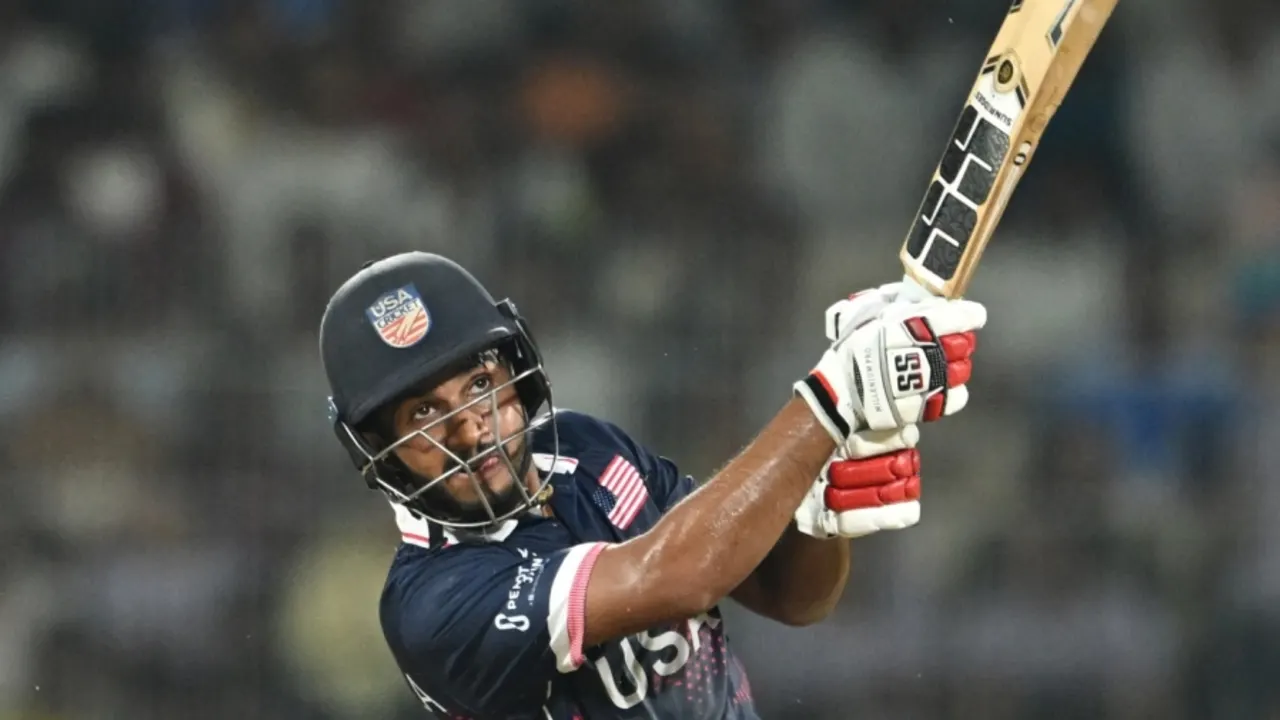
A fired-up USA kept their T20 World Cup campaign alive with a thumping victory, their first over Netherlands in men’s T20Is. After boundary-laden efforts from Saiteja Mukkumala and Shubnam Ranjane powered USA to 196, Harmeet Singh led the spinners’ charge to reduce Netherlands to 66 for 5 on a pitch that offered turn and purchase for slower deliveries. Netherlands then lost 5 for 28 in the end for a 93-run hammering which meant USA are third in Group A.
It was the first evening game of this World Cup in Chennai, where USA got things going as soon as they were asked to bat. Once openers Shayan Jahangir and Monank Patel set the tone with early intent for boundaries, Mukkamalla’s 79 off 51 balls led USA’s innings for nearly 14 overs, with the run rate nearly touching 10 an over. Ranjane then came out all guns blazing in the death overs and set a total Netherlands had never chased before in a T20 World Cup.
USA’s spinners then put the pressure on Netherlands from the get-go. Once Nosthush Kenjige struck in the second over, Harmeet ran through them once he came on in the powerplay to finish with 4 for 21, his second four-for in T20Is.
Even though captain Monank asked his top order at the toss to take five to ten deliveries before taking off, Shayan Jahangir disobeyed by taking the aerial route in the first over with his captain watching at the other end. Jahangir pulled two sixes off short balls in his first five balls for a flying start before being bowled for a 13-ball 20 by Klein. Monank took the responsibility upon himself to keep the run rate soaring, and started with a textbook straight drive that raced to the fence.
Mukkamalla similarly went for the big hits almost right from the start. He fearlessly went aerial again and again, starting with a six off left-arm quick Fred Klaassen, and didn’t take the foot off the pedal even after the powerplay. There was no respite for Netherlands despite several bowling changes as USA kept punishing the loose balls, and traded in singles and doubles against the good ones which gave the experienced Roelof van der Merwe figures of 3-0-36-0 without a single dot ball.
At just 21, Mukkamalla seemed as mature as someone “who has been playing for USA for ten years”, his captain said after the game. Mukkamalla showed that with dazzling strokeplay that saw sixes down the ground, over the covers, against pace and spin, and all while looking steady and elegant at the crease. Monank himself belted three fours and a six at the other end until a short and slow knuckleball from Bas de Leede foxed him completely for a catch for the wicketkeeper.
Mukkamalla, meanwhile, took off from 25 off 20 balls at one stage with four fours in his next five balls that saw two lofted strokes off van der Merwe and two late cuts against Klaassen. The six he smashed off Klein over the covers for his 30-ball fifty stamped his authority further on the bowlers, who all looked at sea. Sanjay Krishnamurthi was also deceived by a slower one that resulted in shattered stumps even as Mukkamalla kept the boundaries coming, and was joined by Ranjane.
Fresh off his quickfire 51 against Pakistan when he took down Shaheen Shah Afridi, Ranjane showed his range of strokes behind the wicket as the Netherlands quicks refused to offer any pace with their range of cutters. That got them two boundary-less overs, the 16th and 17th, as they went for just 12 runs, including Mukkamalla’s wicket for 79.
Ranjane kept shuffling to the off side in anticipation of short and slow balls, which he kept dispatching with slog sweeps, pulls and flicks for 14 runs off the 18th and 13 runs off the 19th over. Logan van Beek conceded just nine runs in the last but USA had managed a steep total by then.
Netherlands had almost no answers for the USA bowlers once Kenjige bowled Michael Levitt in the second over with one that kept very low. Harmeet came on in the fifth over with de Leede attacking, and struck in consecutive overs with his share of luck when he had Max O’Dowd and de Leede hand catches off short and wide deliveries to reduce Netherlands to 53 for 4.
But Harmeet soon found his rhythm. He largely stuck to a stump-to-stump line thereafter, varied his pace from early to the late 80kph, and that helped him rattle Scott Edwards’ stumps and trap van der Merwe lbw. The asking rate had shot up over 12 runs an over at the halfway mark, and Netherlands could never recover.
As cutters and slower ones were being rewarded on this pitch, it was only apt that Shadley van Schalkwyk picked three more wickets to add to his two four-fors in the first two games. His wobble-seam delivery early on accounted for Colin Ackermann in the powerplay, his legcutter went through Aryan Dutt, and he wrapped things up in the 16th over to stretch his lead at the top of the wicket-taking charts with his tally of 11 wickets
Brief scores:
USA 196 for 6 in 20 overs (Monak Patel 36, Shayan Jahangir 20, Saiteja Mukkamalla 79, Shubnam Ranjane 48*; Logan van Beek 1-28, Kykle Klien 1-35, Fred Klassen 1-32, Bas de Leede 3-37) beat Netherlands 103 in 15.5 overs (Max O’Dowd 13, Bas de Leede 23, Scott Edwards 20, Roelof van der Merwe 10; Nosthush Kenjige 1-20, Harmeet Singh 4-21, Shadley van Schalkwyk 3-21, Mohammad Mohsin 2-19) by 93 runs
[Cricinfo]


Salman Ali Agha said that he would have done things ‘differently”, after Mehidy Hasan Miraz ran him out in controversial circumstances in the second ODI in Dhaka.
Agha, who made 64 from 62 balls, had been backing up at the non-striker’s end when Mohammad Rizwan drove the ball back towards him. He was still out of his ground as Mehidy swooped round behind him in an attempt to gather, and Agha had appeared ready to pass the ball back to the bowler before Mehidy reached down to grab it first and throw down the stumps.
Agha reacted furiously to the dismissal, throwing his gloves and helmet down in disgust at the decision. However, he later came to the post-match press conference, ahead of captain Shaheen Shah Afridi and player of the match Maaz Sadaqat, to clear the air.
“I think sportsman spirit has to be there,” Agha said. “What he [Mehidy] has done is in the law. I think if he thinks it’s right, it’s right, but if you ask me my perspective, I would have done differently. I would have gone for sportsman spirit. We haven’t done this [type of thing] previously, we would never do that in the future as well.”
Agha explained that he had been trying to pick up the ball to give to Miraz, thinking it was likely to have been called dead. “Actually, the ball hit on my pad and then my bat,” he said. “So I thought he can’t get me run-out now, because the ball already hit on my pad and my bat.
“I was just trying to give him the ball back. I was not looking for the run or anything like that, but he already decided [to make the run-out].”
Agha however regretted his angry reaction. “It was just heat-of-the-moment kind of stuff,” he said. “If you ask me what would I have done, I would have done things differently. But it was everything, whatever happened after that, it was in the moment.”
He was also involved in a robust exchange with Bangladesh wicketkeeper Litton Das, though he didn’t divulge many of the details.
“I can’t remember what I was saying and I can’t remember what he was saying,” he said. “I’m sure I wasn’t saying nice things, and I’m sure he wasn’t saying nice stuff as well. But it was just heat of the moment, so we are fine.
Asked if he had patched things up with Mehidy, Agha said: “I haven’t yet, but don’t worry, I’ll find him.”
Pakistan won the match by 128 runs via the DLS method.
[Cricinfo]
Latest News
US embassy in Baghdad hit by strike as Trump says military targets ‘obliterated’ on Iran’s key oil island
The US embassy in Baghdad, Iraq, has been hit by a missile – video shows fire and smoke rising in the aftermath.
Meanwhile, President Donald Trump says “every military target” on Iran’s key oil island has been “totally obliterated”, but there was no damage to oil infrastructure.
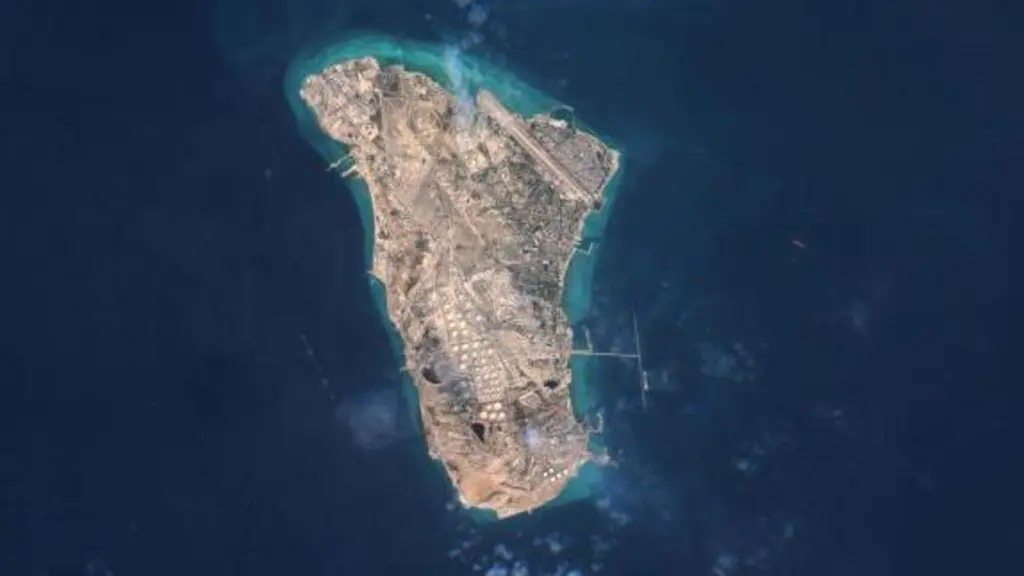
Kharg Island is a tiny but strategic terminal in the northern Gulf, 22 miles off the coast of Iran In response, Tehran warns oil and energy infrastructure belonging to firms that co-operate with the US will be “turned into a pile of ashes” if Iran’s energy facilities are attacked
Elsewhere in the Middle East: Israel and Iran both warn of fresh attacks, and at least 12 medical staff have been killed in an Israeli strike in Lebanon
Meanwhile, more US Marines and warships are expected to be deployed to the Middle East, two officials tell BBC’s partner CBS News
[BBC]

The Bahrain and Saudi Arabia Grands Prix that were scheduled for next month are set to be cancelled as a result of the war in the Middle East.
A formal decision to call off the races has not yet been made but is expected before the end of the weekend.
Freight would need to start being shipped to the Middle East in the coming days. With no sign of the conflict between the US/Israel and Iran coming to a conclusion, holding the races would put personnel at too great a risk.
Neither event will be replaced, with the season being cut to 22 grands prix and F1 taking a commercial hit of more than £100m, given Bahrain and Saudi Arabia pay two of the highest hosting fees.
The race in Bahrain was scheduled to be on 12 April with Jeddah the following weekend.
Consideration was given to holding events at Portimao in Portugal, Imola in Italy or Istanbul Park in Turkey.
But it was accepted that the time to organise a race at any of those locations was too short, and there was little chance of securing a hosting fee.
The decision will mean there is a five-week break between the Japanese Grand Prix on 29 March and Miami on 3 May.
(BBC)

Agha calls for ‘sportsman spirit’ after controversial dismissal

US embassy in Baghdad hit by strike as Trump says military targets ‘obliterated’ on Iran’s key oil island

Showers or thundershowers will occur at several places in the Western, Sabaragamuwa, Central, North-western and Uva provinces and in Galle, Matara, Mannar and Anuradhapura districts after 2.00 pm.

Bahrain & Saudi Arabia Grands Prix to be cancelled

Pink Floyd guitar sold for record-breaking $14.6m

Promoting Local Industries is a key priority of the Government – PM

‘Dates have the highest sugar content to fight Coronavirus’

Sunday Island 27 December – Headlines

#SundayIsland 17th December – Headlines

Sunday Island – 28th March

Sunday Island Headlines – 21 March

Sunday Island – 21st February – Headlines
-
 News6 days ago
Repatriation of Iranian naval personnel Sri Lanka’s call: Washington
-
 Features6 days ago
Winds of Change:Geopolitics at the crossroads of South and Southeast Asia
-

 News5 days ago
Prof. Dunusinghe warns Lanka at serious risk due to ME war
-

 Sports4 days ago
Royal start favourites in historic Battle of the Blues
-

 Sports3 days ago
The 147th Royal–Thomian and 175 Years of the School by the Sea
-

 News3 days ago
Historic address by BASL President at the Supreme Court of India
-
 Business7 days ago
Seven decades of sartorial excellence: The legacy of Linton Master Tailors in Kandy
-

 News4 days ago
CEBEU warns of operational disruptions amid uncertainty over CEB restructuring