
News
MP Kajendran wants politicians kept out of vaccination programmes

By Dinasena Ratugamage
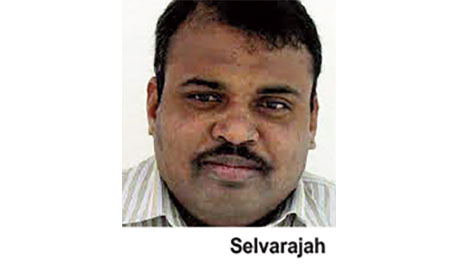
Health officials should be entrusted with the vaccination process in the Northern Province, Tamil National People’s Front (TNPF) MP Selvarajah Kajendran said. The MP said some politicians meddled with the anti – COVID-19 campaigns in the North.
“If the process had not been politicised fewer people would have died,” the MP told journalists when he arrived at the Jaffna Teaching Hospital to observe Jaffna residents being vaccinated.
The MP said that when Sri Lanka received the AstraZeneca vaccine, politicians decided who should get the jab.
“As a result only people in Colombo got the vaccine. Now only the people in other parts of the country are being inoculated. We are getting the vaccine from China and health officials must be allowed to decide what to do. If you look at Jaffna, Ministers Namal Rajapaksa, Douglas Devananda and MP Angajan Ramanathan claim that they were instrumental in having the Jaffna people vaccinated. I think they must be doing so in other parts of the country as well.
The MP said that the role of the politician was to provide necessary facilities and equipment to the health officials.
On 02 June 152 COVID-19 cases were reported from Jaffna District. About 3,754 cases had been reported since 04 October 2020, he said.
Meanwhile, Regional Director of Health – Northern Province, K. Kethiswaran said yesterday that the vaccination programme in the Jaffna District had been a success with the administering of the 50,000 doses allocated to the District successfully.
Dr. Kethiswaran said that they were assisted by security forces, health staff, the police and the people and there were no allegations of irregularities.
“Those involved in the vaccination programme worked until 8 pm almost every day,” he said.
Vice Chancellor of the Jaffna University Prof. S. Satkuunaraja was given the first jab from the 1,600 doses allocated for the inoculation of the university staff on Wednesday June 02.
Prof. Satkunaraja had earlier asked President Gotabaya Rajapaksa to give priority to the Jaffna university in the vaccination drive as a lecturer had died from COVID-19 and 28 staff members and a large number of students were infected.


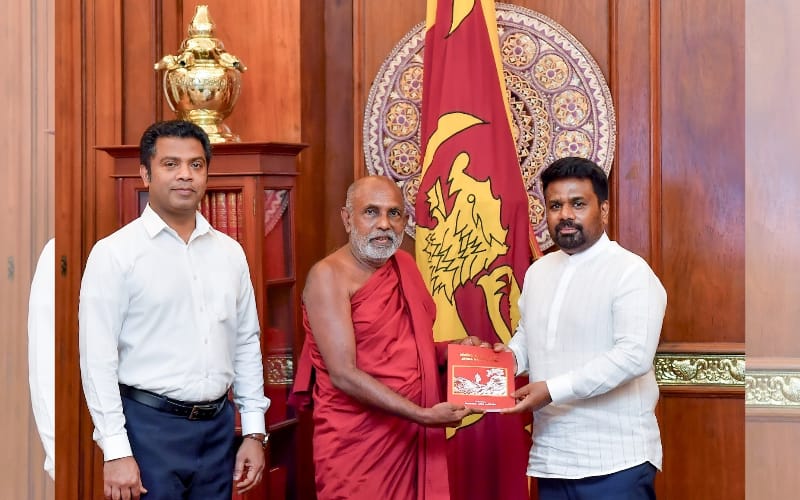
The declaration of the National Namal Uyana as a “National Heritage of Sri Lanka” with the aim of identifying, conserving and bequeathing the country’s national heritage to future generations under the Ministry of Buddhasasana, Religious and Cultural Affairs and the commemoration of the 35th anniversary of its establishment was held under the patronage of President Anura Kumara Dissanayake at the Presidential Secretariat, on Thursday (26).
The National Namal Uyana, spanning 602 hectares within the Palagala Divisional Secretariat Division of the Anuradhapura District, is a unique site of significant national, religious, environmental and geographical value. At the request of its founder, Venerable Wanawasi Rahula Thero and with the intervention of the Ministry of Buddhasasana, Religious and Cultural Affairs, the site was formally declared a National Heritage of Sri Lanka. To mark this occasion, the commemorative plaque was unveiled by the President via virtual technology.
Speaking on the occasion, President Anura Kumara Dissanayake stated that the responsibility of safeguarding this unique environmental heritage and bequeathing it to future generations rests with all.
The President also expressed his sincere appreciation for the dedication shown by Venerable Wanawasi Rahula Thero over the years in protecting and developing the National Namal Uyana.
On the occasion of the 35th anniversary of the National Namal Uyana, the first-day cover issued by the Postal Department of Sri Lanka, along with the ‘National Namal Uyana Shashthreeya Sangrahaya’, was presented to the President by Venerable Wanawasi Rahula Thero.
Delivering a special address on the occasion, Venerable Wanawasi Rahula Thero, founder of the National Namal Uyana, stated that this event would go down in history as one of the most outstanding environmental services undertaken by the present Government.
The thero also expressed his deep appreciation for the President’s decision to hold the programme at the Presidential Secretariat, rather than at the National Namal Uyana premises as originally planned for tomorrow (27), in view of the prevailing situation in the country.
He further highlighted that the people of the country has been widely embraced President Anura Kumara Dissanayake’s vision and commitment for national development and emphasised the need for unity among all citizens in addressing the challenges currently facing the country and for collectively seeking effective solutions.
On this occasion, Venerable Wanawasi Rahula Thero, founder of the National Namal Uyana, also shared further remarks.
On 28 March 1991, I began my work at the National Namal Uyana, a beautiful forested area, dedicating myself with great commitment despite facing a very difficult life. During this time, local monks and members of the public levelled various accusations against me and subjected me to public criticism. Numerous articles were written against me in the press. Yet, I did not waver in my efforts.
However, during the tenure of President Chandrika Kumaratunga, I was fortunate to receive the assistance of Berty Premalal Dissanayake, through whose efforts electricity was made available. Subsequently, I have also received support from all Presidents who have held office after President Kumaratunga. I have not made any personal requests, yet opportunities have consistently been accessible to me, owing to my unwavering commitment to act with integrity.
During your tenure, the roads in the area surrounding the National Namal Uyana have been well developed and I extend my appreciation to all involved in this achievement. I also express my sincere gratitude to Minister Dr. Nalinda Jayathissa and Deputy Minister Gamagedara Dissanayake, who worked with dedication to ensure that the National Namal Uyana was formally declared a National Heritage of Sri Lanka. Similarly, I acknowledge the efforts of officials, including Roshan Gamage, who managed these activities efficiently. I also deeply appreciate the extensive support provided by both electronic and print media in promoting this initiative.
The National Namal Uyana is not my personal property; I have only acted as its guardian. For this reason, I planned for it to be entrusted to the Central Cultural Fund after my tenure and I am confident that this process is being managed effectively. I also envisaged connecting this site with Gangarama and having officials at the level of the Secretary to the President, the Secretary to the Ministry of Wildlife Conservation and the Secretary to the Ministry of Buddhasasana oversee its continued development. Without such measures, the site could have been at risk of deterioration during my absence.
I have done my part for this country. I owe nothing to the nation. My foremost responsibility is to ensure the protection and preservation of this site. As someone born in the nearby village of Anuradhapura District, I am deeply honoured and delighted that, today, this has been officially declared a National Heritage under your auspices.
Additionally, there are two schools and two hospitals in the Palagala Divisional Secretariat Division. On behalf of the local communities, I respectfully request that one of these schools and one of these hospitals be upgraded into fully equipped facilities to better serve the people.
This occasion was attended by a distinguished group of officials, including Minister of Health and Mass Media, Dr Nalinda Jayathissa, Deputy Minister of Buddhasasana, Religious and Cultural Affairs, Gamagedara Dissanayake, Secretary to the President Dr. Nandika Sanath Kumanayake, Secretary to the Ministry of Buddhasasana, Religious and Cultural Affairs, Prince Senadheera, Secretary to the Ministry of Environment, K.R. Uduwawala, Senior Additional Secretary to the President, Roshan Gamage, Director General of Archaeology, E.A. Senerath Wikramasinghe, Director General of the Central Cultural Fund, Dr. Nilan Cooray and Postmaster General S.R.W.M.R.P. Sathkumara among others


(AFP ) Millions of Sri Lankans enjoyed a government-ordered extra day off on Wednesday as the island nation battles an energy crisis triggered by the Middle East war.
Rail and bus stations were largely deserted as most state institutions, schools and universities shifted to a four-day working week.
“I am really enjoying the mid-week break because it is a fully paid holiday,” said housing ministry official Prarthana Perera, 40.
Her office, like many government departments in Battaramulla — the capital’s main administrative hub — was closed.
Banks operated on shorter hours, while many private firms introduced work-from-home arrangements, industry bodies said, urging members to help curb energy use.
Sri Lanka has already raised fuel prices by a third since the United States and Israel began bombing Iran, triggering retaliatory attacks that have disrupted global energy supplies.
About half of Sri Lanka’s electricity is generated by coal and diesel.
The cabinet has set a target of cutting electricity consumption by 25 percent, ordering street lamps switched off and asking civil servants to use table fans instead of power-hungry air conditioners.
Shipping executive Varuna Perera welcomed the day off but was uncertain of its impact.
“It will not be effective in the long term,” Perera said. “But the government will have a breather for a couple of weeks, to save some energy.”
Environmental lawyer Ravindranath Dabare was more sceptical, arguing the move would have limited impact as those needing government services would have to travel on other days.
“We can’t close hospitals… the doctors and health officials can’t work from home,” Dabare said.
The influential Chamber of Commerce said it had urged members to follow government guidelines or adopt remote work where possible, if
“business continuity can be effectively maintained”.
And Sri Lanka’s leading technology firm WSO2 made working from home mandatory for its 500 employees on Tuesdays and Thursdays.
“This is our way of contributing to the national cause,” WSO2 spokeswoman Zaithoon Bin-Ahamed told AFP.
Media Minister Nalinda Jayatissa said the government had yet to assess the impact of the energy-saving measures, but expected broad compliance.
Sri Lanka has been running coal and diesel power plants at full capacity to meet electricity demand.
President Anura Kumara Dissanayake urged electric vehicle owners not to charge their cars overnight, as they would add a surge to an already strained grid.
He asked motorists instead to plug in during the day, when excess solar power is available.
Officials said the country’s diesel stocks are sufficient to last until mid-May, while petrol could last a week longer.
The government is seeking oil supplies from Russia and hopes to tap Iran for crude oil, Jayatissa said.
Political commentator Kusal Perera said the crisis also presented scope to boost productivity across the state sector.
“They must use this opportunity to have a national dialogue on improving productivity,” he told AFP. “We have to address the inefficiency in the public sector.”
By Amal JAYASINGHE
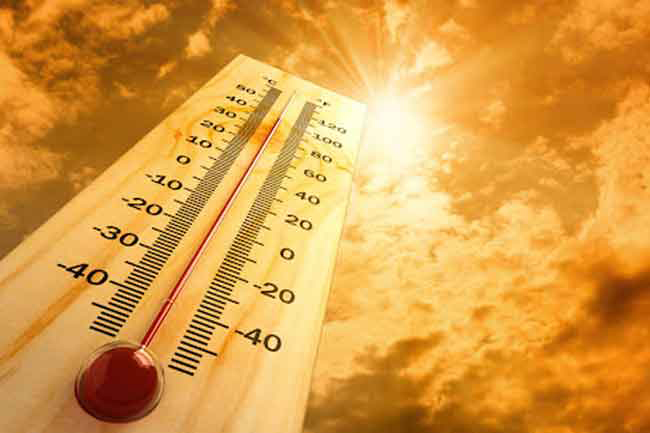
Sri Lanka is set to experience continued hot weather conditions until May, the Department of Meteorology has warned.
Additional Director General of Meteorology Ajith Wijemanna said the current heatwave is expected to ease only slightly once the southwest monsoon sets in toward the latter part of May.
Wijemanna explained that the island is currently in the first inter-monsoon period, characterised by low wind speeds and shifting wind directions, which contribute to rising temperatures. Reduced cloud cover and the sun’s direct position over the country are causing increased heating of land and sea, generating heat waves and warmer atmospheric conditions.
He cautioned that the hottest period of the day will be between 11:00 a.m. and 4:00 p.m., urging the public to limit outdoor activities during these hours.
Authorities also advised drinking plenty of water, wearing light-colored clothing, and avoiding prolonged exposure to direct sunlight, particularly for children and the elderly.The Meteorology Department further noted that rainfall may remain limited in the coming months, with drier conditions possible due to climate variability.

National Namal Uyana Declared a ‘National Heritage of Sri Lanka’

Philippine transport strikers say Marcos Jr failing to control oil prices

One ant for $220: the new frontier of wildlife trafficking

Three Lebanese journalists killed in Israeli strike, say broadcasters

Showers will occur at a few places in the Sabaragamuwa province and in Colombo, Kaluthara, Galle, and Matara districts after 2.00 pm

War-linked power crunch pushes Lanka to four-day week

‘Dates have the highest sugar content to fight Coronavirus’

Sunday Island 27 December – Headlines

#SundayIsland 17th December – Headlines

Sunday Island – 28th March

Sunday Island Headlines – 21 March

Sunday Island – 21st February – Headlines
-

 News5 days ago
Senior citizens above 70 years to receive March allowances on Thursday (26)
-

 Features2 days ago
A World Order in Crisis: War, Power, and Resistance
-

 Features7 days ago
Trincomalee oil tank farm: An engineering marvel
-

 News3 days ago
Energy Minister indicted on corruption charges ahead of no-faith motion against him
-

 News4 days ago
US dodges question on AKD’s claim SL denied permission for military aircraft to land
-

 Features7 days ago
The scientist who was finally heard
-

 Business4 days ago
Dialog Unveils Dialog Play Mini with Netflix and Apple TV
-

 Sports3 days ago
SLC to hold EGM in April