
News
MOU with Australian Government funded Skills for Inclusive Growth Programme


The Tertiary and Vocational Education Commission (TVEC) has entered into an MOU with the Australian Government funded Skills for Inclusive Growth Programme (S4IG), managed by Palladium International Group to increase collaboration to strengthen skills development in tourism.S4IG is a skills development programme of the Department of Foreign Affairs and Trade (DFAT) implemented in Sri Lanka in accordance with the terms of a Subsidiary Agreement signed on 31 March 2022 between DFAT and the Sri Lankan State Ministry of Skills Development, Vocational Training, Research & Innovations.
Parties agreed on the national implementation of the landmark TVEC Reasonable Adjustment Circular, guidelines, and tools to increase accessibility and skill recognition for people with disabilities, as well as the delivery of a training module to TVEC assessors. In addition, it was agreed that an Inclusion Toolkit will be created for use in assessor trainings and assessments in selected occupations.Data from the National Census of 2012 indicates a disability prevalence rate of 8.7%, with only 45% of youth with disabilities aged 15-19 years old attending upper secondary (grades 10 and 11) and collegiate (grades 12 and 13) levels. As a result, this segment of the population remains largely excluded from the labour market; 71% of adults with disability being economically inactive. The TVET system offers a solution to address the higher unemployment rate and low level of education among people with disabilities.
While historically people with disabilities are mainly enrolled in separate schools for education and vocational training, the recent policies issued by TVEC explicitly promotes training of persons with disabilities within mainstream vocational training institutes and support the transformation and incorporation of disability specific TVET programmes into NVQ framework. While enrolment of persons with disabilities in NVQ training courses remains so far limited, the circular aims to specifically remove assessment related barriers people with disabilities may face in the TVET system. This cooperation will support TVEC who is leading system changes to improve participation rates and ensuring all Sri Lankans are getting access to quality vocational training and access to employment.
TVEC will now enable the accreditation of S4IG-developed training courses/modules developed in collaboration with the tourism industry, government, and private hospitality-related training institutes. This will support TVEC to create International Standard curricula.The MOU formalizes the recognition of prior learning (RPL) and upskilling of existing personnel in the hospitality sector to enhance the skills of chefs and kitchen operations staff and enables work-based and online assessment tools developed for the micro, small, and medium enterprises to be scaled out across Sri Lanka. The TVEC website will now incorporate online flexible learning opportunities in the tourist and hospitality industries.S4IG will support TVEC in creating tools for all district coordination committees to identify skills gaps and eliminate local skill mismatches to produce the needed skills for local economic development. This planning tool kit will strengthen TVEC leadership in guiding training provision that is responsive to local employment opportunities and stimulate inclusive economic growth.


On the apparent northward relative motion of the sun, it is going to be directly over the latitudes of Sri Lanka from 05th to 15th of April in this year.
The nearest areas of Sri Lanka over which the sun is overhead today (13th) are Pesalai, Mankulam and Nedunkerny about 12:11 noon.
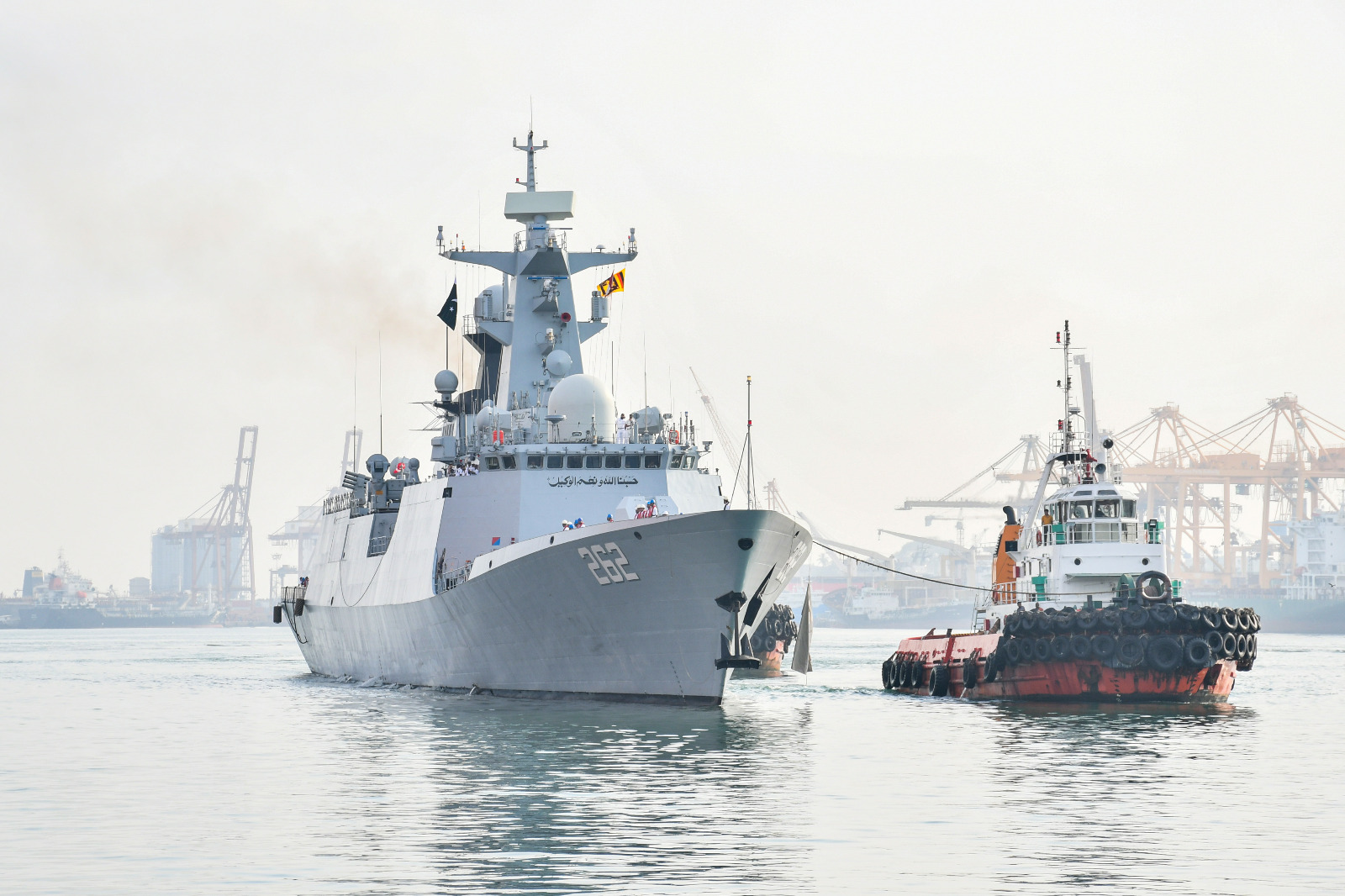
The Pakistan Navy Ship (PNS) TAIMUR and ASLAT arrived at the Port of Colombo on a goodwill visit on 12 Apr 26.
The visiting ships were welcomed by the Sri Lanka Navy in
compliance with naval traditions.
The duo of ships is commanded by Captain NIAMAT SAEED KHAN (PNS TAIMUR) and Captain NADIR MATEEN AFRIDI (PNS ASLAT).
Meanwhile, the ships are expected to conduct a Bilateral Naval Exercise LION STAR V with the Sri Lanka Navy in Colombo seas.
Latest News
Heat index likely to increase up to ‘Caution level’ at some places in the Northern, North-central, North-western, Western, Sabaragamuwa, Southern and Eastern provinces and Monaragala district


Warm Weather Advisory
Issued by the Natural Hazards Early Warning Centre at 3.30 p.m. on 11 April 2026, valid for 12 April 2026
The Heat index, the temperature felt on the human body is likely to increase up to ‘Caution level’ at some places in the Northern, North-central, North-western, Western, Sabaragamuwa, Southern and Eastern provinces and Monaragala district.
The Heat Index Forecast is calculated by using relative humidity and maximum temperature and this is the condition that is felt on your body. This is not the forecast of maximum temperature. It is generated by the Department of Meteorology for the next day period and prepared by using global numerical weather prediction model data.

Effect of the heat index on human body is mentioned in the above table and it is prepared on the advice of the Ministry of Health and Indigenous Medical Services.
ACTION REQUIRED
Job sites: Stay hydrated and takes breaks in the shade as often as possible.
Indoors: Check up on the elderly and the sick.
Vehicles: Never leave children unattended.
Outdoors: Limit strenuous outdoor activities, find shade and stay hydrated.
Dress: Wear lightweight and white or light-colored clothing.
Note: In addition, please refer to advisories issued by the Disaster Preparedness & Response Division, Ministry of Health in this regard as well. For further clarifications please contact 011-7446491.

Sun directly overhead Pesalai, Mankulam and Nedunkerny about 12:11 noon

PNS TAIMUR & ASLAT arrive in Colombo

Sanju Samson and Jamie Overton deliver first points for Chennai Super Kings

Arya, Prabhsimran and Shreyas help Punjab Kings ace another 200-plus chase

Beauty of Sri Lanka in focus: Global showcase blends art, diplomacy and conservation

Showers expected in the Western, Sabaragamuwa, Central, Southern, North-western and Uva provinces and in Ampara, Batticaloa and Polonnaruwa districts after 1.00 p.m.

‘Dates have the highest sugar content to fight Coronavirus’

Sunday Island 27 December – Headlines

#SundayIsland 17th December – Headlines

Sunday Island – 28th March

Sunday Island Headlines – 21 March

Sunday Island – 21st February – Headlines
-

 News6 days ago
Lankan-origin actress Subashini found dead in India
-

 News4 days ago
AG: Coal procurement full of irregularities
-

 News1 day ago
CEB orders temporary shutdown of large rooftop solar systems
-

 Business3 days ago
Israeli attack on Lebanon triggers local stock market volatility
-

 Business4 days ago
Hayleys Mobility introduces Premium OMODA C9 PHEV
-

 Business3 days ago
HNB Assurance marks 25 years with strategic transformation to ‘HNB Life’
-

 News6 days ago
UN Regional Director launches SL’s first Country Gender Equality Profile during official visit
-

 Sports4 days ago
DS to face St. Anthony’s in ‘Bridges of Brotherhood’ cricket encounter