
News
Morbid musings of an octogenarian


by Vijaya Chandrasoma
When most human beings pass the Best By date, when they overstay their welcome on this planet, when their miserable lives, with all the aches, pains and near-unbearable conditions are kept tolerable with the miracles of modern medications, they generally fantasize about the lives they have led.
We have all heard of the old theory that, at the moment of your death, your whole life flashes before your eyes. Many of us cynical non-believers have dismissed this theory as just another fantasy, like all those creations of imagination surrounding near and after death experiences. But I was surprised the other day while reading an article on a paper called “Time, Story, and Wisdom: Emerging Themes in Narrative Gerontology”, published in 2006, by William Randall and Gary Kenyon, which gives a fresh insight into “the inside” of aging. A central perception that human beings are “narrative beings”.
This omnipresent “narratization”, even post mortem, was discovered when an 87-year-old epileptic was rushed to an emergency room after a fall in 2016, bleeding in his skull. During an EEG (Electroencephalogram), the man had a heart attack and died. “What happened next is what’s eye-popping. The scan found that the man’s brain seemed to replay memories in the 30 seconds before and after his heart stopped beating”.
Some scientists believe that the brain might continue to be subliminally active for some time – even up to seven minutes – after death, which may be the time when you relive your memories, and find a way to bid a final farewell to the world you knew and to those you loved – and perhaps even give a final middle finger to those you hated. “Or maybe it’s a process of the brain rewinding itself, revisiting the information it has accumulated in a lifetime”.
The study concludes with the importance of creating a unifying narrative of your existence, as “it may be the last thing we do when we’re alive – and even the first thing we do after we are dead”.
At my age, I tend to read up on such morbid studies, knowing full well that my Best By time is long past. In fact, I was kept alive by the aforementioned miracles of modern medication, and more importantly, by filial intervention, when I should have cashed in my chips a couple of years ago. I have since forgiven my son for prolonging this miserable existence with his constant care and attention. I believe I reached rock bottom of humiliation the other day when I visited the clinic at the local hospital. The clinic was, as usual, full, standing room only. A kindly old lady, 70-years-old if a day, grey haired, toothless, saw me, got up and said, “Aiyo, Uncle, you look very tired, please take my seat”! it sounded infinitely more pathetic in Sinhala.
Instead of such suffering such constant and shameful blows to my ancient but still vibrant ego, I could have been enjoying at least one of those glorious after-death experiences offered by the many great religions, be it savoring a single malt manna in a variety of heavens in the skies, being reborn as a scion of one of the great modern political dynasties like the Trumps or the Rajapaksas – anywhere but the paradise offering a “reward” of 72 virgins; that is my idea of the other place.
I am, of course, assuming that I will be duly rewarded for the exemplary life I have led in my long existence on this planet. This version may be questioned, even laughed at in disbelief by many, but I am sticking to my story. As I said, many of those who know the real truth are safely dead. Dead men – and women – tell no tales.
As recommended by the above study, I have been putting some order and embellishments into my past experiences, so that when my time comes and my life flashes before my eyes, and in the seven minutes after I die, they will flash in some organized structure; in a manner that is entirely my version and complimentary to me. After all, it is my brain, and no one else should have any control of my version of my past in the last moments of my life.
I had a pretty normal childhood, being fortunate enough to be born into an elite Sri Lankan family. My father was a Civil Servant, and after he completed his stint of duties in the outstations and qualified for an administrative job in Colombo, we settled in the environs of Royal College, where my mother owned a house. My father was an old boy of many Colombo schools (Wesley, Nalanda and Ananda) after his excellent primary education in the village school in Hikkaduwa.
He would have preferred that his sons attend his final alma mater, Ananda College, where he had been an outstanding student. However my mother, ever the snob, gave the excuse of proximity and persuaded my father to send us to Royal. As usual, she got her way, but with the grace that made my father believe that the decision was his, a subtly domineering quality that many Sri Lankan ladies possess.
I loved my years at Royal, enjoying wisdom of its secular system of education and the dedication of an array of brilliant teachers who equipped us with an academic background in the English medium that was second to none – globally.
In fact, I would like to share a story about my younger brother to prove this point. His schooling at Royal was interrupted at a very young age, when my father was on assignment with his employers in London. He spent a few months in a primary school in Highgate, North London. When it was time for him to return to Ceylon (as our nation was then known), the headmaster of the Highgate school visited our home, and tried to prevail upon my father to let him continue his studies in England, rather than return to the primitive backwoods of the colonies. He said my brother had showed great academic promise in the few months he spent in the Highgate school, and his potential would be best served if he continued his academic career in England.
I guess his idea of a school in Ceylon was a mud hut with students seated on the ground and the teachers chattering native gibberish. My father politely refused this kind offer with a smile of sardonic condescension, the expression he constantly wore throughout his long life, the expression that is permanently etched in my memory.
My brother returned to Ceylon and had an outstanding academic career at Royal and at the Colombo Medical College. After teaching Pathology at the Medical College for a couple of years, he went on to emigrate to the United States of America, where he has been, for decades, the Professor of the Faculty of Medical Pathology at the University of Southern California, one of the finest private universities in the nation, if not the world. All this was the “icing on the cake, baked at home” at Royal, as referred to by the late, great Lakshman Kadirgamar.
My brother was also a non-smoker, teetotaler, never gambled in his life (except, on one occasion, when he, a lifelong Republican, backed Mitt Romney for the US presidency in 2012, to defeat incumbent President Barack Obama, against my advice) and married the first attractive woman he met. My father used to introduce him to his friends as the black sheep of the family.
My career at Royal was above average at best, though I had my moments. I was reasonably proficient in schoolwork, and went through a truncated academic career with some success. I tried my hand at every sport available in College, except for Rugby, because I have a terrible fear of physical abuse. I showed more enthusiasm than skill in the other sports I played, cricket, tennis, rowing, athletics. I think the only way to describe my prowess in sports was that I was mediocre in my versatility – or perhaps a better description would be that I was versatile in my mediocrity.
Apart from a world-class education that Royal provided, I made many lifelong friends, many of whom remain my closest friends today. A vast majority of my schoolmates have sadly left this mortal coil, hopefully to greener pastures. Many in my group made outstanding achievements in politics, commerce, academia and other careers of their choosing, which added to the already distinguished reputation of the Old School.
I was only a part of this illustrious group by association, having achieved no distinctions of my own in any sphere. However, I hope to out-achieve them by outliving them all – out of the 100 boys who gained admittance to Royal in 1952, I believe only about 20 are still alive. The odds are getting better by the month. I’m joking, of course. I wish all my schoolmates long, happy and healthy lives. Just not longer, happier and healthier than mine.
My school career at Royal was cut short, when my father accepted the aforementioned assignment with his employers in England. Space and discretion prevent me from listing the extraordinary means – the demon drink, slow horses and fast women would be the favored trifecta – which prevented me from reaching my full potential in every aspect of my life, be it my university, marriage or career. Suffice to say that I couldn’t have disappointed my parents, and myself, more.
So I will conclude this rather narcissistic narrative, which is the one I hope will flash before my eyes when the time comes, with the consolation of an ancient adage of the sport which has given me great pleasure over the years – horse racing:
“The test of a true thoroughbred is not to run fast, but to transmit the genes”. I may not have run fast, and may have run in hedonistic circles, but I have successfully transmitted my genes, in no small measure. Dumb luck and coincidence, maybe, but isn’t that what life really is all about?

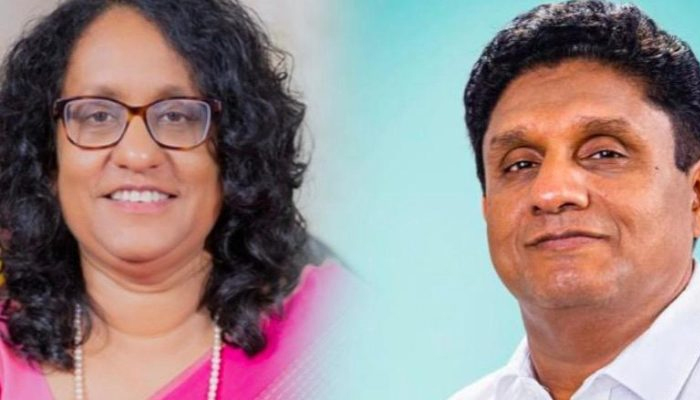
Vicious attacks disguised as criticism of education reforms, says PM
Opposition Leader Sajith Premadasa has said Sri Lanka’s education system has fallen into a “tragic condition,” warning that the crisis extends far beyond the Grade 6 syllabus fiasco.Premadasa made these remarks at the Opposition Leader’s Office during the establishment of the “Common Platform to Protect Free Education.”
Premadasa said that while public attention was on the Grade 6 syllabus issue, the problems facing the education sector were far deeper and affected the entire education system, including schools, universities and tertiary education institutions.
The Opposition Leader noted that the current crisis had not manifested itself overnight due to result of recent decisions; instead, it had developed over time due to reforms being introduced without proper consultation, dialogue or a participatory process involving stakeholders.
The Opposition Leader stressed the urgent need for setting political agendas aside and making a concerted effort to introduce meaningful educaton reforms. He said the rights of more than 4.1 million schoolchildren must be protected.
Premadasa said Sri Lanka must ensure that education was free and of high quality, and warned that failure to do so would have long-term consequences for the country’s future.
Taking part in a televised interview, PM Harini Amarasuriya responded to criticism of the government’s proposed education reforms, especially recent criticism on the rainbow colours on the covers of modules.
This is not constructive in any way. This is vile. This is really vicious. This is the politics the people of this country rejected in three elections in 2024 and 2025,” she said.
She added that the government was open to constructive criticism.
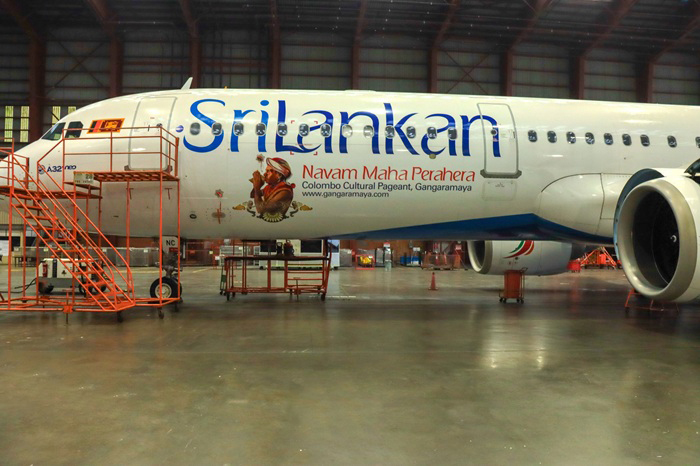
SriLankan Airlines has unveiled a landmark international branding initiative to promote the Colombo Nawam Maha Perahera 2026, one of the country’s most distinguished religious and cultural festivals. The initiative is showcased on an Airbus A320neo, transforming the aircraft into a flying ambassador of Sri Lanka’s living heritage.
Through a specially designed aircraft livery, SriLankan Airlines now carries the prestige, spirituality, and cultural identity of the Nawam Maha Perahera across its international route network. This initiative positions the Perahera not only as a sacred Buddhist procession, but also as a major cultural and tourism attraction, highlighting
Colombo as a destination of heritage, harmony, and tradition.
Organised under the auspices of the Gangaramaya Temple, the Nawam Maha Perahera is internationally recognised for its historical significance, spiritual depth, and ceremonial grandeur. The concept for this international branding initiative was initiated by Venerable Dr. Kirinde Assaji Thero, who recognised aviation as a powerful platform for cultural diplomacy and global storytelling.
The successful realisation of this initiative has been made possible through the collective efforts of the Nawam Maha Perahera Committee, devoted devotees and supporters, and the institutional collaboration of the Prime Minister’s Office and the Ministry of Aviation, together with the full cooperation of SriLankan Airlines. The entire international aircraft branding initiative has been fully funded by the Gangaramaya Temple, together with the Nawam Maha Perahera Committee, reflecting the commitment of the Temple and its devotees to preserving and promoting Sri Lanka’s religious and cultural heritage on a global stage.
SriLankan Airlines extended its support across all levels of the organisation. Special appreciation is extended to the Chairman, Board of Directors, senior management, engineering and technical teams, designers, operational staff, and frontline employees, whose combined expertise and dedication transformed this cultural vision into reality.
Recently, Venerable Dr. Kirinde Assaji Thero, along with members of the Nawam Maha Perahera Committee, visited the SriLankan Airlines engineering and operations premises in Katunayake, accompanied by resident young Buddhist monks from the Gangaramaya Temple. During the visit, the delegation observed the progress of the aircraft branding work and offered blessings to the SriLankan Airlines team, expressing appreciation for their professionalism and commitment.
As the Airbus A320neo travels from city to city and culture to culture, it carries with it the story of Gangaramaya Temple, the Nawam Maha Perahera, and Sri Lanka’s enduring cultural values—fostering international awareness and strengthening the country’s image as a destination of faith, heritage, and cultural pride.
This initiative stands as a strong example of how religion, culture, tourism, and national aviation can work together in unity to elevate Sri Lanka’s presence on the global stage in the lead-up to the Colombo Nawam Maha Perahera 2026.
Statements have been recorded from six individuals, including senior officials of the National Institute of Education (NIE), in connection with the inclusion of a link to a pornographic website in a Grade Six English learning module, according to police headquarters sources.
Those questioned include module writers attached to the NIE’s Academic Affairs Division, as well as officials involved in the review, editing and proofreading of the material.
Meanwhile, an Education Ministry official said a separate preliminary inquiry into the NIE’s module development process was being carried out by a committee chaired by Ranjith Ariyaratne. Reports from both inquiries are expected to be submitted next week.
Deputy Minister of Education Dr. Madhura Seneviratne told the media that measures were underway to strengthen the module preparation process at the NIE, with guidance from a panel of subject experts. He said extensive discussions had been held with senior NIE officials on January 16, and stressed that appropriate disciplinary action would be taken based on the findings of the investigation reports.
Following the disclosure of the incident, NIE Director General Prof. Manjula Vidanapathirana resigned from her post to facilitate the investigations. However, sources said no statement had been recorded from her, as her role was limited to administrative responsibilities.
By Norman Palihawadane and Chaminda Silva ✍️

Dry weather will prevail in most parts of the island

Premadasa: Grade 6 syllabus fiasco signals deeper issues

Sri Lankan Airlines launches Intl branding initiative for Colombo Nawam Maha Perahera 2026

Reports on Grade 6 module adult website link due next week

Scientists can teach Crocodiles not to eat invasive toads: Dr. Ruchira Somaweera

Constitutional Council declines RTI request on AG nomination

‘Dates have the highest sugar content to fight Coronavirus’

Sunday Island 27 December – Headlines

#SundayIsland 17th December – Headlines

Sunday Island – 28th March

Sunday Island Headlines – 21 March

Sunday Island – 21st February – Headlines
-
 News1 day ago
UNDP’s assessment confirms widespread economic fallout from Cyclone Ditwah
-

 Business3 days ago
Koaloo.Fi and Stredge forge strategic partnership to offer businesses sustainable supply chain solutions
-

 Editorial1 day ago
Crime and cops
-

 Editorial2 days ago
The Chakka Clash
-
 Business3 days ago
SLT MOBITEL and Fintelex empower farmers with the launch of Yaya Agro App
-
 Features2 days ago
Online work compatibility of education tablets
-
 Business3 days ago
Hayleys Mobility unveils Premium Delivery Centre
-

 News7 days ago
Level I landslide early warnings issued to the Districts of Badulla, Kandy, Matale and Nuwara-Eliya extended