
News
Monks urge ban on ‘commercial programmes’ on Poson Day

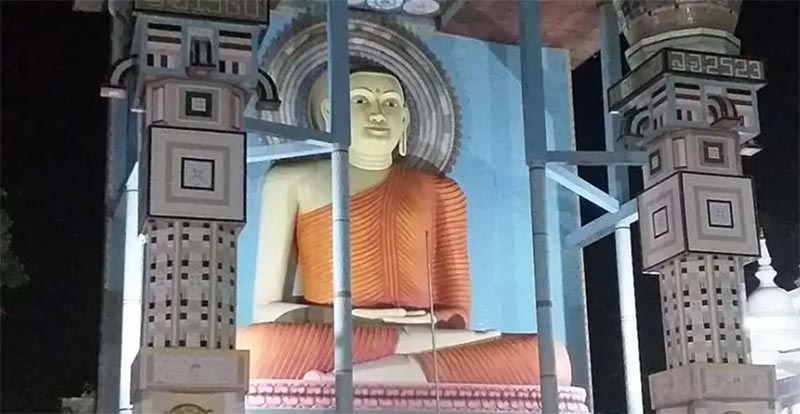
Street shows meant for profit-making and entertainment overshadow the sacred meaning of the festival, they say
Buddhist monks have urged the government to ban commercial entertainment programmes, which violate Buddhist principles, during an annual festival commemorating the arrival of Buddhism on the island nation in the Indian Ocean centuries ago, according ot a report published by UCAN.
The monks said street dancing, folk performances, musical shows, comic acts, devil dances and haunted house exhibitions contradict Buddhist values. They lack religious significance and overshadow the sacred meaning of Poson Day.
The festival is celebrated on the full moon day of Poson — the seventh month in the Sinhalese calendar — which falls on June 10 this year. It marks the historic event in the 3rd century BC when Buddhist missionary monk Mahinda met King Devanampiyatissa at Mihintale, near Anuradhapura, and delivered his first sermon.
“We urge [the government] that this sacred day be recognised as one of the most important for Sri Lankan Buddhists,” said Ven. Thumbulle Seelakkanda Thera, Chairman of the All Ceylon Shasanarakshaka Bala Mandalaya, who addressed a press conference, with fellow monks, in Colombo, on June 4.
The monks sought a ban on street entertainment programmes and also appealed to people against organising them during Poson Week, celebrated in towns and villages across the country.
“Such activities should not take place. It is deeply regrettable if they do,” the chief monk added.
The monks said the event is meant for spiritual reflection, compassion, and moral discipline.
Traditionally, the Buddhist faithful observe sil (stressing moral conduct or virtue), visit temples, meditate, listen to sermons, offer alms, organise free food and flower stalls, light lanterns, and join pilgrimages, honouring the arrival of Buddhism with devotion and reflection. Many lay groups are also worried that sacred observances are being overshadowed by loud, secular performances and events.
Nileesha Chulani, a member of a Buddhist lay group and Sunday school teacher, said in the initial years, public displays depicting hell were meant to illustrate the consequences of sin, often incorporating artistic elements and offering some form of religious instruction.
“Today, these displays have turned commercial, driven by profits rather than spiritual purpose,” the 32-year-old Chulani told UCA News.
R.M.P. Rathnayake, the Commissioner for Buddhist affairs, said the events are granted permission as per the rules provided in government circulars. The organisers need approval from the police for the use of loudspeakers, etc., and pay entertainment tax.
“The use of Buddhist flags, particularly at free food stalls, has now been prohibited,” he said.
More than 70 percent of Sri Lanka’s 22 million people are followers of Buddhism.
For the past two years, the festivities were funded by the people as Buddhist monks turned down the Sri Lankan government’s offer for financial support, as the nation was passing through a severe foreign exchange crisis.
The monks walked the streets to collect funds for illuminating and providing facilities for the two million visitors at the Mihintale Rajamaha Viharaya, a historic landmark in the Buddhist-majority nation.
This year, the National Poson Festival will be state-sponsored, which the monks said is a relief for them.The festival is second only in importance to Vesak, which commemorates the birth, enlightenment, and passing of Buddha, who founded the contemplative religion of Buddhism in India.


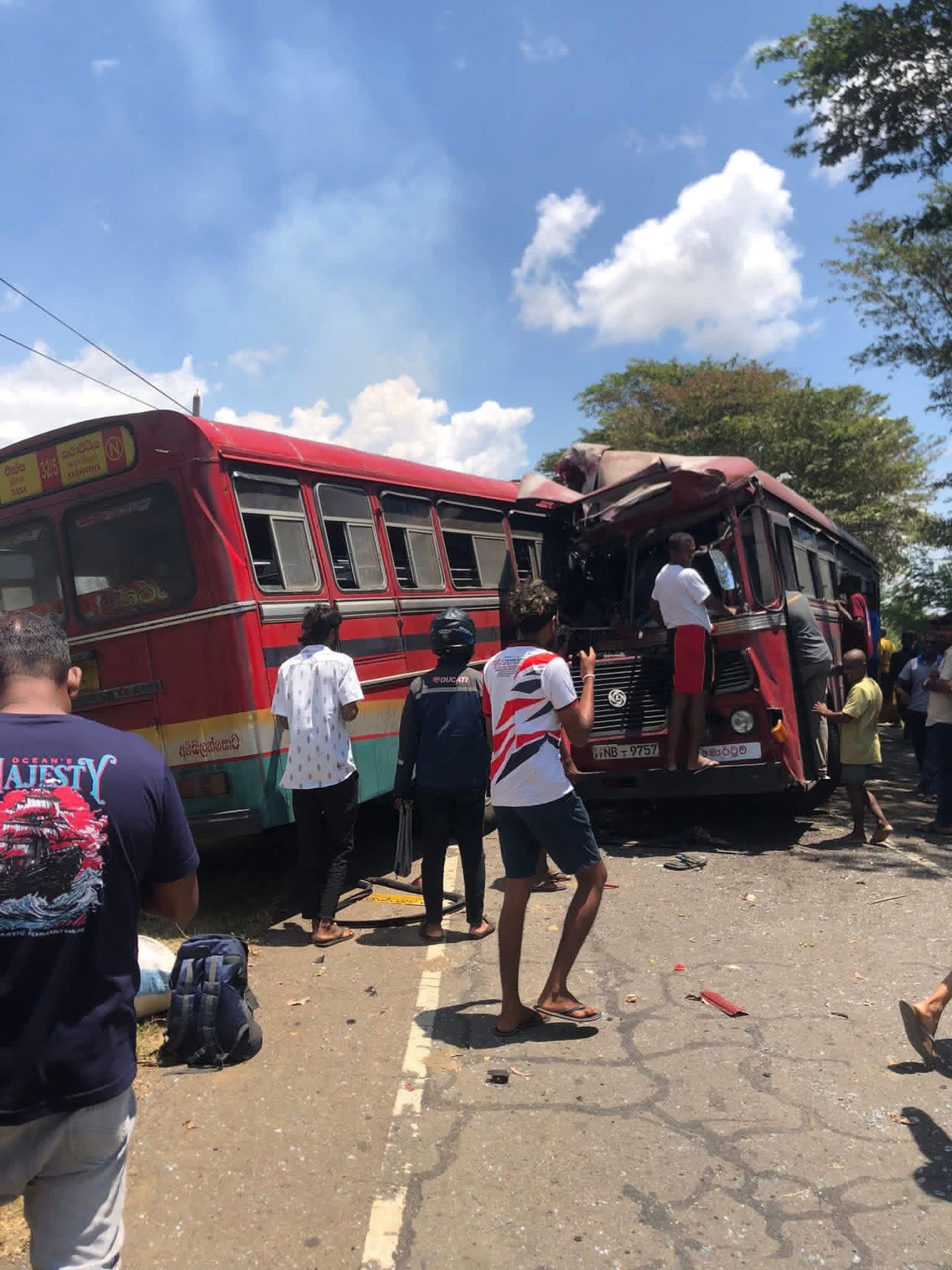
Four persons including a Budhist monk died and 32 others were injured when two SLTB buses collided head on at Weerawila at arond 12 noon today (18).
Three of the deceased were women. 22 of the injured were admitted to the Hambanthota Hospital while 10 others have been admitted to the Debarawewa hospital.

The Japan Maritime Self-Defence Force (JMSDF) ship OONAMI which arrived at the port of Colombo on a goodwill and replenishment visit on 09 Mar 26 departed on 11 March.
The departing ship was given a formal farewell from the Sri Lanka Navy, in keeping with naval traditions at the Port of Colombo.
The 150.5m long JMSDF OONAMI is commanded by Commander IIO Hiromasa.
During the stay in the island, crew members of the ship explored some tourist attractions in Colombo. The itinerary also included a coastal clean-up drive participated by naval personnel of both countries and engagements with the Sri Lanka Navy, designed to strengthen the bonds of friendship and cooperation.

The Central Cultural Fund established under the provisions of the Central Cultural Fund Act No. 57 of 1980 is responsible for development of cultural and religious monuments in Sri Lanka, settling the expenditure borne for development, renovation and conservation of local and foreign cultural monuments, awarding financial donations for artisans as well as awarding those who served the nation in the fields of culture and religious sectors.
The said act has been passed in Parliament 45 years back and, the requirement to revise the provisions of the act according to the contemporary requirements haa been recognized.
Accordingly, the Cabinet of Ministers granted their policy
approval to amend the said act, considering the resolution furnished by the Minister of Buddhasashana, Religious and Cultural Affairs.

SriLankan Airlines Alerts Customers to Social Media Scams

Four dead 32 injured in head on collision at Weerawila

JMSDF ship OONAMI concludes goodwill visit

Cabinet nod to amend Central Cultural Fund Act No. 57 of 1980
’National Namal Uyana’ declared as a National Heritage
Establishment of Supervisory Committees for restoring economic activities.

‘Dates have the highest sugar content to fight Coronavirus’

Sunday Island 27 December – Headlines

#SundayIsland 17th December – Headlines

Sunday Island – 28th March

Sunday Island Headlines – 21 March

Sunday Island – 21st February – Headlines
-

 News7 days ago
Historic address by BASL President at the Supreme Court of India
-

 Sports7 days ago
The 147th Royal–Thomian and 175 Years of the School by the Sea
-

 Business3 days ago
Browns EV launches fast-charging BAW E7 Pro at Rs. 5.8 million
-

 Life style4 days ago
From culture to empowerment: Indonesia’s vision for Sri Lanka
-
 News7 days ago
Power sector reforms jolted by 40% pay hike demand
-

 Latest News3 days ago
QR code system will be implemented for fuel with effect from 06.00 a.m. today (15th)
-
 Opinion6 days ago
M. D. Banda: Memories of Appachchi – II
-

 News5 days ago
Crypto loopholes funnel Lankan funds abroad