
News
Ministry of Education has introduced a five-pillar plan for the proposed education reforms – Prime Minister

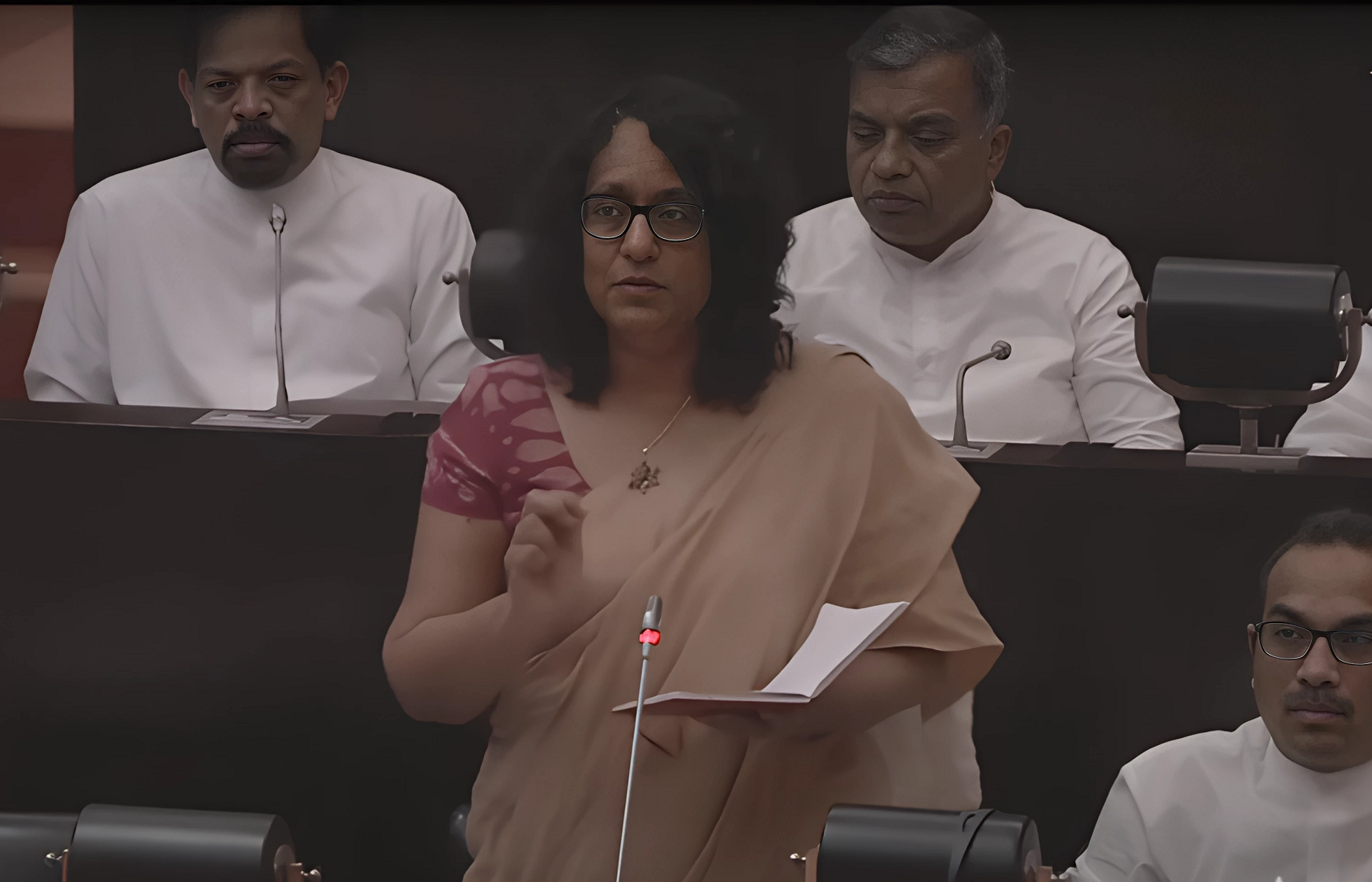
Prime Minister Dr. Harini Amarasuriya stated that the 2025 budget of the present government has allocated the highest amount ever in the history for education and the Ministry of Education has introduced a five-pillar plan for the proposed education reforms.
The Prime Minister Dr. Harini Amarasuriya made these remarks in Parliament on March 10 during the budget debate on expenditure allocation for the Ministry of Education.
“Today, we are represented by fourteen members who entered Parliament through the university system. However, I would like to take a moment in remembering a close colleague of ours, Dr. Janaki Jayawardena, who tragically passed away in a road accident just a few days ago. While my primary reason for mentioning Dr. Jayawardena at the beginning of this speech is to express my deepest condolences, I would take this moment to appreciate her exemplary figure as a model of dedication, integrity, and service that we can all look up to as Janaki embodied that ideal. Her students had immense love and respect for her. Beyond that, she was an exceptional colleague who worked dearly and inspired us greatly. Losing such university academics is a significant loss to the nation. That is why the speech is started in the memory of her.
The protest led by the Federation of University Teachers’ Associations during 2011-2012 marked a significance turning point. It was able to build the confident that the leadership can be initiated in societal movement beyond addressing the professional demands.
The protest which was held during 2011-2012 was not solely a protest held by the trade unions but it also concerned on addressing education. This protest was collectively supported by both the trade unions and the community who felt deep empathy towards the cause of education and it brought together other trade unions, teachers’ unions, civil society, and the concerned citizens and who resonated out a valuable message that together we can advocate and protest for achieving a common cause. Dr. Janaki Jayawardena was one of the key figures who led this movement. She led this movement silently, without seeking the spotlight. However, the struggle would not have been successful without her. You may recall that the five-day march from Galle to Colombo was launched during this movement. University academics participated in wearing black and orange T-shirts marked with ’6%’. We did not even have enough funds to print these T-shirts. Dr. Janaki Jayawardena sold a piece of her land to find funds for that purpose. That was the kind of person she was, someone who is willing to sacrifice anything for what she believed in, someone who was unafraid to lead. Her absence is deeply felt at a time like this. We need such leads.
What the universities and the society is needed at time like this is an exceptional role who see beyond their professional identities, who take responsibility for their students, their field, and their community, and who provide leadership and commitment. Her absence greatly grieved us and I extend my deepest condolence to her family, students, colleagues, and the many friends who stood by her. The primary reason for mentioning Dr. Jayawardena at the beginning of this speech was not to grieve by her absence but to commemorate her exemplary figure as a model of dedication.
The highest amount ever allocated for education in the history has been set out in this year’s budget by the present government. A total of LKR 619 billion has been allocated for the next eight months of period with the allocation of LKR 21 billion specifically designated for capital expenditure and it marks the highest amount allocated for educational infrastructure in recent history.
A clear system for utilizing these funds is also presented. Without properly reforms for education, the societal transformation we envision cannot be achieved. Only through education reform we can bring about the social, political, and economic transformations. Therefore, the 2025 budget has been presented with careful consideration along with a strategic planning for education reforms.
The education reforms are expected to be achieved through five key pillars by the Ministry of Education. The first pillar is centered on the modernization of curriculum. It is expected to intrude a new curriculum that involves updating the existing curricula and designing an education system that nurtures the human resources that are needed for social transformation, and LKR 250 million has been allocated for this purpose. Further, an additional LKR 160 million has been allocated for related projects.
Educational reforms have been discussed in the past, but despite various efforts, they have not been effectively implemented for years. The primary reason addresses that the changes to curriculum alone is not enough. That is why we have identified five key pillars in our education reforms. The curriculum is just one of them, and apart from that the implementation of necessary human resources for the educational reforms has been also focused on the 2025 budget. It is focused on improving the capacity of teachers, principals, educationists, and education administrators and it is addressed by the second pillar. The budget has allocated an amount of LKR 1.64 billion which is the highest amount ever allocated in the history to develop the capacity and I am pleased that we have been able to do so.
The teachers are usually appointed to surpass the cadre of the teachers who are currently occupied in the teaching service or related fields, along with a special focus was drawn to the training teachers in training colleges and universities.
In reality, the current state of our national colleges of education is extremely concerning. I recently visited the colleges of education in Polonnaruwa and Jaffna. The students, who are expected to become teachers in the future, have no proper facilities. They lack proper accommodation, water, and even basic necessities. While we discuss smart classrooms in schools, the teachers who are supposed to conduct those lessons are learning on blackboards in underprivileged conditions. They lack electricity and essential infrastructure. That is why special attention was drawn on this matter. For years, infrastructure projects have been implemented in schools. Since 2016, under the “Nearest School is the Best School” program initiated by the previous government, many initiatives have been undertaken. However, even today, some of the unfinished and unsafe buildings are located in schools. Many schools have impressive gates, fences, and signboards, but once you went inside, the students do not have proper facilities. Some of the schools are not processed by clean drinking water including basic sanitation facilities. Therefore, an amount of LKR 11,000 billion has been allocated to complete these unfinished school projects, with a special focus on sanitation facilities.
Starting this year, we are committed to ensuring that no Sri Lankan child has to attend a school without proper sanitation facilities. We have also allocated LKR 11.126 billion through the line ministry and LKR 14.896 billion through provincial councils to address these issues in estate schools. It is addressed by the third pillar.
The fourth pillar is ensuring that students are receiving education as well as undergoing proper assessment. The responsibility for assessment lies with the Department of Examinations, which has faced significant challenges over the years. When I first entered Parliament, I inquired about the capital expenditure allocated to the Department of Examinations. It was significantly low. This year, we have allocated LKR 12.36 billion to strengthen the evaluation process and enhance capacity within the Department of Examinations.
The greatest challenge faced by the education system is the mental pressure that put on children due to the exam-centered approach. In order to overcome this, we must strengthen the institutions that are primarily responsible for evaluation.
According to the fifth pillar, education cannot be solely restricted to the responsibility of the Ministry, the children, the teachers, or the schools alone. It should be a transformation within society as a whole. A social discussion is essential in order to make this a reality. It is during times like this that I remember Dr. Janaki Jayawardena. Social activists are needed in establishing this discussion and the discussion has been already included in the roadmap of the government. Further, funds have been allocated specifically for the well-being of children.
Specifically I would like to remark on the higher education. We have established a top priority on the quality of higher education. Simply establishing universities is not enough; creating a university is not just about establishing a board. We have numerous examples of universities, faculties, and programs that were initiated primarily due to political reasons, with little regard on the quality of education. Moreover, the benefits for students or the impact on their education was never addressed. That is why we are giving special attention to improving the quality of higher education.
Similarly, the well-being of students is also a priority. Many young people have lost confidence in their education and future. This student community deserves to be treated with respect. While the student population has grown, yet the facilities they deserved have never been addressed. I was in Ampara yesterday and visited a local institution. I was truly shocked. This institution, which has made a significant contribution to the field of higher education since 1955, had students living under deplorable conditions. There are wires used as fences, no proper roofs, no lights, and rats everywhere. I was astonished when I saw the conditions under which these children are expected to cook and eat. They only have one meal a day, and it’s only in the evening that they get to eat. There is a farming facility, but I only saw two workers there. This is the institution that was established to develop human resources for the agricultural sector in South Asia in 1955. Yet, none of this has been addressed. Similarly, I visited the German Tech institution in Kilinochchi, where there are no hostels for the students. They use makeshift offices with toilets as classrooms. Without these basic facilities, how can students feel any sense of education, dignity, or pride? We have allocated LKR 36.841 million for higher education infrastructure. We are requesting all higher education institutions to prioritize providing the necessary facilities for students. We need to ensure that we understand how they are living, how they are eating, and how they are learning.
Allocations have been made for vocational education. We aim to transform vocational education into a modern, relevant field that aligns with the needs of today’s world. This will help us create a skilled workforce that meets the demands of the future labor market. By doing so, we will develop and create educational fields that provide value and skills for young people, offering them real career paths.
We urge everyone to look into this issue without any party or division. This is a crucial sector that needs to be addressed for the future of our country. Through this, we can shape our nation and our children to be fit for the world. It is not just about shaping minds, but about creating individuals with humanity, a refined and complete society. To achieve this, we must transform our education system. It must be achieved through the participation of humans. This transformation is something we are committed to bringing forward.
[Prime Minister’s Media Division]

Latest News
Level III landslide early warnings issued to the Districts of Kandy, Kegalle, Kurunegala and Matale extended

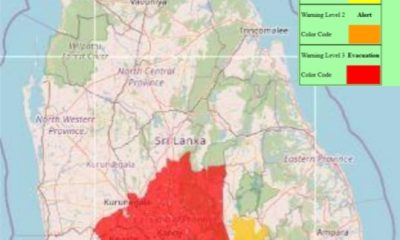
The landslide early warning center of the National Building Research Organisation [NBRO] has extended the Level III RED landslide early warnings issued to the Districts of Kandy, Kegalle, Kurunegala and Matale until 1600hrs on 11th December 2025.
Accordingly,
The LEVEL III RED landslide warnings issued to the the Divisional Secretaries Divisions and surrounding areas of Kundasale, Pasbage Korale, Medadumbara, Ganga Ihala Korale, Hatharaliyadda, Pathadumbara, Doluwa, Panvila, Gangawata Korale, Ududumbara, Akurana, Yatinuwara, Harispattuwa, Deltota, Thumpane, Poojapitiya, Udapalatha, Udunuwara, Minipe and Pathahewaheta in the Kandy district, Aranayaka, Yatiyanthota, Rambukkana, Bulathkohupitiya and Mawanella in the Kegalle district, Mallawapitiya, Mawathagama and Rideegama in the Kurunegala district, and Rattota, Laggala Pallegama, Ukuwela, Matale, Wilgamuwa, Pallepola, Naula, Yatawatta and Ambanganga Korale in the Matale district have been extended.
LEVEL II AMBER landslide early warnings have been issued to the Divisional Secretaries Divisions and surrounding areas of Uva Paranagama, Hali_Ela, Meegahakivula, Badulla, Kandeketiya, Bandarawela, Soranathota, Ella, Haputhale, Lunugala, Welimada, Haldummulla and Passara in the Badulla district, Warakapola, Galigamuwa, Kegalle, Dehiowita, Ruwanwella and Deraniyagala in the Kegalle district, Polgahawela and Alawwa in the Kurunegala district, Kothmale East, Walapane, Thalawakele, Nuwara Eliya, Kothmale West, Nildandahinna, Mathurata, Ambagamuwa Korale, Hanguranketha and Norwood in the Nuwara Eliya district. and Kolonna, Godakawela and Kahawaththa in the Ratnapura district.
LEVEL I YELLOW landslide early warnings have been issued to the Divisional Secretaries Divisions and surrounding areas of Divulapitiya, Attanagalla and Mirigama in the Gampaha district, Narammala in the Kurunegala district, and Kiriella, Eheliyagoda, Balangoda, Kaltota, Openayake, Nivithigala, Imbulpe, Ayagama, Kuruwita, Kalawana, Elapatha, Pelmadulla and Ratnapura in the Ratnapura district.
News
“We cannot allow flooding to become a part of the daily lives of the people in the Colombo District” – PM

Prime Minister Dr. Harini Amarasuriya stated that unauthorized constructions within the Colombo District, nor any form of residential developments that endanger the public carried out under the guise of development agenda will not be allowed.
The Prime Minister made these remarks while addressing the media at the conclusion of the Colombo District Disaster Management Committee meeting held on Tuesday [December 09] at the Colombo District Secretariat.
Addressing further, the Prime Minister stated:
“The Colombo District has become vulnerable to this extent due to the constructions carried out without any proper planning or understanding of regulations, along with personal and politically motivated decisions that have placed both the district and its people at risk.
Compared to the districts that suffered severe loss of life and property due to the recent cyclone, the damage to the Colombo District has been relatively lower. However, special intervention is being carried out together with the relevant institutions to manage the potential future flood risks in the district.
This matter was also given special attention during today’s District Disaster Management Committee meeting. We cannot allow the flooding to become a regular part of the lives of the people in Colombo. All relevant institutions will come together to put forward a common plan for flood control in the district.”
The Prime Minister further stated that discussions are already underway to provide sustainable solutions for the people living in high-risk areas within the Colombo District.
The discussion was attended by the Deputy Minister of Urban Development Eranga Gunasekara, Deputy Minister of Mass Media Kaushalya Ariyaratne, and Colombo District Members of Parliament Aruna Panagoda and Chandana Suriyarachchi.
[Prime Minister’s Media Division]
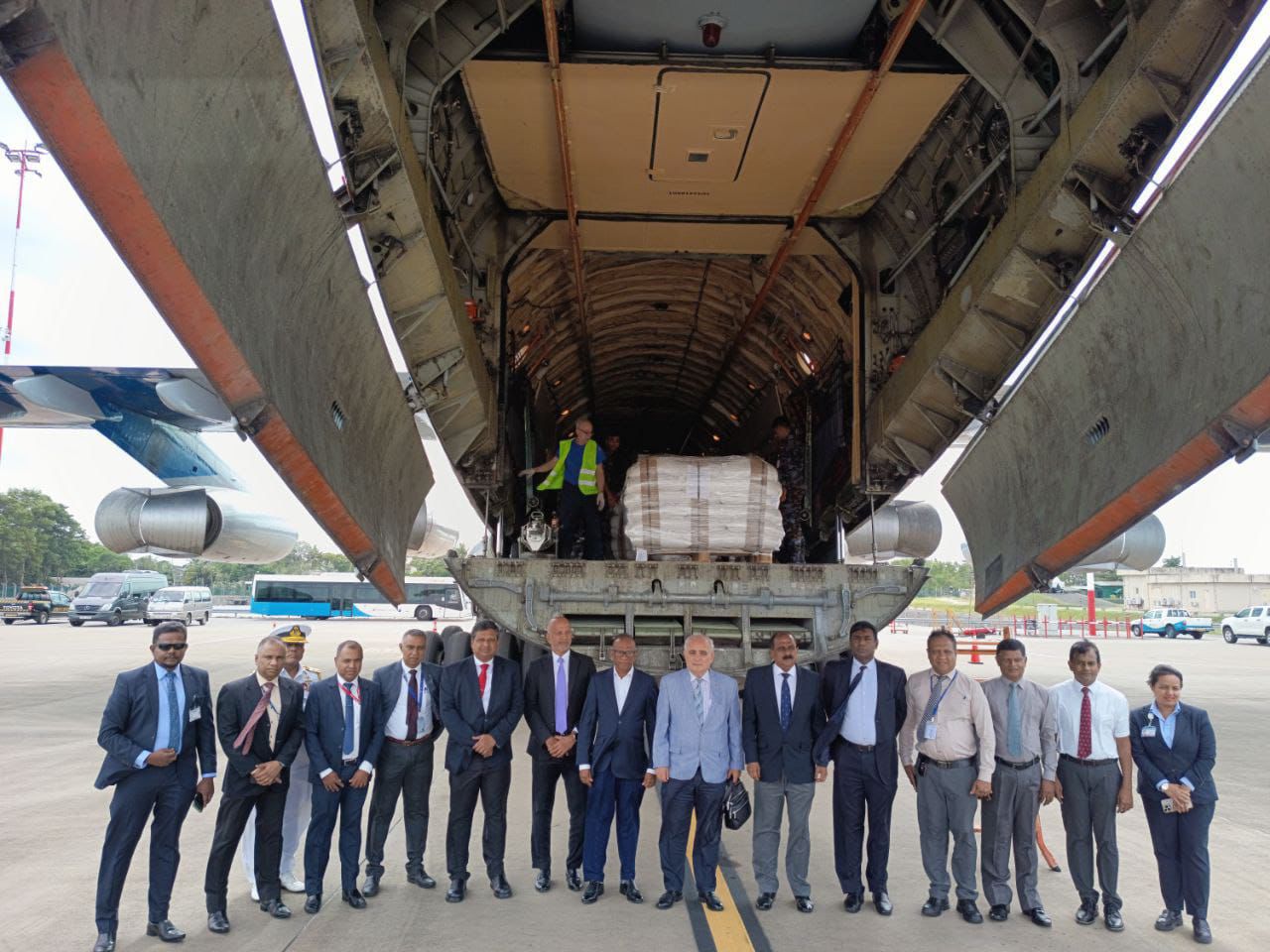
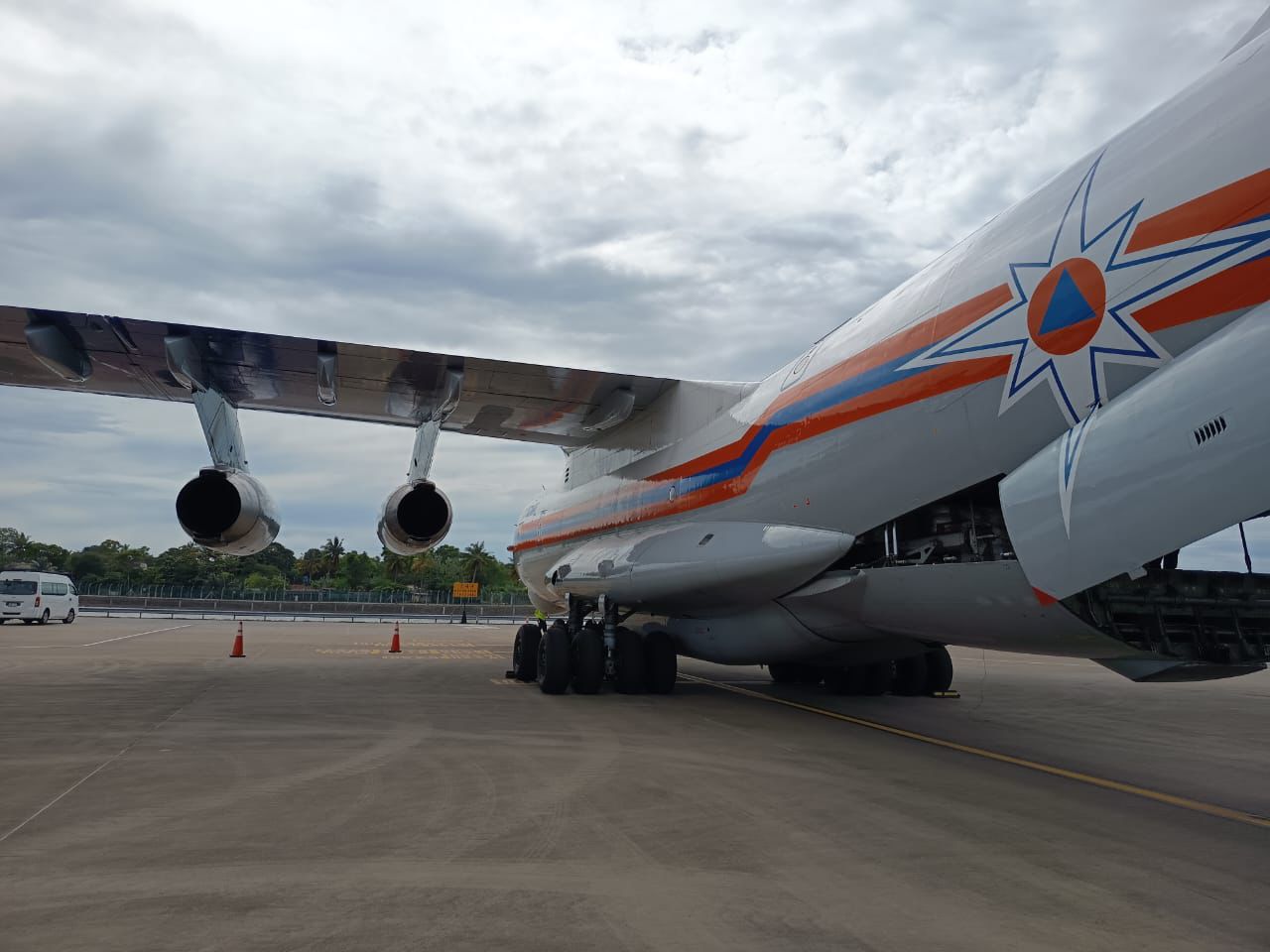
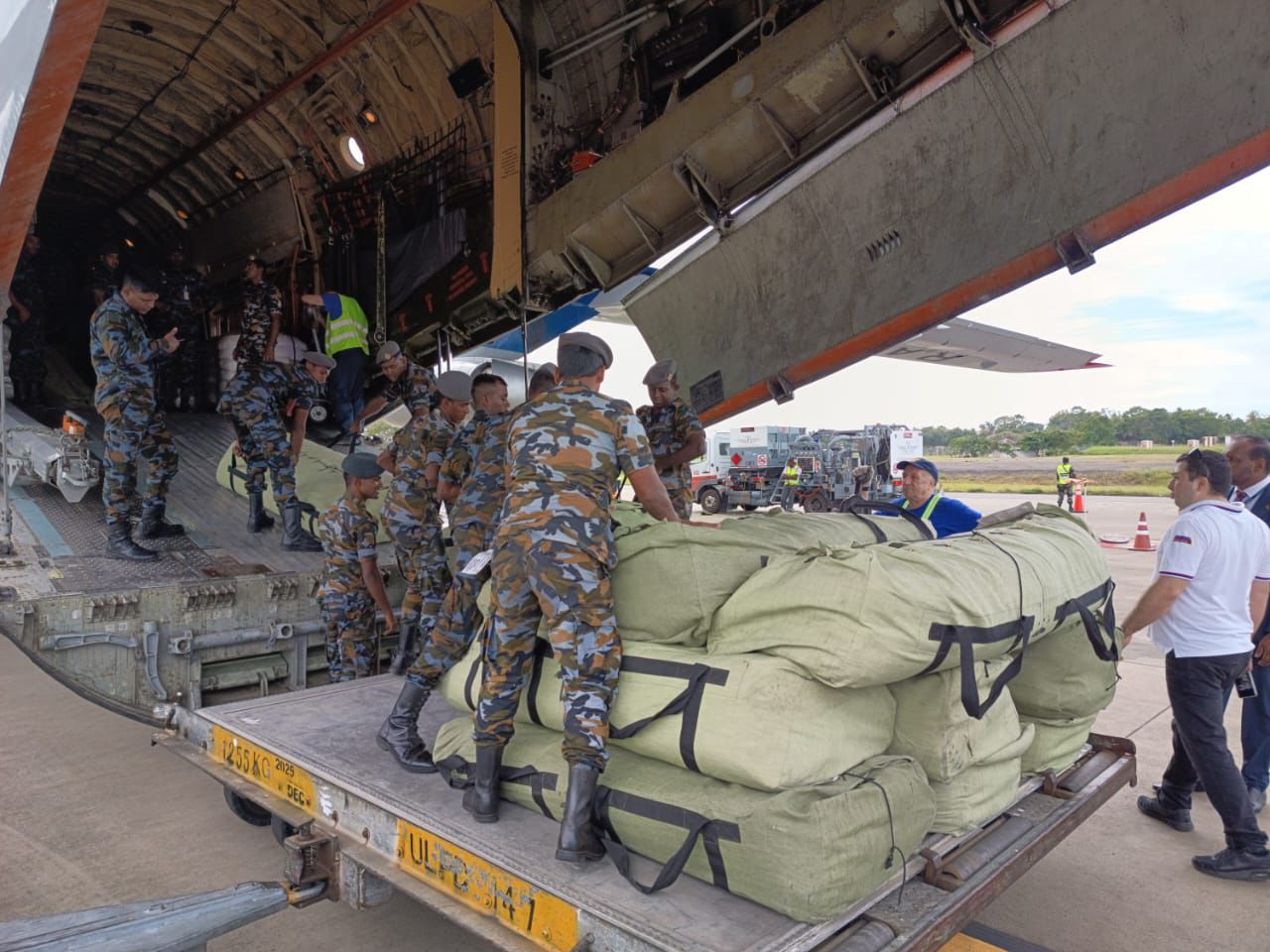
The handover of 35 tonnes of Russian Humanitarian Aid to Sri Lanka, recently affected by the cyclone «Ditwah», took place at Katunayake today (10th December)
The shipment was welcomed at the Katunayake airport by Ambassador of Russia Levan Dzhagaryan, Minister of Ports and Civil Aviation Anura Karunathilaka and Deputy Minister of Defence, Major General Aruna Jayasekara (Retd).
Ambassador Levan Dzhagaryan: said “This delivery is a reflection of long-term friendly relations between Russia and Sri Lanka and reaffirms Moscow’s commitment to support countries in a difficult humanitarian situation.”
The supplies brought by the EMERCOM (Russian Ministry of Emergency Situations) aircraft comprised a movable 60 kW electric power station, Pumping equipment for water drainage, Summer tents (10-person capacity) and Food supplies (sugar, vegetable oil, rice)
The total cargo weight is 35 metric tonnes. The aid will be distributed among the most affected regions.


Level III landslide early warnings issued to the Districts of Kandy, Kegalle, Kurunegala and Matale extended

“We cannot allow flooding to become a part of the daily lives of the people in the Colombo District” – PM

Russia gifts 35 tonnes of Humanitarian Aid to Sri Lanka

Sri Lanka squad named for ACC Men’s U19 Asia Cup

Hospital CCTV helps clear long jumper of doping

Tickner and Rae bowl West Indies out for 205 to give New Zealand the edge

‘Dates have the highest sugar content to fight Coronavirus’

Sunday Island 27 December – Headlines

#SundayIsland 17th December – Headlines

Sunday Island – 28th March

Sunday Island Headlines – 21 March

Sunday Island – 21st February – Headlines
-

 News3 days ago
Over 35,000 drug offenders nabbed in 36 days
-
 News7 days ago
Level III landslide early warning continue to be in force in the districts of Kandy, Kegalle, Kurunegala and Matale
-
 Business5 days ago
LOLC Finance Factoring powers business growth
-

 News5 days ago
CPC delegation meets JVP for talks on disaster response
-
 News2 days ago
Cyclone Ditwah leaves Sri Lanka’s biodiversity in ruins: Top scientist warns of unseen ecological disaster
-
 News5 days ago
A 6th Year Accolade: The Eternal Opulence of My Fair Lady
-

 News3 days ago
Rising water level in Malwathu Oya triggers alert in Thanthirimale
-
 Features22 hours ago
Finally, Mahinda Yapa sets the record straight