
Midweek Review
Masters, not just graduates: Reclaiming purpose in university education


A Critique of the Sri Lankan Education System: The Crisis of Producing Masters
For decades, the Sri Lankan education system has been subject to criticism for its failure to nurture true masters within each academic and professional discipline. At the heart of this issue lies a rigid, prescriptive structure that compels students to strictly adhere to pre-designed course modules, leaving little room for creativity, independent inquiry, or the pursuit of personal intellectual passions.
Although modern curricular frameworks may appear to allocate space for creativity and personal exploration, in practice, these opportunities remain superficial and ineffective. The modules that are meant to encourage innovation and critical thinking often fall short because students are still bound by rigid assessment criteria and narrowly defined outcomes. As a result, students are rarely encouraged—or even permitted—to question, reinterpret, or expand upon the knowledge presented to them.
This tightly controlled learning environment causes students to lose touch with their individual intellectual identity. The system does not provide sufficient opportunities, time, or structured programmes for students to reflect upon, explore, and rediscover their own sense of self, interests, and aspirations within their chosen disciplines. Instead of fostering thinkers, innovators, and creators, the system molds students into passive recipients of knowledge, trained to conform rather than lead or challenge.
This process ultimately produces what can be described as intellectual laborers or academic slaves—individuals who possess qualifications but lack the mastery, confidence, and creative agency required to meaningfully contribute to the evolution of their fields.
Lessons from history: How true masters emerged
Throughout history, true Masters in various fields have always been exceptional for reasons beyond the traditional boundaries of formal education. These individuals achieved greatness not because they followed prescribed curricula or sought the approval of educational institutions, but because they followed their inner callings with discipline, passion, and unwavering commitment.
What made these individuals exceptional wasn’t their adherence to rigid academic structures, but their pursuit of something much more profound: their innate talents and passions. They were able to innovate and push boundaries because they were free to follow what truly excited them, and their journeys were characterized by a level of self-driven discipline that the conventional education system often overlooks.
The inner call: Rediscovering lost pathways
Every person is born with a unique genetic and psychological blueprint — a natural inclination towards certain interests, talents, and callings. Recognising and following this ‘inner call’ gives meaning, strength, and resilience to individuals, enabling them to endure hardships, face failures, and persist through challenges.
However, when this call is lost or ignored, frustration and dissatisfaction take hold. Many young undergraduates today are victims of this disconnection. They follow paths chosen by parents, teachers, or society, without ever discovering their own. This is a tragedy we must urgently address.
According to my experience, a significant portion of students in almost every degree programme lack genuine interest in the field they have been placed in. Many of them quietly carry the sense that somewhere along the way, they have lost their direction—not because of a lack of ability, but because the educational journey they embarked on was shaped more by examination results, societal expectations, and external pressures than by their own inner desires.
Without real, personal interest in what they are studying, can we expect them to learn passionately, innovate boldly, or commit themselves fully? The answer is no. True mastery, creativity, and excellence can only emerge when learning is driven by genuine curiosity and an inner calling.
A new paradigm: Recognizing potential from the start
I envision a transformative educational approach where each student is recognized as a potential Master in their own right. From the very beginning of their journey, every new student should undergo a comprehensive interview process designed to uncover their true interests and passions.
This initiative will not only identify but nurture these passions. Students should be guided and mentored to develop into Masters in their chosen fields—be it entrepreneurship, sports, the arts, or any other domain. By aligning education with their innate talents, we empower students to excel and innovate, becoming leaders and pioneers in their respective areas.
Rather than a standardised intake or mere placement based on test scores or academic history, this new model would involve a holistic process, assessing academic abilities, personal passions, experiences, and the driving forces that define them as individuals.
Fostering Mastery through Mentorship and Guidance
Once students’ passions are identified, the next step is to help them develop these areas into true expertise. This is where mentorship becomes central. Students will work closely with professors, industry leaders, and experts in their chosen fields, ensuring their academic journey is as much about guidance and personal development as it is about gaining knowledge.
Mentors will play an instrumental role in refining students’ ideas, pushing the boundaries of their creativity, and fostering a mindset of continuous improvement. Through personalized guidance and structured support, students will take ownership of their learning, receiving real-world exposure, practical opportunities, and building the resilience and entrepreneurial spirit that drives Masters to the top of their fields.
Revolutionising the role of universities
This initiative will redefine the role of universities, transforming them from institutions of rote learning to dynamic incubators of creativity and mastery. Universities will no longer simply be places where students learn facts and figures—they will become vibrant ecosystems where students are nurtured and empowered to become experts and pioneers.
Rather than focusing solely on academic metrics, universities will measure success by real-world impact: startups launched, innovative works produced, research leading to social change. These will be the true indicators of success for a university dedicated to fostering Masters.
Empowering a generation of leaders and innovators
The result would be a generation of empowered individuals—leaders, thinkers, and doers ready to make a lasting impact. With mastery and passion-driven learning, these students will be prepared not just to fit into the world, but to change it. They will possess the skills, mindset, and confidence to innovate, disrupt, and lead across fields.
By aligning education with unique talents, we help students realize their potential and give them the tools to make their visions a reality. This is not about creating mere graduates—it’s about fostering true Masters.
Concluding remarks: A new path forward
The time has come to build a new kind of education—one that sees the potential for mastery in every undergraduate and actively nurtures that potential from the start. By prioritizing the passions and talents of students, we can create a future where individuals are not just educated, but truly empowered to become Masters of their craft.
In the crucial first weeks of university life, it is essential to create a supportive environment that recognizes the individuality of each student. To achieve this, we propose a structured process where students are individually interviewed by trained academic and counseling staff. These interviews will aim to uncover each student’s inner inclination, personal interests, and natural talents — what might be described as their “inner calling.”
Understanding a student’s deeper motivations and aspirations early in their academic journey can play a decisive role in shaping not only their academic choices but also their personal and professional development. This process will allow us to go beyond surface-level academic placement and engage students in disciplines and activities that resonate with their authentic selves.
At present, while many universities assign mentors to students, this system often remains underutilized and lacks proper structure. One of the main shortcomings is that lecturers and assigned mentors typically have not received specialized training in career guidance, psychological counseling, or interest-based mentoring. As a result, mentorship programs fail to provide personalized and meaningful guidance.
To address the disconnect between academic achievement and personal fulfillment in our universities, we propose a comprehensive, personalized guidance program for every student, starting with in-depth interviews and assessments to uncover their interests, strengths, and aspirations. Trained and certified mentors would then work closely with students to design personalized academic and personal development plans, aligning study paths, extracurricular activities, internships, and community engagements with each student’s inner calling.
Through continuous mentoring, regular feedback, and integration with university services such as career guidance, research groups, and industry collaborations, this program would foster a culture where students actively shape their futures. Regular evaluations and data-driven improvements would ensure the program’s relevance and effectiveness, ultimately producing well-rounded, fulfilled graduates equipped to lead meaningful, socially impactful lives.
by Senior Prof. E.P.S. Chandana
(Former Deputy Vice Chancellor/University of Ruhuna)
Faculty of Technology, University of Ruhuna

Midweek Review
How massive Akuregoda defence complex was built with proceeds from sale of Galle Face land to Shangri-La

The Navy ceremonially occupied its new Headquarters (Block No. 3) at the Defence Headquarters Complex (DHQC) at Akuregoda, Battaramulla, on 09 December, 2025. On the invitation of the Commander of the Navy, Vice Admiral Kanchana Banagoda, the Deputy Minister of Defence, Major General Aruna Jayasekara (Retd) attended the event as the Chief Guest.
Among those present were Admiral of the Fleet Wasantha Karannagoda, the Defence Secretary, Air Vice Marshal Sampath Thuyacontha (Retd), Commander of the Army, Lieutenant General Lasantha Rodrigo, Commander of the Air Force, Air Marshal Bandu Edirisinghe, Inspector General of Police, Attorney-at-Law Priyantha Weerasooriya and former Navy Commanders.
With the relocation of the Navy at DHQC, the much-valued project to shift the Ministry of Defence (MoD) and Headquarters of the war-winning armed forces has been brought to a successful conclusion. The Army was the first to move in (November 2019), the MoD (May 2021), the Air Force (January 2024) and finally the Navy (in December 2025).
It would be pertinent to mention that the shifting of MoD to DHQC coincided with the 12th anniversary of bringing back the entire Northern and Eastern Provinces under the government, on 18 May, 2009. LTTE leader Velupillai Prabhakaran was killed on the following day.
The project that was launched in March 2011, two years after the eradication of the Liberation Tigers of Tamil Eelam (LTTE), suffered a severe setback, following the change of government in 2015. The utterly irresponsible and treacherous Yahapalana government halted the project. That administration transferred funds, allocated for it, to the Treasury, in the wake of massive Treasury bond scams perpetrated in February and March 2015, within weeks after the presidential election.
Maithripala Sirisena, in his capacity as the President, as well as the Minister of Defence, declared open the new Army Headquarters, at DHQC, a week before the 2019 presidential election. Built at a cost of Rs 53.3 bn, DHQC is widely believed to be the largest single construction project in the country. At the time of the relocation of the Army, the then Lt. Gen. Shavendra Silva, the former Commanding Officer of the celebrated Task Force I/58 Division, served as the Commander.
Who made the DHQC a reality? Although most government departments, ministries and armed forces headquarters, were located in Colombo, under the Colombo Master Plan of 1979, all were required to be moved to Sri Jayewardenepura, Kotte. However successive administrations couldn’t go ahead with the massive task primarily due to the conflict. DHQC would never have been a reality if not for wartime Defence Secretary Gotabaya Rajapaksa who determinedly pursued the high-profile project.
The absence of any reference to the origins of the project, as well as the significant role played by Gotabaya Rajapaksa at the just relocated Navy headquarters, prompted the writer to examine the developments related to the DHQC. The shifting of MoD, along with the Armed Forces Headquarters, was a monumental decision taken by Mahinda Rajapaksas’s government. But, all along it had been Gotabaya Rajapaksa’s determination to achieve that monumental task that displeased some within the administration, but the then Defence Secretary, a former frontline combat officer of the battle proved Gajaba Regiment, was not the type to back down or alter his strategy.
GR’s maiden official visit to DHQC
Gotabaya Rajapaksa, who made DHQC a reality, visited the sprawling building in his capacity as the President, Defence Minister and the Commander-in-Chief of the Armed Forces on the morning of 03 August, 2021. It was Gotabaya Rajapaksa’s maiden official visit to the Army Headquarters, located within the then partially completed DHQC, eight months before the eruption of the externally backed ‘Aragalaya.’ The US-Indian joint project has been exposed and post-Aragalaya developments cannot be examined without taking into consideration the role played by political parties, the Bar Association of Sri Lanka, media, as well as the weak response of the political leadership and the armed forces. Let me stress that a comprehensive probe should cover the period beginning with the Swiss project to humiliate President Gotabaya Rajapaka in November, 2019, by staging a fake abduction, and the storming of the President’s House in July 2022. How could Sri Lanka forget the despicable Swiss allegation of sexual harassment of a female local employee by government personnel, a claim proved to be a blatant lie meant to cause embarrassment to the newly elected administration..
Let me get back to the DHQC project. The war-winning Mahinda Rajapaksa government laid the foundation for the building project on 11 May, 2011, two years after Sri Lanka’s triumph over the separatist Tamil terrorist movement. The high-profile project, on a 77-acre land, at Akuregoda, Pelawatta, was meant to bring the Army, Navy, and the Air Force headquarters, and the Defence Ministry, to one location.
President Gotabaya Rajapaksa’s visit to Akuregoda would have definitely taken place much earlier, under a very different environment, if not for the eruption of the Covid-19 pandemic, just a few months after his victory at the November 2019 election. The worst post-World War II crisis that had caused devastating losses to national economies, the world over, and delivered a staggering blow to Sri Lanka, heavily dependent on tourism, garment exports and remittances by its expatriate workers.
On his arrival at the new Army headquarters, President Gotabaya Rajapaksa was welcomed by General Shavendra Silva, who also served as the Chief of Defence Staff. Thanks to the President’s predecessor, Maithripala Sirisena, the then Maj. Gen Shavendra Silva was promoted to the rank of Lt. Gen and appointed the Commander of the Army on 18 August, 2019, just three months before the presidential poll. The appointment was made in spite of strong opposition from the UNP leadership and US criticism.
President Gotabaya Rajapaksa hadn’t minced his words when he publicly acknowledged the catastrophe caused by the plunging of the national income and the daunting challenge in debt repayment, amounting to as much as USD 4 bn annually.
The decision to shift the tri-forces headquarters and the Defence Ministry (The Defence Ministry situated within the Army Headquarters premises) caused a media furor with the then Opposition UNP alleging a massive rip-off. Defence Secretary Gotabaya Rajapaksa reiterated his commitment to the project. If not for the change of government in 2015, the DHQC would have been completed during Mahinda Rajapaksa’s third term if he was allowed to contest for a third term successfully. Had that happened, Gotabaya Rajapaksa wouldn’t have emerged as the then Opposition presidential candidate at the 2019 poll. The disastrous Yahapalana administration and the overall deterioration of all political parties, represented in Parliament, and the 19th A that barred Mahinda Rajapaksa from contesting the presidential election, beyond his two terms, created an environment conducive for Gotabaya Rajapaksa’s emergence as the newly registered SLPP’s candidate.
Shangri-La move
During the 2019 presidential election campaign, SLPP candidate Gotabaya Rajapaksa strongly defended his decision to vacate the Army Headquarters, during Mahinda Rajapaksa presidency, to pave the way for the Shangri-La Hotel in Colombo. Shangri-La was among the hotels targeted by the Easter Sunday bombers – the only location targeted by two of them, including mastermind Zahran Hashim.
President Gotabaya Rajapaksa is on record as having said that vacation of the site had been in accordance with first executive President J.R. Jayewardene’s decision to move key government buildings away from Colombo to the new Capital of the country at Sri Jaywardenepura. Gotabaya Rajapaksa said so in response to the writer’s queries years ago.
Gotabaya Rajapaksa said that a despicable attempt was being made to blame him for the Army Headquarters land transaction. “I have been accused of selling the Army Headquarters land to the Chinese.”
Rajapaksa explained that Taj Samudra, too, had been built on a section of the former Army Headquarters land, previously used to accommodate officers’ quarters and the Army rugger grounds. Although President Jayewardene had wanted the Army Headquarters shifted, successive governments couldn’t do that due to the war and lack of funds, he said.
President Maithripala Sirisena and Prime Minister Ranil Wickremesinghe declared open Shangri-La Colombo on 16 November, 2017. The Hong Kong-based Shangri-La Asia invited Gotabaya Rajapaksa for dinner, the following day, after the opening of its Colombo hotel. Shangri-La Chairperson, Kuok Hui Kwong, the daughter of Robert Kuok Khoon Ean, was there to welcome Gotabaya Rajapaksa, who had cleared the way for the post-war mega tourism investment project. Among those who had been invited were former President Mahinda Rajapaksa, former External Affairs Minister Prof. G.L. Peiris, former Presidential Secretary Lalith Weeratunga, and President’s Counsel Gamini Marapana, PC.
The Cabinet granted approval for the high-profile Shangri-La project in October 2010 and the ground-breaking ceremony was held in late February 2012.
Rajapaksa said that the Shangri-La proprietor, a Chinese, ran a big operation, based in Hong Kong, Malaysia and Singapore. Another parcel of land was given to the mega ITC hotel project, also during the previous Rajapaksa administration. ITC Ratnadipa, a super-luxury hotel by India’s ITC Hotels, officially opened in Colombo on April 25, 2024
Following the change of government in January 2015, the remaining section of the Army headquarters land, too, was handed over to Shangri-La.
Gotabaya Rajapaksa emphasised that the relocation of the headquarters of the Army, Navy, and Air Force, as well as the Defence Ministry, had been part of JRJ’s overall plan. The change of government, in January 2015, had caused a serious delay in completing the project and it was proceeding at a snail’s pace, Rajapaksa said. Even Parliament was shifted to Kotte in accordance with JRJ’s overall plan, Gotabaya Rajapaksa said, explaining his move to relocate all security forces’ headquarters and Defence Ministry into one complex at Akuregoda.
Acknowledging that the Army Headquarters had been there at Galle Face for six decades, Rajapaksa asserted that the Colombo headquarters wasn’t tactically positioned.
Rajapaksa blamed the inordinate delay in the completion of the Akuregoda complex on the Treasury taking hold of specific funds allocated for the project.
Over 5,000 military workforce

Gotabaya Rajapaksa’s maiden visit to DHQC on 3 August, 2021. General
Shavendra Silva is beside him
Major General Udaya Nanayakkara had been the first Director, Project Management Unit, with overall command of approximately 5,000 tri-forces personnel assigned to carry it out. The Shangri-La transaction provided the wherewithal to implement the DHQC project though the change of government caused a major setback. Nanayakkara, who had served as the Military Spokesman, during Eelam War IV, oversaw the military deployment, whereas private contractors handled specialised work such as piling, AC, fire protection and fire detection et al. The then MLO (Military Liaison Officer) at the Defence Ministry, Maj. Gen Palitha Fernando, had laid the foundation for the project and the work was going on smoothly when the Yahapalana administration withheld funds. Political intervention delayed the project and by September 2015, Nanayakkara was replaced by Maj Gen Mahinda Ambanpola, of the Engineer Service.
In spite of President Sirisena holding the Defence portfolio, he couldn’t prevent the top UNP leadership from interfering in the DHQC project. However, the Shangri-La project had the backing of A.J.M. Muzammil, the then UNP Mayor and one of the close confidants of UNP leader Ranil Wickremesinghe. Muzammil was among those present at the ground breaking ceremony for Shangri-La held on 24th February, 2012 ,with the participation of Minister Basil Rajapaksa.
Having identified the invaluable land, where the Army Headquarters and Defence Ministry were situated, for its project, Shangri-La made its move. Those who had been aware of Shangri-La’s plans were hesitant and certainly not confident of their success. They felt fearful of Defence Secretary Rajapaksa’s reaction.
But, following swift negotiations, they finalised the agreement on 28 December, 2010. Lt. Gen. Jagath Jayasuriya was the then Commander of the Army, with his predecessor General Fonseka in government custody after having been arrested within two weeks after the conclusion of the 2010 26 January Presidential poll.
Addressing the annual Viyathmaga Convention at Golden Rose Hotel, Boralesgamuwa, on 04 March, 2017, Gotabaya Rajapaksa, perhaps for the first time publicly discussed his role in the Shangri-La project. Declaring that Sri Lanka suffered for want of, what he called, a workable formula to achieve post-war development objectives, the war veteran stressed the pivotal importance of swift and bold decision-making.
Gotabaya Rajapaksa explained how the government had acted swiftly, and decisively, to attract foreign investments though some such efforts were not successful. There couldn’t be a better example than the government finalising an agreement with Shangri-La Hotels, he declared.
Declaring that the bureaucratic red tape shouldn’t in any way be allowed to undermine investments, Rajapaksa recalled the Chairman/CEO of Shangri-La Hotels and Resorts, Robert Kuok Khoon Ean, wanting the Army Headquarters land for his Colombo project. In fact, the hotels chain, at the time, had proposed to build hotels in Colombo, Hambantota and Batticaloa, and was one of the key investors wanting to exploit Sri Lanka’s success in defeating terrorism.
“Khoon-Ean’s request for the Army Headquarters land caused a serious problem for me. It was a serious challenge. How could I shift the headquarters of the war-winning Army? The Army had been there for six decades. It had been the nerve centre of the war effort for 30 years,” said Rajapaksa, who once commanded the First Battalion of the Gajaba Regiment (1GR)
Rajapaksa went on to explain how he exploited a decision taken by the first executive president J.R. Jayewardene to shift the Army Headquarters to Battaramulla, many years back. “Within two weeks, in consultation with the Secretary to the Finance Ministry, Dr. P.B. Jayasundera, and the Board of Investment, measures were taken to finalise the transaction. The project was launched to shift the Army, Navy and Air Force headquarters to Akuregoda, Pelawatte, in accordance with JRJ’s plan.”
The Hong Kong-based group announced the purchase of 10 acres of state land, in January 2011. Shangri-La Asia Limited announced plans to invest over USD 400 mn on the 30-storeyed star class hotel with 661 rooms.
The hotel is the second property in Sri Lanka for the leading Asian hospitality group, joining Shangri-La’s Hambantota Resort & Spa, which opened in June 2016.
Rajapaksa said that the top Shangri-La executive had referred to the finalisation of their Colombo agreement to highlight the friendly way the then administration handled the investment. Shangri-La had no qualms about recommending Sri Lanka as a place for investment, Rajapaksa said.
The writer explained the move to shift the Army Headquarters and the Defence Ministry from Colombo in a lead story headlined ‘Shangri-La to push MoD, Army Hq. out of Colombo city: Army Hospital expected to be converted into a museum’ (The Island, 04 January, 2011).
Yahapalana chaos
In the wake of the January 2015 change of government, the new leadership caused chaos with the suspension of the China-funded Port City Project, a little distance away from the Shangri-La venture. Many an eyebrow was raised when the then Finance Minister Ravi Karunanayake declared, in March, 2015, that funds wouldn’t be made available to the DHQC project until the exact cost estimation of the project could be clarified.
Media quoted Karunanayake as having said “Presently, this project seems like a bottomless pit and we need to know the depth of what we are getting into. From the current state of finances, allocated for this project, it seems as if they are building a complex that’s even bigger than the Pentagon!”
The insinuating declaration was made despite them having committed the blatant first Treasury bond scam in February 2015 that shook the Sirisena-Wickremesinghe administration to its core.
In June 2016, Cabinet spokesperson, Dr. Rajitha Senaratne, announced the suspension of the Akuregoda project. Citing financial irregularities and mismanagement of funds, Dr. Senaratne alleged that all Cabinet papers on the project had been prepared according to the whims and fancies of Gotabaya Rajapaksa.
The then Minister Karunanayake spearheaded the campaign against the DHQC project alleging, in the third week of January, 2015, that Rs 13.2 billion, in an account maintained at the Taprobane branch of the Bank of Ceylon had been transferred to the Consolidated Fund of the Treasury. The matter was being investigated as the account belonged to the Ministry of Defence, he added. The Finance Minister stressed that the MoD had no right to maintain such an account in violation of regulations and, therefore, the opening of the account was being investigated. The Minister alleged that several illegal transactions, including one involving Samurdhi, had come to light. He estimated the Samurdhi transaction (now under investigation) at Rs. 4 billion.
Having undermined Shangri-La and the DHQC projects, the UNP facilitated the expansion of the hotel project by releasing additional three and half acres on a 99-year lease. During the Yahapalana administration, Dayasiri Jayasekera disclosed at a post-Cabinet press briefing how the government leased three and a half acres of land at a rate of Rs. 13.1 mn per perch whereas the previous administration agreed to Rs 6.5 mn per perch. According to Jayasekera the previous government had leased 10 acres at a rate of Rs 9.5 mn (with taxes) per perch.
The bottom line is that DHQC was built with Shangri-La funds and the initiative was Gotabaya Rajapaksa’s whose role as rock solid wartime Secretary of Defence to keep security forces supplied with whatever their requirements could never be compared with any other official during the conflict.
By Shamindra Ferdinando

Picking-up the pieces in the bashed Isle,
Is going to take quite a long while,
And all hands need to be united as one,
To give it even a semblance of its former self,
But the more calloused and hardy the hands,
The more suitable are they for the task,
And the hour is upon us you could say,
When those vast legions of invisible folk,
Those wasting away in humble silent toil,
Could stand up and be saluted by all,
As being the most needed persons of the land
By Lynn Ockersz

“My tongue in English chains.
I return, after a generation, to you.
I am at the end
of my Dravidic tether
hunger for you unassuaged
I falter, stumble.”
– Indian poet R. Parthasarathy
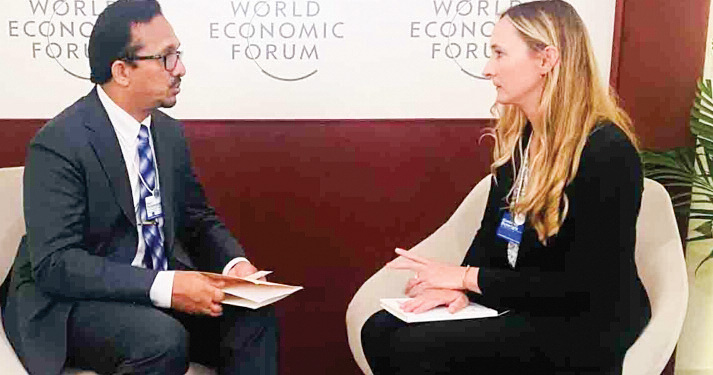
 When Minister Sunil Handunnetti addressed the World Economic Forum’s ‘Is Asia’s Century at Risk?’ discussion as part of the Annual Meeting of the New Champions 2025 in June 2025, I listened carefully both to him and the questions that were posed to him by the moderator. The subsequent trolling and extremely negative reactions to his use of English were so distasteful that I opted not to comment on it at the time. The noise that followed also meant that a meaningful conversation based on that event on the utility of learning a powerful global language and how our politics on the global stage might be carried out more successfully in that language was lost on our people and pundits, barring a few commentaries.
Now Handunnetti has reopened the conversation, this time in Sri Lanka’s parliament in November 2025, on the utility of mastering English particularly for young entrepreneurs. In his intervention, he also makes a plea not to mock his struggle at learning English given that he comes from a background which lacked the privilege to master the language in his youth. His clear intervention makes much sense.
The same ilk that ridiculed him when he spoke at WEF is laughing at him yet again on his pronunciation, incomplete sentences, claiming that he is bringing shame to the country and so on and so forth. As usual, such loud, politically motivated and retrograde critics miss the larger picture. Many of these people are also among those who cannot hold a conversation in any of the globally accepted versions of English. Moreover, their conceit about the so-called ‘correct’ use of English seems to suggest the existence of an ideal English type when it comes to pronunciation and basic articulation. I thought of writing this commentary now in a situation when the minister himself is asking for help ‘in finding a solution’ in his parliamentary speech even though his government is not known to be amenable to critical reflection from anyone who is not a party member.
The remarks at the WEF and in Sri Lanka’s parliament are very different at a fundamental level, although both are worthy of consideration – within the realm of rationality, not in the depths of vulgar emotion and political mudslinging.
The problem with Handunnetti’s remarks at WEF was not his accent or pronunciation. After all, whatever he said could be clearly understood if listened to carefully. In that sense, his use of English fulfilled one of the most fundamental roles of language – that of communication. Its lack of finesse, as a result of the speaker being someone who does not use the language professionally or personally on a regular basis, is only natural and cannot be held against him. This said, there are many issues that his remarks flagged that were mostly drowned out by the noise of his critics.
Given that Handunnetti’s communication was clear, it also showed much that was not meant to be exposed. He simply did not respond to the questions that were posed to him. More bluntly, a Sinhala speaker can describe the intervention as yanne koheda, malle pol , which literally means, when asked ‘Where are you going?’, the answer is ‘There are coconuts in the bag’.
He spoke from a prepared text which his staff must have put together for him. However, it was far off the mark from the questions that were being directly posed to him. The issue here is that his staff appears to have not had any coordination with the forum organisers to ascertain and decide on the nature of questions that would be posed to the Minister for which answers could have been provided based on both global conditions, local situations and government policy. After all, this is a senior minister of an independent country and he has the right to know and control, when possible, what he is dealing with in an international forum.
This manner of working is fairly routine in such international fora. On the one hand, it is extremely unfortunate that his staff did not do the required homework and obviously the minister himself did not follow up, demonstrating negligence, a want for common sense, preparedness and experience among all concerned. On the other hand, the government needs to have a policy on who it sends to such events. For instance, should a minister attend a certain event, or should the government be represented by an official or consultant who can speak not only fluently, but also with authority on the subject matter. That is, such speakers need to be very familiar with the global issues concerned and not mere political rhetoric aimed at local audiences.
Other than Handunnetti, I have seen, heard and also heard of how poorly our politicians, political appointees and even officials perform at international meetings (some of which are closed door) bringing ridicule and disastrous consequences to the country. None of them are, however, held responsible.
Such reflective considerations are simple yet essential and pragmatic policy matters on how the government should work in these conditions. If this had been undertaken, the WEF event might have been better handled with better global press for the government. Nevertheless, this was not only a matter of English. For one thing, Handunnetti and his staff could have requested for the availability of simultaneous translation from Sinhala to English for which pre-knowledge of questions would have been useful. This is all too common too. At the UN General Assembly in September, President Dissanayake spoke in Sinhala and made a decent presentation.
The pertinent question is this; had Handunetti had the option of talking in Sinhala, would the interaction have been any better? That is extremely doubtful, barring the fluency of language use. This is because Handunnetti, like most other politicians past and present, are good at rhetoric but not convincing where substance is concerned, particularly when it comes to global issues. It is for this reason that such leaders need competent staff and consultants, and not mere party loyalists and yes men, which is an unfortunate situation that has engulfed the whole government.
What about the speech in parliament? Again, as in the WEF event, his presentation was crystal clear and, in this instance, contextually sensible. But he did not have to make that speech in English at all when decent simultaneous translation services were available. In so far as content was concerned, he made a sound argument considering local conditions which he knows well. The minister’s argument is about the need to ensure that young entrepreneurs be taught English so that they can deal with the world and bring investments into the country, among other things. This should actually be the norm, not only for young entrepreneurs, but for all who are interested in widening their employment and investment opportunities beyond this country and in accessing knowledge for which Sinhala and Tamil alone do not suffice.
As far as I am concerned, Handunetti’s argument is important because in parliament, it can be construed as a policy prerogative. Significantly, he asked the Minister of Education to make this possible in the educational reforms that the government is contemplating.
He went further, appealing to his detractors not to mock his struggle in learning English, and instead to become part of the solution. However, in my opinion, there is no need for the Minister to carry this chip on his shoulder. Why should the minister concern himself with being mocked for poor use of English? But there is a gap that his plea should have also addressed. What prevented him from mastering English in his youth goes far deeper than the lack of a privileged upbringing.
The fact of the matter is, the facilities that were available in schools and universities to learn English were not taken seriously and were often looked down upon as kaduwa by the political spectrum he represents and nationalist elements for whom the utilitarian value of English was not self-evident. I say this with responsibility because this was a considerable part of the reality in my time as an undergraduate and also throughout the time I taught in Sri Lanka.
Much earlier in my youth, swayed by the rhetoric of Sinhala language nationalism, my own mastery of English was also delayed even though my background is vastly different from the minister. I too was mocked, when two important schools in Kandy – Trinity College and St. Anthony’s College – refused to accept me to Grade 1 as my English was wanting. This was nearly 20 years after independence. I, however, opted to move on from the blatant discrimination, and mastered the language, although I probably had better opportunities and saw the world through a vastly different lens than the minister. If the minister’s commitment was also based on these social and political realities and the role people like him had played in negating our English language training particularly in universities, his plea would have sounded far more genuine.
If both these remarks and the contexts in which they were made say something about the way we can use English in our country, it is this: On one hand, the government needs to make sure it has a pragmatic policy in place when it sends representatives to international events which takes into account both a person’s language skills and his breadth of knowledge of the subject matter. On the other hand, it needs to find a way to ensure that English is taught to everyone successfully from kindergarten to university as a tool for inclusion, knowledge and communication and not a weapon of exclusion as is often the case.
This can only bear fruit if the failures, lapses and strengths of the country’s English language teaching efforts are taken into cognizance. Lamentably, division and discrimination are still the main emotional considerations on which English is being popularly used as the trolls of the minister’s English usage have shown. It is indeed regrettable that their small-mindedness prevents them from realizing that the Brits have long lost their long undisputed ownership over the English language along with the Empire itself. It is no longer in the hands of the colonial masters. So why allow it to be wielded by a privileged few mired in misplaced notions of elitism?

Heavy showers above 100 mm are likely at some places in the Eastern and Central provinces and in the Badulla and Polonnaruwa districts

Post-Ditwah recovery efforts: Rs. 190 bn needed to restore roads and bridges countrywide

Siddhalepa takes authentic Lankan Ayurveda medicine to UK through a collaborative

Prof. G. L. Peiris offers rare insider’s account of Sri Lanka’s peace talks with LTTE

Burnt elephant dies after delayed rescue; activists demand arrests

A harsh reflection of Sri Lanka’s early-warning gap

‘Dates have the highest sugar content to fight Coronavirus’

Sunday Island 27 December – Headlines

#SundayIsland 17th December – Headlines

Sunday Island – 28th March

Sunday Island Headlines – 21 March

Sunday Island – 21st February – Headlines
-
 Business6 days ago
Cabinet approves establishment of two 50 MW wind power stations in Mullikulum, Mannar region
-
 News6 days ago
Gota ordered to give court evidence of life threats
-

 Features6 days ago
Cliff and Hank recreate golden era of ‘The Young Ones’
-
 Features6 days ago
Sri Lanka and Global Climate Emergency: Lessons of Cyclone Ditwah
-

 Latest News7 days ago
Sri Lanka squad named for ACC Men’s U19 Asia Cup
-

 Editorial6 days ago
Experience vs. Inexperience
-
 News6 days ago
WFP scales up its emergency response in Sri Lanka
-

 News6 days ago
Special programme to clear debris in Biyagama