
Sports
Making batting compulsory for bowlers has worked – Theekshana

Rex Clementine
at Pallekele
When Sanath Jayasuriya took the reins as Sri Lanka’s Head Coach earlier this year, he didn’t just shuffle the deck – he set about reshaping the entire playing ethos. Fitness, discipline, fielding, running between the wickets, and commitment were the cornerstones of his strategy. Yet, one masterstroke stood out: mandating tail-enders to sharpen their batting skills during practice sessions.
Jayasuriya had identified a glaring gap during the tour of England—the bowlers’ contributions with the bat were meager at best, leaving the team precariously balanced. Thus, net sessions for the bowlers became more than a box-ticking exercise; they had to learn the art of scoring runs not just playing defence.
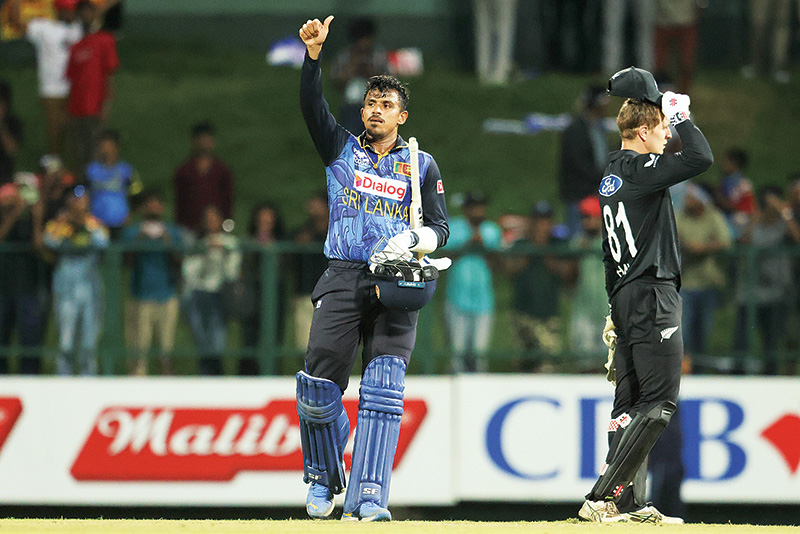
 That foresight bore fruit in spectacular fashion on Sunday at Pallekele. Maheesh Theekshana stepped up to the plate – or rather, the crease – and played a pivotal role alongside Kusal Mendis in scripting a thrilling three-wicket victory against New Zealand. The win wasn’t just another notch on the belt; it ended a 12-year drought in bilateral series wins against the Kiwis.
At 163 for seven, with 47 runs still needed on a pitch that was spinning like a roulette wheel, Sri Lanka’s chances looked bleaker than a batsman caught in two minds. But Theekshana stood firm, facing 44 deliveries to notch a crucial 27 runs, peppered with two fours and a six. His knock, full of grit and sense, helped steer Sri Lanka to a famous win with an over to spare.
“Even our bowlers get to bat at practice, so we know they can contribute when it matters,” Theekshana told reporters, reflecting on the game. “Players like Wellalage, Vandersay, and others are capable of stepping up. The team has confidence that if one player stumbles, the next will rise to the occasion.”
Theekshana shed light on his partnership with Kusal Mendis, which turned the tide of the game. “The plan was simple—bat deep and take the game into the final over. With the dew coming in, it became easier to bat as the match progressed. The spinners struggled to grip the wet ball, forcing them to turn to the quicks. Our strategy to take the game deep worked like a charm,” he explained.
Kusal Mendis, nursing a groin niggle, was visibly struggling but soldiered on to post an unbeaten 74 – a match-winning knock that, coupled with Theekshana’s resilience, sealed the deal.
“When Kusal was on strike, they kept giving him the single, trying to get me on strike. Their plan was to bowl dot balls at me and force a mistake,” Theekshana said with a wry smile. “But they underestimated us. We bided our time, waiting for the loose balls, and when they came, we punished them. They brought the field up for me, and I made the most of the gaps outside the stumps.”
This victory is yet another feather in Sri Lanka’s cap in a year where the team has turned their fortunes around, clinching several bilateral series across all three formats.
“Our bench strength has grown immensely,” Theekshana observed. “Look at Nishan Madushka – he can’t find a spot in the XI despite scoring a 50 and a 40. We have a solid lineup of spinners ready to step in. There’s healthy competition within the squad, and that’s pushing everyone to perform at their best.”

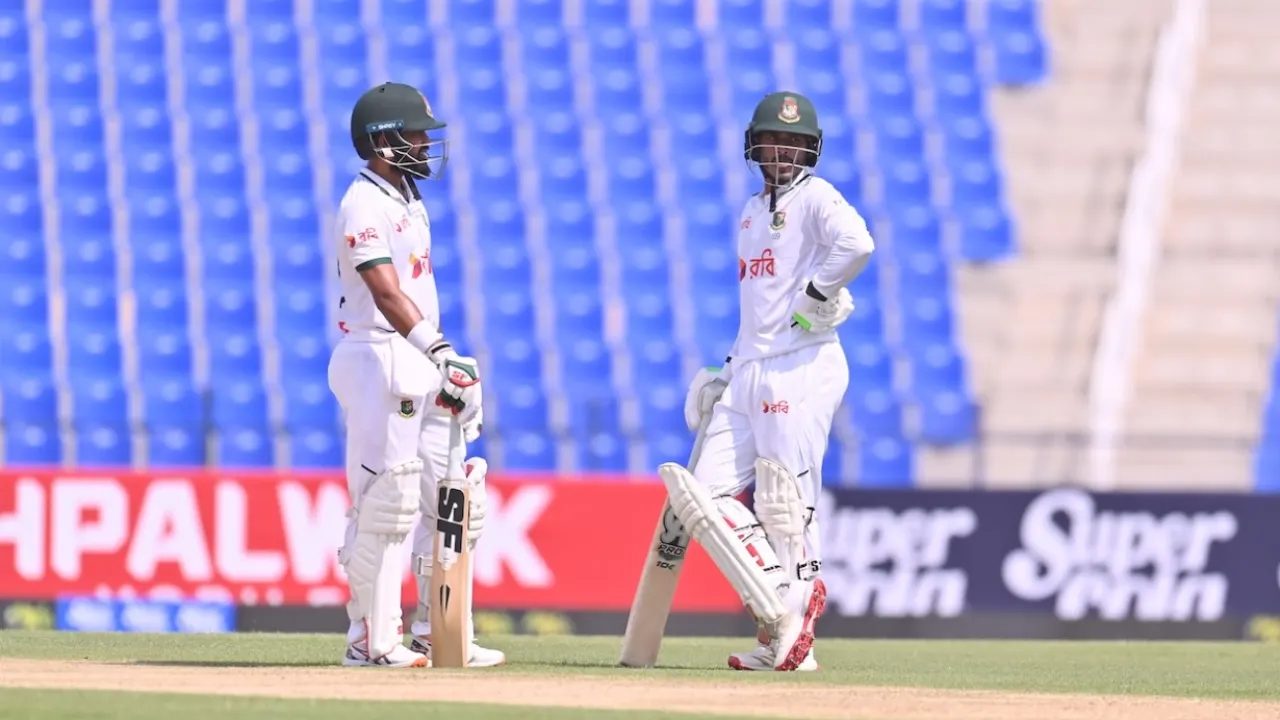
Afghanistan’s pace attack fought back late in the day as Bangladesh went to stumps on 317 for eight on day one in Abu Dhabi.
Mohammad Saleem, Yamin Ahmadzai and Ismat Alam combined to take seven out of the eight wickets that fell on the day. For Bangladesh, Shadman Islam, Tanzid Hassan and Litton Das made fifties.
Saleem targeted the shorter length after lunch, while Ahmadzai found success pitching the ball fuller. Ismat, meanwhile, bowled within himself and was rewarded with the wickets of both set batters Tanzid and Mehidy Hasan Miraz as he drew errors from each.
Tanzid was Bangladesh’s enforcer earlier in the day, hitting eight fours and four sixes in his 71-ball 83 in the first session. He looked set to get to a century in the first session, only for Ismat to thwart his charge.
Later, Shadman Islam and Litton Das struck fifties on either side of Bangladesh’s mini collapse. They lost three wickets for just four runs after they were 221 for two in the second session.
Bangladesh 317 for 8 in 84 overs (Shadman Islam 67, Tanzid Hasan 83, Litton Das 53; Yahmin Ahmadzal 2-62 , Mohmmad Saleem 3-70, Ismat Alam 2-20) vs Afghanistan
[Cricinfo]

Sri Lanka won the toss and chose to bat first in the first T20I against Pakistan being played in Rawalpindi.
Sri Lanka XI: Kusal Mendis (capt & wk), Lahiru Udara (wk), Kamil Mishara, Kamindu Mendis, Sahan Arachchige, Dasun Shanaka, Dunith Wellalage, Maheesh Theekshana, Dushmantha Chameera, Eshan Malinga, Nuwan Thushara
Pakistan XI: Sahibzada Farhan (capt), Saim Ayub, Maaz Sadaqat, Fakhar Zaman, Hasan Nawaz, Khawaja Nafay (wk), Shadab Khan, Muhammed Imran, Razaullah, Naseem Shah, Abrar Ahmed
Latest News
Sutherland and Litchfield lead Australia to quick and convincing win in ODI series opener

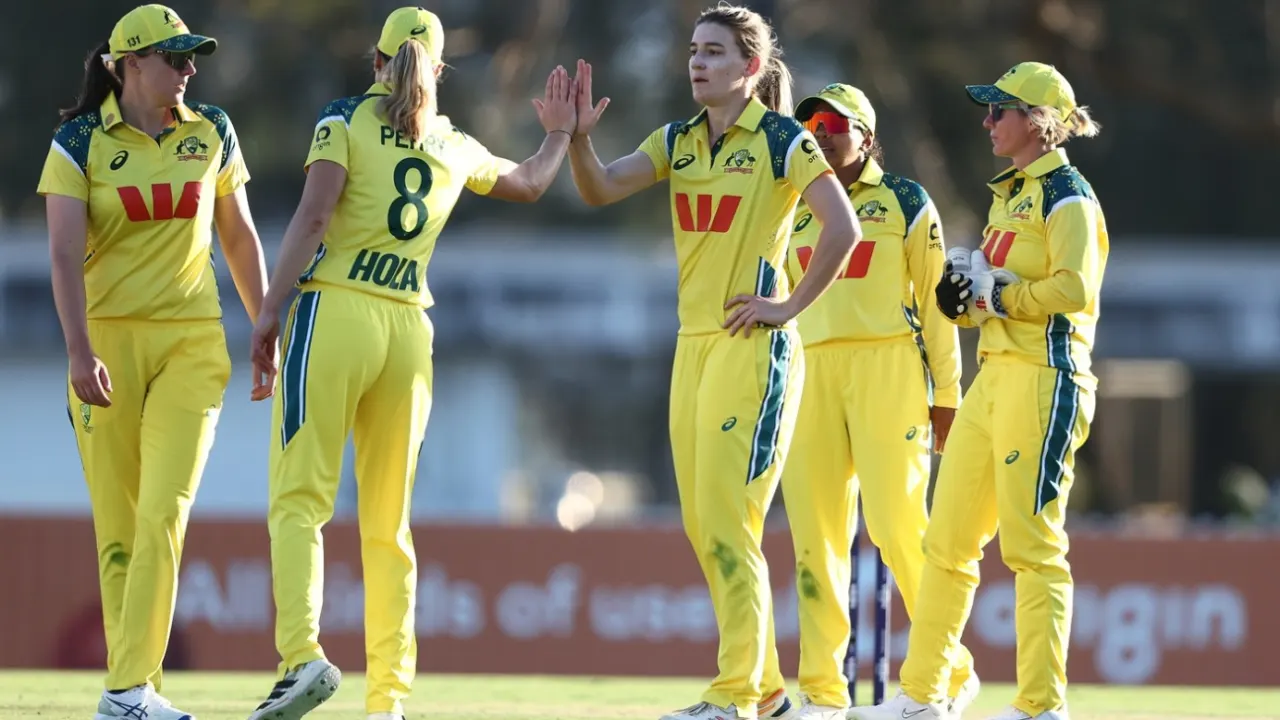
Bangladesh’s second visit to Australia and their first women’s ODI in the country began on a disappointing note as Australia ran out quick and convincing victors.
Annabel Sutherland showed why she is regarded as one of the most versatile fast-bowling allrounders in the world by taking 4 for 30. She kept the batters on their toes by varying the lengths and speeds as Bangladesh were bowled out for 166. Phoebe Litchfield’s swift 77 helped Australia canter home with 24.2 overs and seven wickets to spare to take a 1-0 lead in the three-match series.
The win meant Australia extended their unbeaten record in ODIs at the Allan Border Field in Brisbane to 22 games.
Bangladesh might have put up an even lower total if not for an intent-filled innings from Ritu Moni. Batting at No. 7, she hit two fours in her first four balls following a phase where Bangladesh scored only 35 in about 15 overs.
Asked to bat first, Bangladesh were stung first ball when Megan Schutt got one off a length to hoop in big to have Fargana Hoque caught at slip. In her next over, Schutt trapped the other opener Sarmin Sultana lbw to become only the third Australia woman to 150 ODI wickets.
When Sutherland’s bouncer cramped Sharmin Akhter for room, leaving her unable to get any control on the pull, Bangladesh were truly under the cosh, having lost three wickets inside the first powerplay.
That soon became 48 for 4, which prompted captain Nigar Sultana, perhaps Bangladesh’s best batter, to go into a shell. She hardly looked to score from that point and was happy to defend and merely prevent further wickets from falling.
The ploy was evident from the fact that Nigar didn’t put Sutherland under pressure when she bowled three successive no-balls in the 12th over. What’s more, unaware of the free hit on offer, she ducked under a short ball as well. Shorna Akter, too, curtailed her aggressive instincts to support her captain.
Bangladesh crawled at three runs per over through the middle phase before Tahlia McGrath had Nigar caught behind for 29 off 83 balls. Nigar perhaps half-referred to her own innings when, after the game, she said that Bangladesh “need to be cautious against the new ball and get the intent right”.
As soon as she fell, Moni and Shorna started to put back the pressure on Australia’s spinners. Moni fetched a couple of sweeps from outside off to hit them through midwicket. Shorna also used her feet more frequently.
Moni looked good to score her second half-century in ODIs but was hampered by cramps. That hindered her running, and eventually she was run-out for 45 off 63 balls. Sutherland was generous with her use of the back-of-the-hand slower ones from then on to keep the rest of the batters on a leash.
Australia were never going to be challenged in a paltry chase of 167, and Georgia Voll and Litchfield hit five fours in the first five overs of the chase to get them going.
That is when Bangladesh found another performer of note. Seventeen-year-old Habiba Islam, on ODI debut, bowled a sharp bouncer which got rid of Voll. Habiba, who made her T20I debut against India in 2024 as a 15-year-old, got the ball to nibble around at high pace. While her first spell was expensive, she returned in the middle overs to get Beth Mooney caught brilliantly at midwicket. She bowled the length ball outside leg and got it to move in late, and Mooney could only spoon it to Fargana, who ran in from the circle and completed a diving catch.
But between these two bits of celebration for Habiba and Bangladesh, Litchfield had almost killed the chase. She moved around the crease to hit Marufa Aklter for three successive fours in the seventh over of the chase, and then muscled Habiba over mid-on for the only six in the match.
She played her trademark reverse sweep off Nahida Akter and soon got to fifty off just 35 balls. Her second-wicket stand with Ellyse Perry was worth 89 off 67 balls with Perry contributing only 15 off 23. Until the time Litchfield stepped out and drove Rabeya Khan straight to cover, it looked as if she would complete a century even with so few runs to get.
Scores:
Australia Women 168 for 3 in 25.4 overs (Phoebe Litchfield 77, Ellyse Perry 26*, Annabel Sutherland 25*; Habiba Islam 2-36) beat Bangladesh Women 166 in 49.4 overs (Sharmin Akhter 24, Nigar Sultana 29, Shorna Akter 21, Ritu Moni 45; Megan Schutt 2-19, Ammabel Sutherland 4-30) by seven wickets
[Cricinfo]

Afghanistan fast bowlers hit back after Bangladesh’s strong start

Sri Lanka chose to bat first in Rawalpindi

Sutherland and Litchfield lead Australia to quick and convincing win in ODI series opener

USS Tulsa departs Colombo

Appointments for 1,540 Grama Niladhari Officers

Trump says US will not strike Iran before midterm elections

‘Dates have the highest sugar content to fight Coronavirus’

Sunday Island 27 December – Headlines

#SundayIsland 17th December – Headlines

Sunday Island – 28th March

Sunday Island Headlines – 21 March

Sunday Island – 21st February – Headlines
-

 Features6 days ago
The first woman in the foreign service or Ceylon Overseas Service it was then called
-

 News5 days ago
Geneva takes up Sallay’s case and govt. ignores opportunity to answer accusations
-

 Editorial7 days ago
Fuelling discontent and protest
-

 Foreign News6 days ago
Ten injured after car crashes into rugby supporters in Australia
-

 News6 days ago
Nearly 20 Iranian tankers stranded off Lanka amid US sanctions
-

 Latest News7 days ago
Tharindu Rathnayake, bowlers secure Asian Games Bronze for Sri Lanka
-

 Features4 days ago
Preventing grievances from becoming communal
-

 Features5 days ago
Sri Lanka Cricket Bill: Governance reform is not yet a cricket strategy