
Sports
Mahanama’s book reveals Ranil backed Thilanga undermining Amarasuriya


by Rex Clementine
Among those who follow the gentleman’s game closely, many regard UNP Leader Ranil Wickremesinghe as Mr. Clean. But if they get hold of Roshan Mahnama’s new book, they will have a second opinion. Mahanama in his autobiography ‘My Innings’ goes onto claim that Wickremesinghe as Prime Minister in 2002 stopped then cricket chief Hemaka Amarasuriya from attending an ICC Meeting and instead nominated Thilanga Sumathipala.
“We were appointed to mange Sri Lanka Cricket due to a prevalent issue at the time, till fresh elections appointed a new committee. However, this was a very brief stint as the level of politics involved was contrary to my work ethic and principles. As an example, the Interim Committee decided that the Chairman Hemaka Amarasuriya should attend the ICC annual meeting. However, Prime Minister Ranil Wickremesinghe overruled and said that Thilanga Sumathipala who was not even part of the committee at the time, would attend instead,” writes Mahanama.
To give a bit of background, Sumathipala had been ousted a year prior to that as cricket chief by President Chandrika Kumaratunga and he would avenge his ouster by triggering multiple crossovers that crashed CBK’s Peoples’ Alliance government and Wickremesinghe’s UNP came into power. Sumathipala and the UNP had a deal and Wickremesinghe paved the way for Sumathipala to make a comeback at Maitland Place.
This is Mahanama’s second book on cricket and it was launched just before the festive season. Like the first one, it is selling like hot cakes. The book has some interesting anecdotes, mostly Mahanama’s observations during his long stint as a Match Referee with the ICC.
Often, cricket fans have wondered why Brian Lara batted wearing sunglasses during certain stages of his career. With fast bowlers operating at 140kmph it’s not the most sensible thing to do, that too in fading light. But Lara had his own ways. Mahanama’s book gives you a clue to his eccentrics.
“Memories go back to my first Test match in St. Lucia. I was walking out to the middle with the West Indies captain Brian Lara. I noticed that he was wearing dark sunglasses despite it being overcast and the possibility of rain and I made a casual comment with regards to it. Brian replied in typical Caribbean style, ‘Rosh, I came back at 5 am, and I need to hide my eyes from the camera.’ Such was the culture in the Caribbean and the brilliance of the individual he flayed the bowling to all parts and scored a hundred in quick time as well.”
Mahanama goes onto explain in the book some of the challenges that he faced in the early days as an ICC Match Referee.
“During my early days, I vividly recall some umpires intentionally used to call me ‘Ranjan’ repeatedly. I perceived this to be done as a side jab or indication that they believed that I had received my appointment due to Ranjan Madugalle, as it was only Sri Lanka who had two members on the Elite Panel of seven referees. I handled the issue patiently and professionally. Once I became more confident in my role, I used to at times reply in jest that, ‘you can only take a horse to the water, but you can not make it drink.’
Mahanama’s book also deals with some of the issues facing Sri Lankan cricket and most cricket enthusiasts tend to agree with his sentiments.
“Since the 1996 World Cup, for over two decades most of the administrators at the top have remained unchanged. They transfer from one position to the next and make changes with individuals such as coaches and selectors who are involved with cricket operations. However, it is ensured that they themselves or individuals associated to their ideology remain in key positions. A profound change is now required,” he notes.
“The constitution of SLC and the Sports Law of the country needs to be changed drastically. The present system where appointments are made through an election of club representatives numbering over a hundred small clubs, some of which are unheard of, leaves significant room for mismanagement by certain individuals. Such votes are easily bought over, which leads to the monopoly created by the same individuals who keep getting themselves re-elected. Hence, a complete revamp is needed,” he goes onto point out.


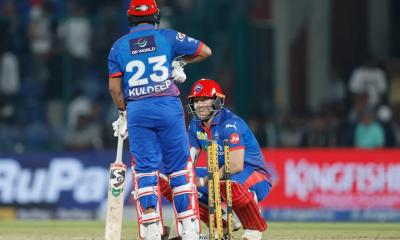




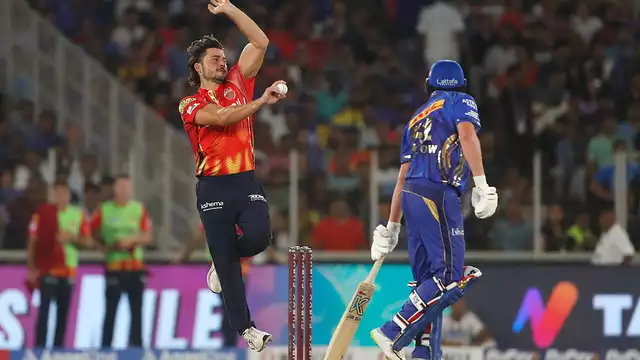

Why did David Miller refuse a single off the penultimate delivery with Delhi Capitals needing 2 off 2? It’ll be spoken of for a while, but not inside the Gujarat Titans change room. Because Prasidh Krishna bowled a nerveless slower bouncer off the final delivery that Miller missed, and Jos Buttler then nailed a direct hit with an underarm throw from behind the stumps to run out Kuldeep Yadav, clinching a dramatic first win for GT in IPL 2026.
Despite being adjudged run out on the field, Miller wasn’t in the mood to concede defeat, and reviewed the final ball for a possible wide. But when replays confirmed what he had perhaps known, he was crestfallen. Equally distraught in the dugout was K L Rahul, whose 52-ball 92 set the game up for DC but for one run.
It was GT’s first win of the tournament and the first loss for DC after starting the campaign with two wins in a row.
Thirty-six needed off 12. A bruised finger that didn’t make it easy for him to grip the bat had forced Miller to retire hurt with DC needing 81 off 42. But when Tristan Stubbs was run-out in the 17th over, Miller returned hoping to play second fiddle to Rahul. Instead, he was now expected to deliver a box-office hit with Rahul nicking behind off a full Mohammed Siraj delivery two balls later.
Miller nearly delivered what was expected, as he went 6, 4, 6 off Siraj, repeatedly peppering the short leg-side boundary. At the other end, Vipraj Nigam also ramped four off a short delivery to bring the equation down to a manageable 13 off the final over.
Prasidh was tasked to bowl the final over. His three overs prior to that had been walloped for 41; Rahul, his state mate, had climbed into him earlier in the night. But all that would’ve been forgiven if Prasidh delivered a gun final over. That GT could only have four fielders out due to a slow over rate added to his challenge. And he nearly succumbed.
Nigam made room and swung cleanly to hit the first ball to the long-off fence, but a rush of blood had him swipe the second delivery to Shubman Gill at mid-off. With DC now needing nine off four, Kuldeep gently deflected his first ball to deep third to leave the chase in Miller’s hands.
With the equation down to 8 off 3, Prasidh bowled a slot-ball that Miller walloped over long-off. But with two needed, Miller inexplicably refused a single to take it all upon himself to finish the deal. He couldn’t connect on the final ball, and Prasidh belted a roar. GT had pulled one from under DC’s rug in dramatic circumstances.
After scores of 1 and 0 in his first two games, Rahul announced himself with a 29-ball half-century that was as pleasing as they come for large parts. It was also one that didn’t have the baggage of him playing run-accumulator, like he has tended to in the past while opening the batting. This Rahul was fun, free and fearless and he helped DC overcome a few roadblocks along the way, like when they lost two wickets in two deliveries to Rashid Khan at the halfway mark.
Rahul was particularly menacing against the fast bowlers, and it began with a wristy flick that he sent way back over deep square off Kagiso Rabada. The early jitters out of the way – if he even had some inkling of them – he batted like a man possessed, fearlessly climbing into length balls from Prasidh over cover, and slapping disdainfully over point.
He is good, but where is the Rashid of old, they asked. Turns out he hadn’t gone anywhere. After he conceded just nine in his first two with DC rampant, he returned to dismiss Nitish Rana in his dramatic third over, the 10th of the innings. Having been given out lbw earlier, only for Rana to overturn the decision through DRS, he was out a few balls later when he miscued a googly to Sai Sudharsan at long-off. This was Rana’s third sub-20 score of the season.
This brought the in-form Sameer Rizvi to the middle, and he lasted all of one delivery as Rashid snuck through his inside-edge with a ripping googly to briefly elicit jitters in the DC camp. This is when Miller entered, before briefly exiting with seven overs left. But in the same over, when Rashid had Axar Patel slice one to Glenn Phillips running back from cover, GT started to have an opening.
On any other night, Rashid’s spell would have cracked open the game. The fact that DC were still in it despite these wickets was down to Rahul. It needed the skilful Siraj to dismiss him with DC needing 45 off three overs. By then, the pressure was telling.
That GT were eventually able to get over the line was down to their run cushion, made possible thanks to half-centuries from Jos Buttler, Gill and Washington Sundar. Buttler looked unshackled, hitting four sixes off his first 15 deliveries en route a bruising half-century, while Gill played himself in and then allayed fears of neck spasms during his takedown of Kuldeep with the slog sweep. Then Washington, promoted to No. 4, struck his maiden IPL fifty to shore up the innings.
Even so, GT managed just 49 off the last five. On another day, this may have proved to be costly. It didn’t on Wednesday, and for that, they have Rashid to thank.
Brief scores:
Gujarat Titans 210 for 4 in 20 overs (Sai Sudarshan 12, Shubman Gill 70, Jos Buttler 52, Washington Sundar 55, Glenn Phillips 14*; Mukesh Kumar 2-55, Lungi Ngidi 1-24, Kuldeep Yadav 1-42 ) beat Delhi Capitals 209 for 8 in 20 overs (Pathum Nissanka 41, KL Rahul 92, David Miller 41*, Vipraj Nigam 12; Mohammed Siraj 1-42, Rashid Khan 3-17, Prasidh Krishna 2-52) by one run
[Cricinfo]

A stunning hundred by opening bat Lasith Croospulle helped Sri Lanka ‘A’ to post a commanding 368 for nine in their allotted 50 overs and then restrict New Zealand ‘A’ to 158 for three and a secure a 44 run win [DLS method] at Suriyawewa yesterday. The win helped Sri Lanka to take an unassailable 2-0 series lead.
The star for Sri Lanka ‘A’ was the former Maris Stella College, Negombo cricketer Lasith Croospulle as he smashed 103 off just 76 balls hitting 13 fours and six sixes as the hosts piled up the runs.
Croospulle has represented Sri Lanka in one T20I and performances such as these are sure to earn him a regular spot in the white ball sides.
The middle order then ensured that they didn’t spoil the good work of the top order with captain Sahan Arachchige and Sonal Dinusha posting half-centuries.
Arachchige smashed 76 in 68 balls with five fours and two sixes while young Sonal Dinusha put the bowling to the sword during the death overs. His 93 came off 77 deliveries with six fours and four sixes.
Dinusha, who has already made his Test debut and impressed many with his electric fielding could have gone on to post his hundred but sacrificed his wicket in a bid to score quick runs.
With the World Cup less than a year away and the selectors keeping a close eye on the second string, performances like these are sure to get their attention.
Rain reduced the game to 28 overs and New Zealand were given a revised target of 203 but they only managed 158 for three to hand Sri Lanka a comfortable win.
Sri Lanka ‘A’ had won the first game by 140 runs in Galle. Saturday’s third one-dayer will be a dead rubber.
The teams will stay back at Suriyawewa for two further weeks where the two match unofficial Test series will be played.
The composition for the four day games is set to change with Pasindu Sooriyabandara set to lead the side.

BCCI curbs movement of benched IPL players in latest rules

Prasidh trumps Miller in last-ball finish as Gujarat Titans clinch thriller

Greece to ban social media for under-15s from next year

Showers will occur at a few places in the Western, Sabaragamuwa and North-western provinces and in Galle, Matara, Kandy, Nuwara-Eliya and Mannar districts after 2.00 p.m.

Sun directly overhead Chilaw, Bingiriya, Halmillawewa, Panduwasnuwara, Gokarella, Kawudupelella, Koppaveli and Kirankulam about 12:12 noon. today (09)

Heat Index at Caution Level in the Western, Sabaragamuwa, Southern, Eastern, North-western, Northern and North-central provinces and in Monaragala district

‘Dates have the highest sugar content to fight Coronavirus’

Sunday Island 27 December – Headlines

#SundayIsland 17th December – Headlines

Sunday Island – 28th March

Sunday Island Headlines – 21 March

Sunday Island – 21st February – Headlines
-

 Features4 days ago
Ranjith Siyambalapitiya turns custodian of a rare living collection
-

 News4 days ago
Global ‘Walk for Peace’ to be held in Lanka
-

 News2 days ago
Lankan-origin actress Subashini found dead in India
-
 Opinion6 days ago
Hidden truth of Sri Lanka’s debt story: The untold narrative behind the report
-

 Features4 days ago
Beyond the Blue Skies: A Tribute to Captain Elmo Jayawardena
-

 Features4 days ago
Aspects of Ceylon/Sri Lanka Foreign Relations – 1948 to 1976
-

 Features6 days ago
The Ramadan War
-

 Editorial5 days ago
Brouhaha over a book