
Business
Lycamobile’s Subaskaran Allirajah: Refugee from SL owning UK business empire

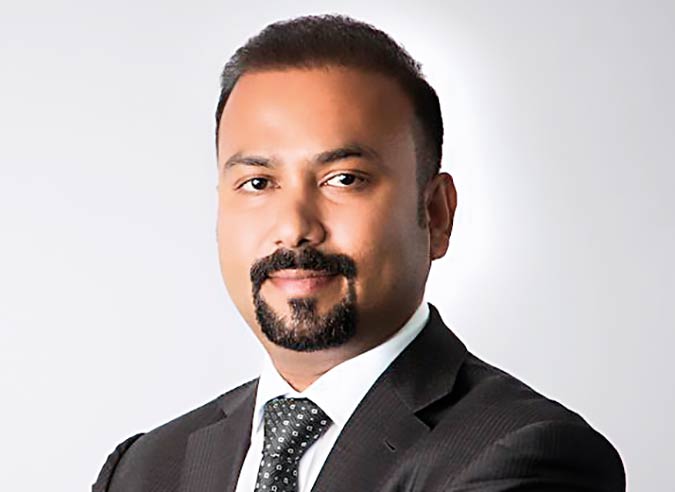
“He cooks for everyone and we stand around the breakfast bar and chat. Some of the most important decisions the company has taken have been over meals he’s made.”
This is one of Lycamobile’s leadership team, and he’s talking about his boss, founder and chairman Subaskaran Allirajah. Lycamobile is a mobile virtual network operator, providing Sim packages to people across the globe, enabling them to make calls to anywhere else in the world – you might recognize its store frontage.
The name “Lyca” is based on Allirajah’s sister’s name, Lehka. “I didn’t want to name the company after her exactly in case it didn’t work out,” he explains. Today, Lycamobile is in 21 countries, has 15m customers and turns over €1.6bn. According to The Sunday Times’s Rich List, Allirajah is worth £180m.
The company has 11 subsidiaries and other parts of the business, too: there’s (to name but a few) Lycaremit, a money transfer service, LycaFly, which offers cheap flights, LycaTV, Lycalotto and Lyca Productions, which is working on the film 2.0, billed as being the most expensive Indian production ever, having released a Bollywood hit already.
“Films as well?” I ask as we course through Allirajah’s achievements. “You can make a good margin on films in India, provided you run it as a business. But more than anything, film is my passion; I just really, really love it. When I was little I loved to watch movies – I’d watch one or two every day. Of course, I never thought I’d release a movie,” he qualifies.
But sitting talking to Allirajah in Bella Cosa, his Italian restaurant in Canary Wharf (it’s opposite his office and came up for sale. He owns the Indian down the road, too), it quickly becomes clear that life hasn’t always been like this. The multi-millionaire grew up in Sri Lanka during the country’s civil war. His dad died when he was young and, as a teenager, he followed his brother to Paris to escape the conflict.
Once there, the family set up a restaurant, then a grocers. The grocers sold calling cards to people who wanted to phone abroad. “Suddenly, the distributor stopped supplying, and customers were running round trying to find cards. Other incumbents were too expensive… my brother and I thought, ‘why don’t we just start selling them ourselves?’”
Business went well and, in 1999, Allirajah moved with his wife, then a medical student in Sri Lanka, to London. Three years later, he set up his own firm, Lycatel, a calling card firm. By 2006, he’d moved into mobile. Calling cards “were great for calling internationally at a cheaper rate, but a pain to use for the customer. In the early 2000s, not everybody had a mobile phone. But between 2000 and 2006, usage increased.”
Allirajah decided to bring across the benefits of the calling card to a mobile platform – so customers would have the benefit of making international calls cheaply on their mobiles. “To do that, we had to become a mobile virtual network operator (MVNO) – a user friendly innovation. Regulations in Europe had recently changed to allow this to happen, and the Netherlands was one of the first countries to adopt the change. So we launched Lycamobile there with T-Mobile.”
Move with the times
Now, Lyca’s reach spans Australia to Poland, Tunisia to the US. Allirajah says changing migration patterns and increasing movement means Lyca’s target audience has altered. “With calling cards, it was individuals looking to call outside Europe. Then, it was intra-Europe. Now, it is the international customer – anyone travelling internationally. People used to be happy with having two phones and having to switch between them; now they want just the one.”
Moreover, voice calls still play a huge part in Lycamobile’s offering, he adds, despite the enormous rise of data. That said, Lyca’s spin-offs focus closely on the rise in the use of data in its key markets: across Africa, for example, LycaTV offers specific content aimed at local audiences. You can see the logic: if you’re offering data, why not offer content for consumers using that data?
“We have LycaTV, LycaRadio – it’s great for customers to have all of that in one place. The challenge for all operators is to strike a balance between what people are doing, what they are using, and be one step ahead: what will they want next?”
A bigger purpose
But what has driven him to do all this? Attempting to extract a grand statement from him, we come to: “I simply took advantage of opportunities that were before me, because that was all I had at the time. Having some success has meant being able to give back to communities who need it. That is fulfilling.”
It’s his team who pipe up: “Subas is the most humble, generous person. He just will not admit it”; “he spends so much time giving others things, making the lives of others better.”
In 2010, Allirajah founded the Gnanam Foundation with his mum (Gnanam is her name). Financed entirely by his company, the foundation will shortly open Lyca Village in Northern Sri Lanka. The village has been built for a community that has been in a refugee camp for the past 25 years. “That is an achievement for me. I would like to do more projects like this, in places where it’s needed most.”
Allirajah’s wife is the chair of the Gnanam Foundation, and of LycaHealth. “She never got to finish her studies and become a doctor [she followed Allirajah to the UK and then studied biomedical sciences], so I said to her ‘I’ll make sure you will have many doctors reporting to you.’” LycaHealth owns and runs diagnostics centres in Canary Wharf and Orpington. It will shortly be opening a new, 11-storey facility, in Chennai in India. “The long-term plan is to have 10 worldwide. She’s the one behind it and now has over 200 doctors reporting to her.”
In addition to opening a village, a medical centre and releasing a film this year, Allirajah intends to press on with his plan to have 50m people using Lycamobile by 2020, focusing on Africa and South America for growth. The company has also just bought Ortel, a direct competitor in Belgium.
“It’s a good year, actually. And there is increasing interest worldwide for launching MVNOs – from football clubs to social media startups.”



Oil prices have surged to their highest level in nearly two weeks amid escalation on multiple fronts of the US-Israel war on Iran.
Brent crude, the global benchmark, rose more than 3 percent on Monday morning to top $116 a barrel.
The latest climb took the global benchmark to its highest point since March 19, when it briefly touched $119 a barrel.
The surge came after Iran said it was prepared for a US ground invasion, with the speaker of the country’s parliament warning that Tehran was waiting for the arrival of US troops to “set them on fire” and “punish” their regional allies.
Tehran’s warning came as the conflict deepened over the weekend, with the Iranian-backed Houthis launching missiles at Israel for the first time in the war, and Israel expanding its invasion of southern Lebanon.
Asia’s main stock indexes fell sharply in morning trading, with Japan’s Nikkei 225 and South Korea’s KOSPI both down more than 4 percent as of 1:30 GMT.
Iran’s effective closure of the Strait of Hormuz in retaliation for the US-Israel war has disrupted about one-fifth of global oil and liquified natural gas (LNG) supplies, plunging the world into its biggest energy crisis in decades.
Oil prices have risen nearly 60 percent since the start of the war, driving up fuel prices worldwide and forcing numerous countries to adopt emergency measures to conserve energy.
Analysts have warned that oil prices are likely to keep rising unless maritime traffic returns to normal levels in the strait.
US President Donald Trump has threatened to “obliterate” Iran’s energy infrastructure if Tehran does not relinquish its stranglehold on the waterway by a deadline of April 6.
Trump, who on Thursday extended his deadline by 10 days, has proposed a 15-point plan for ending the war with Iran and insisted that the two sides are making progress towards a deal in indirect talks being mediated by Pakistan.
Tehran has flatly rejected Trump’s plan and proposed its own terms for a ceasefire, including war reparations and recognition of Iran’s right to control the strait.
Greg Newman, CEO of Onyx Capital Group, which began as an oil derivatives trading house, said energy consumers were only beginning to feel the true fallout of the turmoil.
“Physical oil moves around the world in loading cycles, and Europe has taken around three weeks to really start feeling the effects of the oil shortage,” Newman told Al Jazeera.
“Brent is starting to reflect the reality, and we think it’s a steady rise from here towards $120 and beyond.”
Newman said the scale of the disruption had yet to be fully appreciated.
“No one in the market has ever seen the outages we are now suffering from – physical premiums are the highest ever. There is still a sense that the macro world is not taking this seriously enough, but it is worse than anything that has come before it,” he said.
“The reality will come out in the economic numbers over the coming months.”
While Iran has been allowing a growing number of transits by ships that are not aligned with the US or Israel, traffic remains a fraction of pre-war levels.
On Saturday, Pakistani Minister of Foreign Affairs Ishaq Dar announced that Tehran had agreed to allow 20 Pakistani-flagged vessels to pass the strait in what he described as a “meaningful step toward peace”.
Malaysian Prime Minister Anwar Ibrahim said last week that Iran had granted an unspecified number of Malaysian vessels permission to clear the strait.
Seven non-Iranian vessels passed the strait on Thursday, up from five on Wednesday and four on Tuesday, according to maritime intelligence firm Windward.
Before the start of the war on February 28, the strait saw an average of 120 daily transits, according to Windward.
[Aljazeera]

The era of privatising loss-making state-owned enterprises may be drawing to a close, with SLT-MOBITEL emerging as proof that strategic management can deliver profitability without a change in ownership, Deputy Minister of Digital Economy Eng. Eranga Weeraratne said.
“There was a massive public outcry asking the previous governments to sell the loss-making state-owned enterprises. Now it is not there as it was used to be heard,” Weeraratne said. “SLT-MOBITEL has proven that the proper management strategy can turn any loss-making SOE into profit. Gone are the days we heard ‘sell, sell, sell’.”
The remarks came as Sri Lanka’s national ICT provider reported a decisive financial turnaround in FY 2025, driven by disciplined cost management, operational efficiency, and steady growth across fixed and mobile businesses.
The company has simultaneously rolled out a pioneering 24/7 operational model – the industry’s first – with 14 Outside Plant Maintenance Centres operating round-the-clock in metro areas, Kandy, and Jaffna to ensure uninterrupted connectivity.
“Our strong financial results reflect the resilience of SLT-MOBITEL and the trust customers place in us,” said Dr. Mothilal de Silva, Chairman, SLT Group. “With the roll-out of the 24/7 OPMC operations, we are raising the bar for service reliability.”
SLT-MOBITEL has also made 5G publicly available in Sri Lanka and continues to support the Ministry of Digital Economy with secure data centre infrastructure, reinforcing its role as a catalyst of national development.
By Sanath Nanayakkare

Kia Motors Lanka has launched the all-new Kia Tasman, the brand’s first-ever pickup truck – engineered to redefine the double cab segment by combining rugged capability with SUV-like refinement.
Built on a robust body-on-frame platform, the Tasman offers best-in-class strength with a payload capacity of 1,151kg, towing up to 3,500kg, and water wading up to 800mm. Advanced 4WD systems and terrain modes ensure unmatched off-road performance.
Inside, the cabin surprises with best-in-class rear legroom, sliding and reclining rear seats – a segment-first – and a panoramic display with premium Harman Kardon sound.
Powered by a 2.2-litre diesel engine (210PS, 441Nm), the Tasman is backed by a 5-year or 150,000km warranty.
“This is a vehicle conceived without compromise,” said Kia Motors Lanka Chairman Mahen Thambiah. “For customers who demand durability, capability, and everyday comfort, the Tasman delivers on every front.”

Electricity tariffs to be increased from 1st April

A QR code system to be introduced for agricultural lands and other sectors requiring fuel

Rickelton, Rohit, Shardul break Mumbai’s first-game jinx

Oil tops $116 a barrel as Iran accuses US of preparing invasion

Iranian attack damages Kuwait power and desalination plant, kills worker

Warm weather conditions prevailing over the island are expected to continue

‘Dates have the highest sugar content to fight Coronavirus’

Sunday Island 27 December – Headlines

#SundayIsland 17th December – Headlines

Sunday Island – 28th March

Sunday Island Headlines – 21 March

Sunday Island – 21st February – Headlines
-

 News6 days ago
Senior citizens above 70 years to receive March allowances on Thursday (26)
-

 Features3 days ago
A World Order in Crisis: War, Power, and Resistance
-

 News4 days ago
Energy Minister indicted on corruption charges ahead of no-faith motion against him
-

 News5 days ago
US dodges question on AKD’s claim SL denied permission for military aircraft to land
-

 Business5 days ago
Dialog Unveils Dialog Play Mini with Netflix and Apple TV
-
 Business7 days ago
Postponement of Sri Lanka Investment Forum 2026
-

 News6 days ago
CEB Engineers warn public to be prepared for power cuts after New Year
-

 Sports4 days ago
SLC to hold EGM in April