
News
Long queues for gas and fuel at filling stations


People have been subjected to catastrophic fate like never before
(UCAN) Long queues can be seen in front of gas outlets and filling stations in Sri Lanka as the country faces hours of daily power cuts.
The United Kingdom has warned British citizens about the dire economic situation in Sri Lanka leading to a shortage of basic necessities like fuel, medicines and food.
Riddley Nugasinghe, a university student and activist, said there are shortages of gas, milk powder, fuel and cement.
“People are in long queues for hours to carry gas cylinders and some have had to return home with empty cylinders,” said Nugasinghe, who was in a queue for two days to buy gas in Colombo.
“The massive increase in fuel prices has caused a huge shock that ordinary people cannot bear. One of the main reasons is that foreign exchange has not been properly managed.”
Sri Lanka has been hit by a dollar issue and is struggling to pay for imports including gas, medicines, fuel and food.
The Sri Lankan rupee has fallen 30 percent after the government allowed the currency to free-float last week.
The government has asked for advice from the International Monetary Fund (IMF) amid the worsening economic crisis.
Ven. Muruttetuwe Ananda Thera, chancellor of Colombo University, said Buddhist monks are ready to take the government on the right path or to send it home.
“We worked hard to form this government. But the shortcomings are increasing day by day and the people have been subjected to a catastrophic fate like never before,” he said.
Bishops and priests joined fishermen in Negombo on March 3 to demand protection of their livelihoods as they face a fuel shortage and higher prices.
A Catholic priest said the power cuts and fuel shortage have affected prayer services and other activities during Lent.
“There is a shortage of buses for children to go to schools and with the increase in bus fares many people are finding it difficult to go to work,” said the priest from Negombo who wanted to remain anonymous.
The priest said children are studying using kerosene oil lamps, fishermen do not go to sea and factories are limiting production.
Lawmaker Udaya Gammanpila, who was sacked last week, said people were suffering in queues not for a necessary reason but because of the tactics of deliberately crashing the economy.
“This is not a situation that has arisen but a situation that has been created. At present, the government earns more than 750 million rupees a day from taxes on fuel,” said Gammanpila.
The government said it has written to the IMF seeking technical support to manage the economic crisis.
The government’s main opposition held a massive demonstration in Colombo on March 15 evening against the multiple crises in the country.


The National Shoora Council (NSC) has submitted a humanitarian appeal to the King of Saudi Arabia Salman bin Abdul Aziz Al Saud, King of Saudi Arabia seeking royal clemency and compassionate consideration for Sri Lankan citizen Sivarasa Anujan, convicted and sentenced by a Saudi Court to five years of imprisonment and a financial fine of three million Saudi Riyals for publicizing contemptuous utterances insulting Holy Prophet Muhammed. Sentence is said to have been enhanced in appeal to a sentence of death on Anujan, yet to be confirmed.
The NSC is a home-grown and apolitical umbrella organization representing 14 national-level Muslim organizations in Sri Lanka
The appeal states that ‘while reaffirming respect for the sovereignty, laws, and judicial institutions of the Kingdom of Saudi Arabia’, the NSC has clarified that this appeal ‘does not contest or question the ruling of the competent judicial authorities. Instead, it is submitted strictly on humanitarian grounds, urging consideration of Mr. Anujan’s personal, financial, and family circumstances’.
The appeal signed by NSC President M.M. Zuhair President’s Counsel and NSC General Secretary Rasheed M Imthiyas Attorney at Law highlights key humanitarian factors for the Saudi ruler’s consideration on an urgent basis.
* Sincere Remorse and Repentance: Mr. Anujan has publicly expressed deep regret and genuine repentance via social media, seeking forgiveness and reaffirming his respect for the universally recognized status of Prophet Muhammed (peace be upon him) and the religious sentiments of Muslims.
* Context of Provocation: The incident arose amid sudden emotional reactions to material circulating on social media following a recent Hindu religious procession in East Sri Lanka. “While not legitimising Anujan’s reactions, the NSC has pleaded for absolute clemency referring to this young man’s subsequent remorse and apology as critically important mitigating circumstances for granting clemency.
* Severe Economic Hardship: Mr. Anujan is a modest-income migrant technocrat employed in Saudi Arabia and supporting a large family in Sri Lanka from his Saudi earnings. His absence places severe financial strain on his dependents, and he lacks the financial capacity to pay the heavy fine, leaving an economically vulnerable family without livelihood.
* Disrupted Life Plans: Prior to his detention, Anujan was preparing to marry a young woman from a low-income family in his village later this year. His current imprisonment has created profound uncertainty and distress for both families.
* Promoting Coexistence and Goodwill: As an organisation dedicated to peaceful coexistence among Sri Lanka’s diverse Buddhist, Hindu, Muslim, and Christian communities, the NSC believes that a compassionate resolution will bring immense relief, foster interfaith harmony, and further strengthen the longstanding bonds of friendship between Sri Lanka and the Kingdom of Saudi Arabia.
NSC has forwarded copies of the appeal to Sri Lanka President Anura Kumara Dissanayake; Minister of Foreign Affairs Vijitha Herath, Mr. Yaser Bin Abdulrahman Al-Hazme, Chargé d’ Affaires of the Embassy of the Kingdom of Saudi Arabia in Colombo, Deputy Speaker of Sri Lanka Parliament Dr Rizvie Salih, Governor Haneef Yusuf and Deputy Minister of Religious and Cultural Affairs Muneer Mulaffar.
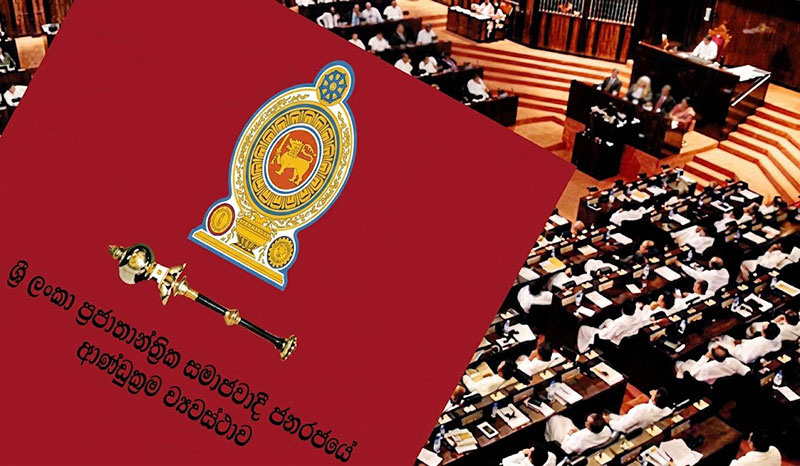
Parliament will vote on the 22nd Amendment to the Constitution at 7.00 p.m. on September 25, following a two-day debate scheduled for September 24 and 25, according to parliamentary sources.

After months of delay in filling several vacancies in the Court of Appeal, President Anura Kumara Dissanayake has recommended High Court Judges Navaratne Marasinghe and Manjula Thilakaratne to the Court of Appeal. The recommendations have been made to the Constitutional Council, the President’s Office said.
The President’s Office said that based on the recommendation of the Judicial Service Commission the President would appoint judicial officers Perumal Sivakumar, Ananthi Kanagaratnam and Gnanesha Lalith Kannangara as High Court Judges today (23).

NSC issues humanitarian appeal on behalf of Sri Lankan facing death sentence in Saudi Arabia

Vote on 22 A on Friday

Sri Lanka settle for silver as India strike gold in cricket

A sustained wave of Indian assistance to Sri Lanka showcases defining shift in developmental diplomacy

Thileepan’s fast unto death: An authentic narrative that many missed

Big Bad Bills

‘Dates have the highest sugar content to fight Coronavirus’

Sunday Island 27 December – Headlines

#SundayIsland 17th December – Headlines

Sunday Island – 28th March

Sunday Island Headlines – 21 March

Sunday Island – 21st February – Headlines
-

 News6 days ago
US embassy won’t comment on IGP’s probe into joint drug raid
-

 News5 days ago
Bid for Basil’s extradition nears final stage: Police
-

 News4 days ago
Shanakiyan urges urgent action over reported death sentence for Lankan in Saudi Arabia
-

 Business6 days ago
All-new Bolero MaXX unveiled in Sri Lanka
-

 News3 days ago
Namal Rajapaksa Buddhist gambit fails, bail denied
-
 Opinion6 days ago
A journalist who wrote across the divide
-

 Features3 days ago
Why the spelling Sri Lankan names in English vary
-

 Features3 days ago
Three bands, a new identity: Sri Lankan wolf snake recognised as distinct species