
Sports
Life after the armband for Asalanka


Stripped of the captaincy on the eve of a World Cup, Charith Asalanka finds himself skating on thin ice. Suddenly, runs are not just runs; they are legal tender. In a game that is brutally transactional, weight of runs is the only currency that guarantees a seat on the flight. The soft will curse their luck and sulk in the corner. The tough roll up their sleeves, take guard, and play the long innings.
History, as ever, offers a handy cue card. Take Arjuna Ranatunga. Axed as captain after the controversial 1991 tour of New Zealand, he was reduced to a mere batter for the 1992 World Cup. What followed was one of the great redemption arcs. A backs-to-the-wall knock at the Basin Reserve against South Africa, with Allan Donald huffing and puffing fire and then that audacious chase against Zimbabwe that rewrote the laws of possibility with the game’s first successful 300-plus pursuit. By the time the confetti settled, Ranatunga was back at the helm, having dragged Sri Lanka to glory almost single-handedly. Asalanka, a fellow left-hander, could do worse than study that script.
When Asalanka took charge of the white-ball sides last year, the sense was that destiny had tapped him on the shoulder. This was a leader in the making, groomed patiently by Sri Lanka Cricket for over a decade. An Under-19 captain, exposed through development squads and domestic leadership roles, he appeared primed to become an all-format captain in due course.
With the bat, particularly in ODIs, he often played the role of the fireman, dousing flames after collapses or steering run chases with a cool head. As a leader, he spoke well, kept the dressing room together and was generous with praise. But just as the talk turned to a long reign, the wheels began to wobble and then, slowly but surely, came off.
Asalanka began treating First-Class cricket like a contagious disease, scarcely turning out for SSC. That absence hurt. The country’s premier club slipped into Division Two, losing First-Class status for the first time in its storied history and his name was firmly in the dock.
Then came murmurs of a clique, largely made up of his Richmond College schoolmates, a charge that rarely ends well in any dressing room. The Asia Cup only deepened the scrutiny. His bowling changes were pedestrian, with holding Dunith Wellalage back for the final over against Afghanistan’s Mohammad Nabi standing out as a tactical misread. The feeling grew that he wasn’t squeezing the most out of his resources.
Pakistan was worse. He looked out of shape, which is never a good look for a captain and the runs dried up in T20 internationals.
When Dasun Shanaka, the man he had replaced, was installed as his deputy, the writing was on the wall in bold capitals. Asalanka, though, failed to read the signs. His brinkmanship in Pakistan, including threats to pull out of the tour, proved to be the final straw.
At 28, Asalanka is still young and this episode may yet prove a necessary dressing down. He is no villain. By all accounts, he is a humble bloke who has momentarily lost his bearings. It happens, particularly to young athletes thrust into leadership before they fully understand the traps that come with it. Right now, he needs support, a steady arm around the shoulder and the chance to rediscover his game.
There is little doubt about his value. Asalanka remains the country’s best finisher, not the sort who clears the ropes four times an over, but the kind who finds gaps, runs hard, rotates strike and before the opposition realises it, has them gasping for air. These are not the fireworks merchants who hog the highlights, but they are the players who win you matches quietly and consistently.
If he is to reclaim his place and perhaps the T20 armband again, the path is simple and unforgiving. Bat first, talk later. In cricket, as in life, nothing silences critics quite like runs on the board.
by Rex Clementine



The Rose Bowl, which has been awarded to the winner of ODI series between the women’s teams of Australia and New Zealand since 1985, has now been expanded to include T20Is as well.
New Zealand’s three match T20I tour of Australia, which begins on Sunday at the North Sydney Oval, will be the first T20I edition of the Rose Bowl. The teams will get to face off again for the trophy in March 2027 when they meet again for three ODIs, also in Australia.
For Rose Bowl series that include matches in both white-ball formats, the trophy will go to the team with the most wins overall. In case of a drawn series, the current holder will retain the trophy.
“The Rose Bowl is a prestigious trophy that holds a lot of meaning to current and past players, and it’s a series we’ve always taken a lot of pride in competing in,”Catherine Campbell, NZC’s chief cricket operations officer and a former New Zealand player, said. “With so much T20I cricket now being played, this is a brilliant opportunity to keep the Rose Bowl relevant and to build on the history between us and our Australian rivals.”
New Zealand captain Melie Kerr was excited by the broadening of opportunities to compete for the Rose Bowl.
“We’re all aware of what the Rose Bowl represents and the importance it holds in the White Ferns whakapapa [genealogy],” said Kerr. “Great players and teams have fought for it over the years and we’d love the opportunity to claim our own piece of that history.”
Australia have held the Rose Bowl continuously since wresting it back from New Zealand in 2000. Since that 3-0 win, Australia have won 18 times with one series – in 2008-09 – shared 2-2. Overall, Australia have won 26 of the 31 ODI series played for the Rose Bowl, with New Zealand winning three times and three series drawn.
North Sydney will host all three T20Is of the upcoming Rose Bowl series, on October 18, 20 and 22.
[Cricinfo]

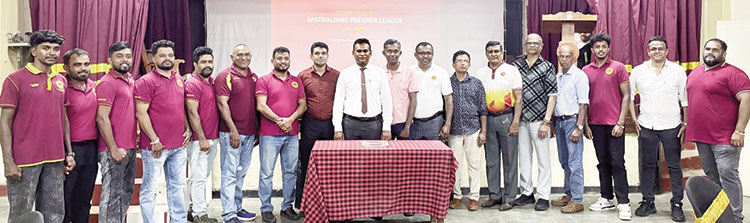
The inaugural Sastralian Premier League (SPL), a T10 cricket tournament aimed at strengthening the cricketing fortunes of Ananda Shasthralaya National School, Matugama, will get underway next month, bringing together eight teams.
Organised by the Old Sastralians Cricket Association in collaboration with the school, the tournament is designed to provide a platform for emerging talent while generating much needed financial support for the school’s cricket development programme.
Each franchise will be required to assemble a squad of 16 players, excluding the captain, with the competition featuring a unique set of regulations aimed at encouraging participation across different age groups.
Cricketers from other schools in the Matugama area will also have an opportunity to showcase their skills under the ‘Guest Players’ category. Each team can recruit up to six guest players, with four required to feature in the playing XI.
In a move designed to nurture the next generation, every team must include two current school cricketers in its squad, with at least one guaranteed a place in the playing XI.
The tournament will also accommodate experienced campaigners, with teams permitted to select five players over the age of 20 and three over 40. The provision to use an ‘Impact Player’ is another feature of the competition.
The eight teams have been divided into two groups. Group A comprises JSD Challengers, Jagath Express, Liveka Power Lions and Rexhill Warriors, while JPI Royals, Five Star Heroes, Marine Titans and Finnk Falcons make up Group B.
A total of 16 matches will be played across November 7, 8 and 15, with November 16 set aside as a reserve day.
Beyond the action on the field, organisers hope the tournament will provide a financial boost to school cricket while forging stronger ties between past and present cricketers.
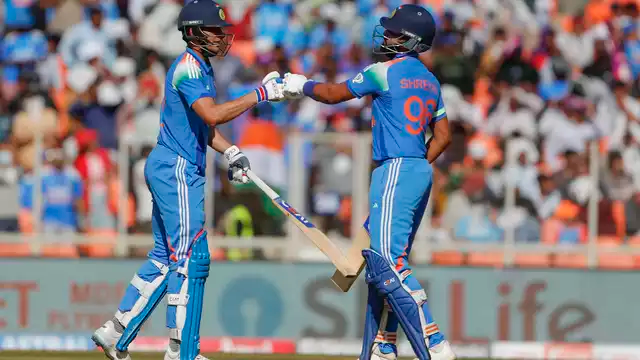
Squad for the first three ODIs: Shubman Gill [C], Rohit Sharma, Virat Kohli, Shreyas Iyer [VC], KL Rahul [WK], Nitish Kumar Reddy, Axar Patel, Naman Dhir, Anshul Kamboj, Gurnoor Brar, Ruturaj Gaikwad, Arshdeep Singh, Ishan Kishan [WK], Mohammed Siraj, Prasidh Krishna*, Kuldeep Yadav
Squad for fourth and fifth ODIs: Shreyas Iyer [C], Rohit Sharma, Virat Kohli, Tilak Varma, Ishan Kishan [WK, VC], Nitish Kumar Reddy, Axar Patel, Naman Dhir, Auqib Nabi, Gurnoor Brar, Ruturaj Gaikwad, Arshdeep Singh, Kumar Kushagra [WK], Mohammed Siraj, Yash Thakur, Kuldeep Yadav
[Cricbuzz]

Review of progress in reforms and modernisation of key state revenue-collecting institutions

Rose Bowl expanded to include Australia vs New Zealand T20Is

Trump claims US Navy blockade stops Iranian ships in Hormuz

Showers above 75 mm are likely at some places in the Western, Sabaragamuwa, Central and North-central provinces and in Trincomalee and Mullaitivu districts

Cut power bills by 3-5%, don’t hike them, consumers demand

Asgiri Mahanayake calls for immediate release of Gnanasara Thera

‘Dates have the highest sugar content to fight Coronavirus’

Sunday Island 27 December – Headlines

#SundayIsland 17th December – Headlines

Sunday Island – 28th March

Sunday Island Headlines – 21 March

Sunday Island – 21st February – Headlines
-

 News6 days ago
Sri Lanka escalates anti-graft drive with Shiranthi’s jailing
-

 News6 days ago
Iranian ships stranded, Lanka fears US sanctions
-

 Latest News5 days ago
Farhan and Sadaqat help Pakistan seal series in style
-

 Latest News4 days ago
Nissanka’s return headlines Sri Lanka’s Test squad against Pakistan
-

 Features5 days ago
Intake 16: 45 years of duty and honour
-
 News5 days ago
Malwathu Chapter issues statement on talks with President over Gnanasara Thera’s robes
-
 News6 days ago
Navi Pillay’s Lankan affairs in focus as she wins 2026 Nobel Peace Prize
-
 News5 days ago
CP alleges NPP has taken the blame for illegal US sanctions on Iranian vessels