
News
Let us initiate the qualitative change required for a new society within ourselves – Prime Minister

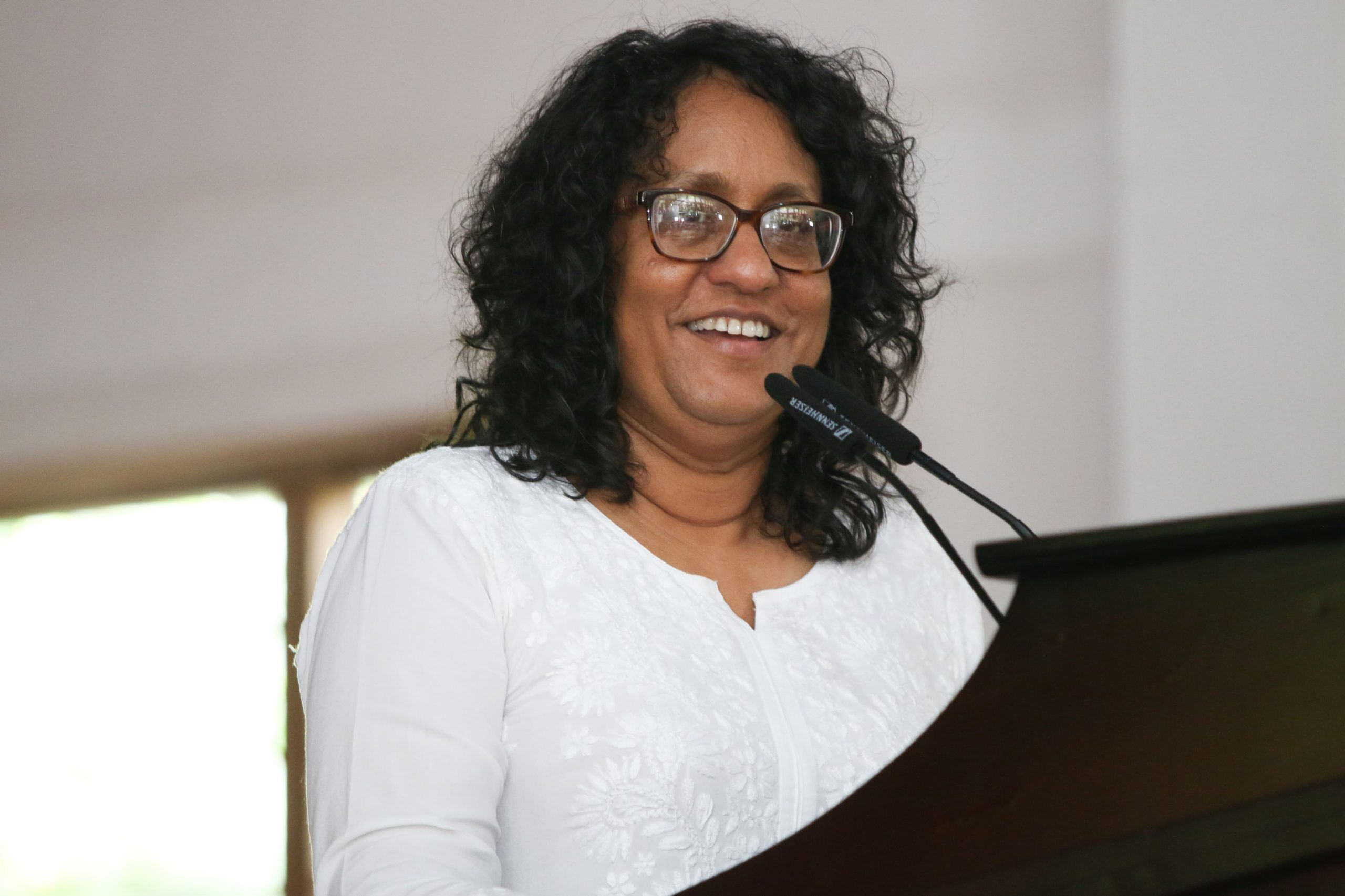
Prime Minister Dr. Harini Amarasuriya stated that the qualitative change required for a new society should begin within ourselves and that the government has planned to develop cooperatives suited to the modern world while strengthening the rural economy.
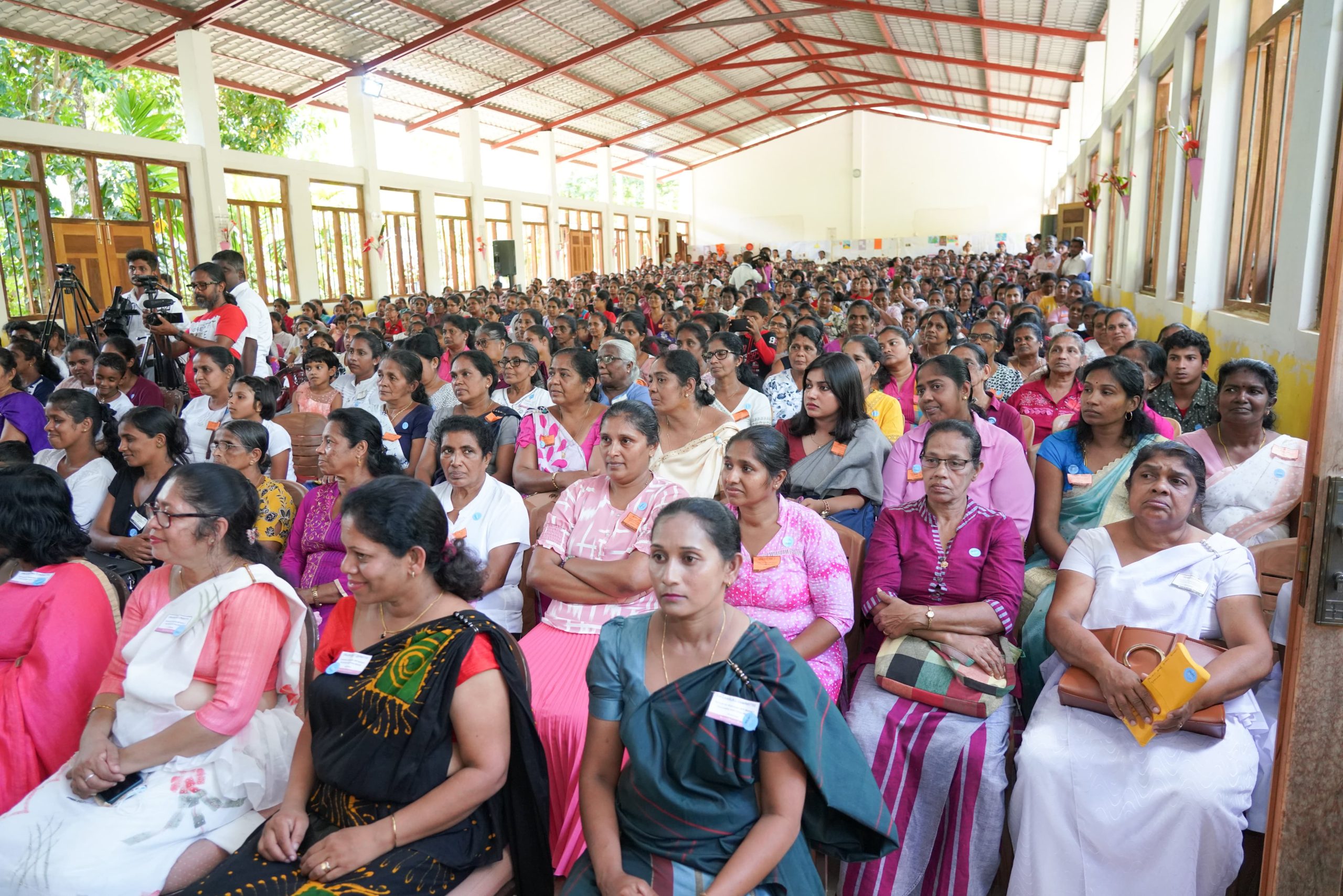
The Prime Minister made this statement while addressing the members of the Women’s Forum held at the Sunanda Theatre, Aranayake, on March 2nd.
Speaking further, Prime Minister Dr. Harini Amarasuriya said:
“We have come to the right place with our long-standing efforts. Now, we must guide the country on the right path. We have started to build a nation where everyone can live happily and prosperously. This requires us to make the necessary changes and correct past mistakes. However, this transformation cannot be achieved by the government alone. Government officials, religious leaders, and citizens must step forward. We must work collectively towards our shared goal.
Women have united to rewrite the political history of this country in 2024. To continue shaping the future of Sri Lanka, women must come forward and take on leadership roles.
The Clean Sri Lanka program initiated by the government is not solely focused on environmental cleanliness. It also aims to clean and transform our mindset and behavior. A spiritual and attitudinal change is necessary.
Change must begin with individuals—from their homes, villages, and workplaces. Women play a crucial role in this journey of national transformation.
Today, we observe the opposition in Parliament behaving as they are more Marxist than us, acting as if they have studied Lenin more than we have.
This year’s budget has been designed with economic democracy at its core, ensuring benefits for all. The public and private sectors, cooperatives, and citizens must all contribute to economic management. Public servants’ basic salaries had not increased for years, but this year’s budget has addressed this issue. The public service must be transformed to provide efficient services to the people, making it an attractive sector.
The salaries of teachers and principals have been placed among the highest salary grades currently available in Sri Lanka. To improve education and provide quality learning opportunities for children, teachers must be empowered both in knowledge and spirit. These efforts are aimed at enhancing the quality of public service institutions.
The era when political favoritism was a prerequisite for getting things done has ended. Today, government officials no longer receive phone calls from politicians regarding administrative matters.
The government has initiated a program to integrate women into the economy, gradually removing barriers to their participation. We are working towards creating a safe society where women can contribute to economic activities while managing their household responsibilities. To support this, we are developing pre-schools, daycare centers, and health services.
Opportunities must be created for those engaged in agriculture to acquire technical training and modern knowledge efficiently. This will strengthen the rural economy.
The government firmly believes that quality education is the key to national transformation.
Accordingly, new education reforms will be introduced from 2026. A significant allocation has been made in this year’s budget for the development of teacher training and the necessary infrastructure to support these reforms.”
A large gathering, including the Maha Sangha, Minister of Environment Dhammika Patabedi, Member of Parliament Nanda Bandara, and other people’s representatives and women from the Aranayake area, attended the event.
[Prime Minister’s Media Division]


Appointment of committee eyewash, says UNP
The government is considering changes to prison regulations pertaining to the treatment of Buddhist monks serving jail terms, including their right to wear monastic robes when taken outside prison.
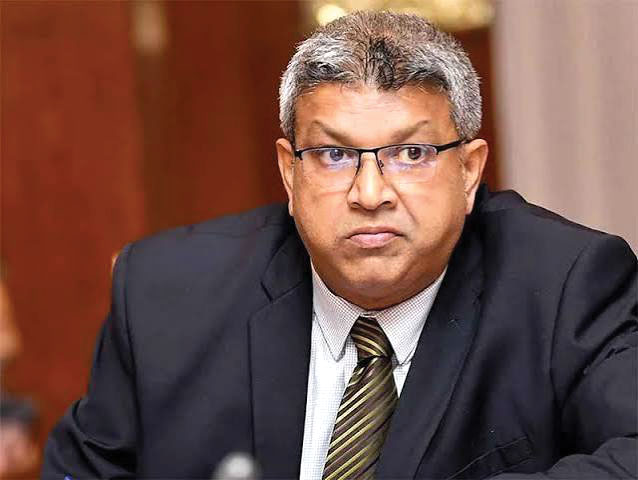
Justice and National Integration Minister Harshana Nanayakkara announced the proposed changes yesterday (14) following the submission of an interim report by a committee appointed to review the rules and procedures governing prisons.
The report was handed over to Secretary to the President Dr Nandika Sanath Kumanayake at the Presidential Secretariat.
One of the key recommendations is to amend Prison Standing Order 356 by introducing a new provision, 356(A). The proposed revision would require prison authorities to consult the Department of Buddhist Affairs on the removal of a monk’s robes upon admission to prison. The Commissioner of Prisons would be allowed 10 days to notify the department and take the necessary steps.
A separate amendment to Departmental Order 550 would allow Buddhist monks to wear their robes whenever they are taken outside prison, unless their respective Nikaya formally requests that the privilege be withdrawn.
The committee has also recommended extending similar arrangements, with suitable modifications, to members of other religious clergy who are imprisoned.
The proposals follow concerns raised over the treatment of Ven. Galagoda Aththe Gnanasara Thera after he was taken into custody. President Anura Kumara Dissanayake subsequently held discussions with representatives of the three main Buddhist Nikayas and appointed the committee to examine the existing legal framework.
Nanayakkara said the interim report had been forwarded to the Acting Commissioner General of Prisons, along with instructions to revise the relevant standing orders in accordance with its recommendations.
The proposed amendments have yet to be confirmed as formally implemented.
Meanwhile, the UNP yesterday criticised the government’s decision to appoint a committee to make recommendations on the attire to be worn by imprisoned Buddhist monks and other religious leaders when taken outside prison, describing the move as unnecessary.
In a statement issued yesterday (14), the UNP said the procedures governing the matter were already clearly set out in the Department of Prisons’ Standing Orders, making the appointment of a separate committee unwarranted.
The party cited remarks by Professor G.L. Peiris, Convenor of the Janathawadi Joint Opposition, who had described the committee’s appointment as a
“complete eyewash” and questioned the need for such a move.
Referring to Standing Order 550 of the Prisons Department, the UNP said convicted prisoners appearing before court for legal proceedings should not be required to wear prison uniforms.
It further stated that the regulations allowed prisoners to wear civilian clothing consistent with what they wore before imprisonment, including attire appropriate to their cultural and religious backgrounds.
The UNP accused the government of unnecessarily prolonging the issue by appointing a committee, despite the existence of regulations governing prisoners’ attire.
The party also called on the government to seek forgiveness from the Mahanayake Thera and the Sangha Council of the Kotte Sri Kalyani Samagri Dharma Maha Sangha Sabha of the Siyam Maha Nikaya over the decision concerning the religious attire of Ven. Galagoda Aththe Gnanasara Thera.
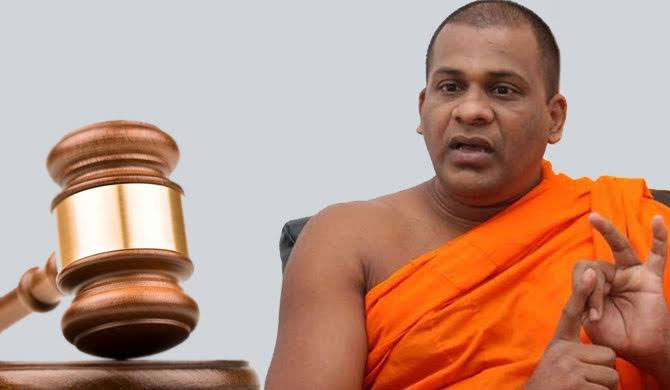
Court of Appeal President Justice Rohantha Abeysuriya yesterday withdrew from the bench hearing petitions challenging the decision by prison authorities to require Ven. Galagoda Aththe Gnanasara Thera to wear prison attire following his imprisonment.
The decision was announced when the petitions seeking to invalidate the prison authorities’ decision were taken up for consideration on October 14.
Following his withdrawal, a three-judge bench was appointed to hear the petitions.
The petitions relate to the prison authorities’ decision to require Gnanasara Thera to wear prison attire after he was taken into custody to serve the remainder of his sentence for contempt of court.
In September this year, the Supreme Court annulled the presidential pardon granted to Gnanasara Thera by former President Maithripala Sirisena in May 2019.
Following the ruling, the Court of Appeal directed the Commissioner General of Prisons to take the necessary steps to enforce the remainder of the monk’s prison sentence.
Gnanasara Thera had originally been sentenced to six years’ imprisonment for contempt of court but had served only around nine months before receiving the presidential pardon in 2019.
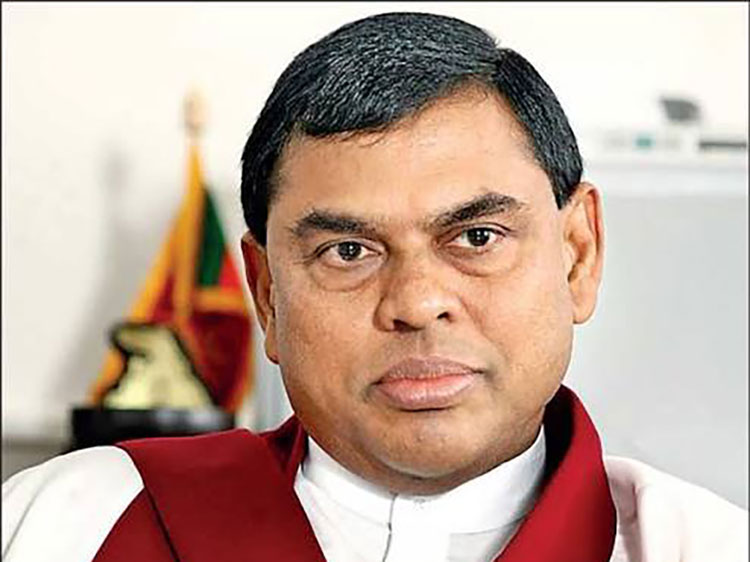
The Fort Magistrate’s Court yesterday issued an arrest warrant for former Minister Basil Rajapaksa over the alleged misuse of funds belonging to the Sri Lanka Tourism Promotion Bureau during the 2014 Uva Provincial Council election.
The Magistrate also directed the CID Illegal Assets Investigation Division to take necessary steps to obtain a Red Notice through Interpol.
The orders were issued following submissions made by the CID in connection with the alleged financial irregularities.
The CID’s Illegal Assets Investigation Unit informed the court that Rs. 7.8 million allocated to the Sri Lanka Tourism Promotion Bureau in 2014 had allegedly not been used for the Bureau’s promotional activities.
Instead, the funds had allegedly been used to provide 12,000 T-shirts during the Uva Provincial Council election, causing a financial loss to the government, the CID told court.

Showers or thundershowers will occur at most parts of the island

Prison rules to be revised over monks’ attire

AC President recuses himself from hearing prison attire case pertaining to Gnanasara Thera

Court orders steps to obtain INTERPOL Red Notice against Basil

CID informs Fort Magistrate’s Court investigation into money laundering case against Namal completed

No force used to make Gnanasara Thera wear prison garb – Prisons

‘Dates have the highest sugar content to fight Coronavirus’

Sunday Island 27 December – Headlines

#SundayIsland 17th December – Headlines

Sunday Island – 28th March

Sunday Island Headlines – 21 March

Sunday Island – 21st February – Headlines
-

 News6 days ago
NDB fraud Rs 60mn more than reported
-

 News6 days ago
Removing monk’s robes matter for Sangha to decide: Mahanayake Theras
-
 News5 days ago
NPP govt. reminded of its responsibilities as US warship leaves Colombo
-

 News4 days ago
Sri Lanka escalates anti-graft drive with Shiranthi’s jailing
-

 Latest News6 days ago
Farhan, Sadaqat help Pakistan ace 183 chase to go 1-0 up
-
 News6 days ago
BHC, Colombo: “LTTE remains a proscribed org. in the UK”
-

 Latest News3 days ago
Farhan and Sadaqat help Pakistan seal series in style
-

 News4 days ago
Iranian ships stranded, Lanka fears US sanctions