
Sports
Let Test cricketers develop

by Rex Clementine
After half a decade of struggle in white-ball cricket, the national cricket team is gradually showing signs of coming out from the slump and they should be a force to be reckoned with at this year’s T-20 World Cup in Australia. The IPL allowed several Sri Lankans to showcase their skills and leg-spinner Wanindu Hasaranga was the biggest draw. He is Sri Lanka’s best hope when they take on Australia in the upcoming series.
There are several other players who have benefited from the IPL stint like Dushmantha Chameera, Maheesh Theekshana, Matheesha Pathirana, and Chamika Karunaratne. It’s pretty certain that they will form the nucleus of the bowling attack as Sri Lanka will be using the series as preparation for the Asia Cup and the World Cup that is to be followed. The bowling in white-ball cricket looks settled and a lot of credit should go to former coach Mickey Arthur who through some tough times built up a competitive unit.
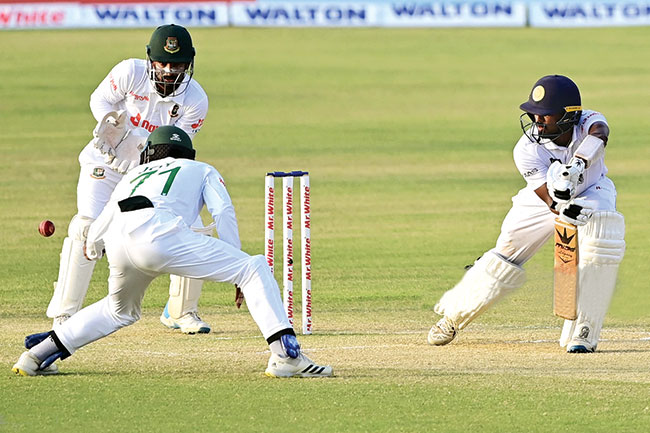
The same cannot be said of the Test team as they struggled to claim 20 wickets in the Test series against Bangladesh. Kasun Rajitha returning to the side from injury looked a class apart and an improved bowler but spin bowling was disappointing. Leave alone claiming wickets, the spinners were not able to keep things tight, create pressure and then pick up wickets. They offered too many hit me balls.
There are issues with the spin bowling department in Test match cricket and the only way you are going to address the issue is by backing the guys whom you have trusted. Ramesh Mendis and Praveen Jayawickrama had quite a bit of success at home in their short careers but overseas they have struggled.
Usually what we have done is when one set of players do well in one format we take them and let them play in a different format. That doesn’t unfortunately work that way in cricket as young players need to develop temperament to succeed in other formats. As a result, players lose their bearings. It has happened with so many of them and eventually, they are dropped from the format they are really good at.
Oshada Fernando is a case in point. Barely known to many when he was picked to play the Test series in South Africa in 2019, he came up with some solid efforts against an attack that comprised Dale Steyn and Kagiso Rabada. His efforts helped Sri Lanka win a Test series in South Africa. A classical Test match number three batsman he should have been allowed to play Test matches alone. But he was rushed into the white-ball teams and he was like a fish out of the water.
Oshada is the type of player who will take his time, show patience in abundance, and rarely plays a rash stroke. But suddenly pushed into the T-20 side, he was trying to manufacture shots and as a result cut a sorry figure. Angered by his failure in the T-20 side, he was axed from the Test team too.
Oshada went back to domestic cricket, scored heaps of runs, and made a comeback to the Test side in Bangladesh and did reasonably well. But you do get the feeling that the rashness of the T-20 format is still there in him. Not many players adjust to the formats so quickly unless you are a Sanath Jayasuriya.
So let Test match players develop. We have enough stocks in white-ball format and therefore Praveen Jayawickrama and Ramesh Mendis should only concentrate on red-ball cricket. But selectors rarely agree with those rational thinking. They play by a different set of rules.
We also have the classic example of Lahiru Kumara. He broke down in the middle of the Mohali Test match in March. He has not played any domestic cricket since then and he is in the preliminary squad for all three formats against Australia. First of all, Lahiru Kumara is no Richard Hadlee and then, this bloke has serious fitness issues that need to be addressed.
Every time Kumara plays a Test match, be it Gabba 2019, Centurion 2020, Pallekele 2021, or Mohali 2022, he broke down during the game and it was a massive blow for the team. But we never seem to learn our lessons. Let him go through proper Firsts Class cricket; prove his fitness over four days before being brought into the longer format. Rational thinking is very much needed as arrogance is going to cost us dearly.






The second T20I between Sri Lanka and Pakistan which was to be played at Dambulla was abandoned without a ball being bowled due to rain.
In its fourth season, the WPL now feels part of the system, shaping careers and standards in increasingly visible ways. Most notably, it played a part in India winning their first ODI World Cup last year. How ’bout that. Almost silly that there was a time when this idea struggled to get off the ground.
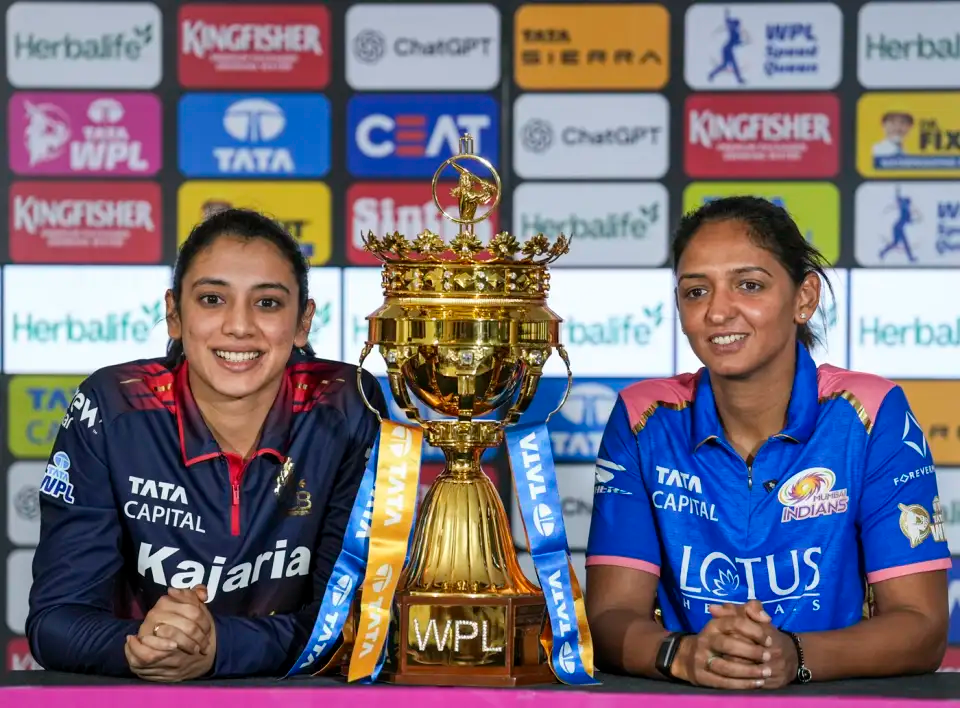
While rivalries are still taking shape in this five-team league, Mumbai Indians vs Royal Challengers Bengaluru has all the ingredients of being the best one. Borrowing from its IPL counterpart, it pits two of the biggest names in Indian cricket, Harmanpreet Kaur and Smriti Mandhana, against each other. They are also the only teams to have lifted the trophy so far, with MI holding a slender 4-3 head-to-head advantage
There is an extra layer of significance this time. Harmanpreet and Mandhana return to the venue where the defining night of their international careers played out two months ago. The DY Patil Stadium will stir fond memories not just for the two captains but also for the India players on both sides, even if the sea of MI blue in the stands is expected to outweigh RCB’s red, black and gold. It was here that the duo shared an emotional hug after India clinched the World Cup, before circling the ground together, singing and dancing long into the night. On the eve of the WPL opener, both admitted those memories came flooding back as they walked into the stadium.
Harmanpreet has since spoken of the venue becoming a hub for women’s cricket in India, a sentiment Mandhana echoed ahead of the season. “Whenever you enter the ground, you remember exactly where the last catch was taken,” she said, recalling Harmanpreet’s leap at extra cover to dismiss South Africa’s Nadine de Klerk and seal the win in the final. “This is still just one-and-a-half months later, but even after 20 years, if we come back to this ground, we are still going to remember exactly what happened on November 2.”
The friendship remains untouched but once the WPL begins, Harmanpreet said the focus will be on “how we can win against each other.”
For defending champions MI, the template established in the inaugural season – continuity, role clarity, a strong core and enviable depth – continues to serve them well. Retaining five players ahead of the auction preserved the backbone of the batting, while the return of familiar faces ensured stability. While other teams opted for reshuffles, MI doubled down on their processes, backing experience, investing in youth and trusting a leadership group that has grown with the league.
RCB arrive with a sense of renewal after missing the knockouts last season. Mandhana remains the face of the team, supported by T20 firepower in Georgia Voll, Grace Harris, Richa Ghosh and Nadine de Klerk, though Ellyse Perry’s withdrawal leaves questions at the top. Their bowling, however, looks formidable, with pace from Lauren Bell, Arundhati Reddy, Pooja Vastrakar and de Klerk, and spin options in Radha Yadav, Shreyanka Patil and Harris.
G Kamalini 17, was retained by MI ahead of the auction alongside players like Harmanpreet, Sciver-Brunt, Matthews and Amanjot, which is an indicator of how highly she is rated. A left-handed wicketkeeper-batter with the ability to go big, Kamalini offers flexibility in the line-up. She made her WPL debut last season and announced herself in just her second game, against RCB, holding her nerve to seal a last over victory, She continued to impress in the domestic circuit, which earned her a maiden India call-up late last year for the T20I series against Sri Lanka, where she made her international debut. Captain Harmanpreet indicated ahead of this season that Kamalini would be given a “special role”, suggesting a move up the order, and said she expects the teenager to be one of the “main players” in the team.
After missing WPL 2025 and spending more than a year sidelined by a series of injuries, spin-bowling allrounder Shreyanka Patil returns to the tournament that launched her into prominence. She was just 20 when she debuted for RCB in 2023, and her rise was swift, with India T20I and ODI caps following later that year. Patil enjoyed a breakthrough campaign in 2024, finishing as the tournament’s leading wicket-taker as RCB went on to lift their maiden title. She made her return from injury at the Women’s CPL last September, featured in the domestic season for Karnataka, and was one of four players retained by RCB ahead of the auction. In the lead-up to the season, Patil has focused on fine-tuning her offspin, batting and overall fitness during a month-long conditioning camp at the private academy where she trains.
As Sri Lanka arrive on the doorstep of another World Cup, there is the usual attendant instability. The captain has been switched out but the team is still losing against good opposition. The top order is being rejigged frequently, and yet consistent scores are not forthcoming. There are strong elements in the attack – such as the bowling of Dushmantha Chameera and Wanindu Hasaranga – but there is fragility elsewhere. It might not take much to turn them around though. The raw materials of a decent T20 side are there.
Pakistan, meanwhile, have no serious work-ons from Wednesday, save for the catching and ground fielding. Head coach Mike Hesson described their big win in the first T20I as “very clinical”, praising not only the bowling that decked Sri Lanka for 128, but the top order batters who aced the chase as well.
That they are putting up such performances while key players – such as Babar Azam – are away in the Big Bash League, is especially impressive. If they are to put together a good campaign in the forthcoming World Cup, Wednesday’s win might have been the day they planted their flag in Sri Lanka. So far, they seem at ease in these conditions.
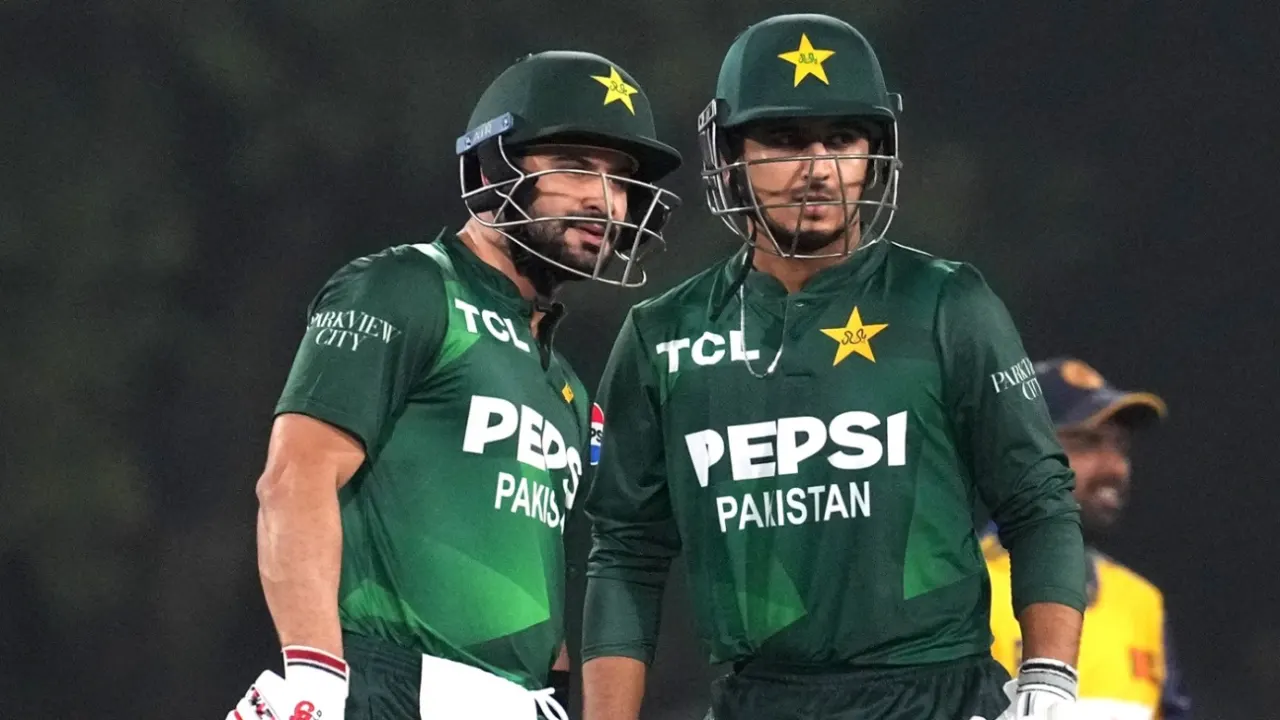
In the T20I tri-series in Pakistan last month, Pakistan opener Sahibzada Farhan had topped the run list, hitting 191 runs at a strike rate of 147. He has now made a bright start in Sri Lanka, hitting 51 off 36 in his first innings on the island. Farhan was especially good at taking down the round-arm seam of Nuwan Thushara, which caused significant problems for Sri Lanka, who require early wickets from Thushara. Farhan’s dominance will make Sri Lanka think twice about playing Thushara in this match.
Second on that run chart from the tri-series last month was Kamil Mishara with 169 runs at a strike rate of 139. He couldn’t get going on Wednesday, registering a three-ball duck after he spooned a catch to mid off. But he has shown glimpses of serious talent at the top level. Impactful innings in this series and the one to come against England will likely seal his spot at the top of the order.
The Dambulla surface for the first ODI was conducive to spin. At this time of year, showers are possible, but are unlikely to last long enough to wash out the match.
Pakistan may see no need to change their XI while Sri Lanka may consider bringing in Matheesha Pathirana for Thushara, which will mean Dasun Shanaka is required to bowl with the new ball.
Pakistan: Sahibzada Farhan, Saim Ayub, Fakhar Zaman, Salman Agha (capt.), Usman Khan (wk), Mohammad Nawaz, Shadab Khan, Faheem Ashraf, Mohammad Wasim, Salman Mirza, Abrar Ahmed
Sri Lanka: Pathum Nissanka, Kamil Mishara, Kusal Mendis (wk), Dhananjaya de Silva, Charith Asalanka, Dasun Shanaka (capt.), Janith Liyanage, Wanindu Hasaranga, Dushmantha Chameera, Maheesh Theekshana, Matheesha Pathirana/Nuwan Thushara

Rain washes out 2nd T20I in Dambulla

Colombia sees ‘real threat’ of US military action, president tells BBC

Landslide RED warnings issued to the Divisional Secretaries Divisions of Ududumbara, Nildadndahinna and Walapane

Harmanpreet, Mandhana return to DY Patil, on opposite sides this time

Huge anti-government protests in Tehran and other Iranian cities, videos show

Clinical Pakistan look to keep momentum going and wrap up series

‘Dates have the highest sugar content to fight Coronavirus’

Sunday Island 27 December – Headlines

#SundayIsland 17th December – Headlines

Sunday Island – 28th March

Sunday Island Headlines – 21 March

Sunday Island – 21st February – Headlines
-

 News4 days ago
Interception of SL fishing craft by Seychelles: Trawler owners demand international investigation
-

 News4 days ago
Broad support emerges for Faiszer’s sweeping proposals on long- delayed divorce and personal law reforms
-

 Opinion21 hours ago
The minstrel monk and Rafiki, the old mandrill in The Lion King – II
-

 Features21 hours ago
The Venezuela Model:The new ugly and dangerous world order
-

 News3 days ago
Prez seeks Harsha’s help to address CC’s concerns over appointment of AG
-

 News5 days ago
Private airline crew member nabbed with contraband gold
-

 Latest News2 days ago
Warning for deep depression over South-east Bay of Bengal Sea area
-

 News3 days ago
Govt. exploring possibility of converting EPF benefits into private sector pensions