
Opinion
Lest we forget – III

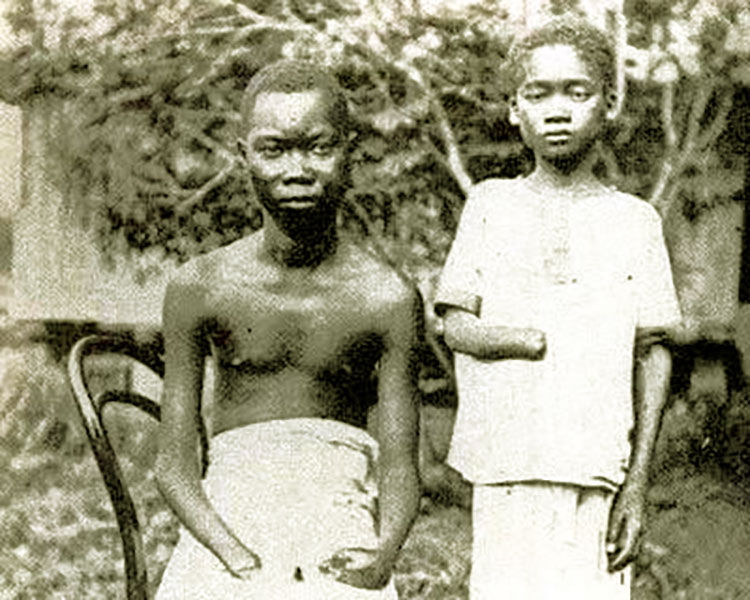
The central part of Africa was privately owned by King Leopold II of Belgium. It was 76 times the size of Belgium, established in 1885, and called the ‘Free state of Congo’. All sorts of expatriate Belgian, South African and other European white folk ran the colony whose people, it was said, were treated as children at best and animals at worst. They were whipped, maimed and killed, at the drop of a hat. Many had their right arms cut off as punishment. There were also many white missionaries who were outraged. Initially, the natives were never taught to read or write. Then, there were also Arab slave dealers running a roaring slave trade, by raiding and decimating villages to capture the natives. It was literally the law of the jungle. There were over 250 tribes within the Congo.!
While many European countries were limiting their operations to the coastal areas of Africa, King Leopold’s minions, led by a Welsh -American agent called Henry Morton Stanley (of “Livingston I presume” fame), worked at the King’s behest to find the source of the Congo River and there discovered 200 miles of turbulent ‘Rapids’ after which there were miles and miles of calm water. So, it was Stanley who suggested that steamboats be dismantled and carried by cart roads upriver to be re-assembled and used for transportation. Many trading posts were established along the river. A railway line was also built. There was a French team of explorers, too.
Initially, the main products from Congo were Ivory and Rubber. Rubber sap came from vines and not from trees. After the pneumatic tire was invented by John Boyd Dunlop, in 1888, the demand for Rubber was even greater. The Congo Free State, now nicknamed the ‘Dark Continent’ by many writers who experienced the appalling conditions that the natives (savages) had to work under. In 1889, at the Paris Exhibition, commemorating hundred years after the French revolution, they even had a human Zoo from the colonies, displaying people, including from the Congo, in a so-called ‘natural’ or ‘primitive’ state. Writers such as Stanley himself and Joseph Conrad of ‘Lord Jim’ fame, wrote about the Congo and imperialism in The Heart of Darkness.
Although King Leopold never set foot in Congo, it was big money for him. There were a few others like the UK educated Frenchman Edward Dene Morel, a shipping clerk and a surveyor/activist named Roger Casement who noticed that trade was only one way from Congo. Goods from Antwerp, Belgium, to Congo, Africa, consisted mainly of arms, ammunition and manacles (handcuffs). That seemed rather odd. They wrote a report about it in 1904. The phrase ‘Human Rights’ was first used in these writings. Arthur Conan Doyl and the American writer, Mark Twain, too, commented about the appalling conditions that prevailed. It was then that the world suspected that all was not well in the dark continent and brutality of the King’s regime. The King then appointed a Commission of inquiry into the affairs of the Congo Free State. (Sounds familiar?)
Eventually, under international pressure, in 1908 the Belgian Government took over its running and the Congo ceased to be ‘private property’ of the King. The State of Free Congo became Belgian Congo. Interestingly, in 1915, high grade (65% pure) Uranium was discovered in the Shinkolobwe Mines in the Katanga Province in the Congo. It was from here that Uranium was supplied for the two Atom bombs dropped on Hiroshima and Nagasaki by the USA to end WWII. The world discovered that Congo was also mineral rich in Copper, Cobalt and Diamonds. The western world and the USA cast their greedy eyes on them.
In Belgian Congo, living conditions of the natives slightly improved as in a ‘normal’ colony. Now there were missionary schools which gave rise to educated elites who then started clamouring for independence from Belgium.
On 30th June,1960, Belgium, without much warning (lead time), granted independence to the country. It was now called the Democratic Republic of Congo (DRC). A Congolese activist Joseph Kasavubu was elected as President, while another charismatic young activist, by the name of Patrice Emery Lumumba, a one-time postal clerk from a rival political party, was elected as Prime Minister. Since they could not individually form a government, they had to go for a ‘Coalition’. At the Independence Day ceremony King Boudouin (a kinsman of King Leopold II) was in attendance.
He said, “The Independence of the Congo is formed by the outcome of the work of King Leopold II’s genius, undertaken by him with tenacious and continuous courage with Belgium’s perseverance.”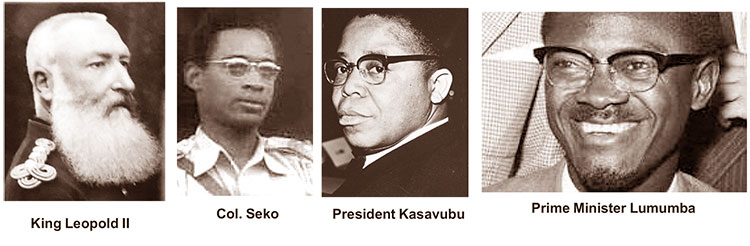
President Kasavubu made it a point to acknowledge and thank the Belgian Authorities for all they had done in the past.
Then Prime Minister Lumumba, who was not even scheduled to speak, stood up and recalled all the atrocities carried out by agents of Belgium. How the natives were controlled and impoverished. He spoke about white supremacy and exploitation. (An estimated 15 million were killed in the process while Belgium got rich.) He was only 35 years old.
He said “Although this independence was proclaimed today by agreement with Belgium, no Congolese will ever forget that independence was won in struggle. We are deeply proud of our struggle and our wounds are too fresh, too painful to be forgotten.”
“We have experienced forced labour in exchange for pay that did not allow us to satisfy our hunger, to clothe ourselves, to have decent lodgings or to bring up our children as dearly loved ones. Morning, noon and night, we were subjected to jeers, insults and blows because we were ‘Negroes’. We have not forgotten that the law was never the same for the White and the Black. That it was lenient to the one and cruel and inhuman to the other. Our lot was worse than death itself.”
Lumumba’s speech did not go down with the King and Belgian nation and the Western world. They were furious. From that day he became a marked man among the CIA and Belgian Intelligence. They plotted to assassinate him as he spoke up for the whole of Africa and not only Congo.
It seemed that independence was only on paper. Almost immediately afterwards the army, expecting quick changes, mutinied. Their leaders were still Belgian Officers with no change in their attitudes towards the natives. Many white Belgians fled the country and Belgium claimed that Belgians were at risk. Then the Belgian army moved, in without the permission of the new government. Almost simultaneously, the mineral rich Katanga, instigated by the mining companies, declared independence under the leadership of a pro Belgian Congolese politician Moise Tshombe as their head. Obviously, Belgium and the western world wanted to retain control of the mines which were the economic heart of DRC.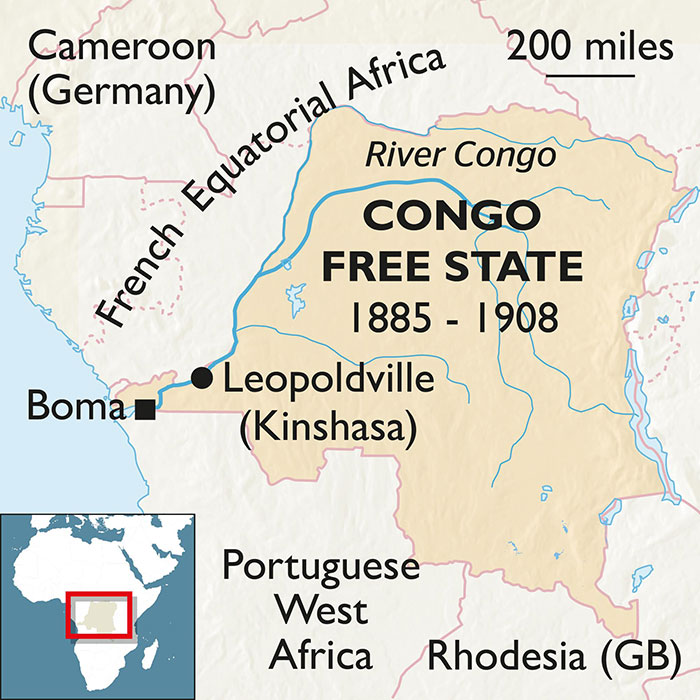
Lumumba appealed to the UN to intervene and send UN troops to get the Belgian forces to leave. The UN Secretary General, Dag Hammarskjold, under pressure of Western powers and the USA, refused such action. UN peacekeeping troops were sent with strict instructions to not interfere. Nikita, Krucheve of the USSR, called for the resignation of the Secretary General Hammarskjold, saying that he was pro Belgium. Lumumba had no alternative but to turn to Soviet Union for help.
This was during the height of the cold war. In the eyes of the USA, and the western world, Lumumba was confirmed to be a communist which he was not. He was only a nationalist. Looking at the declassified information, Allen Dulles, head of the Central Intelligence Agency (CIA) was authorised by President Eisenhower, for Lumumba to be eliminated. Lumumba’s CIA code name was ‘Satan’.
The country was in chaos. The rift between President Kasavubu and Prime Minister Lumumba widened. In early September, 1960, Kasavubu announced on radio that Lumumba had been sacked by him. A few days later Lumumba announced on radio that Kasavubu was sacked! However, there was a coup carried out by the army head Col. Mobutu, on14 September, 1960, to neutralise both politicians. It is now known that Mobutu was a CIA agent and was a secret supporter of President Kasavubu, the ‘Belgian puppet’.
Prime Minister Lumumba was put under house arrest. While the UN forces watched. He attempted to escape one night with his family, but was located by CIA and Belgian intelligence, captured by Mobutu’s forces, brutally beaten up in front of his wife and son and then imprisoned. A few days later he and two others were flown to an airfield in Katanga and killed by a firing squad. His body parts were subsequently dissolved in Sulfuric acid and destroyed, lest the Congolese rally round his burial place and make it a sort of mausoleum. He was still very popular among the people. Killed on 17 January, 1961, at the age of 36, two or three days before John Fitzgerald Kennedy (JFK) took oaths as the 35th President of the United States of America.
The declassified secret CIA documents and investigations by the Parliament of Brussels in 2001/2002 that the above action was planned in Washington and Brussels and executed in Africa. The incumbent police Commissioner, Gerrard Soete, who had been present at Lumumba’s execution and destruction had kept a tooth as a souvenir. This was returned to the family and buried with full honours.
One wonders where Congo and the rest of Africa would have been if Lumumba survived till JFK, another Charismatic young leader was appointed. Today, there are statues and roads named after Patrice Emery Lumumba in Congo and other parts of Africa and Brussels, Belgium. Patrice Lumumba Peoples’ Friendship University Moscow, to help nations to assist countries that had recently achieved independence from colonial powers was also established in 1960.
Col. Mobutu Sese Seko, ruled as a dictator for 32 long years. The name of Congo was changed to Zire (River), on 27th October 1971. After his overthrow in 1997, the country was known again as Democratic Republic of Congo (DRC).
What a shame!
God Bless America and no one else!
by Guwan Seeya


by Sunil Abhayawardhana
After the economic crisis of 2022, and the IMF programme that followed, some are of the opinion that ‘stability’ was achieved, but followed by ‘not out of danger yet’. Where is the ‘stability’ then?
We know that the cause of the crisis was a lack of foreign exchange. However, the IMF programme focused on the fiscal aspects, not one that enhanced export earnings. So, we are once again in a situation, facing the same problem, with the ‘fiscal discipline’ thrust on us.
Therefore, it is clear that if we seriously want to achieve ‘real’ stability, we need to use our heads much more and get out of the ‘epistemic insularity’ that has been around for so long. (Epistemic insularity is a state where an individual or group becomes isolated from alternative perspectives, data, and frameworks of knowledge. It occurs when individuals, groups or communities construct a protective bubble around their beliefs, making them resistant to outside evidence or challenging viewpoints).
It applies also to guys who have recently got into the bubble and being taught Neo-liberal lessons.
Fixing targets for budget deficits and tax collection is ok if it is in relation to a development drive. If not, it would only increase the misery of a higher cost of living. That development drive is what is missing in Sri Lanka.
A development drive comes after formulating a development plan, which is not an instant production, takes much time and effort. Therefore, Sri Lanka needs right now an accelerated ‘urgent’ project, that would bring ‘real’ stability, in the shortest possible time. Once ‘real’ stability is achieved, the focus should shift towards a greater development plan.
The only way
The only way for Sri Lanka to achieve ‘real’ stability is by enhancing its export earnings by at least $ 20-25B. Most of the projects that are being thought of are not capable of bringing in earnings on the scale required, in the shortest possible time.
Over the years, tea, rubber and coconut was the first base of exports. Then there were many smaller products such as gems and petroleum products that were not developed, tough the potential was there, followed by garments and IT, which were small in scale.
Continuing on the same path, is not going to change the story. A radical change of stance is urgently needed. What is amazing is that it has not yet been realised.
A point to note is that a World Bank report issued a few years ago, highlighting the possibility of enhancing exports by the present exporters by as much as $10B, if provided with some assistance, was not even considered. However, this should be an ongoing programme, but conditions of the IMF programme may not be able to give the required support to these industries.
Historically, since Independence, the path chosen has not been able to bring the desired results. Should we then, not change our thinking, to be able to bring about the urgently required outcomes?
Widespread development is going to take time with the existing conditions. The governments programmes would at best, bring in an additional $5B by 2030 at best. Therefore, targeting one specific sector and industry, with total focus for about a year or two, has a better chance of success.
Even if total investment is around 10% of GDP and half of it is diverted to a single project capable of increasing export revenue by 100%, that bold decision should be taken. The shortfall in public investment for a short time should be tolerated.
Sri Lanka has never embarked on such a programme and is the only way it could achieve ‘real’ stability.
Therefore, after much research, the only single project, capable of enhancing export figures by as much as $20 -25B was identified as mentioned below.
Oil refinery in Trincomalee
This is a project that should have been started at the time of Independence in 1948, when the funds were available from the Sterling Balances Agreement. However, it did not materialise and the country paid a heavy price.
Now, to be able to generate $20-25B, a refinery with at least a 400,000 b/d refinery is urgently required to be set up in Trincomalee. India is planning to set up eight new refineries in the coming years. The world’s largest refinery is located in Jamnagar, India, with a capacity of around 1.6 million b/d, owned by Reliance Industries.
The funding of such a project has many options, Multi-lateral sources, Joint Ventures and many more. (However, for a country that could release $2-3B for vehicle imports, should be able to work that out).
An idea of the cost could be determined by the Chinese cost for a 200,000 b/d refinery, which works out to around $3.7B. Sourcing equipment from China is considerably lower, compared with other western sources.
Sourcing the correct equipment, from suppliers at a price that the project can afford becomes critical. Equipment from the west is highly inflated, while Chinese equipment is now available at a much lower price.
The shortest time a refinery has been established is one year, in South Korea, and Singapore’s first refinery, a little over a year. There are many hurdles that have to be got over and a government has the ability to do so, if it is really determined. Most of it is paperwork and environment issues, with site selection.
The Ceylon Petroleum Corporation has been in existence and operating the 50,000 b/d refinery from the late 1960s and should be able to handle such a project, if not outside help would have to be deployed.
Most governments do not see the long- term benefits of such a project, due to the normal long- time frame to commence such a project. However, this is where ‘urgency’ has to be understood. As the CPC is the only institution involved, apart from the state bureaucracy, there is no reason for delay. If there is a strong will, there would always be a way of getting it off the ground, in the shortest possible time.
The discussions already commenced regarding the UAE, India, SL project, could be beneficial. A joint venture with India, is a strong possibility. The pipeline distribution would reduce delivery costs. However, total dependence on the Indian market would not be a good strategic or business decision.
The second refinery
China offered to establish a 200,000 b/d refinery in Hambantota, three years ago. Obviously, the government is under tremendous external pressure on this. This is where diplomacy at its best is required.
Sri Lanka had this ability in the 1960s and early 70s and later in the 1990s and early 2000s. This ability does not seem to be around at present, but needs to be revived.
I remember in the early 1970s during the Bangladesh war, Pakistan requested permission to fly via Colombo to East Pakistan. No one expected Sri Lanka to grant permission. But it was granted, keeping the relationship with India intact.
The proportion to be released to the local market and tax concession, should be worked out with the best interests of the country in mind. Even though the original percentage to be released to the local market was 20%, a further 20% would reduce the export earnings, but would save importing that amount, as SL imports around 100.000 b/d of refined petroleum.
Tax concessions face obstacles with the IMF programme, which could be solved via negotiations, that convince the IMF of the greater benefits to the country, but requires skill, as mentioned earlier.
A project of this nature, which brings immediate results, has never been seen in SL and lacks the confidence needed, but has to be built up to take bold decisions. It would face many obstacles, but as mentioned earlier, if there is a will, it could be done.
The Hambantota refinery could easily add another $10-15B to the aggregate earnings from petroleum exports, which would total around $ 35-40B in total.
Would that not bring ‘real stability’ to the economy?
No other project or projects could bring in the foreign exchange on the scale that these two could. In fact, expanding the refinery capacity in Trincomalee and Hambantota, could be considered later.
Other possibilities
While aiming for ‘real’ stability, it should not be forgotten to bring ‘real’ stability to the farming community in the country.
The mistakes of the past in relation to agriculture development needs to be corrected by the farmer being the ultimate beneficiary from agriculture development. It is ridiculous in an under developed economy like Sri Lanka, where the farmer toils so hard, while the big millers get the ultimate benefit.
Therefore, the thinking should change, where the farmer sells rice, with milling by farmer coops and linking the farmer to the rice market.
Once stability has been achieved and a sizeable reserve built up via earning as against borrowings, Sri Lanka should set its sights on development and not stop at stability. Listed below are a few projects that could be initiated.
* An iron and Steel mill for export in Trincomalee- which could bring in around $10-15B.
* Develop Colombo as The Gem and Jewelry center of the World $ 5-10B.
* R+D into graphene if could be used for semiconductors
* Aircraft repair and maintenance facilities to service the huge fleet in India
* Local IT companies registered in SL, operating out of Jaffna
* R+D to be incentivised in various fields
Sovereignty, Tourism, and the Law:
by Sasanka Perera
(The writer is on X as @sasmester)
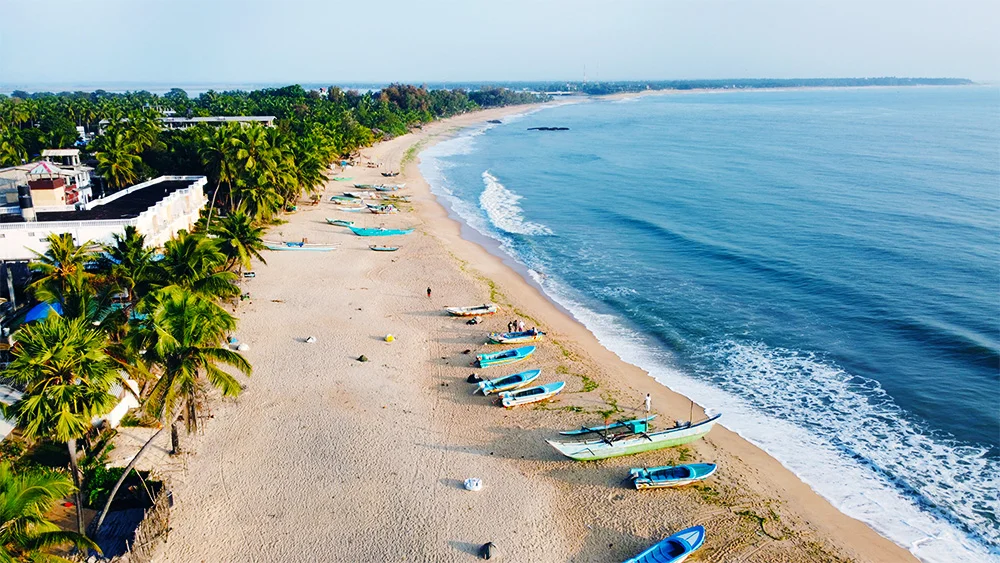
On 28 October 2024, I wrote in this column an essay, titled ‘Israelis in Sri Lanka and the Advent of a ‘Neo’ Colonialism.’ My concern then was the disruption long-term Israeli tourists, often over-staying tourist visas, were causing particularly in the Eastern Province. Government intervention was mostly visible through relative inaction. Over the past year, Sri Lanka’s pristine coastal enclaves, from Hikkaduwa and Weligama in the west to Arugam Bay in the East, have found themselves at the centre of a complex and needless geopolitically-inflected controversy. As I explained in my earlier essay, too, the rapid growth of Israeli tourism has brought to light serious concerns regarding regulatory oversight, economic fairness, and national sovereignty. The latest controversy erupted in August 2026, in Hiriketiya, near Dickwella, in the country’s south. Unlike in the east, where the protesters were mostly from Muslim communities, in Hiriketiya, the protests were led by Buddhists, including monks.
At the centre of latest public debate is the establishment of a ‘Chabad House’, essentially a Jewish community and religious centre, catering to Israeli travellers. One of the primary demands the protesters made, was to investigate if this religious entity was established legally and if the activities of Israeli residents, including running businesses, were legal. In the context of the earlier controversy, Prime Minister Harini Amarasuriya is on record for clarifying in Parliament on 8 January, 2025, that neither the Ministry of Buddhasasana, Religious and Cultural Affairs nor any other government institution had granted official permission for the establishment of Israeli religious sites. In other words, what existed was illegal.
Chabad Houses as private business entities
 Representatives of the local Chabad Houses, of which there are about six at present, claim they operate as registered private business entities. However, operating public religious and communal hubs on standard tourist or corporate permits violates local town planning and immigration guidelines. Besides, despite the claim, it is very unclear even if standard business licenses were issued in the first place. If religious entities were run under temporary business licenses, then, that itself is a clear violation of Sri Lankan law showing scant disregard to both the legal system in the country and its socio-political sensitivities.
This setup stands in stark contrast to how Sri Lanka’s own religious presence is managed in Israel. In Tel Aviv, a Sri Lankan Buddhist temple was established in 2013 to serve thousands of Sri Lankan migrant workers. The effort was facilitated by the Sri Lankan Embassy in the Israeli capital. To respect local Israeli laws and urban regulations, that temple operates discreetly inside a private apartment complex rather than as a prominent, independent public centre with an overt public religious personality as is usually the case with Buddhist temples globally. The Chief Incumbent of the temple, at the time it opened in 2013, Ven. Karavilakotuwe Dhammathilaka, is on record for stating very clearly that in keeping with the religious sensitivities in Israel, the inaugural ceremony itself was also held on a low scale without much publicity. This makes sense given the fact that Israel is one of the most religiously intolerant societies in the world as its track record amply demonstrates. This is more so in the last few years. What is important in the context of the opening of the Buddhist temple in Tel Aviv is, no laws were violated, the temple was meant for long term-residents, and respected local laws and sensitivities. It was also an effort formally facilitated by the Sri Lankan Embassy.
The comparison raises a fundamental question of parity: why should foreign nationals in Sri Lanka, including Israelis, establish public religious and cultural centres without municipal or government authorisation, while Sri Lankans abroad strictly abide by local constraints, as the nondescript Sri Lankan Buddhist temple in Tel Aviv clearly demonstrates?
The debate and anxieties around the Israeli presence in Sri Lanka occurs alongside another pressing concern. That is, the relatively precarious position of thousands of Sri Lankan workers in Israel who are mostly in the construction, agriculture and caregiving sectors. Recently, thousands of Sri Lankan migrant workers faced deportation from Israel due to job category violations, after switching from agriculture or caregiving to unauthorised sectors. The Sri Lankan Foreign Ministry reportedly actively intervened with Israeli authorities to negotiate regularisations and protect these workers. In my view, Illegality is illegality everywhere. If Sri Lankans violated Israeli law, that country had every right to deport them, and we should not have intervened. But I do understand the government’s position, too, as it relates to employment of citizens. Then, there should be a system where such regularisations are managed via the facilitation of the Sri Lankan Embassy, and if citizens do not make use of such a facility, they should clearly face the consequences of Israeli law.
Troubling double standard
Whichever way one looks at it, this highlights a very troubling double standard. That is, while Sri Lankan workers and the government have to cautiously navigate strict Israeli labour and visa laws, Israeli visitors in Sri Lanka frequently evade local visa laws without consequence. This mostly occurs as a result of the institutionalised spinelessness of our law enforcement when it comes to foreigners, and particularly seemingly ‘white’ foreigners. But surely, over 78 years after Independence, spineless meekness on our part must have clear limits. There needs to be clear reciprocity. Besides, Israelis are not here to work as the Sri Lankans in Israel are. They are supposed to be tourists. They should neither work nor establish religious edifices as they feel fit violating our laws and sensitivities as a matter of routine. This is why the ongoing Israeli activities reek of settler-colonialism.
Also, it is not only a matter of Israeli intransigence and official and public Sri Lankan apathy. The latter becomes possible when locals, who rent buildings to visa facilitate in running illegal Israeli businesses depriving their own citizens of legitimate incomes, are not even prosecuted by local law enforcement and judicial systems. As often is the case, foreign arrogance is built upon local meekness and lack of even the most basic sense of national pride. Of course, this does not apply to anyone, including Israelis who are operating a business in Sri Lanka legally, based on legitimate licenses issued by the government.
The proliferation of unlicensed, foreign-run businesses poses severe economic challenges to Sri Lanka’s local tourism industry. Many Israeli visitors enter this country on standard tourist visas but illegally set up guesthouses, surf camps, and cafes. Often operating exclusively in Hebrew, these businesses transact via informal channels or foreign accounts. When foreign visitors, including Israelis, run unregistered businesses, there are numerous local fallouts. For one thing, Sri Lanka loses substantial corporate, local government, and value-added tax revenues. Secondly, these activities severely undercut local livelihoods. Local vendors, tour guides, and small hoteliers are excluded by closed-loop and illegal Israeli operators. One of the common complaints where illegal Chabad Houses have been established is that they provide accommodation and meals to Israeli tourists, seriously disadvantaging local tourism-related businesses.
Adverse economic impact
Much of the income earned from these closed illegal operations, hardly comes to Sri Lanka in any way except for payment for supplies and rentals. Finally, since properties lease informally at inflated long-term rates to these operators, it drives up costs for Sri Lankan entrepreneurs and small business owners. But all this has become possible and so entrenched because of the established track record of relative inactivity of the Sri Lankan government in general as well as local governments and law enforcement in particular.
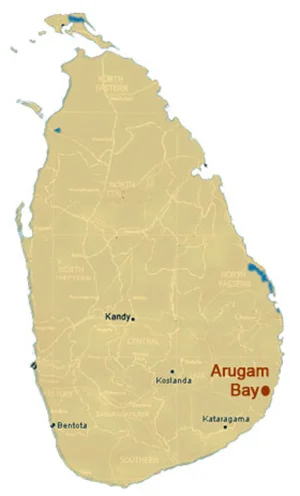
This brings to my mind the Israeli feature film, Arugam Bay. Directed by Marco Carmel and shot on location in Sri Lanka, including Ella and Arugam Bay. The film follows former Israeli soldiers using Sri Lanka’s coastal towns to process military combat trauma. The production received formal clearances for filming from the Sri Lanka Tourism Promotion Bureau in so far as publicly available information indicates. However, its narrative — framing Sri Lankan beach towns as retreats for Israeli military veterans — with blood in their hands and massive human rights violations to their credit, reaffirms local concerns about the island being used as a backdrop for Israeli human rights violations against Palestinians without sufficient regard for local perspectives.
It is precisely this kind of narrative, through word of mouth as well as social media, that creates an image of Sri Lanka as meek and trouble-free destination for Israelis intent on illegal activities. Do the Sri Lankan government or Sri Lankans want such a label attached to the country? I certainly don’t. It is quite shocking that the Sri Lanka Tourism Promotion Bureau gave permission for a such film to be shot locally. It shows both the Authority’s sorry view of what tourism is and scant disregard for ethical tourism.
Pushback mischaracterised as anti-Jewish sentiment
Public pushback against these illegal activities has sometimes been described by local as well as Israel supporters as anti-Jewish sentiment. But this completely mischaracterises the issue. Global condemnation of Israel’s military actions in Gaza and beyond and massive rights violations of entire Palestinian communities is rooted in international humanitarian law — not antisemitism. Differentiating between opposition towards violating state policies and hostility toward Jewish people is critical. Sri Lankans standing against Israeli military aggression or localised law-breaking are asserting human rights and national law as well as decent and legal behaviour by foreigners in our own country. This is not engaging in discrimination. That is, Israelis must be treated here as our people are treated in Israel. By law and by the book.
Sri Lanka must remain a welcoming host to international tourists. However, hospitality must not replace accountability. The government must strictly enforce visa restrictions, shut down unauthorised commercial and communal spaces, and protect local businesses. By upholding the rule of law uniformly, Sri Lanka can safeguard its economy, preserve its national sovereignty, and maintain harmony along its shores.
By A Concerned Aficionado
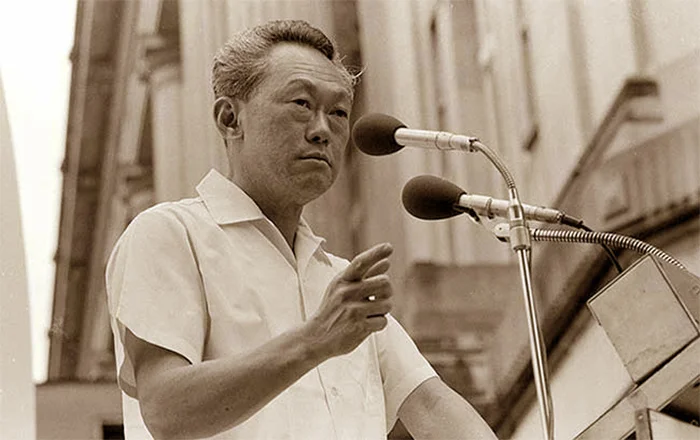
In 1959, just over a decade after Ceylon, as Sri Lanka was then known, gained Independence, a tiny, resource-barren island in many ways, named Singapore, elected a man called Lee Kuan Yew as their Prime Minister. Before that, having been ejected from the Malaysian Federation into forced independence, the founding fathers of independent Singapore looked across the Indian Ocean with envious eyes. The subject of their admiration was Ceylon: “The Pearl of the Indian Ocean.” Here was a nation in a pearl blessed with fertile land, a highly literate population, a functioning model of the civil service, robust infrastructure, and standard English education. Lee Kuan Yew openly declared that his ambition was for Singapore to emulate Ceylon.
Decades later, the tragedy that developed out of this historical juxtaposition is staggering. Singapore now sits comfortably in the first world, boasting a GDP per capita exceeding US Dollars 80,000, world-class institutions, and zero tolerance for corruption. Sri Lanka, meanwhile, lies in the ashes of sovereign default, a begging bowl in hand, passing from one economic crisis to the next, crippled by debt as well as rampant corruption and governed by political short-sightedness.
What went wrong? The answer can be found in a simple three-letter acronym popularised by Singaporean diplomat and academic, Professor Kishore Mahbubani, MPH: the acronym for Meritocracy, Pragmatism, and Honesty: the proven mantra of that country.
Mahbubani famously argued that any nation, regardless of size or origin, can achieve extraordinary success if it rigorously applies these three foundational doctrines. If Singapore stands as the global poster child for the triumph of the MPH model, Sri Lanka stands as its renowned antithesis; a tragic case study of what happens when a country systematically dismantles every single one of those three sacred creeds of good governance.
Meritocracy Dismantled: The Triumph of Nepotism and Tribalism in the Pearl
Meritocracy, in Mahbubani’s framework, demands that a nation relentlessly selects its best and brightest to lead its institutions, regardless of ethnicity, family lineage, or political affiliation. In Singapore, early leaders like S. Rajaratnam, a Sri Lankan Tamil, were elevated to the highest positions strictly on ability.
In Sri Lanka, we did the exact opposite. Almost immediately after independence, our political class realised that exploiting communal divisions was far more lucrative than building a meritocratic state. The Official Language Act of 1956 was the first lethal blow, substituting raw linguistic nationalism for competence. This was followed by media-wise standardisation policies in higher education, which effectively told our youth that their brainpower mattered less than their geographic or ethnic identity. In short, this was the political misdemeanour that destroyed the Sri Lankan nation.
The institutional decay spread rapidly into our civil service, which was once the envy of Asia. The Independent State Services Commission was systematically gutted and replaced by political patronage. State corporations, statutory boards, and diplomatic missions became dumping grounds for politicians’ children, loyalist party hacks, henchmen and henchwomen and despicable sycophants.
Instead of putting domain experts at the helm of economic, medical, and technical bodies, our rulers appointed cronies whose primary qualification was their willingness to bow and kneel before their political masters. The resulting brain drain has been catastrophic. For generations, Sri Lanka’s greatest export has not been tea or garments, but its finest minds, driven out by a system that rewards loyalty to a party over loyalty to intellectual competence.
Pragmatism abolished: Ideological Dogma and Economic Madness in the Pearl
Pragmatism means deserting ideological blinders and adopting policies simply because they work. As Singapore’s Dr Goh Keng Swee put it to Mahbubani: “No matter what problem Singapore encounters, somebody, somewhere has solved it. Let us copy the solution and adapt it.”
Sri Lanka, by contrast, has been a graveyard of economic dogmatism and harebrained experiments. Rather than copying proven global best practices, our policy decisions have consistently been driven by shortsighted populism, ideological posturing, and economic illiteracy.
Consider our economic history: alternating decades of closed-economy import substitution that strangled private enterprise, followed by unbridled, corrupt market deregulation without supervisory safeguards.
Perhaps the ultimate symbol of our anti-pragmatic hubris was the infamous overnight ban on chemical fertilisers in 2021. Ignoring every agricultural scientist and expert in the country, the government imposed a purely ideological and immediate “100% organic” policy by a Presidential Decree. The result was immediate and devastating: agricultural yields collapsed, food security evaporated, and tea production; our main foreign exchange earner, suffered disastrous damage. It was economic suicide masquerading as some kind of a vision of splendour.
Pragmatism requires looking at numbers, listening to experts, and adjusting and changing course when a policy fails. In Sri Lanka, political leaders routinely ignore basic arithmetic and even common sense to preserve their political narratives. They cut taxes when the treasury is empty, print trillions of rupees while inflation soars, and hold off on seeking IMF restructuring until the country literally runs out of foreign currency for fuel, medicines, and food.
Honesty is dead: The Culture of Systemic Corruption, the Misery of the Pearl
The third component, Honesty, is perhaps where Sri Lanka has fallen down the furthest. Professor Mahbubani notes that corruption is the single biggest reason why third-world countries fail. Singapore combated this by establishing near-zero tolerance for corruption, enforcing the strict rule of law, and ensuring that no public official, no matter how powerful, was above accountability.
In Sri Lanka, dishonesty is not merely an occasional scandal; it has become the fundamental operating system of the state. Corruption in Sri Lanka is institutionalised from the bottom to the absolute top. White-elephant infrastructure projects were financed through high-interest commercial loans: not because they offered viable economic returns, but because they offered massive kickbacks and inflated procurement contracts. Commissions were pocketed on everything from highways and airports to coal shipments, vaccines, and even basic food commodities.
Worse still, a culture of complete impunity took root. Commissions of inquiry were appointed not to uncover the truth, but to whitewash theft and buy political time. Files mysteriously vanished, prosecutors were pressured, and political deals were struck to protect corrupt figures across all political divides. The public watched in desperation as billions were drained from the national coffers, leaving the country bankrupt while the perpetrators enjoyed immunity, private jaunts, and even clandestine offshore accounts.
The Current Dispensation: Have They Got Their Wires Completely Crossed
If the public expected a sharp break from this pattern with political shifts in recent years, the disillusionment is totally complete. However, amidst a rhetoric towards a milk and honey nation, the aftermath has been everlasting desolation, as the stark reality has proven bitterly disappointing. The current political leadership appears to have got its wires completely crossed.
Instead of a sharp return to the MPH principles, what we witness is a baffling mix of improvised policies, misplaced priorities, and political double-speak. On the one hand, the government attempts to eloquently speak the language of reform and fiscal discipline to satisfy the gullible citizens and even the international lenders. On the other hand, it continues to rely on the same tired playbooks of executive heavy-handedness, administrative opacity, and political backroom deals.
Where is the true Meritocracy in the current administration? Key appointments in crucial public sectors are still dominated by political trade-offs and ideological echo chamber minions rather than competent people with independent, proven track records. Technical expertise is treated as a secondary consideration, way behind political compliance. The intense tragedy is the folly of ignoring and suppressing capable and efficient people and bringing in the henchmen and henchwomen.
Where is the Pragmatism? Rather than instituting big structural changes, modernising our public sector, and stripping away red tape to attract genuine foreign direct investment, the government remains addicted to piecemeal band-aid and bureaucratic control. Instead of fixing fundamental market distortions, it attempts to micro-manage the economy through top-down mandates, price controls, and extremely heavy taxation that burdens the middle class while leaving structural inefficiency untouched.
Where is the Honesty? Transparency remains a distant unattainable dream. Crucial state contracts, energy deals, and restructuring terms are still negotiated behind opaque doors. There is a glaring absence of genuine accountability for those whose past financial crimes pushed the nation into default. The rhetoric of “anti-corruption” is deployed aggressively against political adversaries, yet remains conveniently muted when it touches allies or organisational dishonesty within state institutions.
Instead of showing the public a clean, transparent roadmap for national recovery, the current regime seems intent on managing optics, suppressing dissent, and maintaining political survival at all costs.
The Path Forward: Can the Pearl be Restored?
Sri Lanka’s journey from being the envy of Asia in 1948 to a terribly bankrupt state in the 2020s is not a result of bad luck or external conspiracies. It is the direct consequence of our miserable choices. We chose tribalism over Meritocracy. We chose ideological populism over Pragmatism. We chose systemic corruption over sanctified honesty.
The Singapore story proves that natural resources, land size, and historical advantages do not determine a nation’s destiny. It has very clearly demonstrated that it is only the realism of proper governance that leads to prosperity. Singapore had no oil, no timber, no agriculture, and not even its own fresh water. What it had was a leadership obsessed with execution, integrity, and competence.
If Sri Lanka is ever to rise from the ashes of its self-inflicted ruin, it must abandon the political illusions that brought it to its knees. No amount of foreign loans, IMF bailouts, or geopolitical manoeuvring will save us if we do not transform the way we govern ourselves.
The formula is already written. It does not need to be reinvented. It has only to be implemented with untold dedication.
· Enforce absolute Meritocracy: Strip politicians of their power to appoint cronies to state bodies. Establish an independent, politically insulated mechanism for public sector leadership based entirely on competitive, verifiable competence.
· Embrace Pragmatism:
Kill economic dogma. Listen to experts, even when their opinions are unpleasant, copy proven global models, digitise state processes, and evaluate every public policy solely on one metric: would it or does it deliver measurable results for the people of our nation?
· Institutionalise Honesty:
Enforce an absolute, unyielding rule of law with zero tolerance for deceit and fraud. Empower independent anti-corruption agencies with real teeth, strip away immunity for financial crimes, and make asset declarations mandatory and publicly accessible for every elected official.
The time for empty political slogans, hereditary politics, and ideological arrogance should be over and, in fact, should be wiped out forever. Sri Lanka has run out of the flight runway. Until we, as a nation and the citizenry of a united nation, demand a radical pivot toward Meritocracy, Pragmatism, and Honesty, the “Pearl of the Indian Ocean” will remain nothing more than a tragic reminder of what it could have been.
It is never too late. All it needs is a supremely committed political and national obligation to the glorious vision of a prosperous future for the entire nation. However, we are forced to lament whether any of our current lot of so-called statesmen, or, for that matter, stateswomen, of any hue and rhetorically imbibed, are up to that committed task of getting the pearl back into its long-lost pristine glory.

ITS Giuseppe Garibaldi’ departs Colombo

Green Climate Fund (GCF) Regional Dialogue for East and South Asia will be held from 14 to 17 September 2026 at Cinnamon Life at City of Dreams Hotel, Colombo

Showers will occur in the Western, North-western and Sabaragamuwa provinces and in Kandy, Nuwara-Eliya, Galle and Matara districts

Prof. Pieris says Buddha Dhamma recognised as source of law under Constitution

GR leaves FCID after making statement over MiG deal

Dengue cases top 97,000 in 2026

‘Dates have the highest sugar content to fight Coronavirus’

Sunday Island 27 December – Headlines

#SundayIsland 17th December – Headlines

Sunday Island – 28th March

Sunday Island Headlines – 21 March

Sunday Island – 21st February – Headlines
-

 Sports2 days ago
DDS set to lose Test captaincy
-

 Latest News7 days ago
Tharanga creates history with Diamond League crown in Brussels
-

 Features6 days ago
After the parade: What a traffic OIC’s walk-out tells us
-

 News7 days ago
Dispute which triggered listed company director being detained at BIA resolved
-

 Editorial6 days ago
Arrests as theatre
-

 Latest News6 days ago
Harshitha’s composed knock seals Sri Lanka’s semi-final berth
-

 News5 days ago
Thailand shuts door on undesirables from Sri Lanka
-

 News6 days ago
‘Choka Malli’ slips out of country before travel ban