
News
Legislative measures will be taken to address the issues faced by the Vedda community in Sri Lanka within the next three months – Prime Minister


A discussion organized by the Ministry of Environment on the progress of the Parliamentary bill prepared to ensure the rights of indigenous community and to resolve existing legal issues regarding their fundamental rights was held at the Parliament Complex with the participation of Prime Minister Dr. Harini Amarasuriya on Wednesday [22].
Uruwarige Vanniyalaththo, the leader of Vedda community who participated in this discussion explained the historical value of their community and drew the attention of the Prime Minister to the issues they are currently facing. He further mentioned about the Indigenous Rights Act prepared in accordance with the United Nations Charter and pointed out that the issues faced by indigenous people in their daily lives had not been properly addressed even though the previous Governments had taken several measures in that regard.
Speaking at the event, Minister of Cultural Affairs Sunil Senevi said that the Veddas are a historical asset of the country and it is essential to protect them and ensure their rights.
Minister of Environment Dhammika Patabendi stated that the Ministry of Environment will take the necessary steps to enact the necessary laws and regulations to protect the rights of the indigenous people in Sri Lanka.
Officials from the Ministry of Environment and the Department of Wildlife explained the status-quo and the future measures that will be followed on addressing the issues.
Prime Minister Dr. Harini Amarasuriya said that the indigenous community plays a vital role and that the rights enjoyed by everyone else should also be enjoyed by the indigenous community. The Premier, who paid attention to the existing legal and technical issues to minimize the problems faced by them as an indigenous community, requested the officials to take the necessary legal action to assure the rights of the indigenous people within the next three months.
Minister of Environment Dhammika Patabendi, Minister of Cultural Affairs Hiniduma Sunil Senevi, Deputy Minister of Environment Anton Jayakody, Member of Parliament Sugath Balagalla, Director General of Wildlife Suriyabandara, and a group of officials representing the Ministry of Environment and the Centre for Policy Alternatives and members of the indigenous community participated the discussion.
[Prime Minister’s Media Division]

News
Food Security is vital to ensuring a Nation’s Sovereignty and National Security – Prime Minister
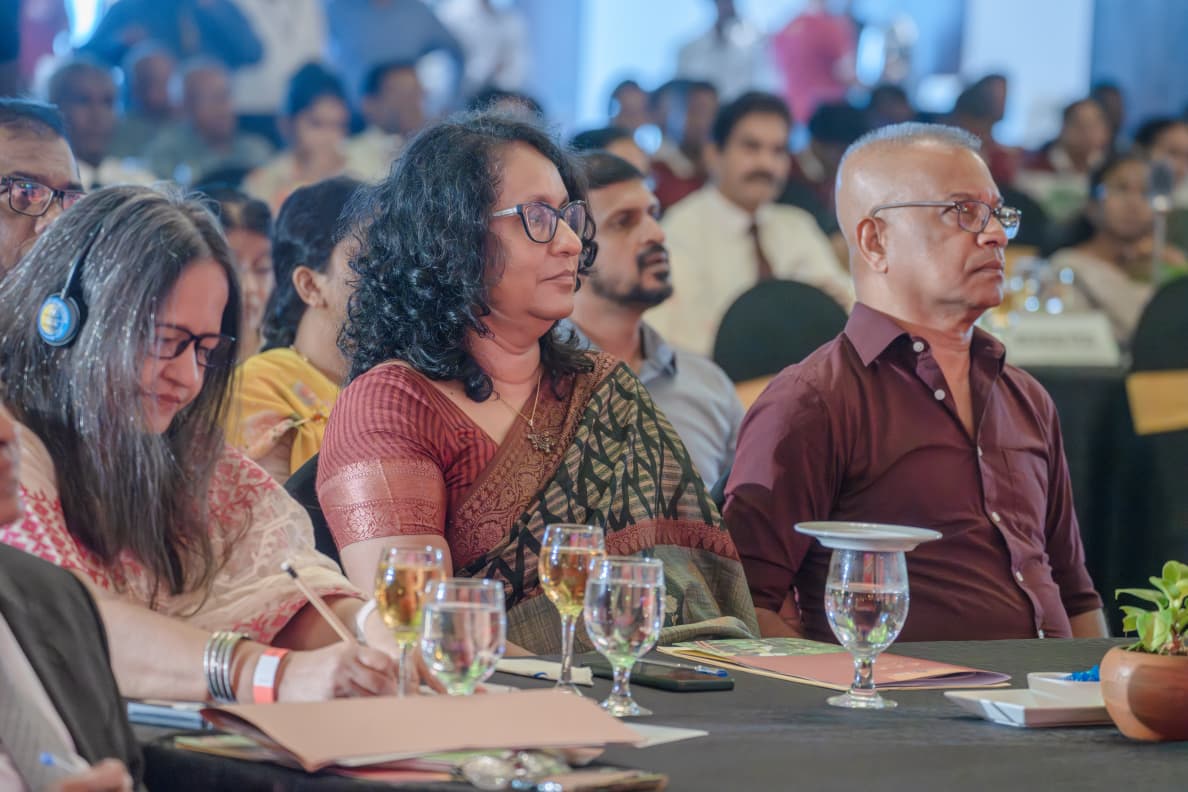
Prime Minister Dr. Harini Amarasuriya stated that, in the face of the turbulent global environment prevailing today, agriculture is confronting significant challenges, and that food security is a crucial factor affecting a country’s stability, sovereignty, and national security.
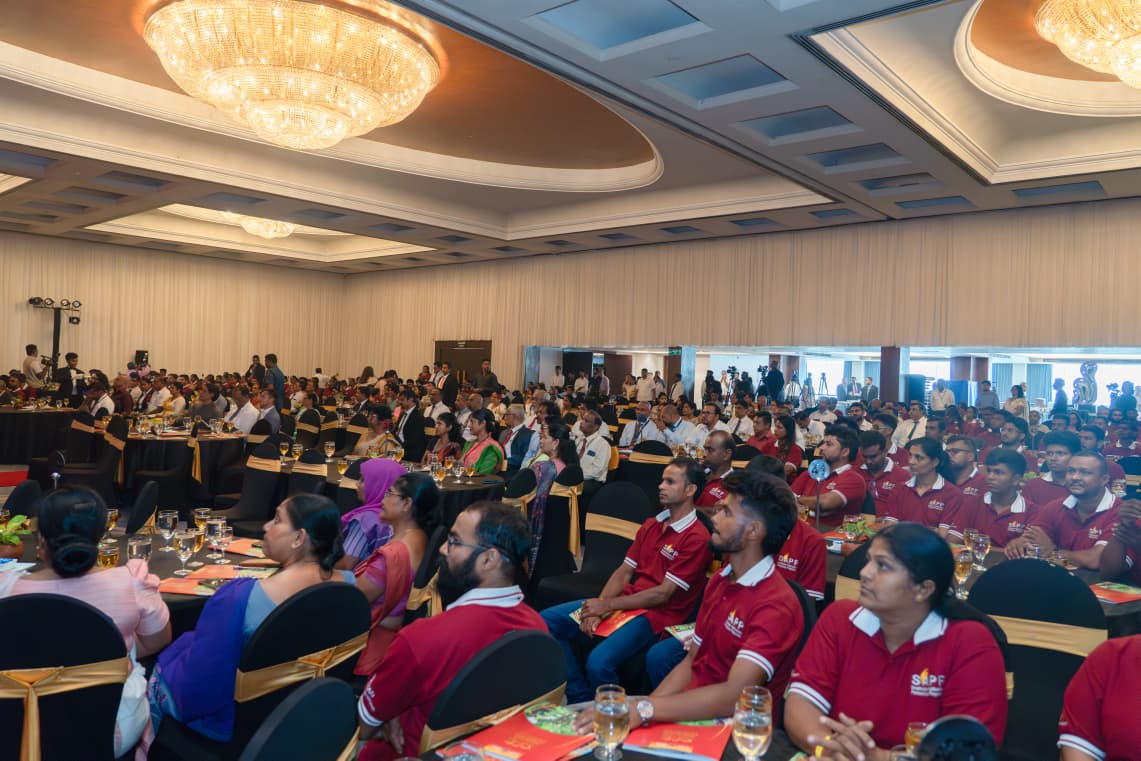
The Prime Minister made these remarks on 28 of April at the Waters Edge, Battaramulla, while addressing the National Youth Agripreneur Showvase and B2B connect Conference organised under the Smallholder Agribusiness Partnership Programme (SAPP), funded jointly by the International Fund for Agricultural Development (IFAD) and the Government of Sri Lanka. The programme aims to empower rural youth to engage in agribusiness ventures.
Addressing the gathering, the Prime Minister further stated:
“I commend the organisers for successfully conducting this event despite the various challenges faced by the country.
You are playing an important role in both the agricultural sector and the national economy. I am happy to witness talented agri-entrepreneurs such as yourselves.
Food security, founded on agriculture, directly impacts a nation’s national security. Concepts such as ’Grow and Sell’ contribute significantly to strengthening the production economy.
During the COVID crisis, as well as amidst the current conflicts in the Middle East, it has become evident that if countries lack food security, their economies become vulnerable. Even a minor decision taken by leaders can disrupt supply chains.
Climate change also poses serious challenges to agriculture. When climatic and environmental conditions become difficult to predict, agriculture itself is threatened. In such a context, your contribution as agri-entrepreneurs goes beyond earning an income. It is also a direct contribution to the nation’s food security and, consequently, to national security. Your talents and innovations are important not only to yourselves, but to the people of the country as a whole”.
The Prime Minister also expressed gratitude for the support extended by institutions such as IFAD and SAPP, and conveyed best wishes to the country’s creative entrepreneurial youth.
The occasion was attended by the Minister of Agriculture, Livestock, Land and Irrigation K.D. Lalkantha; Deputy Minister of Industry and Entrepreneurship Development Chathuranga Abeysinghe; Secretary to the Ministry of Agriculture, Livestock, Land and Irrigation D.P. Wickramasinghe; Additional Secretary of the Ministry Lathisha Priyanthi; Director of SAPP Sunimal Chandrasiri; and several other distinguished guests.
(Prime Minister’s Media Division)

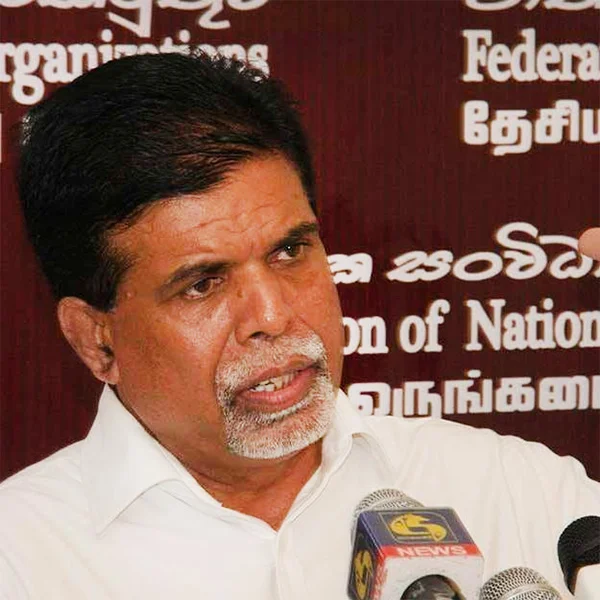
The National Patriotic Front (NPF) has said the NPP government owes the public an explanation regarding the status of negotiations with Russia to secure energy supplies.
NPF General Secretary Dr. Wasantha Bandara said that Sri Lanka was in such a desperate situation, the current dispensation couldn’t, under any circumstances, miss the opportunity to reach consensus with Russia in this regard.
Dr. Bandara was responding to The Island query in the wake of the NPF, in a letter, dated 27 April, warning President Anura Kumara Dissanayake of the catastrophic consequences for the country if it failed to obtain energy supplies on affordable terms.
Alleging that various interested parties, within the government, and the Western diplomatic community, hindered the successful conclusion of an agreement/agreements between Sri Lanka and Russia, Dr. Bandara pointed out that those in authority seemed to have conveniently forgotten that Sri Lanka received two Russian delegations. In late March and early April 2026, Russian Deputy Energy Minister Roman Marshavin and Deputy Foreign Minister Andrey Rudenko, visited Colombo where the focus was on long-term fuel supplies, investment, and tourism.
Dr. Bandara said that Anura Karunatilleke, who succeeded Energy Minister Kumara Jayakody, embroiled in the coal scam, was yet to meet the Russian Ambassador in Colombo Levan Dzhagaryan, who wants to explore ways and means of expediting the process. Instead,
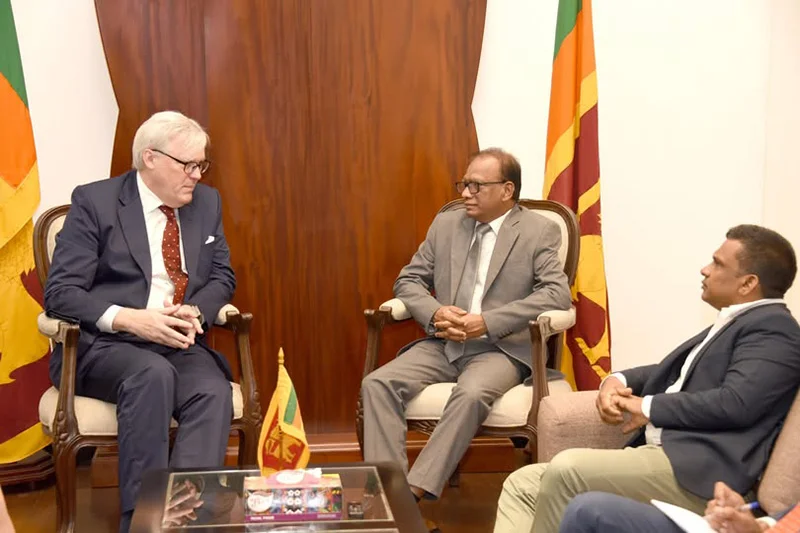
British High Commissioner Andrew Patrick meets Energy Minister
Karunatilleke and Deputy Civil Aviation Minister Janaka Ruwan Kodithuwakku
Karunatilleke and Deputy Civil Aviation Minister Janaka Ruwan Kodithuwakku recently met British High Commissioner Andrew Patrick, Dr Bandara said. Referring to BHC post that they discussed how Sri Lanka could maximise its ports and airports, including through existing and new UK partnerships, alongside UK support for green energy, particularly offshore wind, Dr. Bandara emphasised that the UK and EU struggling to meet their own energy demands couldn’t help Sri Lanka.
In the NPF letter to President Dissanayake, Dr. Bandara alleged that Sri Lanka could secure a barrel of Russian crude for USD 150 to 160 whereas procurement through India cost a lot more. The NPF emphasised the responsibility on the part of the NPP government to maintain close relations with China, Russia and Iran, Sri Lanka’s long-time friends.
The NPF has urged President Dissanayake to intervene without further delay to ensure national interest in this matter is given utmost importance.
Dr. Bandara pointed out that those in charge of coal procurement told a parliamentary committee how the trouble started after Sri Lanka moved from Russian coal to South African products through disgraced Indian firm Trident Chemphar Ltd. Dr. Bandara asserted that political parties, represented in Parliament, should take up this matter vigorously and shouldn’t be distracted by vile NPP strategies.
By Shamindra Ferdinando
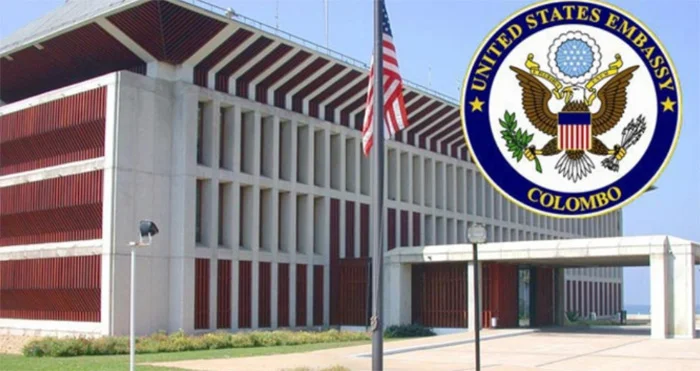
The US Embassy in Sri Lanka, on April 26, celebrated the 15th anniversary of American Corner Jaffna (ACJ), highlighting its longstanding role in connecting communities in Northern Sri Lanka with the United States through programmes focused on education, innovation, and American values. The Embassy also inaugurated the new “Freedom 250 Pavilion,” part of the global Freedom 250 initiative commemorating 250 years of American independence, the Embassy said in a press release issued yesterday (27)
Speaking at the event, US Embassy Public Affairs Officer Menaka Nayyar said: “American Corner Jaffna reflects the United States’ commitment to sharing American values, culture, and ideas with the people of Northern Sri Lanka. On July 4, 2026, the United States will celebrate 250 years of independence—a milestone that highlights our founding ideals and partnerships around the world, including here in Jaffna. Through the new Freedom 250 Pavilion and our programs, we invite the community to engage with the United States and learn more about our history, society, and innovation.”
In 2025 alone, ACJ hosted nearly 400 programmes, reaching more than 10,000 participants. Located at No. 23, Athiyady Road, Nallur, Jaffna, American Corner Jaffna provides free access to resources on the United States, English language learning, educational advising, and skills-based programming.
Established in 2011, in partnership with the Jaffna Social Action Centre, American Corner Jaffna was created as a platform for direct engagement with local communities—offering opportunities to learn about the United States while building skills in critical thinking, leadership, and innovation.
Launched in the post-conflict period, the Corner has played a key role in connecting emerging leaders in Northern Sri Lanka with ideas, resources, and opportunities rooted in American experience and perspectives. The Freedom 250 Pavilion expands ACJ’s capacity to host interactive programmes and community events, reinforcing the Corner’s role as a dynamic space for collaboration, dialogue, and learning.
Individuals can take part in free programmes by visiting American Corner Jaffna in person, contacting the Corner at 021 222 0665 or via email at info@americancornerjaffna.com, and following American Corner Jaffna on Facebook (facebook.com/amcornerjaffna) for the latest updates on events, registration, and membership opportunities.

Food Security is vital to ensuring a Nation’s Sovereignty and National Security – Prime Minister

Showers or thundershowers will occur in the most parts of the island after 1.00 pm

Explanation sought from AKD on ‘Russian energy supplies’

US reiterates its commitment to enhancing relations with Northern Sri Lanka

Rooftop Solar at Crossroads as Sri Lanka Shifts to Distributed Energy Future

Indonesia-SL agreement on Visa Exemption for Diplomatic and Official passports soon

‘Dates have the highest sugar content to fight Coronavirus’

Sunday Island 27 December – Headlines

#SundayIsland 17th December – Headlines

Sunday Island – 28th March

Sunday Island Headlines – 21 March

Sunday Island – 21st February – Headlines
-
 News6 days ago
Whistleblowers ask Treasury Chief to resign over theft of USD 2.5 mn
-

 News6 days ago
No cyber hack: Fintech expert exposes shocking legacy flaws that led to $2.5 million theft
-

 News3 days ago
BIA drug bust: 25 monks including three masterminds arrested
-

 Business4 days ago
Nestlé Lanka Announces Change in Leadership
-

 News1 day ago
Treasury chief’s citizenship details sought from Australia
-

 News3 days ago
Banks alert customers to phishing attacks
-
 News4 days ago
Hackers steal $3.2 Mn from Finance Ministry
-
 Business6 days ago
Dialog Enterprise partners Star Garments: Pioneering 5G innovation in Sri Lanka’s apparel industry