
Opinion
Left, Right … or Forward?


The Post-Neoliberal Crisis
The recent historical record of the political centre-right is not particularly impressive. To define the centre-right in this contemporary period, it may be distinguished from the traditional conservatism of D. S. Senanayake, whose philosophy more closely resembled Stanley Baldwin’s “One Nation” conservatism than the neoliberal turn of his successors.
The United National Party (UNP) was conceived as a liberal-conservative party. Senanayake and his contemporaries articulated a moderate, pragmatic brand of conservatism distinct from today’s mainstream centre-right. Liberal conservatism emphasised the state’s role as an instrument of nation-building while respecting and sustaining cultural traditions and social norms. Intellectually, it drew on Edmund Burke, Alexis de Tocqueville, and the classical economic foundations of Adam Smith, David Ricardo, and John Stuart Mill, figures who tempered markets with moral order, gradual reform, and social stability.
A section of the Samagi Jana Balawegaya (SJB), now Sri Lanka’s main Liberal party, seems inclined towards a renewal or regeneration of the ‘right-wing’ or ‘centre-right’ of our politics; a “unite the right” movement from within. There is also a broader, external elite-liberal project to launch a joint-venture between the SJB and the UNP aiming for a more cosmopolitan and “business-friendly” party.
This is not an outlandish strategy, to frame the SJB as a centre-right antidote to the lacklustre performance of the National People’s Power (NPP) “left-progressive” government. Liberal parties like the SJB typically contain multiple factions: traditionalists, progressives, pro-business lobbies, unions, and activists; all contesting to define an ideological centre from which a politics of some value might emanate.
What began in 1977 as a bold experiment of liberalisation, gradually evolved into a system of privilege and exemptions. Instead of fostering competitive industrialisation, successive governments entrenched versions of a “license raj”, with multi-decade, unconditional protections for industries, generous tax holidays sometimes spanning 30 years, with no overarching strategy. The result was not dynamic market competition but elite rent capture, a pattern that work by Tisdell (2000) and Gunatilleke (2012) have described as forms of rentier capitalism, where economic policy served the interests of a small group rather than broader development.
This article seeks to argue that a realignment to the right or left will neither clarify the SJB’s ideology nor inspire its base and attract new supporters. Instead, Sri Lanka requires a party and an opposition of Progressive Centrism, a middle path that rejects both neoliberal retrenchment and populist overreach, without becoming a Clintonian/ Blairite ‘third way’ compromise.
A Hegemonic Discourse
The global centre-right has long since shifted decisively away from Senanayake’s style of liberal conservatism and toward Ranil Wickremesinghe’s neoliberalism. Stanley Baldwin was British Prime Minister three times during the interwar period, pursuing policies to install or expand unemployment insurance schemes, pensions, housing, and even maternal health services. Under D.S. Senanayake, the newly independent Ceylon carried forward many features of the colonial-era social contract, institutionalising agrarian reforms by broadening land access, expanding the rice subsidy guarantee and investing in public goods.
By contrast, the UNP’s centre-right evolution was formalised in the 1990s by its joining the International Democratic Union, becoming an ideological partner of Thatcherism and Reaganomics, reflecting the broader global political takeover of the centre-right by the forces of neoliberalism.
For a sober, structural definition and analysis of this concept, take David Harvey’s ‘A Brief History of Neoliberalism’ (2005): “Neoliberalism is … a theory of political economic practices that proposes that human well-being can best be advanced by liberating individual entrepreneurial freedoms and skills within an institutional framework characterised by strong private property rights, free markets and free trade… The role of the state is to create and preserve the institutional framework appropriate to such practices…It must … set up those… legal structures and functions required to secure private property rights and to guarantee, by force if need be, the proper functioning of markets”.
Harvey is precise in his definition of the role of the State; limited to the generating and preserving of institutions that safeguard the market and further, goes on to state that where markets don’t yet exist, such as in land, water, health, education, the State may create them. Once created, these markets must not be interfered with because governments cannot possibly hope to “out-perform market signals”.
Susan George’s 1999 speech titled ‘A Short History of Neoliberalism’ (delivered at the ‘Conference on Economic Sovereignty in a Globalising World’ in Bangkok) describes the movement as an ideological project disguised as technical economics, designed to expand the power of markets and corporations while shrinking the State’s role in welfare and redistribution.
Sri Lanka rightly opted for liberalisation in 1977 to spur industrial growth and exports, yet the benefits were unevenly distributed, inequality increased and social protections lagged. Several studies confirm that while liberalisation spurred growth, it failed to deliver inclusive outcomes, especially in poorer and rural areas. For instance, S. Perera et al analyse trade liberalisation’s effects on welfare in South Asia, with specific reference to Sri Lanka, and find that gains largely bypassed rural and estate-sector households, reinforcing income disparities.
Dunham & Kelegama (1995) argue that it was only under President Ranasinghe Premadasa (1989–1993) that liberalisation was fully realised through a “second wave.” This period is praised for its dual approach: combining export-oriented liberalisation with targeted subsidies, welfare expansion, and poverty alleviation. Premadasa’s policies, described by Amaratunga (1999) as a “middle path,” represented a pragmatic model of balancing market reforms with social protections to stabilise growth and broaden its reach.
Progressive Centrism
Much of Sri Lanka’s economic structural issues such as low tax to GDP, external debt for consumption, a significant ISB Portfolio, a deindustrialising external sector, decades of low investments in health and education, poor quality public services; all reflect outcomes of neoliberalism in other countries.
The SJB’s 2024 manifesto, the Blueprint, explicitly sought to frame a social market economy: capitalism with a human face, growth with equity. It was part of the SJBs evolution and point of departure, from the neoliberalism of the UNP; a more moderate political positioning. The Blueprint emphasised global production value chains (GVCs), FDI in high-technology manufacturing, and intellectual, physical and soft infrastructure for long-term competitiveness.
Progressive centrism will go further, insisting on coupling market dynamism with welfare systems designed for churn, not dependency; recipients must exit as new ones enter, ensuring turnover. Rather than retreating into austerity and orthodoxy, the SJB should support or sponsor legislation that reforms social assistance programs: cash-transfers, subsidies, and training, but with time-bound, hybrid welfare systems that build skills and compulsory savings, creating pathways out of dependency.
This is not utopian: large countries with complex societies, like Brazil and Mexico, have pioneered such models. Brazil’s Bolsa Família, a conditional cash transfer tied to school attendance, vaccinations, training, and micro-credit, lifted over 20 million people out of poverty. But Sri Lankan policymakers need not look as far as South America because the 1989 Janasaviya programme was one of the region’s first hybrid welfare schemes, linking transfers to savings and income-generation.
Launched by President Ranasinghe Premadasa, the Janasaviya programme (1989–1995) emerged as an ambitious poverty alleviation scheme that combined consumption support with a compulsory savings transfer to finance small-scale income-generating projects. Janasaviya was similar in spirit to today’s “graduation” models that link cash assistance to skills, training, and asset-building. High administrative costs led to Janasaviya’s replacement by Samurdhi in 1995, an entirely consumption-oriented transfer program that persists to this day under a different name, Aswesuma, with no graduation-linked policies.
A 2013 nationwide analysis published in The Lancet found that Brazil’s Bolsa Família conditional cash transfer (CCT) reduced child mortality from malnutrition, evidence that cash plus health/education conditionalities translate into real survival gains. Lancet Public Health (2025) estimates the programme prevented 713,000 deaths and 8.2 million hospitalisations between 2004-2019.
In Mexico, the PROGRESA/Oportunidades CCT raised preventive health visits and schooling in rigorously evaluated pilots that later informed national rollout. In Indonesia, evidence shows that Program Keluarga Harapan (PKH), a 2007 national CCT program, sustained gains in incentivised health and education behaviours even six years after launch.
These are not isolated cases, successful experiences are documented around the world from the Philippines to Ethiopia, but policy design matters, not just the quantum of investment.
Sri Lanka exhibits the worst of all worlds, grossly under-funded, poorly-targeted transfer programs with rudimentary design. Progressive Centrism treats such public policy as instruments to deliver focused solutions instead of ideological radio transmissions. It represents a middle-path treatment of ideology, philosophy and thus public policy rather than a compromise between two sides of the spectrum.
The Economic Middle-Path
Sri Lanka’s universities face well-documented challenges: oversubscription in arts and social sciences, limited STEM output (World Bank 2020), chronic underfunding, as well as entrenched issues like ragging and harassment. Quite apart from cultural and structural issues, Sri Lanka also exhibits a uniquely active, politically organised student population, with mobilisation capabilities at scale and official integration with established political parties.
This extreme politicisation of student unions is presented as a major obstacle to national progress, take two common issues: (1) The resistance to private higher-education institutions, and (2) The demand and pressure for state employment, post-graduation. Should we dispel these complaints as part of Sri Lanka’s so-called entitlement culture, or should we first try to understand the arguments?
Student activists correctly note that as the state under-invests in the public system, more private institutions are licensed, many unaffordable to low and middle-income families.
An OECD study from 2017 shows that families often take on debt or liquidate assets to afford tuition; an Indian study (Tilak 2020) suggests that expansions of private systems of education without simultaneous expansion of public sector capacity, inevitably leads to inequality and discrimination of access.
Research suggests that demand for public-sector jobs is partly driven by weak labor markets as much as skills-mismatches, which is certainly a major factor. When private sector jobs are scarce or low-paying, or do not provide pensions and job security, public employment becomes the safe and rational choice.
An IMF Report from 2014 notes this dynamic in developing countries; demand for public-sector jobs signal weak or under-developed private sector labor absorption.
A progressive centrist approach would recognize the validity of these grievances while charting reforms and policies: state-backed, contributory pension schemes to make private employment more attractive, or targeted social infrastructure, such as the state-funded childcare proposal modelled by Verité Research (2021), to ease labor force participation.
India’s 2004 National Pension System (NPS) offers a useful contrast. The NPS is a portable, state-backed defined-contribution scheme open to both public and private sector workers, and even the self-employed. It provides flexibility in investment choices and crucially converts part of the savings into annuities at retirement, ensuring lifelong income security.
Sri Lanka’s Employees’ Provident Fund (EPF) and Employees’ Trust Fund (ETF), while portable across jobs in the formal sector, are limited to lump-sum withdrawals at retirement, with little flexibility, no annuity guarantee, and restricted coverage and excludes most of the informal workforce.
Ideological Caricatures
Industrial Policy and Export Promotion have succeeded spectacularly in many economies but as policy-making tools, they require radical departures from an orthodoxy that is uncomfortable with the State picking “winners and losers”. This is a fallacy because most often, successful industrial policies are implemented in a context of strong market signals.
In the 1970s, South Korean conglomerates like Samsung and Hyundai identified semiconductors as vital to their survival and global competitiveness. Lacking the scale and technology to enter the industry alone, they worked with the government to secure targeted subsidies, tax breaks, development finance, and R&D support. By the 1990s, South Korea had become a global leader in DRAM chips, with Samsung and SK Hynix now dominating the semiconductor supply chain.
Such industrial policy, often dismissed as “statist” or “interventionist,” was in fact central to the growth trajectories of Germany, Japan, South Korea, Singapore, Vietnam, and China. These ideas have been around since Friedrich List and Alexander Hamilton, who argued that markets and states must work together to nurture strategic domesticated industries.
The welfare state, likewise miscast as leftist, was forged in the post-WWII consensus when liberals and conservatives alike recognised redistribution as essential for stability and civic trust. From John Stuart Mill’s support for inheritance taxes to Friedrich Hayek’s acceptance of limited welfare. Today even the IMF and World Bank stress social safety nets (SSNs) and cash transfers, as foundations for sustainable growth; even the IMF has evolved, so should Sri Lanka’s policymakers.
By Kusum Wijetilleke ✍️



Here is what you can do!
Comedy and the ability to have a good laugh are what keep us sane. The good news to announce is that there are many British and American comedy shows posted up and available on the internet.
They will bring a few hours of welcome relief from our present doldrums.
Firstly, and in a class of its own, are the many Benny Hill shows. Benny is a British comedian who comes from a circus family, and was brought up in an atmosphere of circus clowning. Each show is carefully polished and rehearsed to get the comedy across and understood successfully. These clips have the most beautiful stage props and settings with suitable, amusing costumes. This is really good comedy for the mature, older viewer.
Benny Hill has produced shows that are “Master-Class” in quality adult entertainment. All his shows are good.
Then comes the “Not the Nine o’clock news” with Rowan Atkinson and his comedy team producing good entertainment suitable for all.
And then comes the “Two Ronnies” – Ronnie Barker and Ronnie Corbett, with their dry sense of humour and wit. Search and you will find other uplifting shows such as Dave Allen, with his monologues and humour.
All these shows have been broadcast in Britain over the last 50 years and are well worth viewing on the Internet.
Similarly, in The USA of America. There are some really great entertainment shows. And never forget Fats Waller in the film “Stormy Weather,” where he was the pianist in the unforgettable, epic, comedy song “Ain’t Misbehavin”. And then there is “Bewitched” with young and glamorous Samantha Stevens and her mother, Endora who can perform magic. It is amazing entertainment! This show, although from the 1970s was a milestone in US light entertainment, along with many more.
And do not overlook Charlie Chaplin and Laurel and Hardy, and all the Disney films. Donald Duck gives us a great wealth of simple comedy.
The US offers you a mountain of comedy and good humour on Youtube. All these shows await you, just by accessing the Internet! The internet channel, ‘You tube’ itself, comes from America! The Americans reach out to you with good, happy things right into your own living room!
Those few people with the ability to understand English have the key to a great- great storehouse of uplifting humour and entertainment. They are rich indeed!
Priyantha Hettige

After the recent disaster, a great deal of information has been circulating on WhatsApp and YouTube regarding our reservoirs, highways, etc.
In many of these discussions, people have analysed what went wrong and how the damage could have been prevented. My question is this: why do all these knowledgeable voices emerge only after disaster strikes? One simple reason may be that our self-proclaimed, all-knowing governing messiahs refuse to listen to anyone outside their circles. It is never too late to learn, but has any government decision-maker read or listened to these suggestions?
When the whole world is offering help to overcome this tragedy, has the government even considered seeking modern forecasting equipment and the essential resources currently not available to our armed forces, police, and disaster-management centres?
B Perera
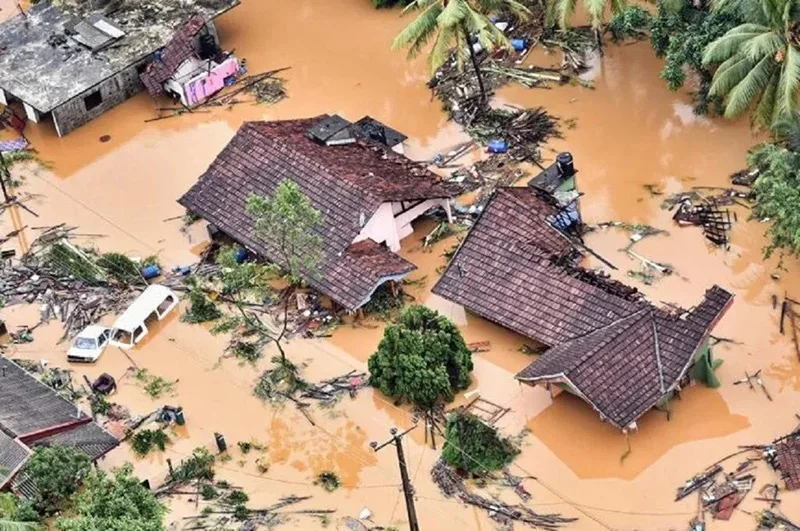
A great deal has been said about Cyclone Ditwah and its impact. To my mind one important aspect of it has not been addressed.
During the 1,400 odd landslides, it washed off a vast volume of soil which entered the various water bodies like tanks, lakes, rivers and streams etc. This process has raised their water levels reducing the water holding capacities (water holding capacity has a different meaning in soil science). What it means is that they cannot hold the same amount of water as before without spilling. Therefore, a precipitation which would not have been significant then can cause spilling of tanks leading to floods now. Hence there is a possibility of experiencing more floods in the future. Due to silting the tanks will carry less water than before, thus reducing the irrigable areas under their command. They will not be able to irrigate the same extents of paddy, thus affecting production.
How do we rectify this situation? It is desilting which can be very expensive.
It is good if these are considered in future planning.
Gamini Peiris
Panadura
Experienced agriculturist

Trump files $5bn defamation lawsuit against BBC over Panorama speech edit

UK and South Korea strike trade deal

Rob Reiner’s son Nick arrested for murder after director and wife found dead

70,297 persons still in safety centers

Showers will occur at times in the Northern, North-Central, Eastern, Uva and Central provinces

MEPA to crack down on marine polluters

‘Dates have the highest sugar content to fight Coronavirus’

Sunday Island 27 December – Headlines

#SundayIsland 17th December – Headlines

Sunday Island – 28th March

Sunday Island Headlines – 21 March

Sunday Island – 21st February – Headlines
-
 Features6 days ago
Finally, Mahinda Yapa sets the record straight
-
 Features6 days ago
Handunnetti and Colonial Shackles of English in Sri Lanka
-
 Business5 days ago
Cabinet approves establishment of two 50 MW wind power stations in Mullikulum, Mannar region
-

 News5 days ago
Gota ordered to give court evidence of life threats
-

 Features5 days ago
Cliff and Hank recreate golden era of ‘The Young Ones’
-
 Features5 days ago
Sri Lanka and Global Climate Emergency: Lessons of Cyclone Ditwah
-
 Opinion6 days ago
A national post-cyclone reflection period?
-

 Latest News6 days ago
Sri Lanka squad named for ACC Men’s U19 Asia Cup