
Business
Leave No One Behind: Building a disability-inclusive COVID-19 recovery plan for Sri Lanka

By Lakshila Wanigasinghe
Persons with disabilities (PWDs) are an important group that needs to be considered when building an all-inclusive COVID-19 recovery plan. They often tend to get excluded or only partly considered due to the heterogeneous nature of the difficulties they face owing to the diversity in the types of disabilities and support required. This blog explores the significant challenges faced by PWDs amidst COVID-19 and outlines strategies that Sri Lanka can adopt towards ensuring an inclusive recovery.
PWDs and Emerging Challenges
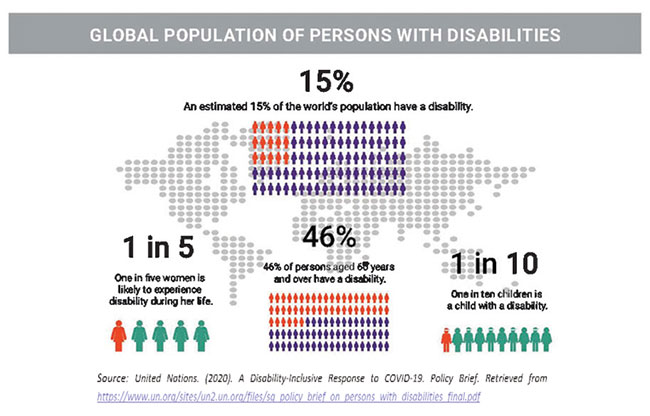
Over 1 billion people around the world live with some form of disability, accounting for 15% of the world population as shown in Figure 1. Around 80% of PWDs live in developing countries including 1,617,924 persons in Sri Lanka (as of 2012). Hardships faced by such persons are greater for those living in developing countries due to limited resources and facilities available to them. Many developing countries lack resources to detect disability early on, have inadequate rehabilitation facilities, and lag in updated research and strategies to support PWDs. This is the case in Sri Lanka where PWDs have inadequate access to society, education, specialised healthcare, and employment opportunities in comparison to developed countries.
 Adversities faced by PWDs have escalated due to COVID-19. A study conducted by Global Disability Inclusion found that apart from heightened health risks, the pandemic significantly affected the employment and financial security of PWDs. This can widen existing disparities and lead to long-term consequences such as higher poverty rates, lower wages and increased costs of living among such persons, thereby leaving lasting impacts on their lives.
While COVID-19 has affected the global population, its effects are distinct and intensified for PWDs. Their pre-existing health conditions put them at greater risk of contracting the virus, experiencing severe symptoms and higher mortality rates. Depending on the nature of their disability, some individuals are unable to effectively communicate their symptoms or practice preventative measures such as regular sanitisation.
Lack of access to public health information due to physical, mental or sensory impairments poses a higher risk of PWDs contracting COVID-19 by being unaware of symptoms and precautionary measures that need to be taken. Disproportionate access to information also poses a threat when implementing recovery procedures.
Lockdowns and social distancing policies limit access to caretakers and medical professionals, putting those unable to care for themselves at substantial risk while in isolation. Lockdowns can also prevent PWDs from accessing basic necessities and seeking regular medical care. Further, school closures and the switch to distance education have led to higher learning disruptions among children with disabilities. This is more pronounced for children in developing countries due to factors such disproportionate access to technology, and lack of assistive devices and in-person support.
Overcoming the Challenges
An understanding of the barriers faced by PWDs is essential to ensure an inclusive recovery. Therefore, it is vital to consult PWDs and engage organisations that work with these groups –such as the Department of Social Services and the National Secretariat for Persons with Disabilities (NSPD) – throughout the decision-making process of creating a disability-inclusive recovery plan. Information about the disease such as ways of contraction, symptoms, precautionary measures and procedure to follow in the event of contracting it should be made readily available in accessible formats. This includes presenting COVID-19 related information in sign language, captions, braille, graphics, etc.
It is important for PWDs to be prioritised during the vaccination process. If active efforts are not made to include these groups, they will be disproportionately excluded, and will be among the last to receive vaccinations. The healthcare systems should identify PWDs that meet the eligible vaccination criteria and provide them information on vaccination.
However, this requires proper procedures to be in place for these individuals to register for vaccinations, along with disability-accessible vaccination centres and regular monitoring of such persons upon completion of the vaccination process. The NSPD and other local organisations that work with these groups can be utilised to make the process more accessible and effective. Further, special vaccination drives solely targeting PWDs are an option to ensure effective and efficient vaccination.
In addition, social protection systems should be enhanced to support PWDs better, especially those adversely impacted by COVID-19. A commendable initiative by the government was the extension of its COVID-19 relief cash transfers beyond regular recipients (PWDs in low-income households) to those in the waiting list and groups specially identified by rural committees. However, to ensure long-term recovery and prevent low-income groups from slipping into poverty, these groups should be evaluated by the NSPD and absorbed into the existing social protection system.
Road to Recovery
COVID-19 has exposed many weaknesses in healthcare, education and social protection systems worldwide, such as high levels of inequalities and the lack of inclusivity. To ensure sustainable post-COVID recovery, resources should be strategically allocated to support all groups of people and inclusion must be made a priority to build a lasting recovery plan.
In the long-term attention should be directed at building more inclusive systems that are better equipped at serving all groups of people and are more resilient to shocks in the future. A starting point for Sri Lanka would be to increase disability-accessible infrastructure (in public buildings, public transport, restrooms etc.), provide better healthcare and rehabilitation facilities, actively engage PWDs in the workforce, reduce stigma surrounding disability, and increase engagement between PWDs and society at large.
Link to original blog: https://www.ips.lk/talkingeconomics/2021/08/16/leave-no-one-behind-building-a-disability-inclusive-covid-19-recovery-plan-for-sri-lanka/
Lakshila Wanigasinghe is a Research Assistant at IPS with research interests in poverty, social welfare, development, education, and health. She holds an MSc in Economics with a concentration in Development Economics and a BA in Economics with concentrations in International, Financial and Law and Economics from Southern Illinois University Carbondale (SIUC), US. (Talk with Lakshila – lakshila@ips.lk).



National Airport Exit Survey tells quite a story
Australia’s role here is strategic, not charitable
In a quiet but significant shift, Sri Lanka’s tourism sector is moving beyond traditional destination marketing and instinct-based planning. The recent launch of the “From Data to Decisions” initiative jointly backed by Australia’s Market Development Facility and the Sri Lanka Tourism Development Authority, sent an unambiguous message: sentiment is out, statistics are in.
The initiative is anchored by a 12-month National Airport Exit Survey, a trove of data covering 16,000 travellers. The findings sketch a new traveller profile: nearly half are young (20–35), independent, and book online. Galle, Ella, and Sigiriya are the hotspots; women travellers outnumber men; and a promising 45% plan to return. This isn’t just trivia. It’s a strategic blueprint. If Sri Lanka Tourism listens, it can tailor everything from infrastructure to marketing, moving from guesswork to precision.

Tourists have a real sense of achievement after hiking the trail to Ella Rock
The keynote speaker, Deputy Minister Prof. Ruwan Ranasinghe called data “a vital pillar of tourism transformation.” Yet the unspoken truth is that Sri Lanka has long relied on generic appeals -beaches, heritage, smiles. In today’s crowded market, that’s no longer enough. As SLTDA Chairman Buddhika Hewawasam noted, this partnership is about “elevating how we collect, analyse, and use data.”
Australia’s role here is strategic, not charitable. By funding research and advocating for a Tourism Satellite Account, it is helping Sri Lanka build a tourism sector that is both sustainable and measurable. Australian High Commissioner Matthew Duckworth linked this support to “global standards of environmental protection” – a clear nod to the growing demand for green travel. This isn’t just aid; it’s influence through insight.
“The real test lies ahead,” a tourism expert told The Island. “Data is only as good as the decisions it drives. Will these insights overcome bureaucratic inertia? Will marketing budgets actually follow the evidence toward younger, independent, female travellers?,” he asked.
“The comprehensive report promised for early 2026 must move swiftly from recommendation to action. In an era where destinations are discovered on Instagram and planned with algorithms, intuition alone is a high-stakes gamble. This forum made one thing clear: Sri Lanka is finally building its future on what visitors actually do – not just what we hope they’ll do. The numbers are in. Now, the industry must dare to follow them,” he said.
By Sanath Nanayakkare

In his inaugural address as the new Chairman of the Asia Tea Alliance (ATA), Nimal Udugampola placed the region’s millions of smallholders at the core of the global tea industry’s future, asserting they are the “indispensable engine” of a sector that produces over 90% of the world’s tea.
Udugampola, who is also Chairman of Sri Lanka’s Tea Smallholdings Development Authority, used his speech at the 6th ATA Summit held in Colombo on Nov. 27 to declare that the prosperity of Asian tea is “entirely contingent” on the resilience of its small-scale farmers, who have historically been overlooked by premium global markets.
“In Sri Lanka, smallholders account for over 75% of our national production. Across Asia, millions of families maintain the quality and character of our regional teas,” he stated, accepting the chairmanship for the 2025-2027 term.
To empower this vital community, Udugampola unveiled a vision focused on Sustainability, Equity, and Digital Transformation. The strategic agenda includes:
Climate Resilience: Promoting climate-smart agriculture and regenerative farming to protect smallholdings from environmental disruption.
Digital Equity: Leveraging technology like blockchain to create farm-to-cup traceability, connecting smallholders directly with premium consumers and ensuring fair value.
Market Expansion: Driving innovation in tea products and marketing to attract younger consumers and enter non-traditional markets.
Standard Harmonization: Establishing common regional quality and sustainability standards to protect the “Asian Tea” brand and push for stable, fair pricing.
Linking the alliance’s goals to national ambition, Udugampola highlighted Sri Lanka’s target of producing 400 million kilograms of tea by 2030. He presented the country’s “Pivithuru Tea Initiative” as a model for other ATA nations, designed to achieve this through smallholder empowerment, digitalization, and aligned policy objectives.
By Sanath Nanayakkare
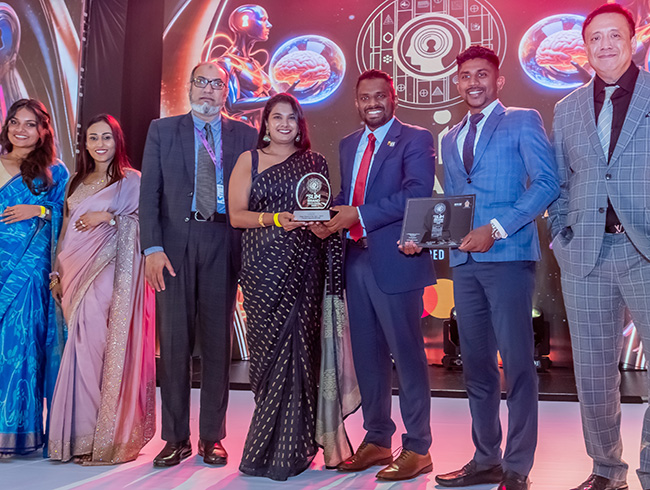
Brandix Apparel Solutions was recognised as the Green Brand of the Year at the Sri Lanka Institute of Marketing (SLIM) Brand Excellence Awards 2025, taking home Silver, the highest award presented in the category this year.
The ‘Green Brand of the Year’ recognises the brand that drives measurable environmental impact through sustainable practices, climate-aligned goals and long-term commitment to protecting natural resources.
A pioneer in responsible apparel manufacturing for over two decades, Brandix has championed best practices in the sphere of sustainable manufacturing covering environmental, social, and governance aspects. The company built the world’s first Net Zero Carbon-certified apparel manufacturing facility (across Scope 1 and Scope 2) and meets over 60% of its energy requirement in Sri Lanka via renewable sources.
Head of ESG at Brandix, Nirmal Perera, said: “Being recognised as Green Brand of the Year is an encouraging milestone for our teams working across sustainability.”

Jetstar to launch Australia’s only low-cost direct flights to Sri Lanka, with fares from just $315^

Starmer to host Zelensky for Ukraine talks in London

Benin coup thwarted by loyalist troops, president tells nation

Laws to curb unauthorised constructions to be strengthened

Van Niekerk cameo, Tunnicliffe fifty give South Africa series win

627 confirmed dead, 190 persons missing as at 6:00 a.m. today [08]

‘Dates have the highest sugar content to fight Coronavirus’

Sunday Island 27 December – Headlines

#SundayIsland 17th December – Headlines

Sunday Island – 28th March

Sunday Island Headlines – 21 March

Sunday Island – 21st February – Headlines
-
News5 days ago
Lunuwila tragedy not caused by those videoing Bell 212: SLAF
-

 News8 hours ago
Over 35,000 drug offenders nabbed in 36 days
-
 News4 days ago
Level III landslide early warning continue to be in force in the districts of Kandy, Kegalle, Kurunegala and Matale
-
 Latest News7 days ago
Level III landslide early warnings issued to the districts of Badulla, Kandy, Kegalle, Kurunegala, Matale and Nuwara-Eliya
-
 Features6 days ago
Ditwah: An unusual cyclone
-
 Business2 days ago
LOLC Finance Factoring powers business growth
-

 News2 days ago
CPC delegation meets JVP for talks on disaster response
-
 News2 days ago
A 6th Year Accolade: The Eternal Opulence of My Fair Lady