
News
LIOC move killing CPC; govt. in deep slumber – Unionist

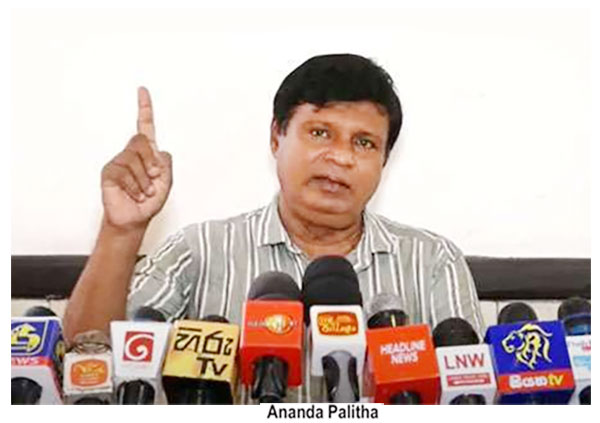
By Shamindra Ferdinando
Top spokesperson for the ‘Samagi’ Opposition trade union Ananda Palitha has alleged that differences between the prices of petrol and diesel sold at Lanka IOC filling stations and those sold by CEYPETCO and Laugfs are one of the reasons for the disruption of countrywide fuel supplies.
Ananda Palitha urged newly appointed Energy Minister Gamini Lokuge to reveal why Lanka IOC had been allowed to increase petrol and diesel prices by Rs 27 and 17 respectively.
Responding to another query Palitha, a former employee of the CPC (Ceylon Petroleum Corporation) and CPSTL (Ceylon Petroleum Storage Terminals Limited) said that the Lanka IOC had driven all its customers to the cash-strapped CEYPETCO and Laughs, thereby causing an unprecedented rush at service stations other than those managed by Lanka IOC.
Both the government and the Opposition had conveniently turned a blind eye to the Lanka IOC twice increasing fuel prices on 06 Feb and 25 Feb with the consent of the then Energy Minister Udaya Gammanpila, who exercised the regulatory powers in the absence of the mechanism proposed in terms of Act No 35 of 2002. The trade union activist emphasized that lawmaker Gammanpila could have thwarted the Lanka IOC move.
Ananda Palitha challenged political parties to explain why the proposed mechanism couldn’t be established over the past 20 years.
The Act enacted during Ranil Wickremesinghe’s premiership in 2002 provided for the establishment of the Public Utilities Commission of Sri Lanka to regulate certain public utilities, including petroleum, electricity and water.
Ananda Palitha said that the national economy could suffer debilitating losses unless the Parliament ensured the setting up of proper mechanism to regulate fuel prices as soon as possible. The incumbent Energy Minister should exercise regulatory powers until then, the activist said, emphasizing that Lanka IOC was a highly profitable enterprise as its mode of operation was totally different to CEYPETCO.
Chairman of the Public Utilities Commission of Sri Lanka Janaka Ratnayaka yesterday said that he couldn’t comment on the issue at hand. Ratnayaka said so when The Island sought his opinion on the vast difference in the pricing formula. Ratnayake said that though he served as the Chairman of the PUCSL, the petroleum sector didn’t come under his purview.
A senior Central Bank official told The Island that the sharp differences between fuel prices at CEYPETCO and Laugfs and the Lanka IOC caused massive losses to the government. Pointing out that the Central Bank had asked the government to increase fuel prices, the official said that CEYPETCO couldn’t meet the country’s oil requirement under present conditions.
Ananda Palitha said that Lanka IOC was in a stable condition to maintain the power pricing formula. However, Lanka IOC Managing Director Manoj Gupta has attributed the recent price increases to steep increases in international market prices and the Russian invasion of Ukraine. Gupta commented on the Russian invasion on Feb 25, the same day LIOC revised its prices for the second time that month.
According to the Opposition activist, he had retired in Oct 2018 after having served the CPC and CPSTL for 40 years and never believed a government could be so irresponsible. Declaring that the much touted agreement between Sri Lanka and India in respect of the Trincomalee oil tank farm was nothing but a sellout and betrayal of the country, Ananda Palitha claimed that Pivithuru Hela Urumaya leader Gammanpila should accept responsibility for the current calamity. Ananda Palitha alleged that India couldn’t have negotiated such a one-sided deal even during UNP leader Ranil Wickremesinghe tenure as the Prime Minister though he was repeatedly accused of succumbing to Indian pressure.
Ananda Palitha said that the inordinate delay in setting up the regulalatory mechanism in terms of Act No 35 of 2002, allowing Lanka IOC to decide petroleum prices and the agreement on the Trincomalee tank farm should be carefully examined. The then Energy Minister Gammanpila should never have been given the authority to negotiate the Trincomalee deal, Ananda Palitha said.
Lawmaker Gammanpila has explained both in and outside Parliament how proper procedures were followed in negotiating the agreement on Trincomalee oil tank farm. Gammanpila told The Island that there were absolutely no basis for accusations and that he obtained the best terms for the country under the circumstances faced by the country.


Latest News
Advisory for Severe Lightning issued for Galle, Matara, Kaluthara and Rathnapura districts

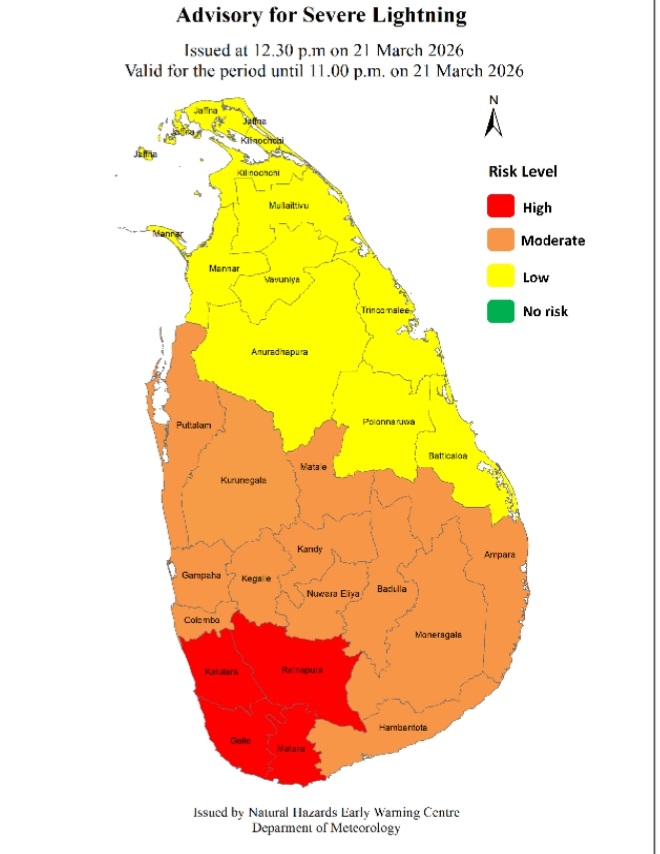
Advisory for Severe Lightning Issued by the Natural Hazards Early Warning Centre Issued at 12.30 p.m. 21 March 2026, valid for the period until 11.00 p.m. 21 March 2026
Thundershowers accompanied with severe lightning are likely to occur at some places in the Galle, Matara, Kaluthara and Rathnapura districts after 1.00 p.m.
There may be temporary localized strong winds during thundershowers. General public is kindly requested to take adequate precautions to minimize damages caused by lightning activity.
ACTION REQUIRED:
The Department of Meteorology advises that people should:
Seek shelter, preferably indoors and never under trees.
Avoid open areas such as paddy fields, tea plantations and open water bodies during thunderstorms.
Avoid using wired telephones and connected electric appliances during thunderstorms.
Avoid using open vehicles, such as bicycles, tractors and boats etc.
Beware of fallen trees and power lines.
For emergency assistance contact the local disaster management authorities.
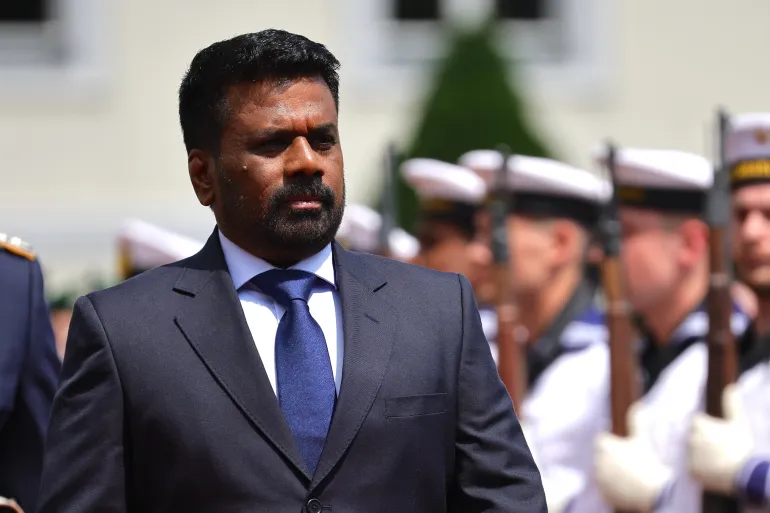
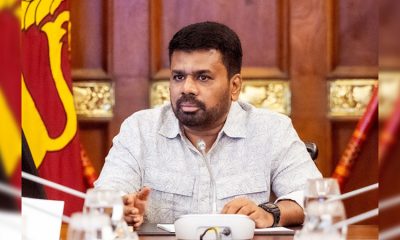
Sri Lanka’s president says his government turned down a request from the United States to land two US combat aircraft at a civilian airport earlier this month.
President Anura Kumara Dissanayake told Sri Lanka’s parliament on Friday that Washington had requested permission for the aircraft to land at Mattala Rajapaksa International Airport in southern Sri Lanka from March 4 to 8.
The request was made on February 26, two days before the US and Israel launched their military offensive against Iran.
“They wanted to bring two warplanes armed with eight antiship missiles from a base in Djibouti”, Dissanayake told lawmakers. “We turned down the request to maintain Sri Lanka’s neutrality”, he added to applause.
The US-Israeli war on Iran has sparked widespread concern globally, as Iranian missile and drone attacks across the wider Middle East have sent energy prices soaring and fuelled fears of a widening conflict.
US President Donald Trump has also been pressuring Washington’s allies to show more support for the war, slamming NATO countries as “cowards” for refusing to help secure the Strait of Hormuz.
Iran has essentially shuttered the critical Gulf waterway amid the war, forcing leaders around the world to scramble to try to offset the effects on their economies and energy supplies.
Amid the turmoil, many countries have refused to get directly involved in the war while calling for urgent de-escalation.
On Friday, Switzerland announced that it would halt any weapons exports to the US that could be used in military operations against Iran, citing its longstanding policy of neutrality.
“The export of war materiel to countries involved in the international armed conflict with Iran cannot be authorised for the duration of the conflict”, the Swiss government said.
Sri Lanka’s president also cited his country’s neutrality in the decision to deny the US request to land the two aircraft at Matalla airport earlier this month.
Dissanayake said he had received another request that same day, on February 26, from Iran to seek permission for three naval vessels to make a goodwill visit to Sri Lanka.
“With two requests before us, the decision was clear,” he said, noting that the government denied both to avoid taking sides as signs of escalating conflict emerged.
“Had we said ‘yes’ to Iran, we would have had to say ‘yes’ to the US, as well”, Dissanayake added.
In early March, Sri Lanka’s navy rescued 32 Iranian crew off IRIS Dena after it was torpedoed by a US submarine off the country’s coast, killing at least 84 people.
Days later, Sri Lanka evacuated more than 200 crew members from a second Iranian vessel, IRIS Bushehr, after the ship requested assistance from Colombo.
[Aljazeera]

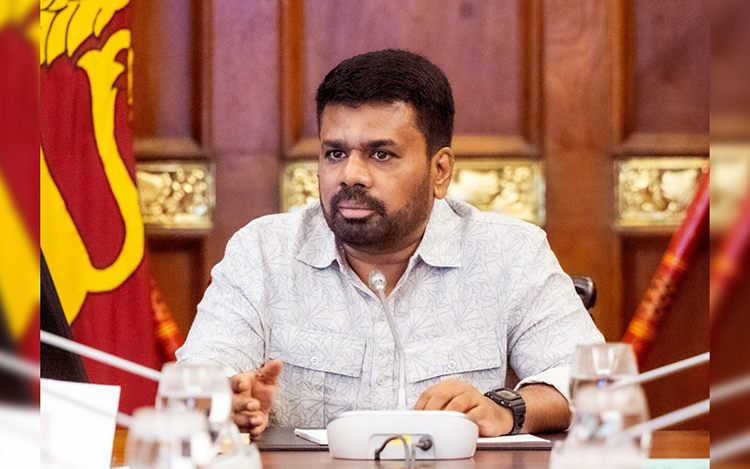
Sri Lanka refused the request by three Iranian ships to come to Sri Lanka on a goodwill visit and the request by the United States to land two of its fighter jets in Mattala, President Anura Kumara Dissanayake told Parliament yesterday.
“Sri Lanka maintained neutrality by refusing the two requests by both the US and Iran,” he said.
President Dissanayake provided a clarification on domestic fuel prices in light of rising crude oil prices in the global market and subsequent fuel price increases in other countries, triggered by the ongoing crisis in the Middle East.
The President highlighted that the Ceylon Petroleum Corporation (CPC) currently supplies 57% of the country’s fuel requirements, while the remaining 43% is supplied by the private sector.
He further noted that private sector suppliers have requested pricing that reflects current global market rates for the fuel they import.
Accordingly, the President emphasised that a decisive decision on fuel price adjustments must be reached as expeditiously as possible to ensure the continuity of the national fuel supply.
Addressing the Parliament, the President stated that the current pricing formula dictates that for every one-dollar increase in global oil prices, domestic fuel prices must rise by Rs. 2.
He noted that the primary impact being faced is driven by the surge in global fuel prices rather than the depreciation of the rupee against the US dollar.
The President said that, globally, countries have been compelled to make difficult decisions regarding fuel costs, with price increases ranging from approximately 6% to 50%.
He added that while global prices have risen by as much as 49%, the domestic increase has been limited to 8%.
He further stated that Sri Lanka is currently facing a significant challenge in maintaining fuel supply.
The Ceylon Petroleum Corporation (CPC) accounts for 57% of the country’s fuel supply. He noted that had the CPC been the sole supplier, fluctuations could have been managed by offsetting current losses with future profits.
However, he said the private sector now controls 43% of the market, and their position is that if retail prices do not reflect the current landed cost of fuel, they will cease imports.
He added that, from a business perspective, this is a valid concern, as private companies reportedly incur a loss of approximately USD 55 million per shipment, which he said is unsustainable.
The President emphasised that the contribution of the private sector is essential to maintaining the national fuel supply, but noted that they will only participate if they are able to sell at cost-reflective prices.
He stressed that the issue of fuel pricing must, therefore, be addressed urgently.
He also pointed out that under the existing Act, companies are permitted to increase prices; however, the maximum retail price is determined by the Ceylon Petroleum Corporation.
“Although we have entered into agreements with these private companies, the necessary legislative amendments to the Act have not yet been finalised,” he noted.
Regarding government revenue, the President stated that tax income from fuel currently stands at Rs. 20 billion, compared to Rs. 240 billion generated last year from taxes on diesel.

Advisory for Severe Lightning issued for Galle, Matara, Kaluthara and Rathnapura districts

Sri Lanka says it denied US request to land two aircraft at Mattala airport

Eid celebrations dimmed by war and displacement across Middle East

Showers may occur at several places in the Western, Sabaragamuwa, Northwestern and Uva provinces and in Galle, Matara, Kandy and Nuwara-Eliya districts after 1.00 pm.

Iranian strikes on bases used by US caused $800m in damage, new analysis shows

President maintains Lanka has been even-handed in dealing with Iran and US

‘Dates have the highest sugar content to fight Coronavirus’

Sunday Island 27 December – Headlines

#SundayIsland 17th December – Headlines

Sunday Island – 28th March

Sunday Island Headlines – 21 March

Sunday Island – 21st February – Headlines
-

 Business6 days ago
Browns EV launches fast-charging BAW E7 Pro at Rs. 5.8 million
-

 Life style7 days ago
From culture to empowerment: Indonesia’s vision for Sri Lanka
-

 News3 days ago
CIABOC questions Ex-President GR on house for CJ’s maid
-

 Life style7 days ago
Ranjith Fernando celebrates cricketing journey with Hob Nails to Spikes
-

 News5 days ago
Sri Lankan marine scientist Asha de Vos honoured at UNGA opening
-

 Features6 days ago
Achievements of the Hunduwa!
-

 Latest News6 days ago
QR code system will be implemented for fuel with effect from 06.00 a.m. today (15th)
-

 News5 days ago
Australian HC debunks misleading travel risk claims for Sri Lanka