
News
Landmark judgment in election bribes case yet to be implemented

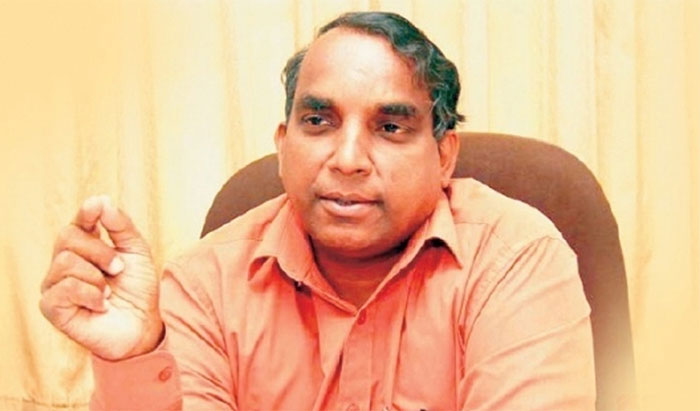
PAFFREL: Disqualification of politico warning to ‘corrupt lot’
By Shamindra Ferdinando
In spite of the Court of Appeal rejecting an appeal made by SLPP Monaragala Pradeshiya Sabha member D. M. Harshaka Priya Dissanayake, who was disqualified by the Monaragala High Court on charges of bribing voters at the last Local Government polls, the convict continued to be a member of the Monaragala PS, Executive Director, PAFFREL (People’s Action for Free and Fair Elections) Rohana Hettiarachchi said.
The last LG polls were held in 2018 during the Yahap-alana administration. Civil society activist Hettiarachchi said that the Monaragala High Court judge Ranga Dissanayake delivered a landmark judgment on Sept. 13, 2021, and the Court of Appeal rejected the SLPP member’s appeal on June 07, this year.Pointing out that the original ruling had been delivered over a year back, Hettiarachchi said that the inordinate delay in implementing the judgment was a matter of serious concern.
Those genuinely interested in free and fair elections should take up this issue, Hettiarachchi said, underscoring the responsibility on the part of the Parliament, political parties represented in Parliament, Commission to Investigate Allegations of Bribery or Corruption (CIABOC) and the Bar Association of Sri Lanka (BASL), in this regard.
Having disqualified the elected member, the Monaragala High Court declared Sunil Shantha Wanasinghe as the duly elected representative for Maduruketiya division in the Monaragala PS. Hettiarachchi stressed that in the absence of a specific campaign financing law, the Monaragala High Court judgment was of paramount importance. The disqualified PS member was represented by President’s Counsel U.R. de Silva, the then President of the BASL.
Referring to the follow-up procedure in respect of such a verdict, Hettiarachchi said that in the wake of the rejection of the appeal, Monaragala High Court had to send the relevant ruling to the Election Commission, via the President.
Responding to another query, Hettiarachchi said though major political parties had been repeatedly accused of offering bribes to voters at presidential, parliamentary, provincial council and local government polls, they were never challenged in court. Hettiarachchi said that as the PAFFREL couldn’t move court against the Monaragala PS member on its own, the outfit had no option but to file a case through Sunil Shantha Wanasinghe who obtained the second highest number of votes.
Hettiarachchi said: “This historic ruling will serve as a deterrent to candidates at any level. They know their actions will be liable to be challenged subsequently. In addition, the need for enacting laws to limit election expenses by candidates and provision of a level playing field for all candidates in an election has been stressed.”
The Right to Information (RTI) Act had also proved helpful in acquiring information to secure the verdict, Hettiarachchi said. The PAFFREL was able to obtain lists of fresh connections provided to voters by the National Water Board and the Ceylon Electricity Board in terms of the RTI (Right to Information) Act paid by an ‘agent’ of the candidate. Hettiarachchi identified the person who made payments as a minor government employee.
Hettiarachchi said that they also sought the intervention of the Election Commission (EC) in this regard. PAFFREL has warned that there could be further complications if the disqualified member deliberately lost his seat by skipping PS sessions. If that happened, the SLPP could replace its member, thereby depriving the person named by the Monaragala High Court to serve the PS at least for a short period, Hettiarachchi said.
Waste, corruption, irregularities and mismanagement in the public sector had caused so much devastation, Hettiarachchi said, urging the electorate to be mindful of continuing poll malpractices. The unprecedented ruling delivered by the Monaragala High Court could give a mega boost to anti-corruption efforts at a time Sri Lanka recently received the attention of the Geneva-based United Nations Human Rights Council (UNHRC) as a country where economic crimes took place.



News
Establishment of an Institutional Framework to Inagurate Upper Hydro Catchment Areas Management Authority

Policy approval of the Cabinet of Ministers was granted at their meeting held on 08.06.2026 to establish the Upper Hydro Catchment Areas Management Authority for identification and
execution of a formal and long – lasting remedy to secure the central hills including the upper hydro catchment areas enabling them to sustain amidst extreme weather conditions
due to natural calamities and human activities as well as to be used for the sustainable development of the country.
Accordingly, a concept paper has been prepared including
institutional structure, activities, powers, active subject area as well as administrative and coordination mechanism for the proposed authority by an expert technical committee appointed by the Secretary to the President.
Based on the said concept paper, the Cabinet of Ministers granted approval to the resolution furnished by the President to instruct the Legal Draftsman to prepare a draft bill including legal provisions required for the establishment of Upper Hydro Catchment Areas Management Authority.
News
Introduction of Flora and Fauna (Regulation of actions of the Indigenous Community within the nominated areas) Regulations
With the objective of securing the traditional livelihood and the eco system of the indigenous community, it has been recognized the necessity of introducing a formal regulation methodology to secure their engagement in livelihood activities by being more sensitive to the existing laws.
Thereby, the Fauna and Flora (regularizing) regulations under the Fauna and Flora Protection Ordinance (Authority 469) have been prepared so that nominated activities within the prescribed area to a member of the indigenous community
who has been registered for securing the rights acquired from law or custom or usage or traditional stance to execute an act within a certain state land that is fundamental to the survival of the indigenous community permission can be granted
Accordingly, the Cabinet of Ministers granted approval to the resolution furnished by the Minister of Environment to publish the said regulations in the government gazette notification and thereby submit to the Parliament for its concurrence.
Latest News
M. M. D. J. Senarathne, appointed Director General of the Department of National Botanical Gardens
The Cabinet of Ministers approved the resolution furnished by the Minister of Environment to appoint M. M. D. J. Senarathne, who is the senior most officer in Grade I of Sri Lanka Scientific Service se

Establishment of an Institutional Framework to Inagurate Upper Hydro Catchment Areas Management Authority
Introduction of Flora and Fauna (Regulation of actions of the Indigenous Community within the nominated areas) Regulations
M. M. D. J. Senarathne, appointed Director General of the Department of National Botanical Gardens

Harmanpreet Kaur steps down as India captain

Turkiye, Pakistan agree Saudi Arabia military deployment under Mecca pact

Rumesh Tharanga among nominees announced for World Athlete of the Year 2026

‘Dates have the highest sugar content to fight Coronavirus’

Sunday Island 27 December – Headlines

#SundayIsland 17th December – Headlines

Sunday Island – 28th March

Sunday Island Headlines – 21 March

Sunday Island – 21st February – Headlines
-

 Latest News7 days ago
Gold winner Tharanga gets brand-new Honda Vezel from SLAAJ
-

 News6 days ago
US-assisted ‘Ice’ detection: NPC to examine IGP’s move to transfer drug-busting team
-

 Features7 days ago
Why Sri Lanka needs an Inclusive Civic Nationalism – urgently
-

 Editorial5 days ago
Colombo Port drug bust: The plot thickens
-

 News7 days ago
Civil society activist accuses govt. of favouring Ven. Gnanasara
-
 Midweek Review7 days ago
Dappula’s Easter Sunday ‘grand conspiracy’ claim demolished
-

 Editorial7 days ago
When crime bosses rise above law and shrines
-
Editorial6 days ago
Drug busting, transfers and trust deficit