
Sports
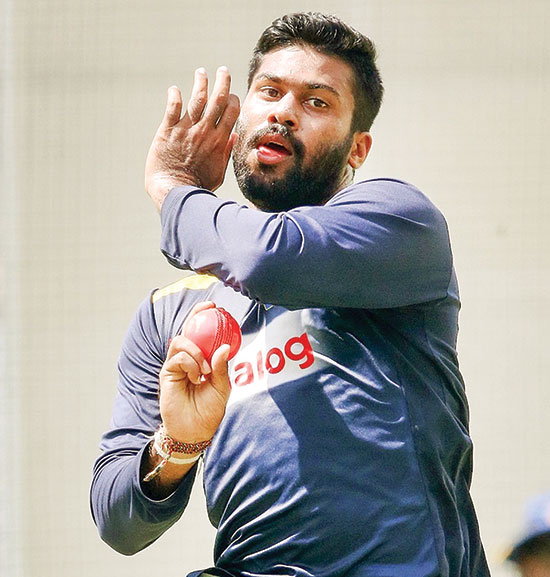
Lahiru Kumara: all brawn and no brains

by Rex Clementine
This Lanka Premier League (LPL) has produced some thrilling contests and probably the best of them all was the clash between Colombo Stars and Kandy Warriors with Seekkuge Prasanna helping Stars to snatch victory from the jaws of defeat this week.
Some inexplicable fast bowling by Lahiru Kumara did contribute to Warriors getting knocked out of the competition. Kumara got a lot of flak for the manner in which he handled the pressure against South Africa in Sharjah in that World Cup game last month having been called up to deliver the last over.
On the positive side, people thought that Kumara would have learned his lessons. Many fans actually felt for Kumara as holding your nerve against someone like David ‘killer’ Miller is not something easy.
But this week it emerged that Kumara has learned little lessons. That LPL game taught us two lessons.
One, captains should not trust Kumara with the last over. Two, his brain is as thick as a mustard.
With Colombo Stars requiring 16 off the last over, Kandy Warriors skipper Angelo Perera entrusted his most experienced bowler to do the job. But Kumara went about things like a rookie not like someone who has been representing Sri Lanka for five years.
When third man and fine-leg was brought up, it looked that Kumara was going for the wide yorker. But he sent down a bouncer.
Why would you bring up your third man and fine-leg and send a bouncer that too with the square boundary short. Seekkuge Prasanna made most of it by depositing the ball for a six. There were two more sixes in the next two deliveries to seal a stunning run chase with two deliveries to spare and seal the fate of Kandy Warriors.
Kumara was a sensation with Sri Lanka Under-19 where he bowled with raw pace and was one of the stars in the series win in 2016. Everyone knows that he took 11 wickets at Chelmsford in a County game but little is known about what happened behind the scenes. On a wicket assisting quicks, Kumara was spraying it all over and fast bowling coach Ravindra Pushpakumara had to fetch a bottle of water and go towards the boundary to tell him to stick to the basics.
Basically he tends to get carried away and needs a lot of mentoring. Surely, when you have graduated to the senior side you are expected to do a better job.
For some reason cricket gods have given us a lot of fast bowling talents but they have been gifted with only talent and little brain. There was Ravindra Pushpakumara, nicknamed ‘Baby Waqar’ who once attempted a dive in the pool and hurt his head. He did not know the meaning of ‘shallow end’. Then there was Dilhara Fernando who floored Jacques Kallis with a vicious bouncer at Centurion but never rectified his overstepping problems.
Kumara is a precious talent. He needs constant mentoring both on and off the field so that he could go onto achieve his potential. At 24, we are yet to see the best out Kumara. He has produced some terrific spells over the years but consistency is missing. Bit of hard work and smart choices can take him places.






by Reemus Fernando
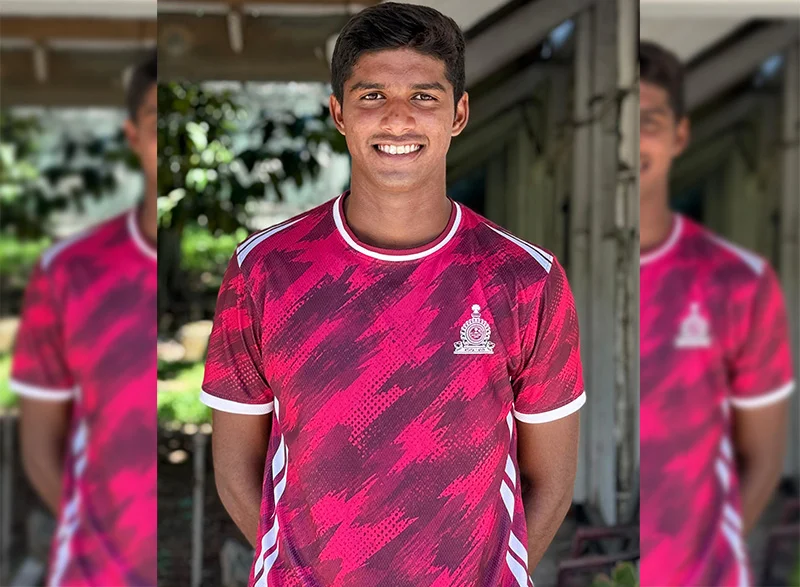
Nalanda College, Colombo continued their unbeaten run to come closer to securing a berth in the knockout stage as they beat Gurukula College by nine wickets in the Under 19 Division I Tier A Limited Overs Tournament match played at Campbell Place on Tuesday.
With Rusandu Silva continuing his impressive run in the tournament, Nalanda did well to restrict the team from Kelaniya to just 113 runs (in 35.4 overs).
After two outings Rusandu had six wickets against his name coming to this match.Rusandu and Methuka Perera claimed three wickets each. Lithum Wijekumara also impressed with two wickets, while Santhul Wijeyarathne took one.
Adeepa Pinsara was the only batsman to make a contribution of note as he top-scored with 35 off 49 balls, including four fours and two sixes, while Javindu Madusanka made 20.
In their chase Nalanda made light work of the modest target, reaching 114 for one, scoring at a rate of over a run a ball.
Nadul Jayalath cracked an unbeaten 62 from just 52 balls. His innings contained four fours and five sixes. He received valuable support from Lithum Wijekumara, who scored 35 off 42 deliveries with six boundaries.
Ranmith Senarath completed the successful chase with an unbeaten 10 off seven balls, including two fours.
Nalanda lost only one wicket as the opening pair added 89 for the first wicket. Jayalath and Senarath then finished the contest comfortably, securing a convincing nine-wicket victory with many overs to spare.
It was Nalanda’s third successive victory in the Tier A tourney after having beaten Thurstan (155) by seven wickets and St. Servatius’ Matara (187) by four wickets in the first two matches.
As of now, they are the leading team in Group G where they have only St. Joseph’s Darley Road to meet before the knockout stage.
With just two teams advancing to the next stage from each Group Nalanda are almost assured of their place.
33RD SINGER – MCA Super PREMIER LEAGUE
Hayley’s Group ‘A’, HNB ‘A’ and CDB registered wins by defeating Colombo Aces, Fairfirst Insurance and SLC Youth in the matches of the Mercantile Cricket Association’s Super Premier League cricket tournament on Sunday (04).
The MCA Super Premier League is sponsored by Singer Sri Lanka for the 33rd consecutive year.
At the Bloomfield Cricket ground, Nishan Madushka, Pulindu Perera and Minod Dhanuka smashed half tons as Hayley’s Group ‘A’ registered their second win of the tournament defeating Colombo Aces by six wickets.
At the Thurstan ground, Nipun Dhananjaya and Muditha Lakshan posted eighty plus scores to help CDB amass 307/8, which the bowlers defended by 71runs.
At the Colts Ground Milan Rathnayake starred with bat and ball [71 and 3-24] to help HNB ‘A’ overcome SLC Youth by 41 runs. Rehan Pieris topped SLC Youth score card with a 108 ball 77 with six fours and a six.
At Bloomfield Ground Colombo:
Hayley’s overcome Colombo Aces by six wickets
Colombo Aces 222/10 in 49 overs
[ Kavin Bandara 62, Dinura Kalupahan 50; Dhanajaya Lakshan 2-14, Ramesh Mendis 4-36]
Hayleys Group A 227/4 in 25.2 overs [Nishan Madushka 61, Pulindu Perera 51, Minod Bhanuka 54; Dinura Kalupahana 2-35]
At Thurstan College Ground:
CDB BY 71 runs
CDB 307/8 in 50 overs
[ Vishsd Randika 53, Nipun Dhananjaya 86, Muditha Lakshan 89; Himesh Ramanayake 3-49, ]
Fairfirst Insurance 236/10 in 46.4 overs
[Sanoj Dharshika 58, Yasiru Rodriga 78; Movin Subasinghe 3-27, Lahiru Madushanka 2-16]
At Colts ground;
Milan Rathnayake stars in HNB A’s 41 run win:
HNB ‘A’ 262/10 in 50 overs
[Janishka Perera 43, Anjala Bandara 54, Milan Rathnayake 71; Gimhan Mendis 2-43, Latheendra Akash 2-28, Himaru Deshan 2-42]
SLC Youth 221/10 in 44 overs [Rehan Peiris 77, Kithma Widnapathirana 53; Duvindu Ranathunga 2-40, Milan Rathnayake 3-24, Chamindu Wijesinghe 2-18]

The 20 nominees for the World Athlete of the Year honours have been announced ahead of the World Athletics Awards taking place in Monaco on 29 November.
The nominees – selected by an international panel of athletics experts – include 10 for Women’s World Athlete of the Year and 10 for Men’s World Athlete of the Year.
In what has been another sensational year for the sport, the nominations reflect some of the standout performances achieved at the inaugural World Athletics Ultimate Championship and World Athletics Series events held throughout the year, as well as during various one-day meeting circuits, Label road races and other events around the world.
Nominees for 2026 Women’s World Athlete of the Year (in alphabetical order):
Tigest Assefa, Ethiopia
• Won the Berlin Marathon in 2:11:04, the third-fastest time in history
• Won the London Marathon in a women-only world record of 2:15:41
Chase Jackson, USA
• Twice improved the North American shot put record, to 21.02m and 21.14m
• Won the world indoor title and set a Diamond League record to regain the Diamond Trophy
Melissa Jefferson-Wooden, USA
• Won a sprint double at the Ultimate Championship
• Set world leads of 10.62 in the 100m and 21.47 in the 200m, the latter putting her third on the world all-time list
Agnes Ngetich, Kenya
• Won the world half marathon title by 50 seconds in a women-only world record of 1:05:15 and won the world cross-country title by 42 seconds
• Ran world leads of 8:08.95 for 3000m and 28:58 for 10km
Marileidy Paulino, Dominican Republic
• Won the Ultimate 400m title and regained the Diamond League title
• Set a world lead and Diamond League record of 48.48 and remained unbeaten, running under 49 seconds in eight races
Maria Perez, Spain
• Set an inaugural world half marathon race walk record of 1:30:06
• Won the European title by 58 seconds with that world record performance
Camryn Rogers,Canada
• Improved her own North American hammer record with 81.13m, strengthening her place at second on the world all-time list
• Achieved the five best performances in the world and retained the Commonwealth Games title
Masai Russell, USA
• Set a world 100m hurdles record of 12.09 and achieved nine of the 10 fastest times of the season
• Won Ultimate and Diamond League titles as part of an unbeaten season in the 100m hurdles
Aubrey Werro, Switzerland
• Won Ultimate, Diamond League and European 800m titles
• Broke the Diamond League record three times, improving to a world lead of 1:53.70 – putting her third on the world all-time list
Yan Zivi, China
• Threw 71.74m on her season opener, an Asian and world U20 record that puts her second on the world javelin all-time list
• Won Diamond League and Asian Games titles
Nominees for 2026 Men’s World Athlete of the Year (in alphabetical order):
Kenneth Bednarek, USA
• Achieved a sprint double at the Ultimate Championship, winning the 100m in 9.85 and 200m in a world-leading PB of 19.52
• Won the Diamond League 200m title in 19.62
Kristian Ceh. Slovenia
• Won the Diamond League discus title with a Memorial van Damme meeting record of 71.29m
• Retained the European title with a championship record of 72.51m
Andy Diaz Hernandez, Italy
• Won world indoor, Diamond League and European triple jump titles
• Jumped 18.15m to move to fourth on the world all-time list
Allison dos Santos, Brazil
• Set a world 400m hurdles record of 45.80 and won the Ultimate title in 45.98, the third-fastest time in history
• Went undefeated in 11 hurdles races, including the Diamond League Final
Mondo Duplantis, Sweeden
• Improved his world pole vault record to 6.31m
• Won Ultimate, world indoor and European titles
Collen Kebinatshipi, Botswana
• Won the Ultimate 400m title in 43.39, putting him fifth on the world all-time list
• Won the Diamond League title and improved the Diamond League record three times, to a best of 43.40 – one of his six sub-44.00 races, a record for a single season
Josh Kerr, Great Britain and NI
• Set a world mile record of 3:42.66, achieving a world lead of 3:27.62 for his 1500m split
• Won Ultimate 1500m, world indoor 3000m, and Commonwealth Games mile titles
Rumesh Tharanga Pathirage,Sri Lanka
• Won Ultimate, Diamond League, Asian Games and Commonwealth Games javelin titles
• Set a world-leading national record of 92.62m and won 13 of his 14 competitions
Sabastian Sawe, Kenya
• Won the London Marathon in a world record of 1:59:30
• Became the first man to break two hours in a record-eligible marathon
JaKobe Tarp, USA
• Set a world 110m hurdles record of 12.75 at the NCAA Championships
• Won Ultimate and Diamond League titles and broke 13 seconds in six races
An eight-strong panel of statisticians – two members from World Athletics and one from each of the six area associations – selected the nominees. A four-way vote, which closes on Saturday 17 October at midnight CEST, will now determine their final ranking, from first to 10th.
Each of the four voting groups will contribute 25% of the final vote:
• World Athletics fans voting
by survey available via the World Athletics app, website and social media channels
• Athletes
who have competed at World Athletics Series events during 2026
• Members of the media
including TV and radio commentators, written press journalists and content creators who have been accredited at World Athletics Series events in 2026
• World Athletics Family
including Council members; commission members; athlete representatives; World Athletics Series event local organising committee chairs; Diamond League, World Indoor Tour Gold and Continental Tour Gold meeting directors; member federation presidents; official partners; and World Athletics staff
The six finalists – three for the women’s World Athlete of the Year award and three for the men’s – will be announced on 10 and 11 November and be invited to Monaco for the World Athletics Awards on 29 November, when each winner will be announced live on stage.
Other awards presented on stage will include the men’s and women’s Rising Star honours, Coach of the Year, the President’s Award and, for the first time, the Moment of the Year award.
[World Athletics]

Showers in the Western, Sabaragamuwa, Central, Uva, North-western and Southern provinces and in Anuradhapura and Mannar districts

Fuel crunch looms

Gnansara Thera to be assigned to prison printing section: Officials

Speaker rejects Ajith Perera’s privilege complaint

OIC of FCID summoned before Maligakanda Magistrate

Sallay cleared for discharge, to return to CID custody

‘Dates have the highest sugar content to fight Coronavirus’

Sunday Island 27 December – Headlines

#SundayIsland 17th December – Headlines

Sunday Island – 28th March

Sunday Island Headlines – 21 March

Sunday Island – 21st February – Headlines
-

 Latest News7 days ago
Gold winner Tharanga gets brand-new Honda Vezel from SLAAJ
-

 News6 days ago
US-assisted ‘Ice’ detection: NPC to examine IGP’s move to transfer drug-busting team
-

 Editorial5 days ago
Colombo Port drug bust: The plot thickens
-

 Editorial6 days ago
Drug busting, transfers and trust deficit
-

 Features3 days ago
The first woman in the foreign service or Ceylon Overseas Service it was then called
-

 Latest News4 days ago
Tharindu Rathnayake, bowlers secure Asian Games Bronze for Sri Lanka
-
 News6 days ago
Sri Lankan facing death penalty in Saudi Arabia: Mano G appeals to Crown Prince
-

 Editorial4 days ago
Fuelling discontent and protest