
Editorial
Keheliya’s exit and the upcoming budget

Last week’s removal of Health Minister Keheliya Rambukwella from his position was not altogether unexpected. True, he had predictably weathered a motion of no confidence in parliament last month after a three-day debate, thanks to the pohottuwa’s voting strength. Although he had the confidence of 113 members of the SLPP and a 40-vote majority, he obviously did not have the confidence of President Ranil Wickremesinghe who replaced him at the health ministry with Dr. Ramesh Pathirana, a qualified though non-practicing doctor. Whether Pathirana gladly accepted the assignment thrust upon him or not, the public will not know. But he seems to have successfully insisted that he remains Minister of Industries, part of his old portfolio, although he has divested himself of plantation industries for which he was previously responsible.
The Ministry of Health and the minister personally had been under sustained attack in the media and on the streets for a variety of reasons for the past several months. Among these was the alleged irresponsible import of substandard medicine and surgical equipment which had weakened the health sector and caused the death of several patients under treatment at state hospitals.
The main opposition alleged that the government continued to bring in low quality medicines and surgical equipment without complying with due procurement and registration processes on the excuse that compulsions of emergency purchases for urgent needs required lowering barriers. Rambukwella’s problems began way back in 2022 when a lot of noise was made about a visit he made to India to inspect a pharmaceutical factory from which Colombo intended to import medicines.
On that occasion, it was alleged that an Indian pharmaceutical company had funded the minister’s visit. He strongly denied these allegations saying a friend paid the expenses as his credit card had reached its weekly spending limit. He had since reimbursed the friend in cash upon landing in India. He told a Colombo news conference at his ministry that he had traveled to 86 countries, the first being to England with his parents an eight-year old, and was now holding his 17th passport.
He claimed he maintained close relations with travel companies as he was a frequent traveller and there were two of three companies that offered him massive discounts. As a cabinet minister, he could have used government funds for the trip but did not do so as the government had advised ministers to be economical in their spending. He also displayed a receipt at the press conference indicating that the payment for his ticket had been made by his friend and not a pharmaceutical company.
Rambukwella countered questions on his expertise on pharmaceuticals and their manufacture saying he took the chief executive officer of the National Medicines Regulatory Authority on this visit for this reason. He was quoted saying that when the country was spending 250 million dollars for purchases of medicine, did he not as health minister have the right to look into these industries, using his own funds? Whether the public, given its wide perceptions of politicians in general, would buy into the argument that they would spend out of pocket on public business, is another question. It will not be difficult to provide a near unanimous answer to that.
However that be, a legitimate question that can be posed to the president is that if Keheliya Rambukwella has proved himself a massive failure, as all the circumstantial evidence surrounding his departure from the health ministry suggests, then how good a job will he do at the environment ministry in which he has been found a comfort zone? The harsh reality is that the president, who to his credit has resisted massive pressure from the SLPP to expand the cabinet, is not strong enough to make a sacrificial lamb of the former health minister and has found him an alternative ministry without banishing him to the back bench.. Rambukwella, swallowing his pride – if he has any – has accepted. But is the overburdened taxpayer, already reeling under the weight of an unbearable cost of living, have any choice but pick up the tab.
President Wickremesinghe a few days ago told the UNP Convention that the presidential election followed by the parliamentary poll will be held the next year and the year after as decreed in the constitution. But the recent appointment of a Presidential Commission to report on prevailing election law and desirable changes have created fears that powers that be may be having some politricks up their sleeve to quote Mr. Neal de Alwis, a well known leftist of yesteryear. There is no doubt that the president has brought a semblance of stability to the country after last year’s chaos. But whether that can be sustained once Sri Lanka resumes paying its debts is an open question.
The Rajapaksas and their fellow travellers are now out of the woodwork. The president took a couple of them to the UN general assembly in September despite ours being a bankrupt nation. Namal Rajapaksa and SLPP General Secretary Sagara Kariyawasam last week, in effect, took the president to task over the recent cabinet changes. This provoked Nimal Lanza, a pro-Ranil SLPPer to loudly proclaim that Namal and Sagara are free to defeat next month’s budget, if they dare, and force a parliamentary election.
We no doubt live in interesting times. Whatever next month’s budget brings, it will not be sunshine. More hardships are inevitable and concessions to meet mounting demands without money printing will be impossible. The president as finance minister and the government locked into an agreement with the IMF will have to walk an impossible tightrope. Whatever happens, hopefully the next few months will see the election which is the rightful due of the people.







Thursday 27th August, 2026
The world is bracing itself for a historic El Niño event, which is very likely to be the strongest ever measured, “breaking records by a considerable and dangerous margin”, experts have warned. The World Health Organization, World Meteorological Organization (WMO) and World Food Programme are urging nations to be prepared for extreme weather conditions and their impact on health, food and energy systems.
Sri Lanka apparently believes in disaster response rather than disaster preparedness. It usually does not heed warnings or expert opinion. Unlike in the past, today, the world is lucky that El Niño is no longer unpredictable. About three months ago, WMO issued the first warning of the unfolding El Niño event. Sri Lanka should have sprung into action immediately afterwards.
The Ministry of Trade, Commerce, Food Security and Cooperative Development has reportedly launched a programme to ensure an uninterrupted supply of essential food items and stable prices amidst the possible global impact of the current El Niño phenomenon. It held a meeting, chaired by Minister Wasantha Samarasinghe, on Tuesday, to discuss ways and means of handling issues affecting food availability. According to media reports, the officials present at the meeting were of the view that the impact of El Niño on Sri Lanka could be minimal, but action had to be taken to face the food issues that might arise from possible disruptions to agricultural production in other countries and the resultant price escalations.
It has been reported that Tuesday’s meeting was attended by Ministry Secretary K. A. Wimalenthirarajah, Consumer Affairs Authority Chairman Hemantha Samarakoon, Cooperative Wholesale Establishment Chairman Kosala Wilbhava and Lanka Sathosa Chairman Ravindra Fernando, along with other officials and representatives of food importers. The government should involve all stakeholders in discussions on working out a strategy to accomplish the difficult task of ensuring food security, especially during disasters. A multi-sectoral approach is required, with the participation of officials and experts drawn from various fields such as trade, agricultural and irrigation and meteorology, and farmers’ organisations.
No room must be left for optimism in planning for disaster mitigation, and the country must always be ready for the worst-case scenario. In fact, the dry zone is already facing a severe water crisis, and the prevailing drought has caused widespread crop losses there. Reservoirs are drying up fast in those parts of the country while precipitation is high in some areas, especially in the central hills. El Niño is known to drive such extreme and erratic weather conditions.
The success of any strategy to mitigate the impact of El Niño or any other adverse weather or climate event hinges on timely anticipatory action, which alone can prepare a country for the impact of droughts, floods or heat waves on its public health and agriculture.
Experts have pointed out the steps Sri Lanka needs to take urgently in view of El Niño events. They include strengthening early-warning systems, adjusting planting dates and crop choice, promoting drought- and heat-tolerant crop varieties, improving irrigation efficiency, harvesting and storing more water, diversification of agriculture and rural incomes, and strengthening food storage and distribution systems. Why rainwater harvesting is not promoted in all parts of the country as a national priority is the question. It can help mitigate water issues to a considerable extent.
Meanwhile, a national strategy needs to be formulated to address the key factors that affect Sri Lanka’s agriculture sector and food security. They have been identified as adverse weather and climate shocks, low agricultural productivity, economic and forex constraints, high cost of production, disaster-related damage to food infrastructure, post-harvest losses and wildlife depredation. Sri Lanka is believed to lose roughly 20% to 30% of its fruits and vegetables after harvest, while wildlife is estimated to account for about 40% of annual crop damage.
Drought has already taken a heavy toll on food crops in the dry zone, with paddy bearing the brunt. Hence the government’s focus must be on maintaining buffer stocks of paddy. The current El Niño event is expected to continue into early 2027, but its effects will be felt even afterwards.
It defies comprehension why the government has allowed paddy/rice to be used for manufacturing animal feed and beer. Farmers’ demand for higher prices for their produce and a shortage of maize may have led the government to do so, but it should have heeded the warnings of a possible food shortage. Paddy production is bound to drop during the prevailing drought in the main rice producing areas affected by the prevailing drought, as it is highly water intensive, and therefore its diversion to animal feed or beer production must be stopped.
Wednesday 26th August, 2026
The Public Utilities Commission of Sri Lanka (PUCSL) has warned of possible power cuts due to the prevailing El Niño phenomenon. It has said demand for electricity could rise steeply under the prevailing weather conditions, with power generation declining, if water levels in the hydropower reservoirs recede drastically. One may recall that long before the onset of El Niño, experts predicted that power cuts would have to be imposed as substandard coal stocks, procured allegedly in a fraudulent manner, had led to a generation shortfall at the Norochcholai coal-fired power complex. They also pointed out that it would not be feasible to increase the output of hydropower and oil-fired power plants indefinitely to compensate for the shortfall. But the government ignored expert opinion for political reasons. Going by the PUCSL warning, the situation has now come to a head, and the government is apparently left with no alternative but to impose power cuts.
Curiously, Director of the Water Management Secretariat of the Mahaweli Authority Nilantha Dhanapala sounded optimistic about reservoir water levels when he addressed the media the other day. He said the Mahaweli reservoirs were at 55% of capacity, with those used for hydropower generation and irrigation at 64% and 52%, respectively. Water levels in reservoirs under the Irrigation Department had reached 49% of capacity, he said, noting that the Mahaweli, Walawe and Kelani systems were at 54%, 57% and 93%, respectively. He described the overall reservoir levels as “good”. If so, why is the PUCSL so concerned about the major hydropower reservoir water levels to the extent of warning of possible power cuts?
As for the PUCSL warning, there are two possibilities. Either the picture is not as rosy as Dhanapala has made it out to be, and the government cannot sustain hydropower generation at the current level due to the impact of El Niño, or there is enough water in the hydropower reservoirs, as claimed, but the cost of running oil-fired power plants has become unbearable.
Prime Minister Dr. Harini Amarasuriya has recently informed Parliament that fuel import expenditure significantly increased during the first half of the current year, compared to the corresponding period in 2025. She has said that about USD 3,168 million was spent on fuel imports during the first six months of 2026, but fuel cost only USD 1,995 million during the first half of 2025.
Chairman of the Sectoral Oversight Committee on Infrastructure and Strategic Development, SJB MP S. M. Marikkar, has told Parliament, quoting from a PUCSL report, that due to substandard coal imports, Norochcholai was unable to generate about 300MW of power needed to meet electricity demand between Jan. 1 and June 30, 2026, resulting in additional expenditure of Rs. 8,536 million on oil-fired power generation to make up for the shortfall.
Instead of having the coal procurement scam under his watch probed urgently in keeping with his promise to ensure transparency and accountability, President Anura Kumara Dissanayake sought to obfuscate the issue by appointing a Presidential Commission of Inquiry to investigate coal procurement from 2009 to 2026. JVP General Secretary Tilvin Silva said in his May Day speech this year that the Presidential Commission would exonerate those from the NPP government of wrongdoing and find those from the opposition guilty. Subsequently, he apologised to the Commission for his remarks at issue, but they can be considered a Freudian slip that revealed the government’s real intention.
According to the Central Bank data, the massive increase in the country’s fuel bill is due to several key factors, such as a surge in international oil prices owing to the Iran conflict, higher import volumes, and higher expenditure on refined petroleum products. These are no doubt causative factors, but the fact remains that the shortfall in Norochcholai’s coal-fired power generation also forced the country to rely more heavily on costly oil-fired power generation, adding to its fuel import expenditure. The Ceylon Petroleum Corporation (CPC) admitted in April that it had bought three shipments of diesel between the last week of March and the second week of April at prices of between USD 288 and USD 281 per barrel. It did so following a revelation by HSBC Group’s CEO, Georges Elhedery, that the highest price he had seen paid for a barrel of oil was USD 286—and that it went to Sri Lanka. Critics claimed that the government had purchased those diesel shipments at extremely high prices because it was desperate to keep diesel-fired power plants running to make up for the drop in Norochcholai’s power output. The additional fuel used for operating oil-fired power plants to compensate for Norochcholai generation shortfall and its cost need to be estimated.
Power cuts are bound to take a heavy toll on the country’s economic recovery efforts. They could lead to lower production, higher costs, weaker exports, and ultimately slower economic recovery. There is no way the government can deny the fact that the questionable coal procurement deals have led to a shortfall in power generation, higher cost of electricity, increased tariffs and the prospect of power cuts.
Tuesday 25th August, 2026
President Anura Kumara Dissanayake is scheduled to address a series of rallies across the country as part of a JVP/NPP reorganisation drive, according to media reports. A recent public opinion survey has indicated a sharp drop in the government’s approval rating, and this may have prompted the JVP/NPP to launch a grassroots campaign. The President’s nationwide speaking or barnstorming tour, on the cards, can be seen as an indication of the government limbering up for a possible referendum on the proposed 22nd Amendment to the Constitution. It can also be a show of strength.
Cabinet Spokesman and Minister Dr. Nalinda Jayatissa has dared Opposition politicians to take to the streets if they are capable of mobilising people against the government. We are reminded of the rhetoric of the big guns of the Mahinda Rajapaksa government following the 2010 general election. Prudence demands that a government take anti-incumbency sentiments into account and refrain from provoking its opponents into flexing their muscles. Street protests tend to snowball.
During successive governments, we have editorially highlighted the misuse of public funds by politicians, especially the Presidents, the Prime Ministers, Ministers and the Opposition Leaders, for their political campaigns. Some Presidents launched their re-election campaigns immediately after the commencement of their first term, dressing up their political campaigns as official events.
Presidential and prime ministerial travel costs the state coffers dear; it involves extraordinary security measures, which require the deployment of hundreds of police and armed forces personnel and scores of vehicles. All ministers rush wherever the President goes. They too travel with their security contingents at the expense of the public. The same applies to the Opposition Leader’s travel, albeit to a lesser degree.
The JVP raked President Mahinda Rajapaksa over the coals for traversing the length and breadth of the country either in his presidential limousine with a huge security convoy in tow or by helicopter to do political work. Anura Kumara Dissanayake, an Opposition MP at the time, demanded to know why Rajapaksa used two choppers, cynically asking whether the latter could change helicopters in midair in case of an emergency. His criticism of Rajapaksa struck a responsive chord with the public.
Former President Ranil Wickremesinghe was arrested and remanded over allegations that he misused state funds to cover travel and security expenses for what the CID has described as a private visit to the UK while in office. One wonders why the issue of the Presidents, the Prime Ministers and others using colossal amounts of state funds to cover their travel and security expenses during their political campaigns has gone unaddressed.
The JVP-NPP government was expected to curtail VIP travel. In the run-up to the 2024 general election, senior JVP/NPP politicians made a solemn pledge that under a JVP-NPP government, their MPs and ministers would travel in buses and trains as the ordinary public did, and auction the vehicles used by politicians during previous governments. But they are now moving about in luxury vehicles. Are they living by the Machiavellian axiom that promises need not be kept when circumstances change?
Some Presidents, Prime Ministers and Ministers have tried to pull the wool over the eyes of the public by paying for fuel used for their official vehicles during election campaigns, but fuel accounts for only a fraction of the costs borne by the public.
It is unbecoming of the self-proclaimed Marxist leaders who denounced the previous Presidents and Prime Ministers for using insanely expensive vehicles purchased with state funds to maintain the status quo. In 2018, Dissanayake made a hue and cry in Parliament about two bulletproof vehicles bought for the then Prime Minister Ranil Wickremesinghe’s use, at a staggering cost of Rs. 300 million each. He condemned that kind of expenditure as an utter waste of state funds. Now, “the 600-million-rupee question” is where those vehicles are. Are the incumbent government leaders using them?
One may recall that before the 2024 elections, the JVP/NPP leaders had the public believe that they would practise austerity a la Jose Mujica, who was the President of Uruguay from 2010 to 2015. Known as the world’s poorest President, Mujica, refused to move into the President’s House, and lived on a farm with his wife; his most notable asset was a 1987 Volkswagen Beetle. He donated his presidential salary and waited in queues with ordinary people in government hospitals, where he received treatment. He died last year. Sadly, as we argued in a previous comment, the only similarity one sees between the policies of the Mujica administration and those of the JVP-led NPP government is their lax attitude towards cannabis, of all things. Mujica legalised the recreational use of cannabis, and the JVP/NPP leaders have permitted the cultivation of cannabis for export.
It is high time the practice of political leaders using state funds for their political campaigns under one pretext or another was brought to an end. Let that be part of the “system change” the incumbent government promised.

US golfer Gogel gets six-month ban for betting

UAE’s Asif Khan handed 15-month ban for using a banned substance

Nepal-Tibet floods: What happened, what caused them and who is missing?

Showers above 50 mm are likely in the Western, Sabaragamuwa and North-western provinces and in Kandy, Nuwara-Eliya, Galle and Matara districts

Patali alleges NPP conspiring to put off elections indefinitely

August 15 Super Dvora tragedy: Search continues for missing officer’s body

‘Dates have the highest sugar content to fight Coronavirus’

Sunday Island 27 December – Headlines

#SundayIsland 17th December – Headlines

Sunday Island – 28th March

Sunday Island Headlines – 21 March

Sunday Island – 21st February – Headlines
-
 News6 days ago
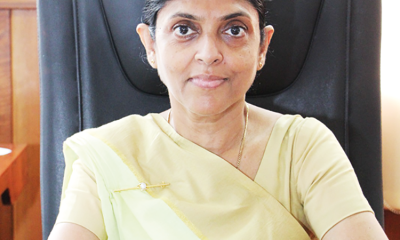
Country’s first woman Surveyor General appointed
-

 Business5 days ago
SriLankan Airlines makes ShakthiSAT Mission possible for talented Sri Lankan student
-
 Features6 days ago
Medical education in Sri Lanka: Then and now
-
 Latest News6 days ago
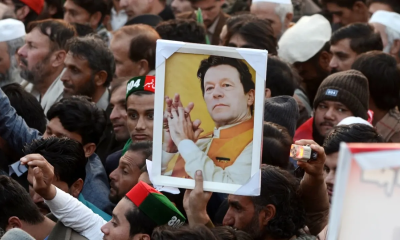
Imran Khan moved to private hospital amid deteriorating health
-

 Latest News6 days ago
Government has declared 21, 22 and 23 August 2026 as national days of mourning
-
 Features4 days ago
My secondary schooling after Royal Primary
-

 Latest News5 days ago
Tharanga edges out Chopra in 88m javelin battle
-
 News6 days ago
22A: Opp. demands all available SC judges hear petitions