
Foreign News
Japan’s ‘Moon Sniper’ makes historic lunar landing

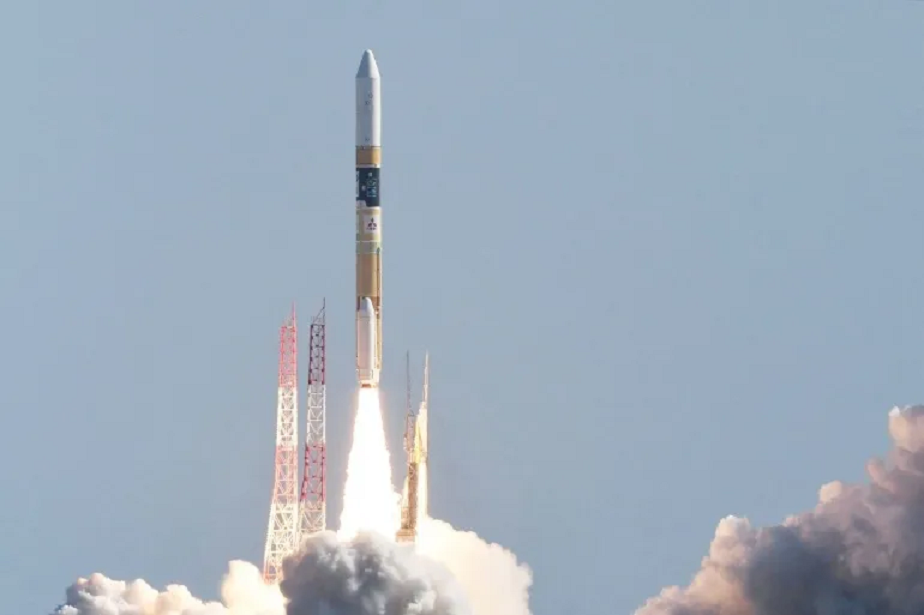
Japan’s high-precision “Moon Sniper” lander has touched down on the lunar surface in a first for the country, the Japan Aerospace Exploration Agency (JAXA) has said.
But the agency said it was still “checking its status” due to an issue with the craft’s power supply. Officials also said they needed more time to analyse whether the unmanned spacecraft made a pinpoint landing – one of the priorities of the mission.
The Smart Lander for Investigating Moon (SLIM) probe began its “power descent sequence” towards the lunar surface early Saturday local time (15:00 GMT Friday), according to JAXA.
Hitoshi Kuninaka, head of the Institute of Space and Astronautical Science, said they believe that rovers were launched and data was being transmitted back to Earth. But he said SLIM’s solar battery was not generating power and the battery life of the spacecraft would only last a few more hours. The priority now was for the craft to gather as much moon data as possible on the remaining battery.
“It takes 30 days for the solar angle to change on the moon,” Kuninaka said. “So when the solar direction changes, and the light shines from a different direction, the light could end up hitting the solar cell.”
He added that “looking at the trace data, SLIM most certainly achieved a landing with 100-metre accuracy” of its target as it was intended to, versus the conventional accuracy of several kilometres. It will take about a month to verify the preliminary information.

By accomplishing the landing, Japan became the world’s fifth country to put a spacecraft on the moon, after the United States, Russia, China and India.
Japan calls its technology unprecedented and crucial for advancing lunar exploration, particularly in the quest for lunar water and the potential for human habitation.
Speaking in advance of the touchdown, Shinichiro Sakai, JAXA’s SLIM project manager, said “Proving Japan has this technology would bring us a huge advantage in upcoming international missions like Artemis,” referring to US space agency NASA’s crewed moon mission. “No other nation has achieved this.”
Japan has been actively looking to expand its role in space activities, forging partnerships with the US, to address the growing military and technological influence of China, extending even into the realm of space.
Japan is actively participating in NASA’s Artemis programme with the goal of sending one of its astronauts to the moon.
However, JAXA has faced multiple setbacks, including a launch failure in March of the new flagship rocket H3 that was meant to match cost-competitiveness against commercial rocket providers like SpaceX.
JAXA has emphasised that its high-precision technology will become a powerful tool in future exploration of hilly moon poles, seen as a potential source of oxygen, fuel and water. It also plans a joint unmanned lunar polar exploration with India in 2025.
On board Japan’s “Moon Sniper” is a little robot with a big mission: to pop open like a Transformer toy, wiggle across the lunar surface and beam images back to Earth.
The shape-shifting SORA-Q probe – codeveloped by a major toy company – has been compared with a friendly Star Wars droid and a sea turtle because of the way its metal form can navigate the dusty moonscape.
Sora means “universe” in Japanese, while “Q” refers to the words “question” and “quest”, its makers say.
Slightly bigger than a tennis ball and weighing as much as a large potato – eight centimetres (three inches) across and 250 grams (half a pound) – SORA-Q was designed by JAXA with Takara Tomy, the toy company behind the original 1984 Transformers.
After landing on the moon, the probe’s cameras are expected to take valuable images of a crater where parts of the moon’s mantle, usually hidden deep below its crust, are believed to be exposed.








United States President Donald Trump has issued a new warning to Nicolas Maduro, saying “it would be smart” for the Venezuelan leader to step down, as Washington escalates a pressure campaign that has drawn sharp rebukes from Russia and China.
Speaking at his Mar-a-Lago resort in Florida on Monday, flanked by Secretary of State Marco Rubio and Secretary of Defense Pete Hegseth, Trump suggested he was prepared to further ratchet up the tensions after four months of mounting pressure on Caracas.
When asked if the goal was to force Maduro from power, Trump told reporters: “Well, I think it probably would… That’s up to him what he wants to do. I think it’d be smart for him to do that. But again, we’re gonna find out.”
“If he wants to do something, if he plays tough, it’ll be the last time he’s ever able to play tough,” the US leader added.
Trump levied his latest threat as the US Coast Guard continued for a second day to chase a third oil tanker that it described as part of a “dark fleet” that Venezuela uses to evade US sanctions.
“It’s moving along, and we’ll end up getting it,” Trump said.
The US president also promised to keep the two ships two ships and the nearly 4 million barrels of Venezuelan oil the coastguard has seized so far.
“Maybe we’ll sell it. Maybe we’ll keep it. Maybe we will use it in the strategic reserves,” he said. “We’re keeping it. We’re keeping the ships also.”
[Aljazeera]

Saudi Arabia has surpassed its record for the number of executions carried out annually for a second year in a row.
At least 347 people have now been put to death this year, up from a total of 345 in 2024, according to the UK-based campaign group Reprieve, which tracks executions in Saudi Arabia and has clients on death row.
It said this was the “bloodiest year of executions in the kingdom since monitoring began”.
The latest prisoners to be executed were two Pakistani nationals convicted of drug-related offences.
Others put to death this year include a journalist and two young men who were children at the time of their alleged protest-related crimes. Five were women.
But, according to Reprieve, most – around two thirds – were convicted of non-lethal drug-related offences, which the UN says is “incompatible with international norms and standards”.
More than half of them were foreign nationals who appear to have been put to death as part of a “war on drugs” in the kingdom.
The Saudi authorities have not responded to the BBC’s request for comment on the rise in executions.
“Saudi Arabia is operating with complete impunity now,” said Jeed Basyouni, Reprieve’s head of death penalty for the Middle East and North Africa. “It’s almost making a mockery of the human rights system.”
She described torture and forced confessions as “endemic” within the Saudi criminal justice system.
Ms Basyouni called it a “brutal and arbitrary crackdown” in which innocent people and those on the margins of society have been caught up.
On Tuesday, a young Egyptian fisherman, Issam al-Shazly, was executed. He was arrested in 2021 in Saudi territorial waters and said he had been coerced into smuggling drugs.
Reprieve says 96 of the executions were solely linked to hashish.
“It almost seems that it doesn’t matter to them who they execute, as long as they send a message to society that there’s a zero-tolerance policy on whatever issue they’re talking about – whether it’s protests, freedom of expression, or drugs,” said Ms Basyouni.
There has been a surge of drug-related executions since the Saudi authorities ended an unofficial moratorium in late 2022 – a step described as “deeply regrettable” by the UN human rights office.
Speaking anonymously to the BBC, relatives of men on death row on drugs charges have spoken of the “terror” they’re now living in.
One told the BBC: “The only time of the week that I sleep is on Friday and Saturday because there are no executions on those days.”
Cellmates witness people they have shared prison life with for years being dragged kicking and screaming to their death, according to Reprieve.
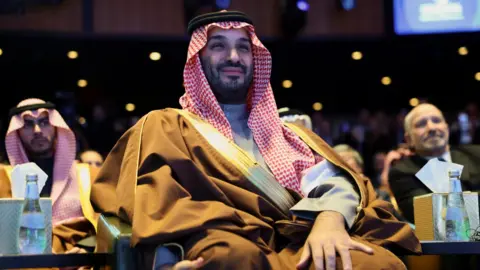
The de facto ruler of Saudi Arabia, Mohammed bin Salman – who became crown prince in 2017 – has changed the country profoundly over the past few years, loosening social restrictions while simultaneously silencing criticism.
In a bid to diversify its economy away from oil, he has opened Saudi Arabia up to the outside world, taken the religious police off the streets, and allowed women to drive.
But the kingdom’s human rights record remains “abysmal”, according to the US-based campaign group Human Rights Watch, with the high level of executions a major concern. In recent years, only China and Iran have put more people to death, according to human rights activists.
“There’s been no cost for Mohammed bin Salman and his authorities for going ahead with these executions,” said Joey Shea, who researches Saudi Arabia for Human Rights Watch. “The entertainment events, the sporting events, all of it is continuing to happen with no repercussions, really.”
According to Reprieve, the families of those executed are usually not informed in advance, or given the body, or informed where they have been buried.
The Saudi authorities do not reveal the method of execution, although it is believed to be either beheading or firing squad.
In a statement sent to the BBC, the UN’s special rapporteur on extrajudicial, summary or arbitrary executions, Dr Morris Tidball-Binz, called for an immediate moratorium on executions in Saudi Arabia with a view to abolition,.
He also pressed for “full compliance with international safeguards (including effective legal assistance and consular access for foreign nationals), prompt notification of families, the return of remains without delay and the publication of comprehensive execution data to enable independent scrutiny”.
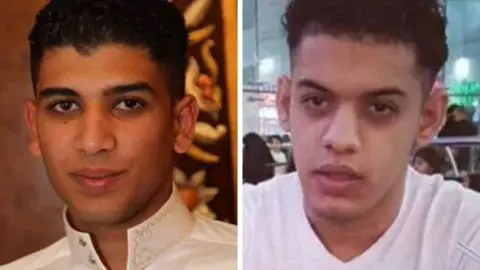
Among the Saudi nationals executed this year were Abdullah al-Derazi and Jalal al-Labbad, who were both minors at the time of their arrest.
They had protested against the government’s treatment of the Shia Muslim minority in 2011 and 2012, and participated in the funerals of people killed by security forces. They were convicted of terrorism-related charges and sentenced to death after what Amnesty International said were grossly unfair trials that relied on torture-tainted “confessions”. UN human rights experts had called for their release.
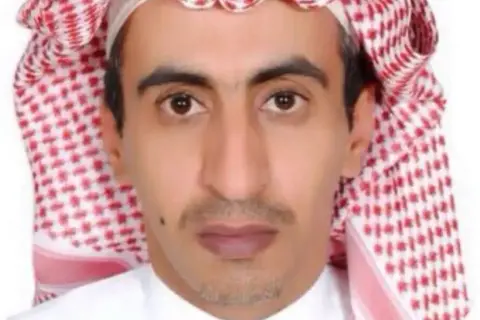
The UN also condemned the execution in June of journalist Turki al-Jasser, who had been arrested in 2018 and sentenced to death on charges of terrorism and high treason based on writings he was accused of authoring.
“Capital punishment against journalists is a chilling attack on freedom of expression and press freedom,” Unesco’s Director-General, Audrey Azoulay, said.
Reporters Without Borders said he was the first journalist to be executed in Saudi Arabia since Mohammed bin Salman came to power, although another journalist, Jamal Khashoggi, was murdered by Saudi agents at the Saudi consulate in Istanbul in 2018.
Last December, UN experts wrote to the Saudi authorities to express concern over a group of 32 Egyptians and one Jordanian national sentenced to death on drugs charges, and their “alleged absence of legal representation”. Since then, most of the group have been executed.
A relative of one man put to death earlier this year said he had told her that people were being “taken like goats” to be killed.
The BBC has approached the Saudi authorities for a response to the allegations but has not received one.
But in a letter dated January 2025 – in reply to concerns raised by UN special rapporteurs – they said Saudi Arabia “protects and upholds” human rights and that its laws “prohibit and punish torture”.
“The death penalty is imposed only for the most serious crimes and in extremely limited circumstances,” the letter stated. “It is not handed down or carried out until judicial proceedings in courts of all levels have been completed.”
[BBC]
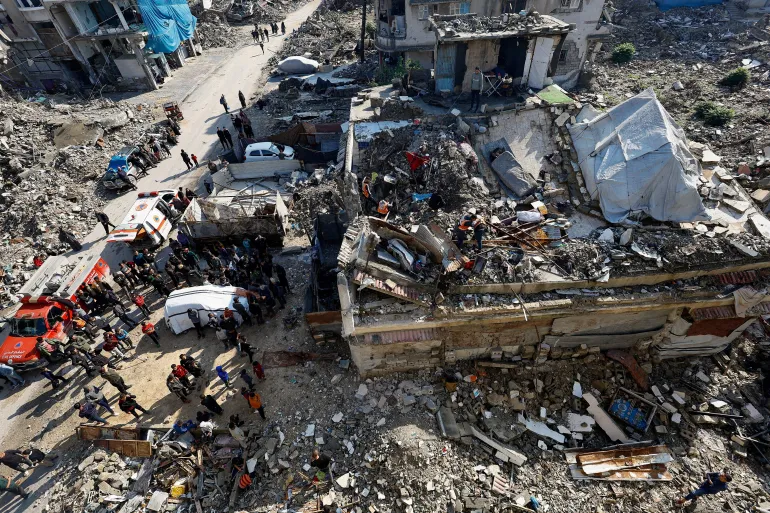
The United States Middle East envoy, Steve Witkoff, will hold talks in Miami, Florida, with senior officials from Qatar, Egypt and Turkiye as efforts continue to advance the next phase of the Gaza ceasefire, even as Israel repeatedly violates the truce on the ground.
A White House official told Al Jazeera Arabic on Friday that Witkoff is set to meet representatives from the three countries to discuss the future of the agreement aimed at halting Israel’s genocidal war on Gaza.
Axios separately reported that the meeting, scheduled for today [Friday], will include Qatari Prime Minister and Foreign Minister Sheikh Mohammed bin Abdulrahman bin Jassim Al Thani, Turkish Foreign Minister Hakan Fidan and Egyptian Foreign Minister Badr Abdelatty.
At the same time, Israel’s public broadcaster, quoting an Israeli official, said Prime Minister Benjamin Netanyahu is holding a restricted security consultation to examine the second phase of the ceasefire and potential scenarios.
That official warned that Israel could launch a new military campaign to disarm Hamas if US President Donald Trump were to disengage from the Gaza process, while acknowledging that such a move was unlikely because Trump wants to preserve calm in the enclave.

Despite Washington’s insistence that the ceasefire remains intact, Israeli attacks have continued almost uninterrupted, as it continues to renege on the terms of the first phase and blocks the free flow of desperately needed humanitarian aid into the besieged Palestinian territory.
[Aljazeera]

A few showers may occur in the Northern, Eastern and Uva provinces and in Polonnaruwa, Matale and Nuwara-Eliya districts

Sajith warns country is being dragged into authoritarian rule

Wholesale mafia blamed for unusually high vegetable prices

Cyclone-damaged Hakgala Botanical Garden reopened with safety measures

Holiday travellers generate record revenue for expressways

Another casualty from underworld warfare succumbs to his injuries

‘Dates have the highest sugar content to fight Coronavirus’

Sunday Island 27 December – Headlines

#SundayIsland 17th December – Headlines

Sunday Island – 28th March

Sunday Island Headlines – 21 March

Sunday Island – 21st February – Headlines
-

 News5 days ago
Members of Lankan Community in Washington D.C. donates to ‘Rebuilding Sri Lanka’ Flood Relief Fund
-

 News3 days ago
British MP calls on Foreign Secretary to expand sanction package against ‘Sri Lankan war criminals’
-
 Business7 days ago
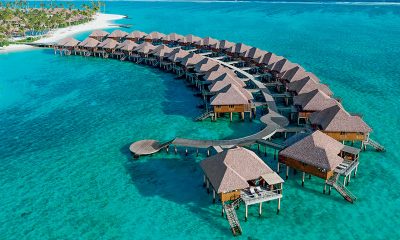
Browns Investments sells luxury Maldivian resort for USD 57.5 mn.
-

 News6 days ago
Air quality deteriorating in Sri Lanka
-

 News6 days ago
Cardinal urges govt. not to weaken key socio-cultural institutions
-
 Features7 days ago
Hatton Plantations and WNPS PLANT Launch 24 km Riparian Forest Corridor
-
 Features7 days ago
Another Christmas, Another Disaster, Another Recovery Mountain to Climb
-

 Features5 days ago
General education reforms: What about language and ethnicity?