
News
Japan seeks Lanka’s backing for its Indo-Pacific strategy

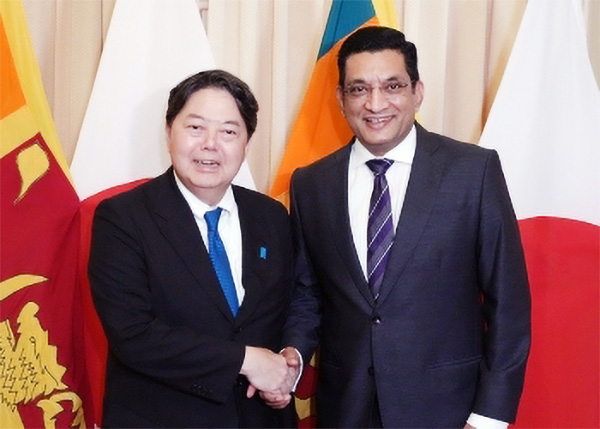
Japan has sought Sri Lanka’s backing for its Free and Open Indo-Pacific (FOIP) strategy. Japanese Foreign Minister Hayashi Yoshimasa has taken up this issue with his Sri Lankan counterpart Ali Sabry, PC, when they met on 29th July.
According to a statement issued by the Japanese Embassy, in Colombo, Minister Yoshimasa has also briefed Minister Sabry regarding Russia terminating an international agreement that allowed grain exports from Ukraine through the Black Sea to various parts of the world.
The following is the text of the Embassy statement: “At the outset, Minister Hayashi welcomed the increasing exchanges of dignitaries between Japan and Sri Lanka since the 70th anniversary of the establishment of diplomatic relations last year, including President Wickremesinghe’s two visits to Japan, and expressed his desire to continue to actively cooperate with Sri Lanka, which is located at a strategic juncture along the sea lanes of the Indian Ocean and is an important partner in realizing a “Free and Open Indo-Pacific (FOIP)”.
Minister Hayashi explained the outcomes of the G7 Hiroshima Summit, including the maintenance and strengthening of a free and open international order, based on the rule of law, and the new plan for a “Free and Open Indo-Pacific (FOIP)”. He also stated Japan would place importance on cooperation with the Indian Ocean Rim Association (IORA) that Sri Lanka will chair from October. Foreign Minister Sabry as the IORA chair conveyed his hope for Japan’s active involvement.
Minister Hayashi expressed his expectations for further progress in the debt restructuring process and the importance of a transparent and comparable debt restructuring that involves all creditor countries. Foreign Minister Sabry stated that Sri Lanka is committed to a transparent and comparable debt restructuring process, and again expressed his gratitude for Japan’s contribution to the discussions on debt restructuring.
Minister Hayashi commended Sri Lanka’s efforts in promoting anti-corruption measures and transparency in the policy making process in accordance with the agreement with the IMF, and expressed his hope that Sri Lanka will bring itself back on track for development as soon as possible. Regarding national reconciliation, he commended Sri Lanka’s efforts in amending the Prevention of Terrorism Act and in establishing the Truth and Reconciliation Commission, and conveyed to Foreign Minister Sabry that Sri Lanka has Japan’s support in this endeavor. Foreign Minister Sabry expressed his appreciation for Japan’s cooperation.
The two ministers exchanged views on international issues including nuclear disarmament and non-proliferation. Minister Hayashi highly commended and welcomed Sri Lanka’s ratification of the CTBT.
Minister Hayashi presented Japan’s position on ALPS treated water, to which Minister Sabry responded that Sri Lanka is a member of the IAEA and trusts the IAEA process.
The two ministers also had a frank exchange of views on the regional situation, including the situation in Ukraine and East Asia. In this context, Minister Hayashi reaffirmed the importance of the efforts of the Black Sea Grain Initiative (BSGI), which has enabled grain exports from Ukraine through the Black Sea to various parts of the world, and then confirmed that Russia’s termination of the initiative completely runs counter to the international community’s efforts in addressing food insecurity and is deeply regrettable and that the international community must be united and strongly urge Russia.”

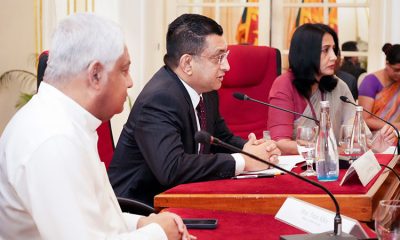



The Sri Lanka Natural History Society (SLNHS) will host a public lecture on the challenges of wildlife veterinary medicine, conservation and human–wildlife coexistence on 20 October at the University of Colombo.
Titled “From the Zoo to the Wild – A Wildlife Veterinarian’s Journey”, the eighth public lecture of 2026 will be delivered by Dr Ganga Wijesinghe, who has more than 28 years of experience in wildlife veterinary medicine, One Health coordination and wildlife forensics. She is currently performing the duties of Director (Wildlife Health) at the Department of Wildlife Conservation.
The lecture will examine the contrasting challenges of treating animals in controlled zoo environments and working in the wild, where veterinary interventions must take into account animal survival, ecological conditions and the health of wildlife populations.
It will also explore the balance between animal welfare, conservation priorities and the need to promote coexistence between humans and wildlife.
In collaboration with the Nature Foundation, the SLNHS will also screen the documentary Last Roundup at the same venue at 5 pm, ahead of the lecture.
The film documents Sri Lanka’s first-ever translocation of an elephant herd using tranquillisation, detailing the operation to relocate the well-known Daduru Oya herd to Wilpattu National Park.
The lecture will commence at 6 pm at the Auditorium on the sixth floor of the ILC (Library) Building, Faculty of Science, University of Colombo.
Admission is free and open to the public, with online participation available via Zoom. Parking facilities will also be available. https://us02web.zoom.us/j/82702262125?pwd=NrOabre1fnOrsvW2laQbbYLYyuGdAW.1, Meeting ID: 827 0226 2125 Passcode: 517663
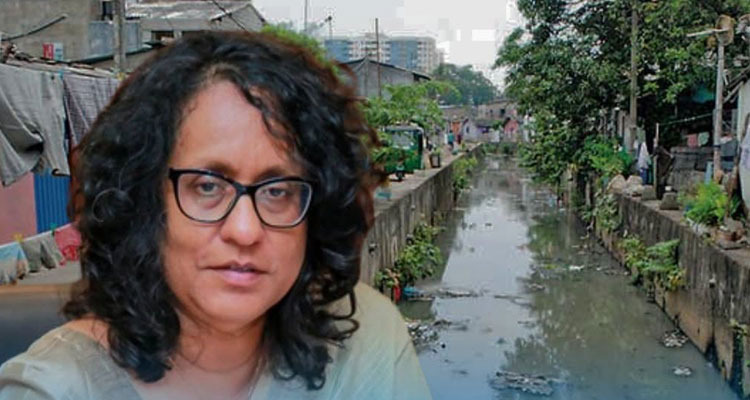
Prime Minister Dr. Harini Amarasuriya has directed officials to expedite the cleaning of canals and drainage systems across the Colombo District to ensure the efficient flow of rainwater amid forecasts of increased rainfall in the coming weeks.
She instructed the relevant authorities to complete the cleaning work within two weeks and ensure regular maintenance thereafter.
The Prime Minister issued the directives on Tuesday (13) at the Colombo District Coordinating Committee meeting held at the Narahenpita District Secretariat.
During the meeting, Divisional Secretariats, the Department of Agrarian Development and the Provincial Irrigation Department outlined challenges encountered in cleaning canals and drainage networks.
Officials also highlighted difficulties arising from a shortage of technical officers and constraints in preparing plans and cost estimates for the work.
The meeting also reviewed development programmes scheduled for implementation in the Colombo District in 2026.
Officials provided updates on proposed projects in several key sectors, including rural road development, community empowerment, disaster management and the promotion of a sports culture.

Land plots in Colombo Port City have been leased for 99 years at an average value of US$3,000 per square metre, with nine plots valued at a total of US$1.12 billion already leased, officials have told the Committee on Public Finance.
The Colombo Port City Economic Commission is also planning to lease a further six plots valued at US$1 billion, while preparing to bring four government-owned plots to the market, Parliament was informed.
The disclosures were made when the Committee on Public Finance, chaired by Dr Harsha de Silva, met in Parliament recently to review investment progress, the status of businesses designated as Businesses of Strategic Importance (BSIs), and the development and sale of condominium properties within Port City.
Officials said that, to date, only land plots belonging to CHEC Port City Colombo (Pvt) Ltd had been leased. The four government-owned plots being prepared for market represent approximately one-seventh of the total land allocation, they added.
The Commission has so far received Rs. 398 million, equivalent to one per cent of the total lease payments, according to officials.
The Committee also examined the regulatory framework governing foreign investments, including measures to identify the beneficial owners of companies operating in Port City and prevent money laundering and the financing of terrorism.
The issuance of visas to foreign workers and the monitoring of their activities also came under scrutiny. Members discussed the practical challenges of monitoring foreign nationals after being informed that approximately 14,300 visas had been issued on the Commission’s recommendation.
The need to strengthen regulatory safeguards to prevent illegal activities and protect Sri Lanka’s international reputation was emphasised during the discussion.
The Committee further raised concerns over the protection of advance payments made by investors purchasing units in condominium and residential development projects. Particular attention was given to escrow accounts, which are intended to ensure that funds received from foreign investors remain secure and are used exclusively for the projects concerned.
Members also sought information on the actual volume of foreign investment attracted to Port City, the operational status of businesses approved to operate there, and whether those businesses had generated the employment opportunities anticipated.
The meeting was attended by Deputy Ministers Chathuranga Abeysinghe and Nishantha Jayawera and several MPs, including Ravi Karunanayake, Harshana Rajakaruna and Shanakiyan Rajaputhiran Rasamanickam.

Rethinking our attitude towards three-wheeler industry

20th Anniversary of Digampathana blast – the day Sri Lanka Navy cried

‘Murder at Whitby Abbey’

The Balance of power The valiant, the vain and the villain

An open letter to Leader of the Opposition

Wildlife veterinarian’s journey from zoos to the wild to be explored at public lecture

‘Dates have the highest sugar content to fight Coronavirus’

Sunday Island 27 December – Headlines

#SundayIsland 17th December – Headlines

Sunday Island – 28th March

Sunday Island Headlines – 21 March

Sunday Island – 21st February – Headlines
-

 News7 days ago
NDB fraud Rs 60mn more than reported
-

 News7 days ago
Removing monk’s robes matter for Sangha to decide: Mahanayake Theras
-

 News5 days ago
Sri Lanka escalates anti-graft drive with Shiranthi’s jailing
-
 News6 days ago
NPP govt. reminded of its responsibilities as US warship leaves Colombo
-

 Latest News6 days ago
Farhan, Sadaqat help Pakistan ace 183 chase to go 1-0 up
-
 News7 days ago
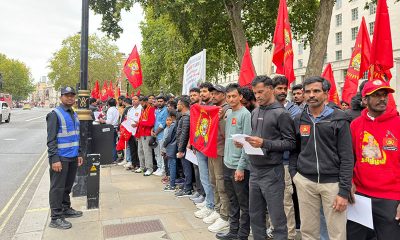
BHC, Colombo: “LTTE remains a proscribed org. in the UK”
-

 Latest News4 days ago
Farhan and Sadaqat help Pakistan seal series in style
-

 News5 days ago
Iranian ships stranded, Lanka fears US sanctions