
Latest News
Jaiswal, Gill tons begin India’s new Test era in style

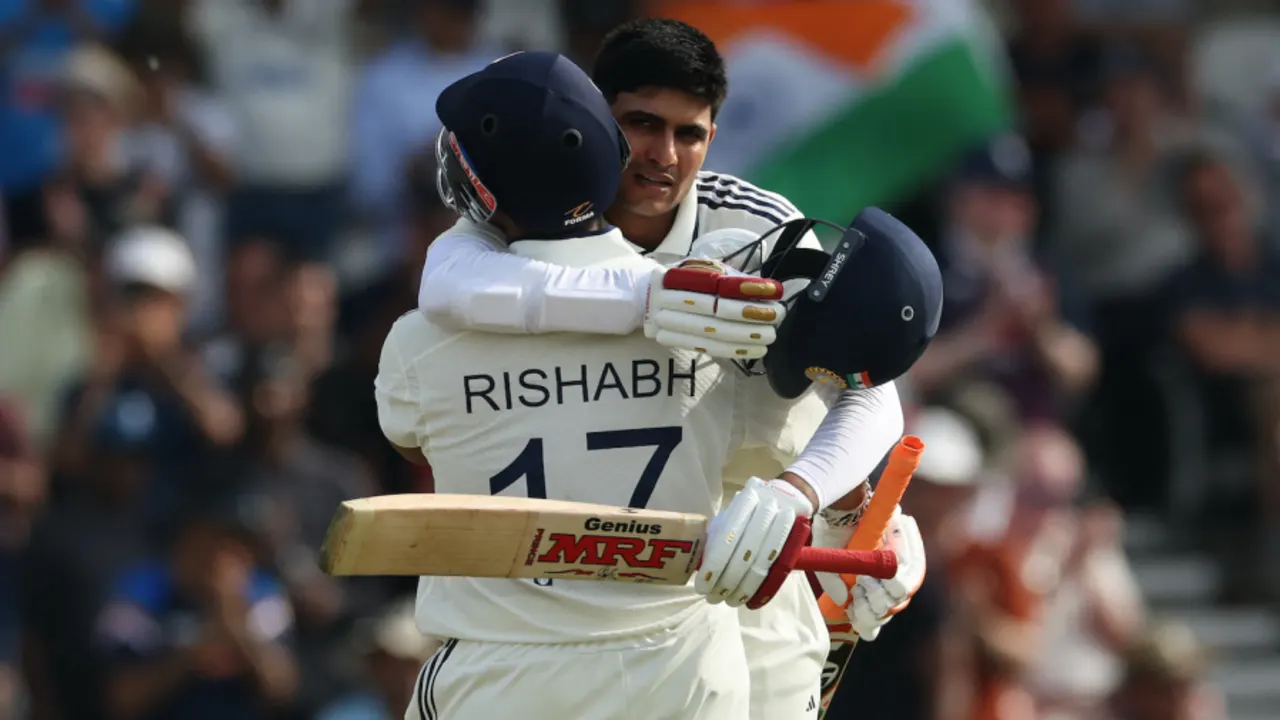
The two faces of India’s new generation of Test batters traded sparkling centuries to dominate England on the opening day at Headingley. Yashaswi Jaiswal and Shubman Gill cruised to hundreds as opener and No. 4 respectively, shrugging off the absence of two modern greats whose retirements have vacated those roles: no Rohit, no Virat, no problem.
Jaiswal plundered 712 runs in India’s home series against England 18 months ago, here, he provided further evidence of his adaptability. His century was a masterclass in off-side strokeplay: each of his 17 boundaries, including a vicious cut for six over cover, came on the off side, and he took only 48 balls to move from 50 to 100.
But Gill’s innings, his first as captain, was even better. He embodied the tempo that he wants from his side, charging to his fastest half-century (off 56 balls) without offering a chance before cruising serenely to three figures. After lashing a cover drive for four to reach his sixth Test hundred, he bowed to a standing ovation from his team-mates on the dressing-room balcony.
Gill said on the eve of the series that he would look to lead through his action and “dominate” with the bat, and backed up his words with an innings that oozed authority. Having never previously made an impact in Tests outside Asia, he looked completely at home as he seized his chance to prove he is not only the future of India’s batting line-up, but the present too.
It made for a long, painstaking day in the field for England’s bowlers, who must have ruedBen Stokes’ decision to bowl first on winning the toss on an unusually hot day in Leeds. Stokes himself was the pick of the attack, strangling the debutant B Sai Sudharsan down the leg side on the stroke of lunch and knocking back Jaiswal’s off stump straight after tea.
Stokes’ call was informed by the sense that there would be life in the pitch in the first session, but Jaiswal and KL Rahul did not entertain that notion. England’s seamers bowled reasonably full and attacked the off-stump channel but without success, their desperation summed up by a hugely optimistic lbw review when Josh Tongue hit Jaiswal on the pad from around the wicket.
Jaiswal occasionally played and missed, and was struck on the ribcage by a lifter from Brydon Carse, but Rahul looked totally unflustered as he punished width and half-volleys. It came as a shock when he finally offered a chance off a Carse outswinger, his thick outside edge flying straight to Joe Root at slip.
Carse’s follow-up ball to Sai Sudharsan, India’s new No. 3, was a snorter which wrapped him on the back thigh, and he soon fell into England’s trap. Stokes bowled the final over of the morning session with a leg slip and a leg gully, appealing unsuccessfully for a leg-side strangle with his third delivery; Sai Sudharsan duly obliged one ball later, feathering through to Jamie Smith.
Gill started jumpily after lunch, scampering through for a tight single off his second ball and offering a run-out chance off his sixth. He worked Carse to the right of Ollie Pope at short midwicket, whose pick-up-and-throw would have found Gill short of his ground with a direct hit; instead, it ran away to the boundary for overthrows.
It proved to be the only real chance of the middle session, though Carse might well have had Jaiswal lbw on review for 45 had he not overstepped. After an itchy start, Gill settled down and looked utterly unflappable for the rest of his innings: he made Chris Woakes look utterly innocuous after lunch, then reached a rapid half-century with a pull off Tongue.
Jaiswal battled cramp as he put his foot on the accelerator, marking Shoaib Bashir’s introduction to the attack by slicing his first ball away behind point and later dumping him back over his head for four. As he grew tired, he began to stand and deliver: he reached his hundred by belting Carse for consecutive fours, then snuck through for a single and raised his arms aloft.
His innings ended soon after tea, as Stokes angled the ball away off the seam and pegged back the top of his off stump. But the respite was short-lived: Rishabh Pant, playing against England in Tests for the first time in three years, charged at his second ball and belted it over Stokes’ head for four. England’s captain could only laugh.
Pant and Gill reined themselves in, allowing Bashir to settle into an economical, if largely unthreatening, spell of 21 unchanged overs from the Football Stand End. But Pant was never likely to wait for long, and started to take on the deep fielders: he nearly miscued a catch to Crawley at short midwicket, but comfortably cleared long-on with a towering straight six.
Gill upped the tempo further after his rasping drive off Tongue to reach his century, short-arm pulling six over long leg. And England’s hopes that the second new ball would provide a breakthrough were quickly quashed as Pant toe-ended a slog-sweep through mid-on, then hoicked Woakes over midwicket for six in the final over of the day.
Brief scores:
India 359 for 3 in 5 overs (Shubman Gill 127*, Yahaswi Jaiswal 101, Rishabh Pant 65*; Ben Stokes 2-43) vs England
[Cricinfo]


Polls have opened in Myanmar’s first general election since the country’s military toppled Nobel laureate Aung San Suu Kyi’s democratically elected government in a 2021 coup.
The heavily restricted election on Sunday is taking place in about a third of the Southeast Asian nation’s 330 townships, with large areas inaccessible amid a raging civil war between the military and an array of opposition forces.
Following the initial phase, two rounds of voting will be held on January 11 and January 25, while voting has been cancelled in 65 townships altogether.
“This means that at least 20 percent of the country is disenfranchised at this stage,” said Al Jazeera’s Tony Cheng, reporting from Myanmar’s largest city, Yangon. “The big question is going to be here in the cities, what is the turnout going to be like?”
In Yangon, polling stations opened at 6am on Sunday (23:30 GMT, Saturday), and once the sun was up, “we’ve seen a relatively regular flow of voters come in,” said Cheng.
“But the voters are generally middle aged, and we haven’t seen many young people. When you look at the ballot, there are only few choices. The vast majority of those choices are military parties,” he said.
The election has been derided by critics – including the United Nations, some Western countries and human rights groups – as an exercise that is not free, fair or credible, with anti-military political parties not competing.
Aung San Suu Kyi, who was deposed by the military months after her National League for Democracy (NLD) won the last general election by a landslide in 2020, remains in detention, and her party has been dissolved.
The pro-military Union Solidarity and Development Party (USDP) is widely expected to emerge as the largest party.
The military, which has governed Myanmar since 2021, said the vote is a chance for a new start, politically and economically, for the nation of 55 million people, with Senior General Min Aung Hlaing consistently framing the polls as a path to reconciliation.
Dressed in civilian clothes, the military chief cast his ballot shortly after polling stations opened in Naypyidaw, the country’s capital. He then held up an ink-soaked figure and smiled widely.
Voters must dip a finger into indelible ink after casting a ballot to ensure they do not vote more than once.
He told reporters afterwards that the elections are free and fair, and the vote was not tarnished because it is being held by the military.
The state-run Global New Light of Myanmar, in an opinion piece on Sunday, said the poll would open a new chapter and “serve as bridge for the people of Myanmar to reach a prosperous future”.
Earlier, it reported that election observers from Russia, China, Belarus, Kazakhstan, Cambodia, Vietnam, Nicaragua and India have flown into the country ahead of the polls.
But with fighting still raging in many areas of the country, the UN’s Special Rapporteur on Myanmar, Tom Andrews called on the international community to reject the military-run poll.
“An election organised by a junta that continues to bomb civilians, jail political leaders and criminalise all forms of dissent is not an election – it is a theatre of the absurd performed at gunpoint,” Andrews said in a statement.
“This is not a pathway out of Myanmar’s crisis. It is a ploy that will perpetuate repression, division and conflict,” he said.
The civil war, which was triggered by the 2021 coup, has killed an estimated 90,000 people, displaced 3.5 million and left some 22 million people in need of humanitarian assistance.
According to the Assistance Association for Political Prisoners, more than 22,000 people are currently detained for political offences.
In downtown Yangon, stations were cordoned off overnight, with security staff posted outside, while armed officers guarded traffic intersections. Election officials set up equipment and installed electronic voting machines, which are being used for the first time in Myanmar.
The machines will not allow write-in candidates or spoiled ballots.
Among a trickle of early voters in the city was 45-year-old Swe Maw, who dismissed international criticism.
“It’s not an important matter,” he told the AFP news agency. “There are always people who like and dislike.”
In the central Mandalay region, 40-year-old Moe Moe Myint said it was “impossible for this election to be free and fair”.
“How can we support a junta-run election when this military has destroyed our lives?” she told AFP. “We are homeless, hiding in jungles, and living between life and death,” she added.
The second round of polling will take place in two weeks’ time, before the third and final round on January 25.
Dates for counting votes and announcing election results have not been declared.
Analysts say the military’s attempt to establish a stable administration in the midst of an expansive conflict is fraught with risk, and that significant international recognition is unlikely for any military-controlled government.
“The outcome is hardly in doubt: a resounding USDP victory and a continuation of army rule with a thin civilian veneer,” wrote Richard Horsey, an analyst at the International Crisis Group in a briefing earlier this month.
“But it will in no way ease Myanmar’s political crisis or weaken the resolve of a determined armed resistance. Instead, it will likely harden political divisions and prolong Myanmar’s state failure. The new administration, which will take power in April 2026, will have few better options, little credibility and likely no feasible strategy for moving the country in a positive direction,” he added.

[Aljazeera]
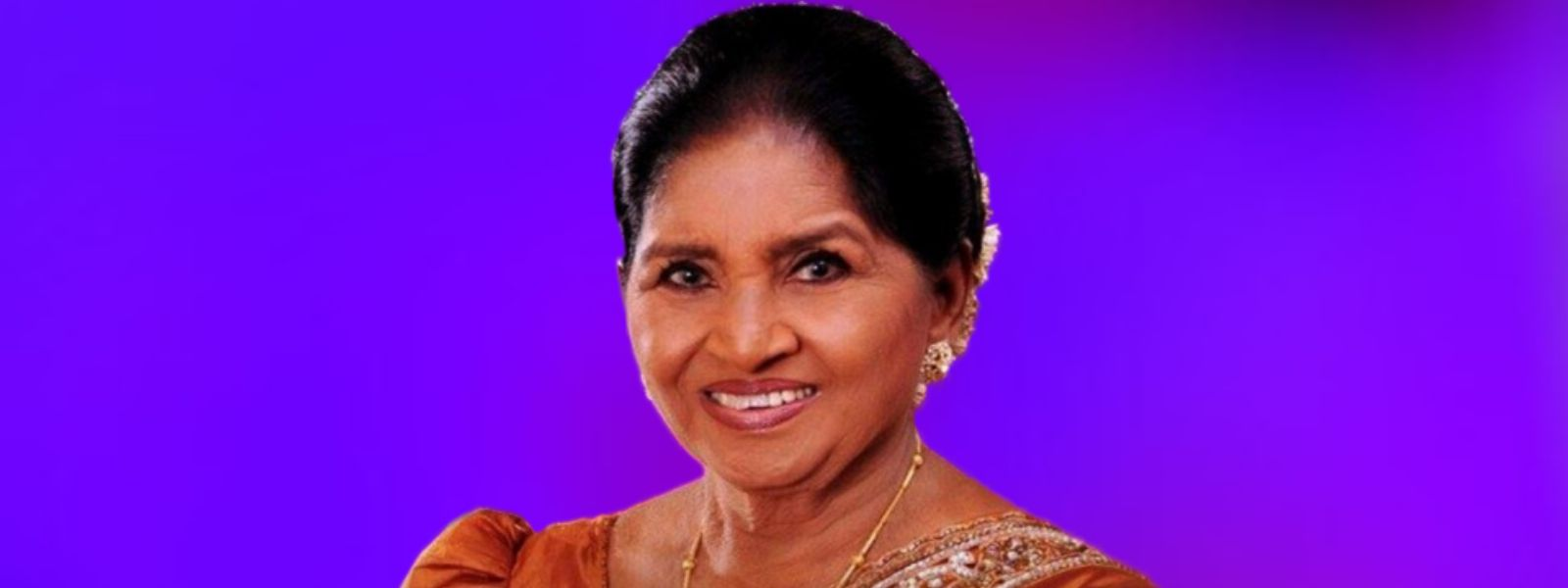
Family sources have confirmed that the interment of singer Latha Walpola will be performed at the General Cemetery Borella on Wednesday (31 December).

Former Malaysian Prime Minister Najib Razak has been jailed for 15 years for abuse of power and money laundering, in his second major trial for a multi-billion-dollar state funds scandal.
Najib, 72, was accused of misappropriating nearly 2.3 billion Malaysian ringgit ($569m; £422m) from the nation’s sovereign wealth fund 1Malaysia Development Berhad (1MDB).
On Friday afternoon a judge found him guilty in four charges of abuse of power and 21 charges of money laundering.
The former PM is already in jail after he was convicted years ago in another case related to 1MDB.
Friday’s verdict comes after seven years of legal proceedings, which saw 76 witnesses called to the stand.
The verdict, delivered in Malaysia’s administrative capital Putrajaya, is the second blow in the same week to the embattled former leader, who has been imprisoned since 2022.
He was handed four 15-year sentences on abuse of power charges, as well as five years each on 21 money laundering charges. The jail terms run concurrently under Malaysian law.
On Monday, the court rejected his application to serve the remainder of his sentence under house arrest.
But the former prime minister retains a loyal base of supporters, who claim that he’s a victim of unfair rulings and who have showed up at his trials calling for his release.
On Friday, dozens of people gathered outside the court in Putrajaya in support of Najib.
The 1MDB scandal made headlines across the world when it came to light a decade ago, embroiling prominent figures from Malaysia to Goldman Sachs and Hollywood.
Investigators estimated that $4.5bn was siphoned from the state-owned wealth fund into private pockets, including Najib’s.
Najib’s lawyers claim that he had been misled by his advisers – in particular the financier Jho Low, who has maintained his innocence but remains at large.
But the argument has not convinced Malaysia’s courts, which previously found Najib guilty of embezzlement in 2020.
That year, Najib was convicted of abuse of power, money laundering and breach of trust over 42 million ringgit ($10m; £7.7m) transferred from SRC International – a former unit of 1MDB – into his private accounts.
He was sentenced to 12 years in prison, but saw his jail term halved last year.
The latest case concerns a larger sum of money, also tied to 1MDB, received by his personal bank account in 2013. Najib said he had believed the money was a donation from the late Saudi King Abdullah – a claim rejected by the judge on Friday.
Separately Najib’s wife, Rosmah Mansor, was sentenced to ten years in jail in 2022 for bribery. She is free on bail pending an appeal against her conviction.
The scandal has had profound repercussions on Malaysian politics. In 2018 it led to a historic election loss for Najib’s Barisan Nasional coalition, which had governed the country since its independence in 1957.
Now, the recent verdicts has highlighted fissures in Malaysia’s ruling coalition, which includes Najib’s party United Malays National Organisation (UMNO).
Najib’s failed house arrest bid on Monday was met with disappointment from his allies but celebrated by his critics within the same coalition.
Malaysia’s Prime Minister Anwar Ibrahim called for politicians on all sides to respect the court’s decisions.
Former Malaysian lawmaker Tony Pua told the BBC’s Newsday programme that the verdict would “send a message” to the country’s leaders, that “you can get caught for corruption even if you’re number one in the country like the prime minister”.
But Cynthia Gabriel, founding director of Malaysia’s Center to Combat Corruption and Cronyism, argued that the country has made little headway in anti-corruption efforts despite the years of reckoning after the 1MDB scandal.
Public institutions have not been strengthened enough to reassure Malaysians that “the politicians they put into power would actually serve their interests” instead of “their own pockets”, she told Newsday.
“Grand corruption continues in different forms”, she added. “We don’t know at all if another 1MDB could occur, or may have already occurred.”
(BBC)

Myanmar votes as military holds first election since 2021 coup

Interment of singer Latha Walpola at Borella on Wednesday [31st]

Western Naval Command conducts beach cleanup to mark Navy’s 75th anniversary

Ex-Malaysia PM Najib Razak given 15-year jail term over state funds scandal

Two dead in 50-vehicle pile up on Japan highway

New York blanketed in snow, sparking travel chaos

‘Dates have the highest sugar content to fight Coronavirus’

Sunday Island 27 December – Headlines

#SundayIsland 17th December – Headlines

Sunday Island – 28th March

Sunday Island Headlines – 21 March

Sunday Island – 21st February – Headlines
-

 News5 days ago
Members of Lankan Community in Washington D.C. donates to ‘Rebuilding Sri Lanka’ Flood Relief Fund
-

 News3 days ago
British MP calls on Foreign Secretary to expand sanction package against ‘Sri Lankan war criminals’
-

 News6 days ago
Air quality deteriorating in Sri Lanka
-

 News6 days ago
Cardinal urges govt. not to weaken key socio-cultural institutions
-

 Features5 days ago
General education reforms: What about language and ethnicity?
-

 Opinion6 days ago
Ranwala crash: Govt. lays bare its true face
-
 News5 days ago
Suspension of Indian drug part of cover-up by NMRA: Academy of Health Professionals
-

 News6 days ago
CID probes unauthorised access to PNB’s vessel monitoring system