
News
Island nations of the Indian Ocean and South Pacific urge non-interference in great power rivalry


President Ranil Wickremesinghe participated in the ‘Ocean Nations: The 3rd Annual Indo-Pacific Islands Dialogue,’ moderated by Dan Baer, Senior Vice President for Policy Research at the Carnegie Endowment for International Peace and hosted by the Carnegie Endowment and Sasakawa Foundation. During this event, he highlighted the reluctance of island nations in the Indian Ocean and South Pacific to become embroiled in the rivalry between major world powers. The President emphasized that these nations are focused on their own priorities, including social, economic, and ecological development and seek to maintain their sovereignty and independence.
President Wickremesinghe asserted that Sri Lanka’s government does not align itself with either India or China and firmly stands for Sri Lanka’s interests above all else. This commitment to sovereignty extends to other island nations in the region.
Island nations in the Indian Ocean and South Pacific have distinct priorities, unrelated to the Quad (comprising the US, India, Japan, and Australia) or China’s objectives, he said, adding that Sri Lanka is open to collaboration with any partners willing to respect its autonomy.
In terms of regional frameworks President Wickremesinghe noted that China’s rise occurred within existing regional frameworks such as APEC and ASEAN, which many nations prefer to maintain. The recent expansion of great power rivalry beyond these frameworks has raised concerns among member nations.
He noted that the South Pacific and the Indian Ocean hold immense strategic value. The South Pacific is a vital hub for the US Navy and the Indian Ocean played a crucial role in World War II. President Wickremesinghe noted, “The South Pacific which includes Hawaii – it is here that the US dominance of the Pacific established in WW2 and Battle of the Coral Sea and Midway as well as the shooting down of Admiral Yamamoto’s plane took place. The importance of the Indian Ocean was best described by Winston Churchill who said the most dangerous moment of war was the capture of Ceylon and consequently the loss of Indian Ocean.”
The Indo-Pacific concept has gained recognition, primarily due to mounting challenges from China, the President said, adding that it has prompted a re-evaluation of regional dynamics and cooperation, such as the Jakarta Concord within the Indian Ocean Rim Association (IORA).
The G7’s attempt to involve European powers and NATO in the Indo-Pacific was met with opposition, with only France expressing interest. This move was seen as violating IORA’s rules-based order, the President pointed out.
The President also noted that the Quad has shifted from a focus on security and dialogue to applying coordinated pressure in the region. While surface warfare threats are minimal in the Indian Ocean, the issue of submarine warfare needs to be addressed within IORA.
In terms of Security Dialogues, the President pointed out that the island nations find security dialogues acceptable but emphasize non-interference in their internal affairs. Many island nations, including Sri Lanka, have not engaged in high-level discussions regarding the Indo-Pacific. Recent developments such as the US opening an embassy in the Maldives were also noted.
The power balance in the Indian Ocean is evolving, influenced by ASEAN, the Russian-Ukraine war, and the emergence of BRICS+. This changing landscape favours the independence of island nations and calls for strengthened cooperation between IORA, ASEAN, and BRICS+.
In response to a question posed on the Hambantota port, President Wickremesinghe said Sri Lanka expressed concerns over the labelling of the Hambantota commercial port as a Chinese military base. The country is developing the Trincomalee harbour in cooperation with India and intends to raise the matter at international forums.
He also emphasized the need for IORA to accommodate the Indo-Pacific concept, recognizing the interconnectedness of the Indian and Pacific Oceans and enabling cooperation among small island states in both regions.
The island nations of the Indian Ocean and South Pacific are resolute in their pursuit of independence, non-interference and the protection of their unique priorities amidst the evolving dynamics of great power rivalry in the Indo-Pacific region.
(PMD)





The Ceylon Electricity Board (CEB) has submitted a proposal to the Public Utilities Commission of Sri Lanka (PUCSL) seeking an 11.57 percent increase in electricity tariffs for the first quarter of 2026, citing an estimated revenue shortfall and additional financial pressures, including cyclone-related damages.
According to documents issued by the PUCSL, the proposed tariff revision would apply to electricity consumption from January to March 2026 and includes changes to both energy charges and fixed monthly charges across all consumer categories, including domestic, religious, industrial, commercial and other users.
Under the proposal, domestic electricity consumers would face increases in unit rates as well as fixed monthly charges across all consumption blocks.
The CEB has estimated a deficit of Rs. 13,094 million for the first quarter of 2026, which it says necessitates the proposed 11.57 per cent tariff hike. The utility has noted that any deviation from this estimate whether a surplus or a shortfall will be adjusted through the Bulk Supply Tariff Adjustment (BSTA) mechanism and taken into account in the next tariff revision.
In its submission, the CEB said the proposed revision is aimed at ensuring the financial and operational stability of the power sector and mitigating potential risks to the reliability of electricity supply. The board-approved tariff structure for the first quarter of 2026 has been submitted to the PUCSL for approval and subsequent implementation, as outlined in Annex II of the proposal.
The CEB has also highlighted the financial impact of Cyclone Ditwah, which it said caused extensive damage to electricity infrastructure, with total losses estimated at around Rs. 20 billion. Of this amount, Rs. 7,016.52 million has been attributed to the first quarter of 2026, which the utility said has a direct bearing on electricity tariffs.
The CEB warned that if external funding is not secured to cover the cyclone-related expenditure, the costs incurred would need to be recovered through electricity tariffs in the second-quarter revision of 2026.
Meanwhile, the PUCSL has said that a decision on whether to approve the proposed tariff increase will be made only after following due regulatory procedures and holding discussions on the matter.
By Sujeewa Thathsara ✍️
Ondansetron controversy
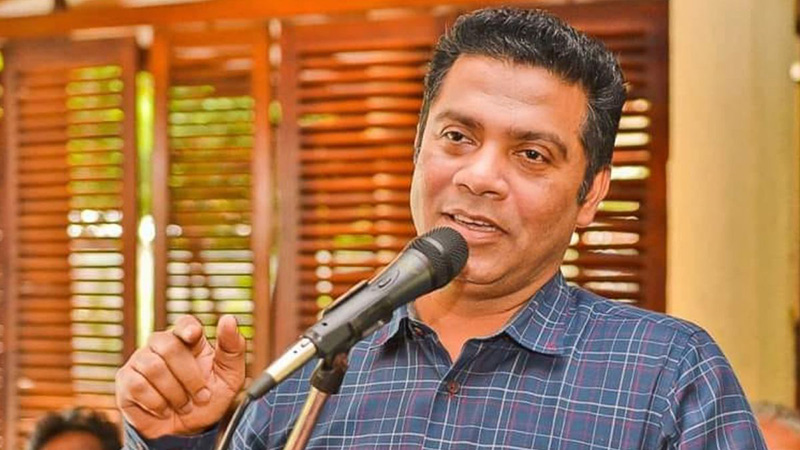
Minister of Health and Mass Media Dr Nalinda Jayatissa has sent a letter of demand for Rs. 1 billion in damages from YouTube content creator Dharmasri Kariyawasam, accusing him of disseminating false and defamatory material linking the Minister to the importation of Ondansetron and inciting public unrest.
The notice, sent through the Minister’s lawyers, states that investigations are currently under way into 10 medicines, including Ondansetron Injection, manufactured by India-based Maan Pharmaceutical Limited.
Ondansetron Injection was among nine injectable drugs recently suspended by the National Medicines Regulatory Authority (NMRA) following reports of patients administered with the drug suffering adverse complications.
Despite the ongoing investigations, Kariyawasam allegedly aired a widely viewed programme on his YouTube channel titled “The hidden story of the Indian drug that claimed lives, Mayor Balthazaar’s relative, and Minister Nalinda’s cover-up.”
According to the letter of demand, the programme falsely portrayed Minister Jayatissa as being directly responsible for importing the drug, colluding with the supplier, and attempting to conceal the issue, while depicting him as indifferent to public suffering.
The Minister’s lawyers maintain that these allegations are entirely false and defamatory, citing passages in which Kariyawasam allegedly accused Jayatissa of lying about the supplier, concealing facts related to PTC Medicals (Pvt) Ltd., the actual importer, and showing a lack of concern over deaths purportedly linked to the drug.
The programme also claimed links between the directors of PTC Medicals and family members of Colombo Mayor Vraîe Cally Balthazaar, implying political favouritism.

A 20-year-old man was shot dead and two others injured in a shooting incident reported from the Menikgara area of Korathota, Nawagamuwa, in Kaduwela, on Thursday night (01 January).
The injured victims were initially admitted to the Oruwala Hospital in Athurugiriya and were later transferred to the Homagama Base Hospital for further treatment.
Police said the shooting targeted a group allegedly linked to an underworld figure known as Borelle Kudu Duminda, and investigations indicate the attack may have been carried out by a rival faction led by Borelle Kudu Chathu.
Preliminary investigations by the Nawagamuwa Police revealed that the victims were inside a rented house at the time of the attack. The suspects are believed to have arrived on a motorcycle and a three-wheeler, opened fire, and fled the scene immediately afterwards.
According to police, two gunmen had gained entry to the premises after cutting through a fence and used a pistol in the attack.
The deceased was identified as Sankalpa, a 20-year-old resident of Borella.
Police further said the victim and another individual were allegedly involved in an incident on November 14, 2025, in which a woman’s hand was severed with a sharp weapon in the Sarana Road area of Borella. Investigations have revealed that the woman is a close associate of Kudu Chathu.
Police said the woman’s residence was allegedly used by suspects involved in a separate shooting in Borella on 24 June, 2025, which had targeted an individual who escaped unharmed. It is alleged that the survivor of that shooting and the youth killed on Thursday later carried out the attack on the woman.
Both individuals are believed to be close associates of Kudu Duminda, a rival of Kudu Chathu, police said, adding that efforts to arrest suspects connected to the earlier incidents had been unsuccessful.
Investigators believe the latest killing was carried out based on information that a member affiliated with Kudu Chathu’s faction was present at the location. One of the injured persons is reportedly the brother-in-law of the individual who survived the June shooting.
A senior police officer said special security had earlier been deployed in the Borella area following intelligence reports that Kudu Duminda was planning a retaliatory attack.
Police noted that this is the first shooting incident reported in Sri Lanka for 2026.
By Norman Palihawadane ✍️

CEB demands 11.57 percent power tariff hike in first quarter

Health Minister sends letter of demand for one billion rupees in damages

One killed, two injured in shooting at Kaduwela

SLTB introduces digital solution to halt malpractices

A question of power

Land dispute brings death to three in a knife attack that also left a fourth in hospital

‘Dates have the highest sugar content to fight Coronavirus’

Sunday Island 27 December – Headlines

#SundayIsland 17th December – Headlines

Sunday Island – 28th March

Sunday Island Headlines – 21 March

Sunday Island – 21st February – Headlines
-

 Sports5 days ago
Gurusinha’s Boxing Day hundred celebrated in Melbourne
-
 News3 days ago
Leading the Nation’s Connectivity Recovery Amid Unprecedented Challenges
-

 Sports6 days ago
Time to close the Dickwella chapter
-

 Features4 days ago
It’s all over for Maxi Rozairo
-

 News6 days ago
Environmentalists warn Sri Lanka’s ecological safeguards are failing
-
 News4 days ago
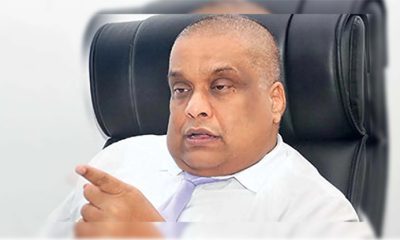
Dr. Bellana: “I was removed as NHSL Deputy Director for exposing Rs. 900 mn fraud”
-
 News3 days ago
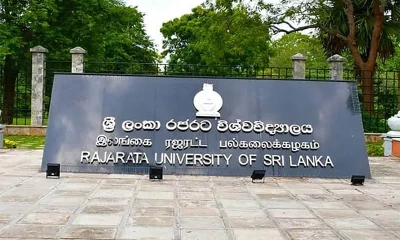
Dons on warpath over alleged undue interference in university governance
-
 Features6 days ago
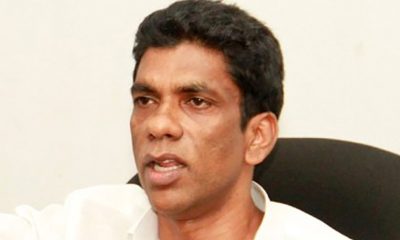
Digambaram draws a broad brush canvas of SL’s existing political situation